But a spokesperson for the charity said the position articulated by its deputy chief operations officer at a council meeting recently is not its current policy.
This article mentions suicide. If you or somebody you know might need help, Samaritans’ national suicide prevention hotline can be contacted at 116 123 and jo@samaritans.org. You can also visit the HSE’s website here for a range of additional resources.
He had a blank spot on the wall, just in case.
“Maybe if I do find them I can put them in there,” said Paul Waters, his head angled upwards.
He could put the photos next to the smiling selfie of his daughter Chantelle, and above that picture of him with his Aunty Susan on the day – he peers at it – of his confirmation maybe.
That’s his Uncle Tutts, his birth dad’s brother, with his dog over in that photo.
“He used to say little remarks, like, I used to say, ‘Oh my da’s down the house.’ He would say, ‘That’s not your da!’” said Waters.
It was one of the ways that Waters knew that his father wasn’t his birth father and his mother, his Aunty Susan, wasn’t his birth mother – though they had cared for him and loved him since he was five days old.
But while Waters, now 52, has known the outlines of his origin for decades, it is only in the last few years that he has been able to learn more.
In October 2022, the government set up its Birthing and Information Tracing Service, giving people the right to access records about their early life and to trace birth family members.
Not long after, Waters signed up.
He wanted to find out about his birth parents, Thomas Tutty and Sheila Tutty (née Duffy) – and to find his scattered birth siblings too.
A social worker at Tusla has been a massive help, he said.
He now knows where both of his parents are buried. “But I don’t know what they looked like,” said Waters, which is something he has desperately wanted to see.
As part of the search, he Googled around and found an old thread from March 2010 on Boards.ie.
“Lookin for info on a charismatic homeles ‘tutty’ that went around ranelagh 20yrs ago?” said the post.
That was Waters’ birth father, Waters says. He scanned the replies.
“Yeah I remember him,” said the next poster.
“He died a few years ago,” said another.
“Now, I wonder does anyone have a photo of him?” said the original poster.
Waters hoped somebody would reply so he could fill that space on the wall in his Finglas flat next to the kitchen door, he said.
But nobody did. The thread ended there.
Growing up
Waters was born in October 1973.
His birth certificate gave his address as Mount Pleasant Buildings, the run-down cramped and overcrowded flats in Ranelagh which were gradually demolished over the course of that decade, deemed unfit for human habitation.
He still doesn’t know why he was given to his da’s sister, Aunty Susan, and her husband, who lived over in St Teresa’s Gardens, he said on Tuesday.
He asked, he said. “They never told me.”
They wanted to protect him, he thinks. Maybe because his birth mother and father were homeless, maybe with poor mental health. He wonders sometimes, he said, about how traumas are passed on.
Waters’ early life was far from easy, too.
He suffered the split with his birth family, he said. One of his brothers lived with another aunt in the flats at St Teresa’s Gardens.
Other siblings he never knew were scattered, he later learnt, across care homes in south Dublin.
His new parents cared for him, he said. “My aunty loved me like a mother. She reared me, she done everything she could. My father done the best he could, but he had his alcohol addiction.”
His parents struggled with money for food, too.
Waters would be sent around to the church on Donore Avenue to queue for a big black bag of bread from the nuns, he said. “There were some times where we went hungry for days.”
Through the 1980s, heroin ripped through St Teresa’s Gardens. “There was lots of people banging up, using on the stairs, on the field.”
Waters got involved in drugs and crime, in robberies, young, he said.
He was at most eight years old, he said, the first time he got high. “Tippex it was. Your man put it on my jumper, and you suck it,” he said, pulling at his grey sleeve.
He began to rob bottles of gas from his da’s flat and to buy them from a shop on Cork Street, he said. “I’d sit at the back of The Coombe Hospital there, at the back of the flats, and I’d be on my own sniffing the gas everyday.”
“I don’t know what it was. Everything. The trauma, being separated. My head was just completely messed up as a child,” said Waters.
His parents tried to keep him out of trouble, he said. “Even my father, when I started getting involved in crime, he tried to steer me clear.”
“He’d go mad at me, he’d never hit me,” said Waters.
By 14, he was smoking cannabis, drinking, taking benzos and valium. When he got seven years in Limerick prison at 17, he finally took heroin, he said.
“Once I took the first hit, that was it,” said Waters.
Waters was in and out of prison, he said, with stints in Limerick, Mountjoy, and Portlaoise, through cycles of treatment, and depression and anxiety, and relapse into crime.
There are basements to rock bottom, he said.
His rock bottom came in 2008, when he suffered a crack seizure after a night of smoking and woke up on the toilet floor. “It was like being in hell. Absolute horrendous pain.”
“I needed to go through that pain in order for me to realise that addiction to me is pain,” he said. “I took drugs because I was in pain and I ended up in worse pain.”
He was 36 years old by then, he said, looking back at 28 years of addiction.
Facing memories
Recovery followed, one day at a time, he said. “It hasn’t been easy. I’ve had days where I felt like throwing the towel in.”
The first year and a half in recovery was pure pain, he said.
“When I got clean, not only did I have guilt around family members. I had guilt to society,” he said. “All the crime, I committed that in my life, for years, robbing, robbing, all the time.”
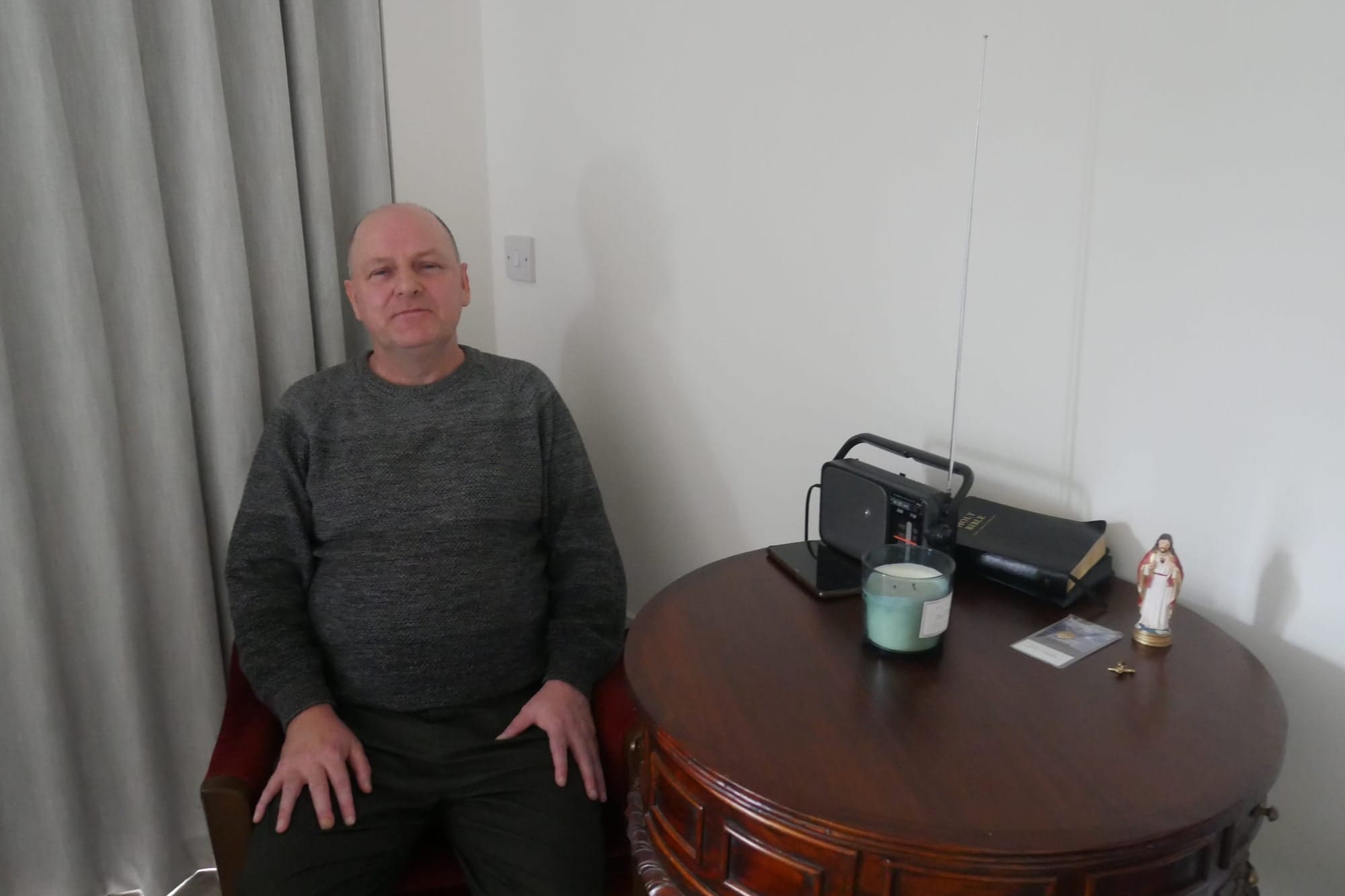
At home in Finglas. Photo by Lois Kapila.
He knew he needed to do it though, he said, and not just for himself but for his daughter Chantelle, who was six years old by then. “She kept me going through my darkest times.”
“It was that cycle of addiction that I always wanted to change,” said Waters. A break in the family trauma, he said.
Waters felt full of directionless anger, he said.
“Because behind that anger was hurt. I was very hurt,” he said. “Even though I never met them, I loved them and I missed them, and I always wondered what it would be like if they brought me up.”
His anger wasn’t towards his parents though, he said, instead he feels empathy. “I don’t blame them. I don’t use that dynamic.”
He sometimes thinks back to April 1998.
Waters was in Mountjoy Prison, and still in addiction, when the governor called him out of his cell to tell him his birth father was dying.
He asked if he wanted to go and see him in hospital, said Waters. “And I said no, at the time, because I’d never met them,” he said.
“And I do regret that,” he said. “Because I’m looking for photos of them now. I do regret that I never went over.”
Searching
Recently, Waters read a Facebook post on old Dublin characters. What if he tried another Google search, he thought, this time with different words.
Dublin. Characters. Ranelagh.
There were his birth parents again, a fresh mention. This time, coming from Jess Lynch, the owner of Sound Hire, a sound equipment shop in Ranelagh.
He was talking about “Sheila and Pom Pom” who would hang out on a bench in Palmerston Park.
Waters knew they had married in 1963. But he hadn’t known they had still been together later, he said, for a time at least.
He was struck by it. “Just to know that they were homeless, but they were together,” he said.
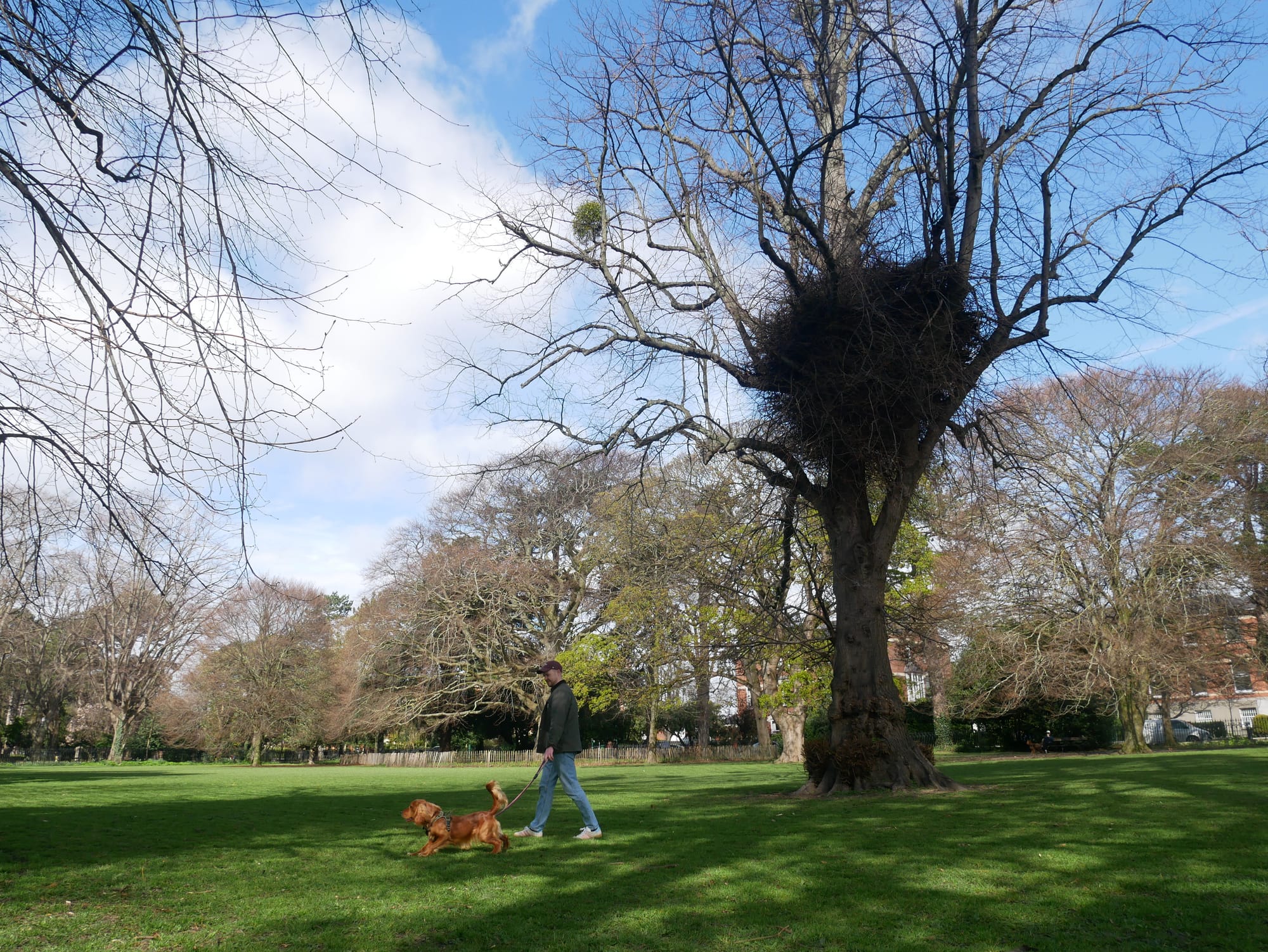
At Palmerston Park.
Palmerston Park was budding with birdsong and children’s shouts on Wednesday late morning.
Gerry Kennedy has lived in the area since the mid-1990s, he said, midway along the perimeter path.
He doesn’t recall the couple himself. But the park was certainly different then, he said, searching for the right words.
With oddballs, and cruising too, he said.
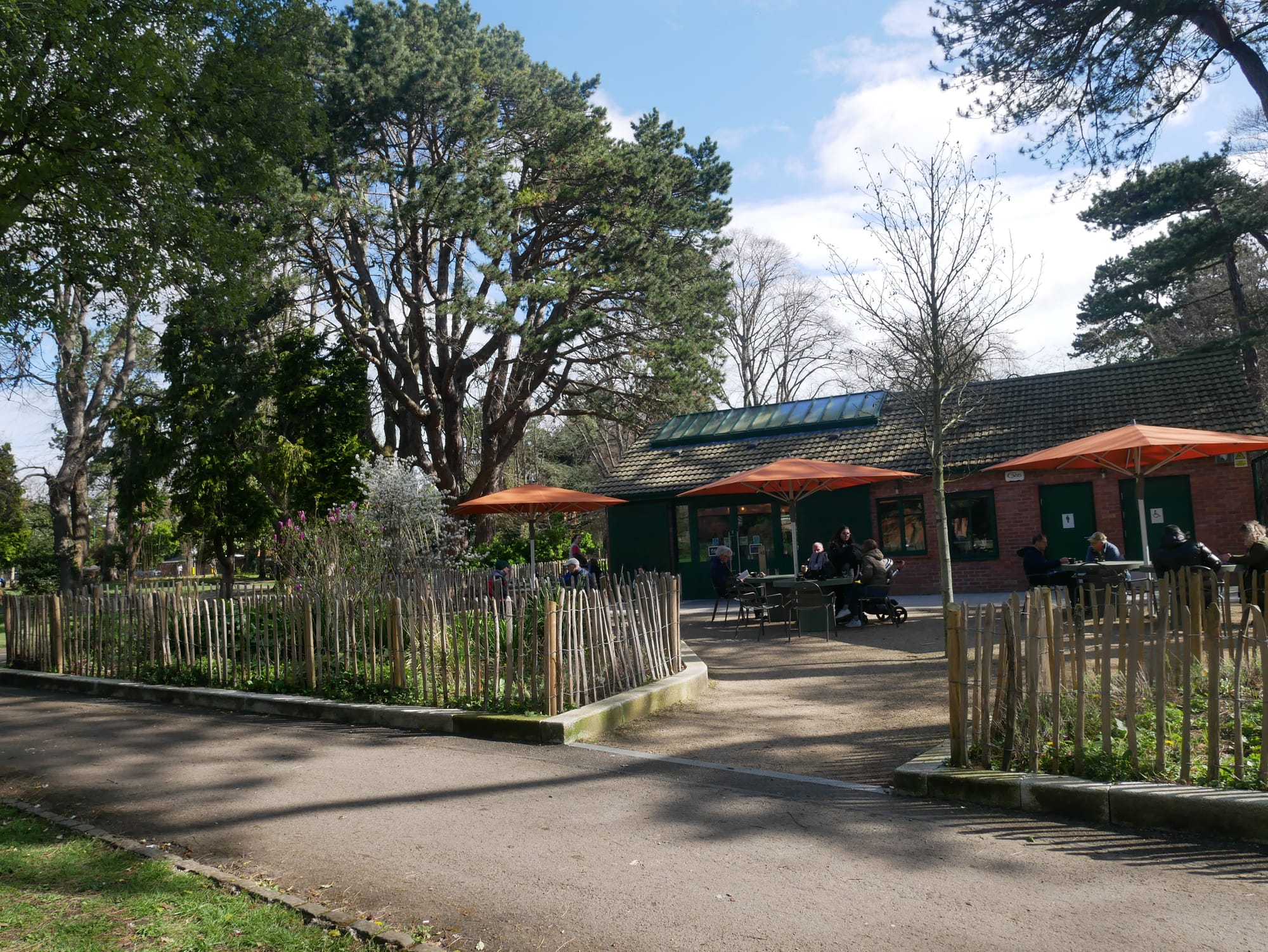
Follow the paths eastward to the new tearooms in a converted red-brick bungalow and beyond to the rocky waterfall.
“Up there, there was a public toilet,” he said.
He saw the neighbourhood change fast, he said, for better or worse.
Within five years, Sherry Fitgerald-types were knocking to say home prices had quadrupled.
Suburban dreamers began to move back in, he said. There are more kids around, he said. “Families are back.”
He didn’t remember Pom Pom and Sheila though, he said.
Orange parasols shade the courtyard outside the Palmerston Park tearoom. At one table, a man flicks through a paperback.
At another, Brían Butterly pauses for a moment.
“I never knew him as anything other than Tutty,” said Butterly. He first knocked on the door of their home in 1985.
“He would get food from Morton’s” – the old Ranelagh grocery store, still busy today – “and knock in for you to cook”, he said.
It could be anything, rashers, fish cakes, whatever he had been given. He took his tea in a jam jar, but if it was below par, would toss it aside.
Other small flashbacks.
His wife gave Tutty a plate and cutlery the first time he knocked. “You’re not here long,” he said to her. “Nobody gives me a knife.”
She was wary of him at first, but it quickly wore off.
He always had his big boombox. He was gruff with children but would also offer teenagers cassettes.
He slept under the old railway bridge where the Cowper Luas Station is now, he said.
But he wasn’t destitute as far as they could tell. He would bet on the horses, and there was a woman who ran a community group, who he would give rolls of cash to mind. “He was just eccentric.”
But he doesn’t know if any photos exist, said Butterly.
Questions
Waters is sat in a chair in the corner of his living room. On the coffee table is a candle, a radio, a Bible, and a small figurine of Jesus.
If he had met his birth parents, he would ask them the big open questions, he said.
“How did you feel?”
“What happened to you growing up?”
“What was your life like?”
He would also tell them that he understood, he said, that in giving him to his father’s sister, his mother had given him to someone who would – and had – loved him as his own.
“I think, back then, that she was messed up and she did the best that she could for me,” said Waters. “And I would thank her.”
As part of his search, he had found John’s, his brother’s, grave in Mount Jerome a few years ago through online databases for graveyards and cemeteries.
His brother who had grown up in St Teresa’s Gardens too, and been in addiction too. He committed suicide, said Waters. Waters had been in prison at the time.
Waters took two friends with him the first time he went to his grave, he said. “I couldn’t talk for a few minutes. The pain just hit me.”
His grandparents lay in the same grave, he said, but he noticed his father wasn’t there. He asked a staff member where he was.
“He was in a different grave,” says Waters, with two brothers and a sister. “All on the one row.”
The thread on Boards.ie, from March 2010 had mentioned his father’s love of ’80s music.
Waters loves that too, he said, and it felt like a point of connection. “When I go to his grave, I play ’80s music,” he said.
He plays Michael Jackson, Tina Turner, and Elton John, the Hothouse Flowers. He plays “I Can See Clearly Now”, the classic by Johnny Nash.
“I think he can hear it,” said Waters. “I really do.”
About eight months ago, he got the call that his social worker at Tusla had traced his mother’s grave. She had died in May 2002.
He had sensed she was gone, he said, but still the tears came. He didn’t know how he was supposed to feel, he said.
“It’s still painful, even though I never met her,” he said. But “I don’t even know whether I’m grieving for her.”
Her grave is in Glasnevin Cemetery a short drive from his Finglas apartment. “She’s only there, right beside me. Just five minutes away,” said Waters.
He went over on his own one Saturday, he said. A woman gave him a map. “I’m brutal with maps,” he said.
He came back the following Monday, when someone was free to guide him and they led Waters to the plot for those who died in St Brendan’s Hospital, the psychiatric facility, and were buried under a collective headstone.
He wondered how she had ended up in the hospital, he said. “How long she was in there, what happened.”
The plot is vast. But his guide brought out a measuring tape and sprayed red lines around where records said she lay.
Waters bought a plaque. “Just to put her name on it,” he said, “And I said, ‘From her loving family.’”
He is conscious that he knows more, even if it is little, about his birth father than his birth mother, he said.
He goes almost every week now to her grave, he said. He talks to her, he said.
With Tusla’s help, he has traced more of his birth siblings. Some don’t seem to want contact, and others are gone.
But he met with one sister six months ago, he said, in a care home in Blackrock. After they met, he went and told his mother. “I said, I’m after finding Liz.”
Still though, he feels a lack of closure. Not being able to picture his birth parents, to see their faces, he said.
An answer
John Murray says he never knew Tutty had children.
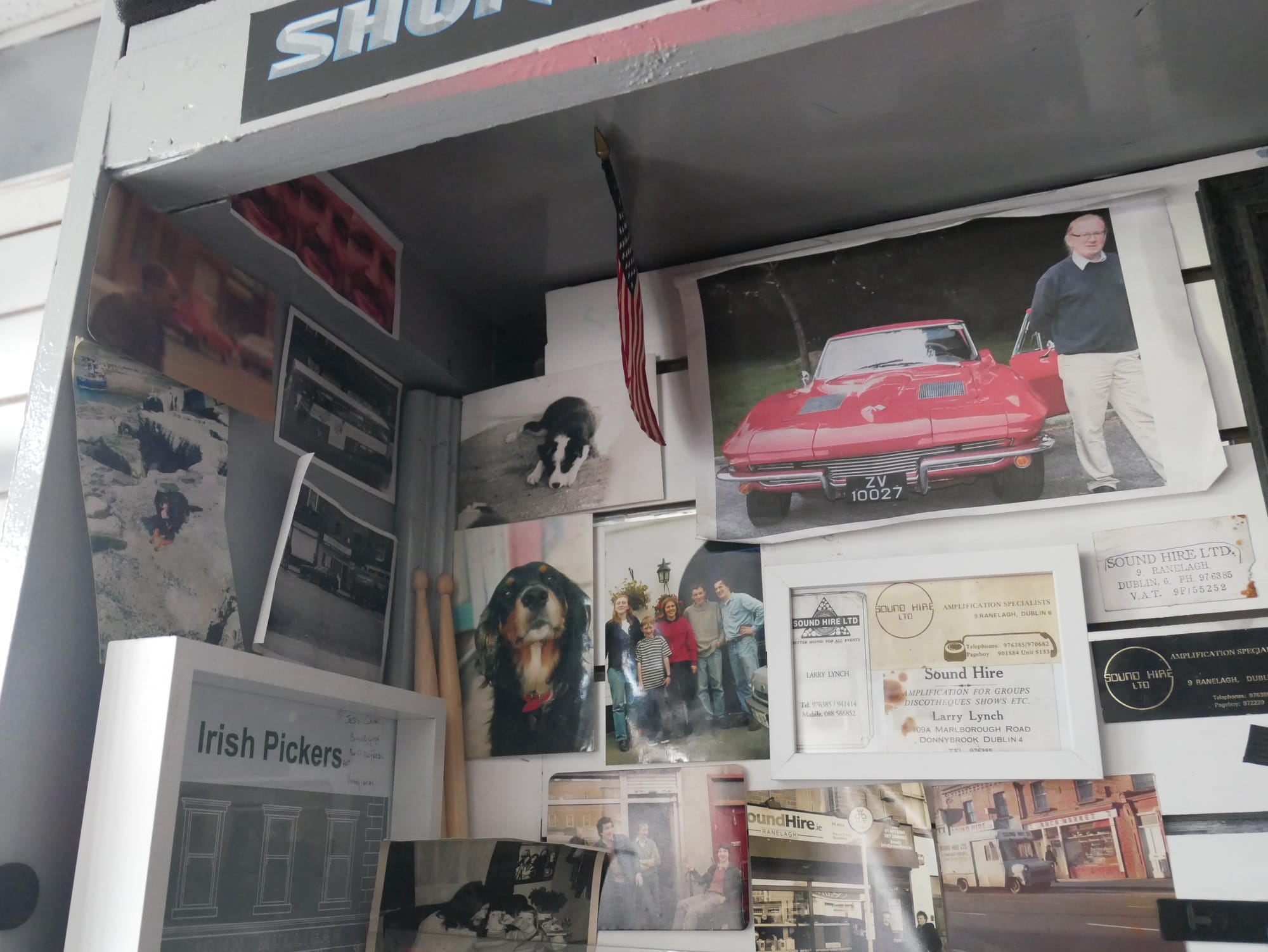
He reaches behind him and untucks a photo. It was lodged in the corner of an alcove, alongside faded photos of dogs, Ranelagh shops, and old receipts and business cards.
He hands it over.
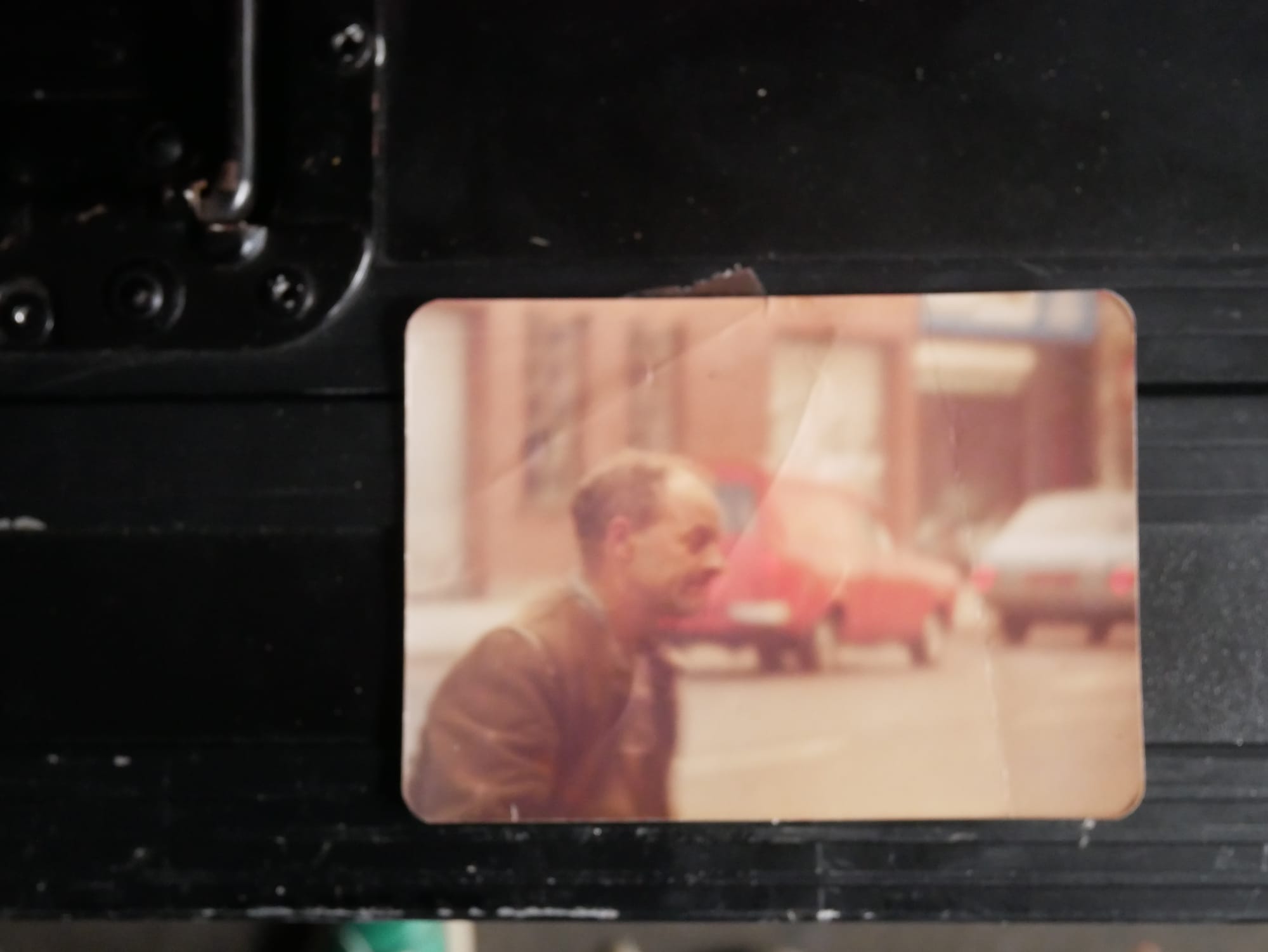
There are old-style cars and a red-brick building in the background. A man, side-profile, is walking across the frame.
His expression is hard to read.
A photo of Thomas Tutty, at Sound Hire in Ranelagh.
“It was only when I came down here that I heard the name Pom Pom,” said Murray, standing to the side on the counter of Sound Hire on the main drag of Ranelagh not far from the Luas.
There are amps and soundboards around the shop, and spools of wires hooked up on the walls.
Murray grew up in upper Rathmines, he said. He was Tutty up there.
He too remembers the drop-ins and requests for tea, pints of it drunk from glass milk bottles. “It was tea, tea was all he would drink,” said Murray.
He remembers him sleeping under the bridge at Cowper, protected from the wind and rain by a horseshoe roof of corrugated iron.
He remembers the boom box. “It would be ear-shattering,” he said, of the music. “You’d hear him coming. God love his ears.”
But he never knew of any children, he said.
They should know that he was respected, he said, that he was never threatening or aggressive. “Anyone who talks about him, it’s fond memories of the guy.”
He remembers Sheila with him, he said. For a time, in any case. She was thinner and wrapped in a blanket.
He hasn’t seen any photos of her though. Maybe there’s one, somewhere. “It’s possible, it is possible,” he said.
Doesn’t he look like me? says Waters, of the photo of his father the next day. The shape of his head, the hair.
He sent it around to friends already. He’s the spit of him, they’ve said.
He plans to print his father’s photo at Boots, stick it up on that blank spot on the wall, he said. “It is better than winning the lotto.”
Maybe, still out there, is his birth mother’s face too.
If you have a photo of Sheila Tutty (née Duffy), please do get in touch at lois@dublininquirer.com.
But a spokesperson for the charity said the position articulated by its deputy chief operations officer at a council meeting recently is not its current policy.
A spokesperson for the board said it redacted accounts that weren’t “evidence-based” and had not tried to “hide or trivialise the scale of any crisis”.