

Eight years ago, government made it easier to turn old shops and offices into homes. How's it panning out?
More than 10 percent of the notified homes turned into, it seems, holiday lets.
More than 10 percent of the notified homes turned into, it seems, holiday lets.

The outside of the old shop on the corner of Ushers Island, fronting onto the busy quays, used to be kind of drab. It's now painted sunflower yellow with wall lights fixed either side of the front door.
In November 2023, the owner notified Dublin City Council that they would be converting the space from commercial to residential, and turning it into a two-bedroom home of 53sqm.
These days, visitors can book through the website GuestReady to stay in the apartment, as long as they book for two weeks or longer. Fewer, and it would be classed as a short-term let.
It used to be short stay and now it's for longer stays, said David Berber, who owns the property through the company DB Boba Property Limited, on the phone last Tuesday. "There's a minimum nights stay in line with all the planning regulations."
The property is one of 179 old commercial and retail premises in Dublin city for which owners, between February 2018 and the end of 2025, notified the council that they planned to make into homes.
Provided they tick some boxes – that the spaces have been vacant for two years, aren't protected structures, among other checks – owners of such properties can benefit from a fast-track exemption, allowing them to convert outside of the usual planning process.
It's a vital route to provide much-needed housing, said Minister for Housing James Browne, a Fianna Fáil TD, in August last year.
“I feel very strongly about buildings lying often vacant in the middle of a housing crisis, and to be honest it is not acceptable if a conversion is possible," said Browne. "It is imperative that we convert suitable properties into homes and give people the opportunity to do that."
Dublin City Council has had the most such notifications of all local authorities, and those 179 addresses, converted, would create 453 homes. But a department spokesperson said earlier this week that it doesn't verify to what degree those notification figures led to new homes.
Cycling around the city in recent weeks, knocking on doors, speaking to property owners and neighbours, alongside online searches and trawls of planning enforcement records, shows that a fair share of them have not been turned into long-term homes – at least not yet.
More than 10 percent of the notified homes have either been dinged for being short-term lets, have open planning enforcements cases as suspected short-term lets, later applied for and were granted change of use to become short-term lets, or are currently listed online as short-term – or medium-term lets, like the one on Usher's Island.
Meanwhile, at least another 20 percent of them are still vacant.
Sinn Féin Housing Spokesperson Eoin Ó Broin says the number of suspected short-term lets among the properties shows the urgency with which government needs to act, to bring in the new regime, and register, to regulate them.
"This was to create long-term residential stock, to rent or own," says Ó Broin, of the planning exemptions route.
For Ó Broin, making it easier to convert vacant commercial spaces into homes with a planning exemption – bearing in mind they still have to meet building regulations, and minimum standards – was a good move, he said.
But the gap between notifications and projects coming through, and the continued vacancy and dereliction in urban cores, shows that simply putting in new planning regulations and waiting for individual property owners to act isn't going to convert all those properties, he said.
"It's going to take much more active intervention from the state," he said.
A pilot being rolled out in Dublin city centre under an "urban renewal framework", where the council is focusing on chosen streets, is a promising approach, he said.
That project, part of the big package of work to manage the city centre more actively, is focused on Middle Abbey Street and North Frederick Street to start, and involves the council working with property owners to help them navigate all the rules and regulations, and to offer grants, and use enforcement powers, to shape and encourage changes and works to address underuse.
"We need people to be able to live in social, affordable and private homes in our urban cores," said Ó Broin.
A spokesperson for the Department of Housing didn't address queries sent on 25 September, asking whether they think more needs to be done to get more out of that planning exemptions route, and what challenges they see blocking the conversion of long-term vacant commercial spaces.
On the edge of Temple Bar, the upper storeys of 3 Eustace Street had already been vacant for years before its current owners bought it, and notified the council in April 2021 that they planned to convert these old offices into five apartments.
At some point after that, the apartments became short-term lets. Last November, Helixhill Limited put in an application for "planning retention" – so, to keep that use.
Temple Bar is noisy, the application says, and the heat pumps and air conditioning for the apartments are noisy too. The apartments also don't have as much open space, bike parking, or waste storage, as long-term residents need, they said.
So, they're better for short stays, they said.
Neither council planners, nor An Coimisiún Pleanála – on appeal earlier this summer – agreed, though.

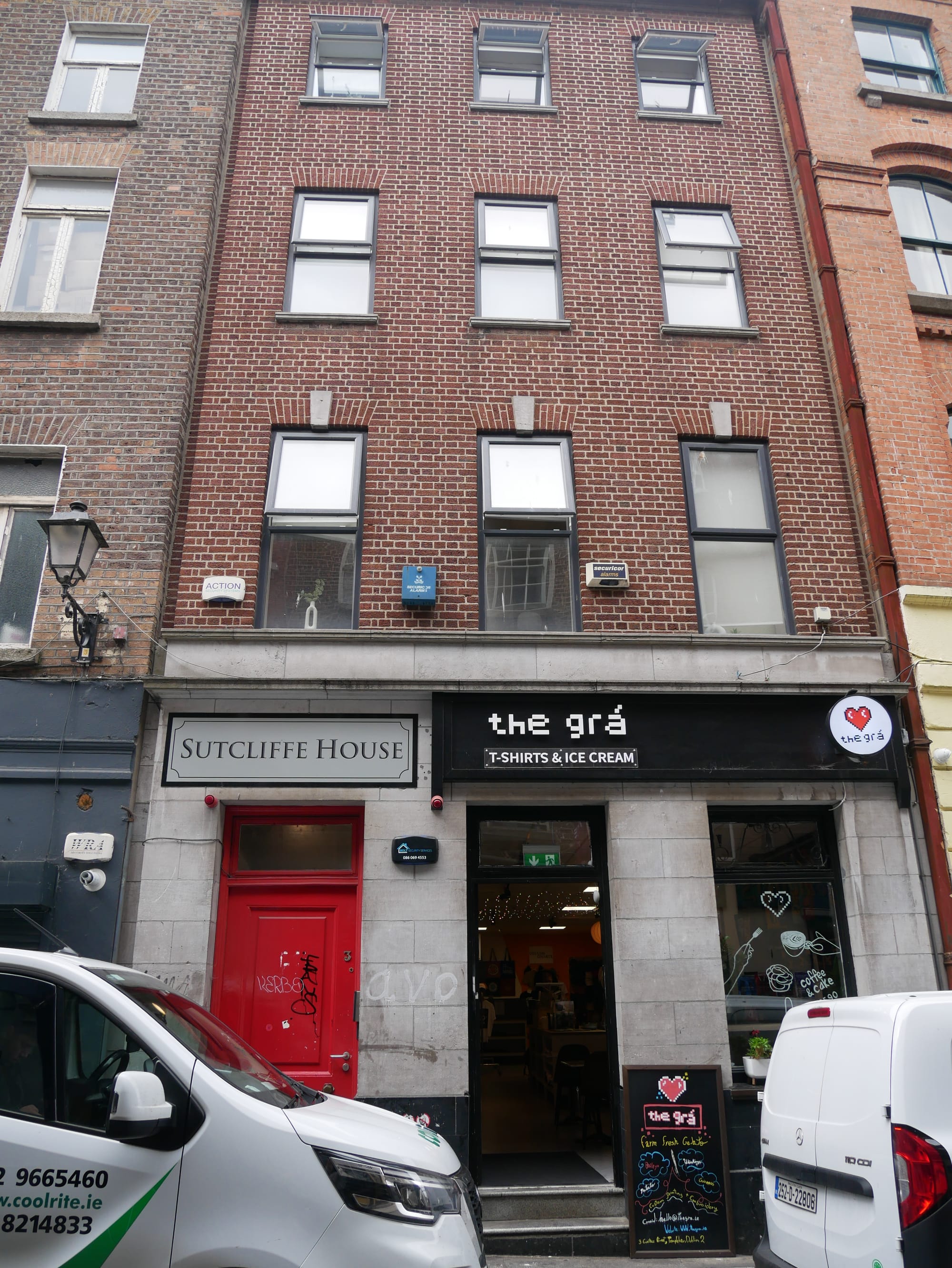
3 Eustace Street. Photos by Lois Kapila.
Keeping them as holiday lets would mean a loss of longer-term homes, and there's flexibility around standards when refurbishing these kinds of buildings, said council planners.
Helixhill Limited hasn't responded to queries, sent via the email listed on company records, so it's unclear what its current plans are for the apartments. As of 29 September, there were no tenancies registered on the Residential Tenancies Board database for the apartments.
Four other commercial properties, for which notifications of the exempt conversion to residential were received by the council – and which have open planning enforcement cases for short-term letting dating back to February and June 2023 – are owned by Green Label Property Investments Limited.
Marc Godart was a director of that company at that time, according to company records. However, in December 2025, he resigned.
That's about the same time that, after a series of articles in the Irish Times about his activities as a landlord, he was disqualified by the Corporate Enforcement Authority from acting as a company director for five years "in the public interest".
The current status of those four buildings and units owned by Green Label, at Reuben House, in the Barley House on Cork Street, and the Foundry on Beaver Street, is unclear. The company hasn't responded to queries sent by email about them.
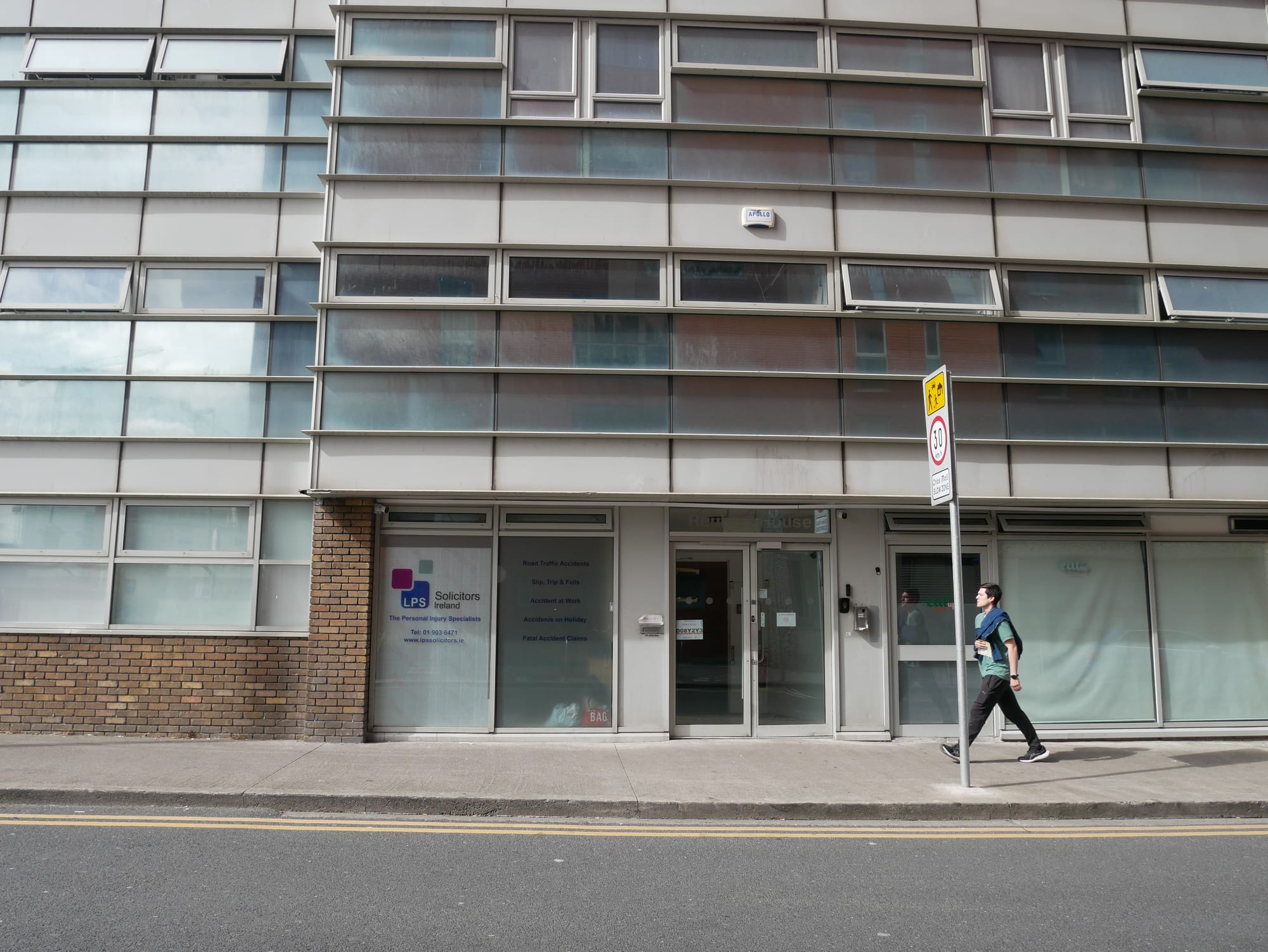
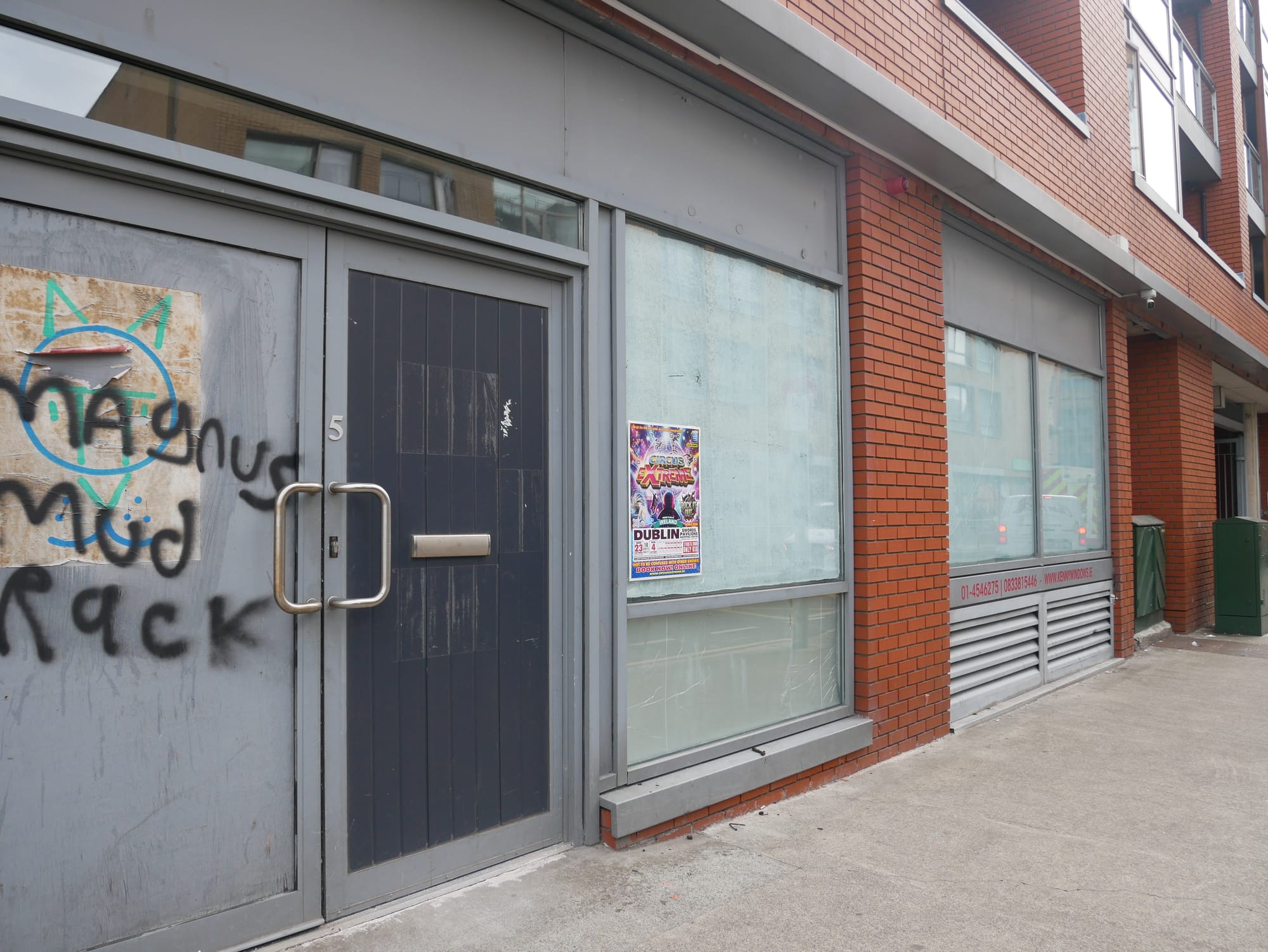
Reuben House (L); Unit 5, Block B, the Barley House (R). Photos by Lois Kapila
A spokesperson for Dublin City Council said that it couldn't comment on individual properties and enforcement cases relating to short-term lets.
But generally speaking, it's possible that properties subject to this planning exemption may be more likely to turn into short-term lets than properties across the city overall because of where they are, they said.
They're generally closer to the city centre, they said, "so that in itself may make them more likely than other properties further out from the City being used for Short Term Letting".
Ó Broin, the Sinn Féin TD, says that just because short-term lets have featured among the properties on the notifications list, it doesn't follow that there's anything wrong with the planning exemption route allowing easier commercial-to-residential conversions.
Rather, it shows the importance of enforcement and controls alongside, he said.
Councils have struggled to reach the high bar of evidence that they need to hit to be able to prove short-term letting outside of the laws in the courts, he said.
A planned new register should make that easier.
With the new rules, property owners can't trade without being on the register, it would be a criminal offence, he said. And, they can't get on the register without proving they have the right planning permission, he said.
"They can be fined and prosecuted, that should clean up the industry pretty quickly," he said.
What TDs do still need to see though, he said, is the detail of the planning-enforcement changes that are to be brought in, alongside the register.
Cian Farrell, a Social Democrats councillor and head of the Dublin City Council's planning committee, says new legislation that brings in the register should also help the council to get an accurate picture of what is in the short-term rental market.
"It would be great to get that platform information," he said. Under the changes, Fáilte Ireland will be able to share the data it gets from platforms such as Airbnb with councils, the Department of Housing has said.
Research published by the Economic and Social Research Institute (ESRI) last year found that there was one entire-home Airbnb listing for every 10 private-rentals in Dublin's south-east inner-city, and one for every 17 in Dublin's north inner-city.
At a full council meeting on Monday night, independent Councillor Vincent Jackson put forward a motion calling for strict use-it-or-lose-it planning permissions.
Because he wanted "dereliction in the heart of our city [to] be seen for what it is a failure to plan for the future uses of building no longer suitable for retail/commercial uses", his motion said.
There are parts of the city where you can see a domino effect of closing shops, said Jackson, at the meeting. "You can just see that constant drip, closure, closure, closure. There has to be a vision for better use of these buildings going forward."
Other councillors lined up to talk about the streets in their own constituencies where they were particularly frustrated by long-vacant commercial, and other, properties – from Thomas Street, to Talbot Street, to Bolton Street, and beyond.
If all the notifications to convert vacant shops and offices that were filed with Dublin City Council by property owners between February 2018 and the end of 2025 had been acted on, it would have created 453 homes, shows a tally of figures.
But those 179 addresses are just a fraction of the vacant commercial and shop spaces in the city. There's a 13.5 percent commercial vacancy rate in Dublin at the moment, show Geodirectory figures, although not all are long-term vacant.
And, as with any planning permissions, not all of these notifications have been followed up with development. At least a fifth of the homes don't seem to have materialised yet, a review of the addresses suggests.
There's no process for owners to have to notify the council, if they haven't moved on the exemption notification within a certain time, said a council spokesperson.
In some cases, owners have found new tenants and just stuck with shops or offices. In other cases, buildings still lie partly, or fully, vacant.
After the exemption was brought in in February 2018, two of the earliest notifications later that year were for the conversion of units 2 and 5 at Parnell Court, on Granby Row, a grand white building, where owner Collen Investments said it planned to put in four apartments.
Those works were stopped though after council planning enforcement proceedings, says a recent planning application, which seeks to restart development on the site.
The owner hadn't realised the building was a protected structure, for which this conversion route is not allowed, it says.
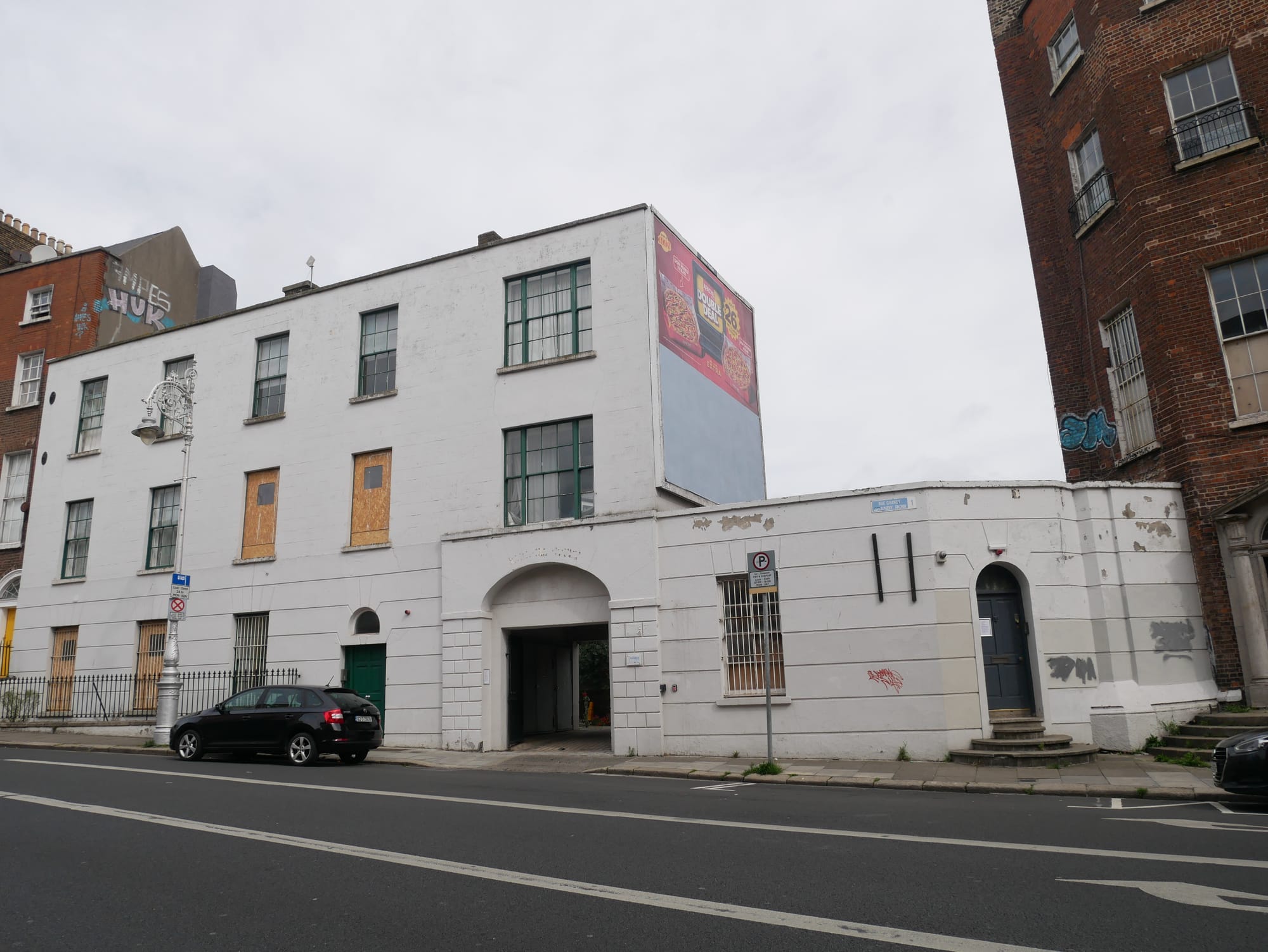
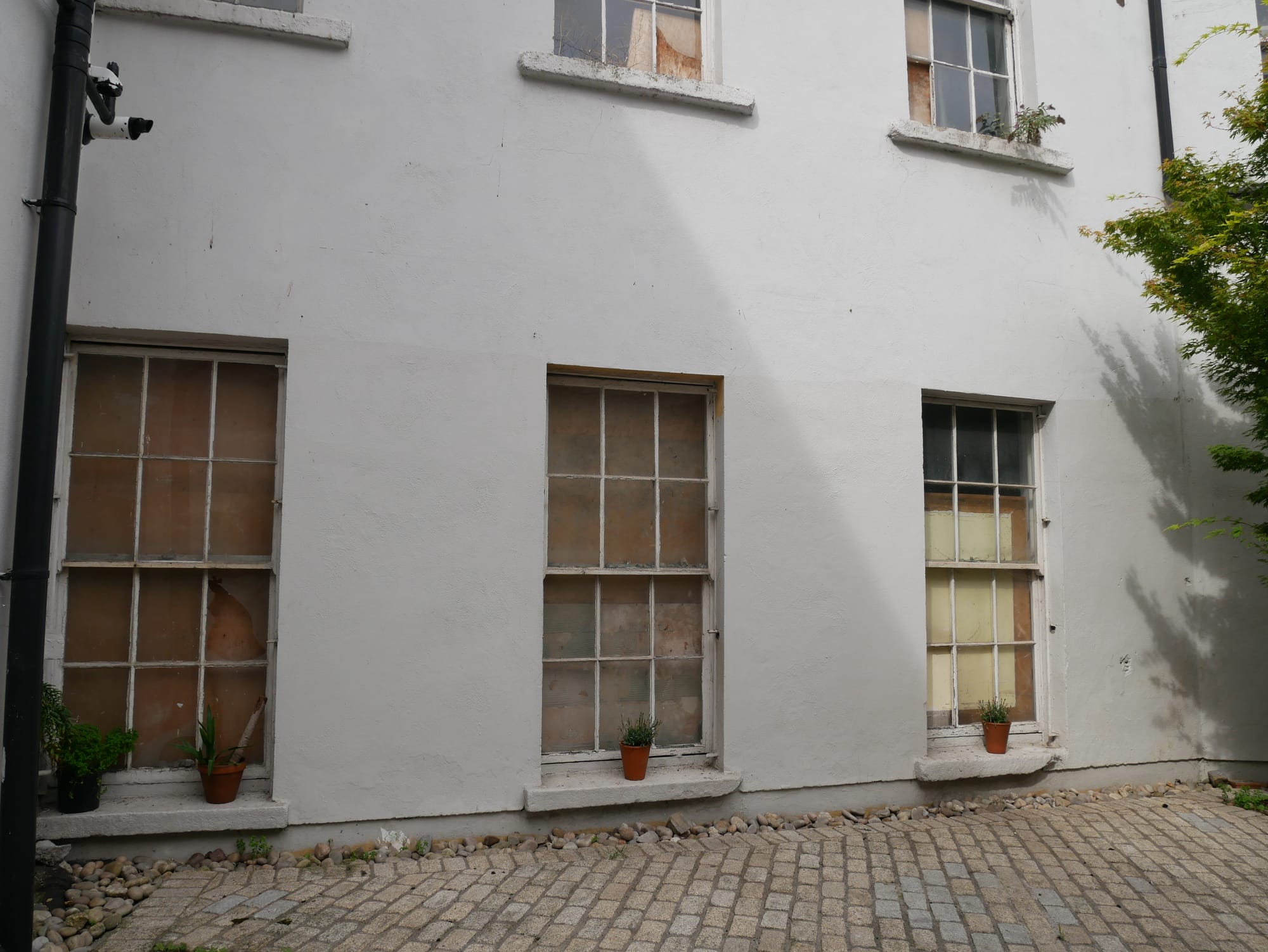
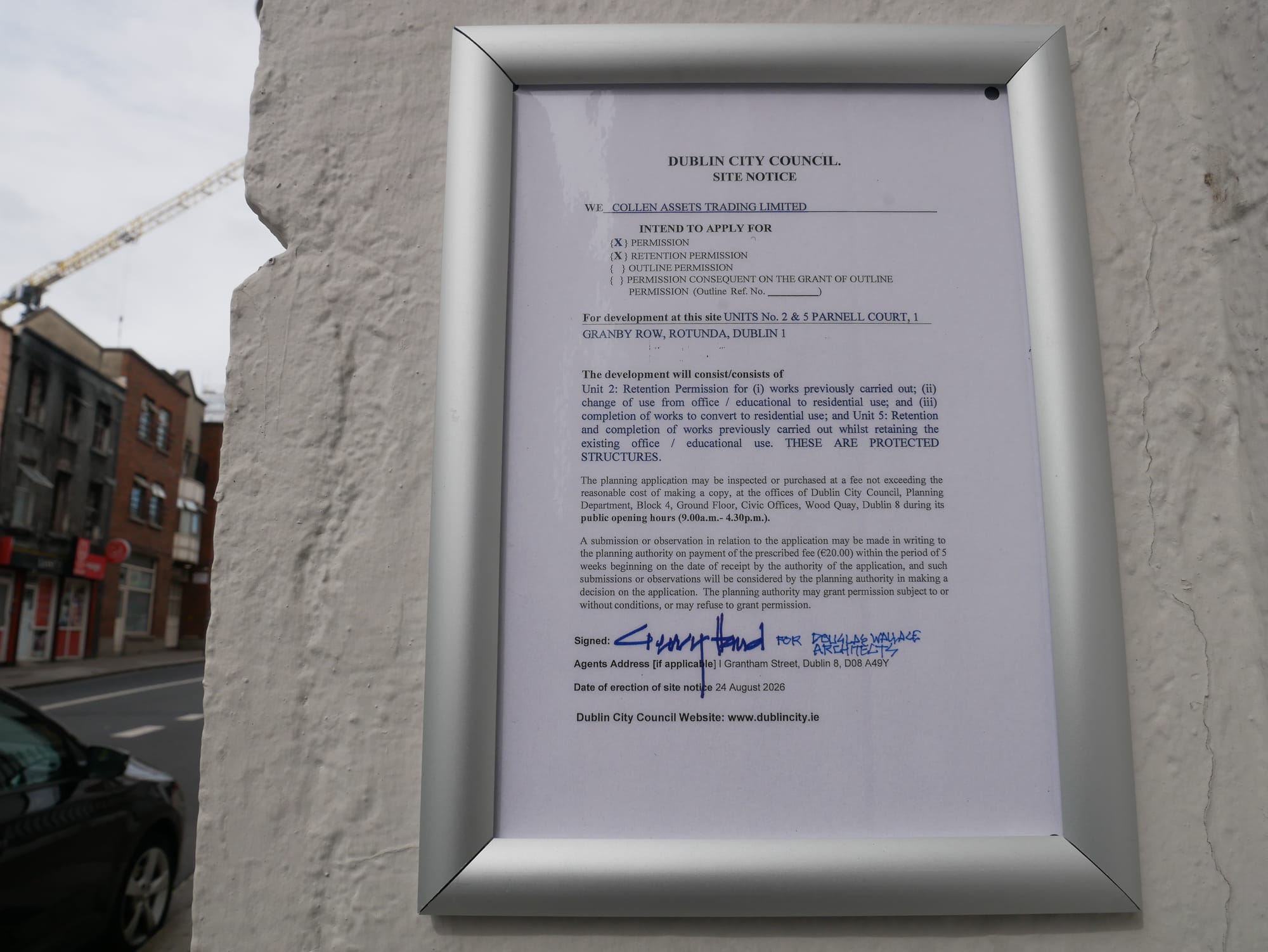
Parnell Court on Granby Row. Photos by Lois Kapila
Meanwhile, south of the river and just off Merrion Street Lower, there's a vacant grey office building that stretches across 8 to 9 Grant's Row.
In August 2019, the owners told Dublin City Council that they planned to make six homes in the building, instead of the offices. But that never happened.
"Due to the shallow floor plate and single aspect orientation, the current building does not support a layout adequate for high quality residential use," said the architecture report in a recent planning application from its owners Ravala Limited.
Ravala Limited had applied to turn it instead into a tourist hostel – but the council recently refused permission for that, saying it would lead to an overconcentration of hotels in the area, and that the plans didn't show enough communal facilities.
Architect and housing commentator Mel Reynolds said that there is flexibility with the design standards when turning old commercial buildings into apartments – and there are examples of redesigned commercial buildings overcoming similar design challenges to those on Grant's Row.
He pointed by to the Printworks in Temple Bar, the flagship scheme designed by DTA Architects, with its internal courtyard.
He suspects though that the real sticking point is probably cost, he said. "The feasibility of small-scale in-fill residential now is very, very challenging."
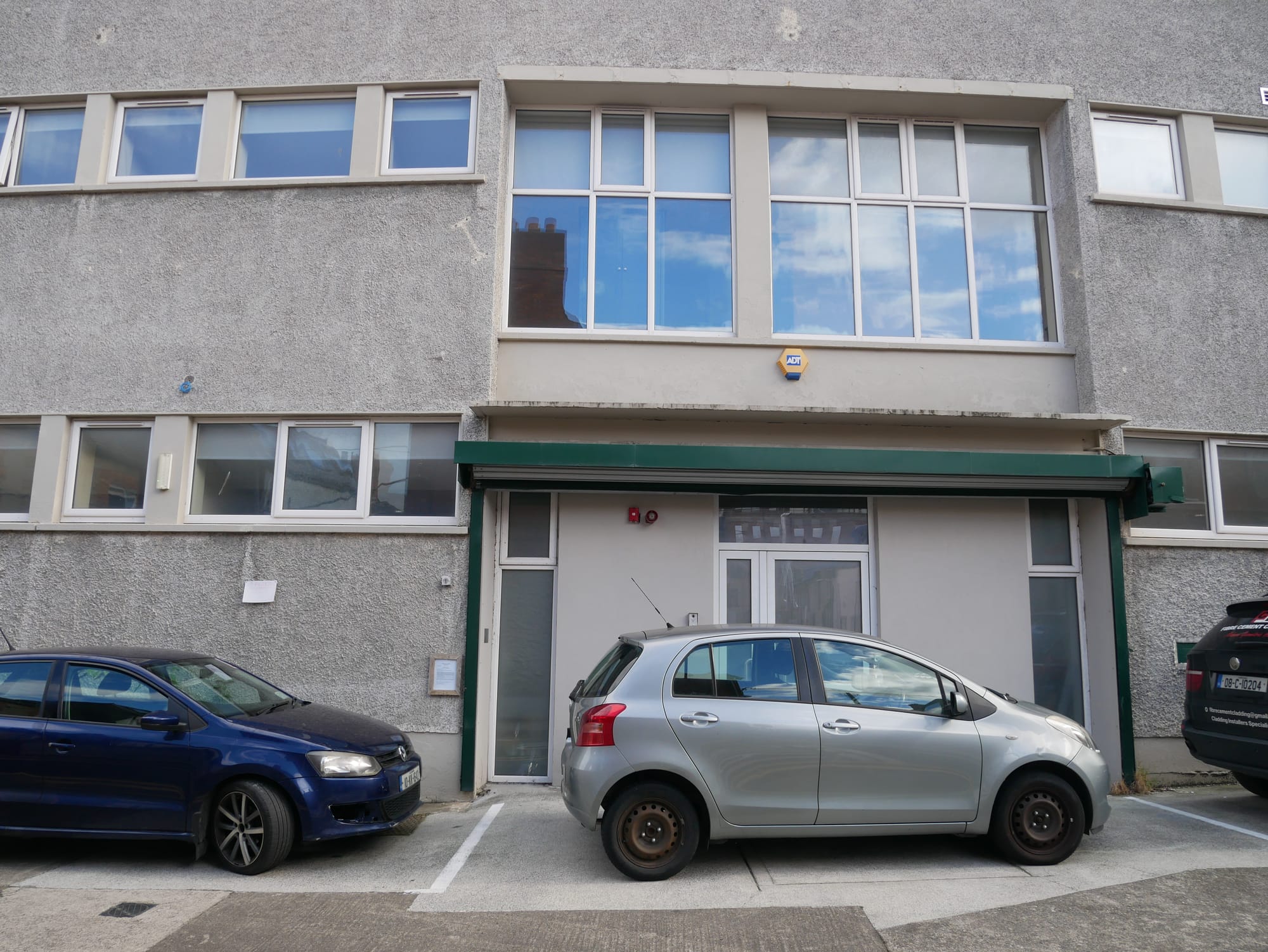
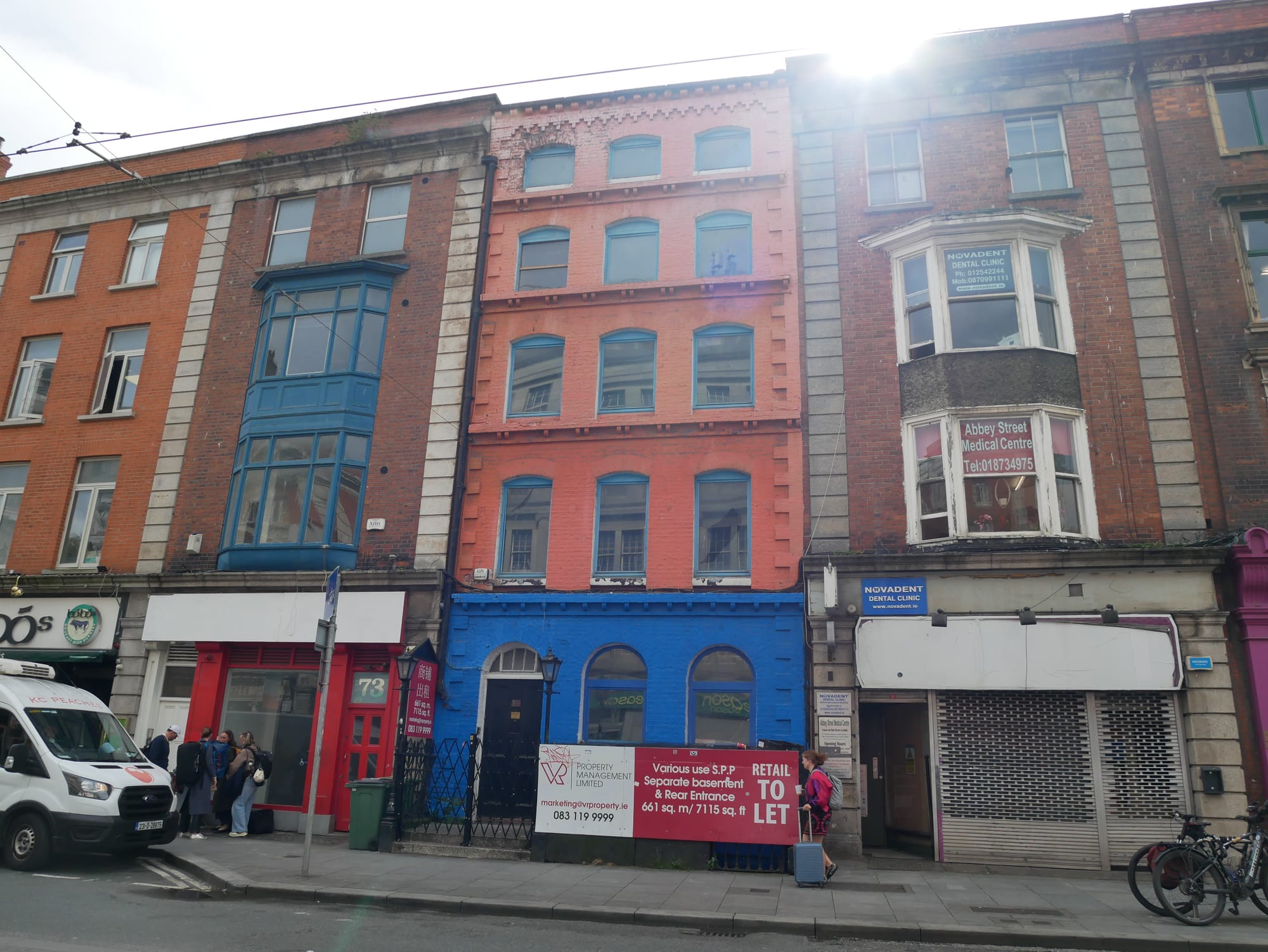
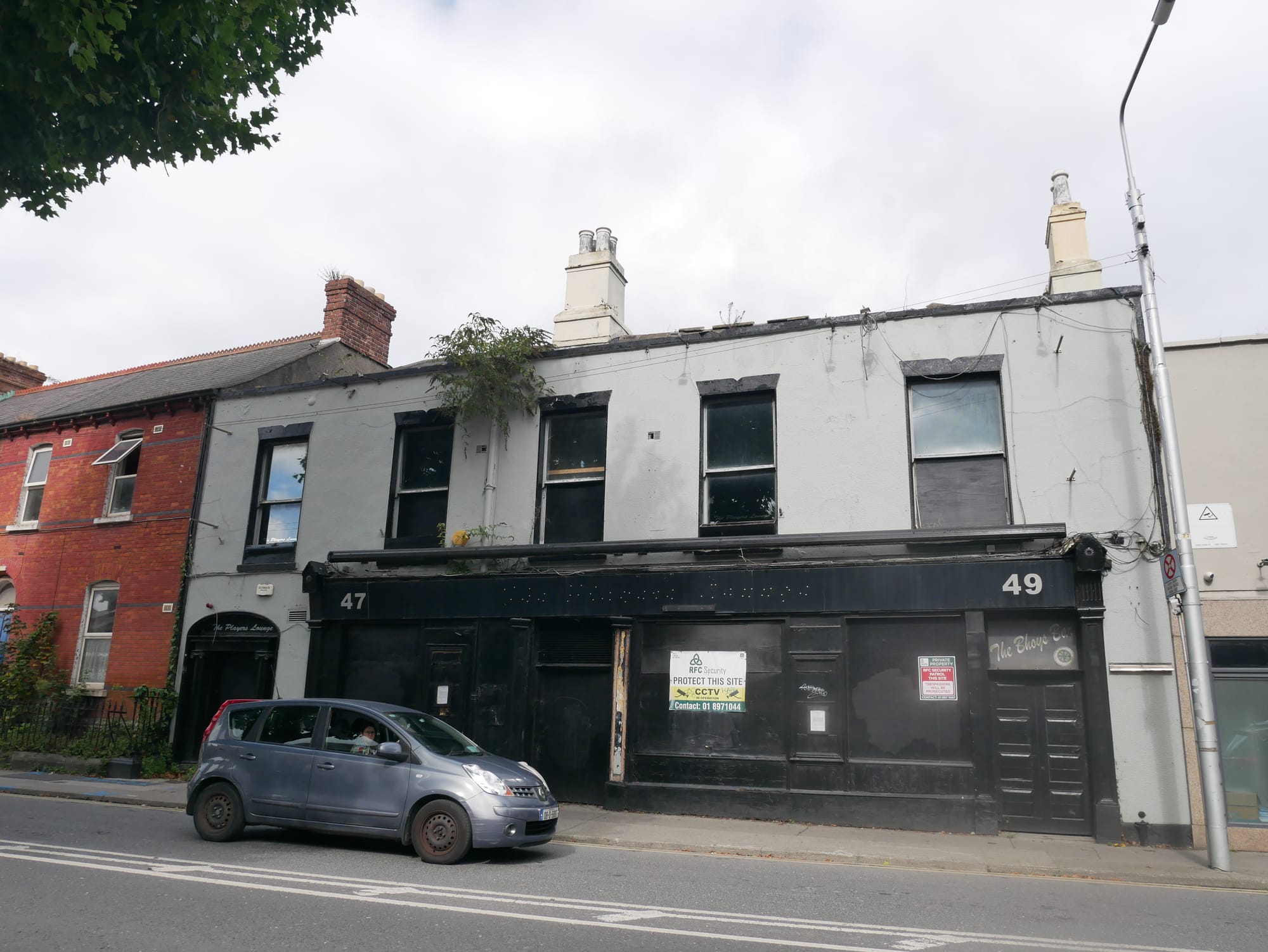
8 to 9 Grant's Row; 72 Middle Abbey Street; 47/49 Fairview Strand.
In some other cases – not counted among that 20 percent that remain vacant – owners say the projects are underway, they're just taking a while.
Like, at Harts Corner in Glasnevin, in the triangular island that sits between Prospect Road and Finglas Road. The address at 8/9 Prospect Road appeared on the council's notifications list in June 2024.
Raymond Barrett, of On The Level, a plumbing and heating company, said they've been working to convert their old offices into an apartment.
But "it was painfully slow as it's an old building", he said, by email. "Our ultimate plan is to let the unit as soon as possible".
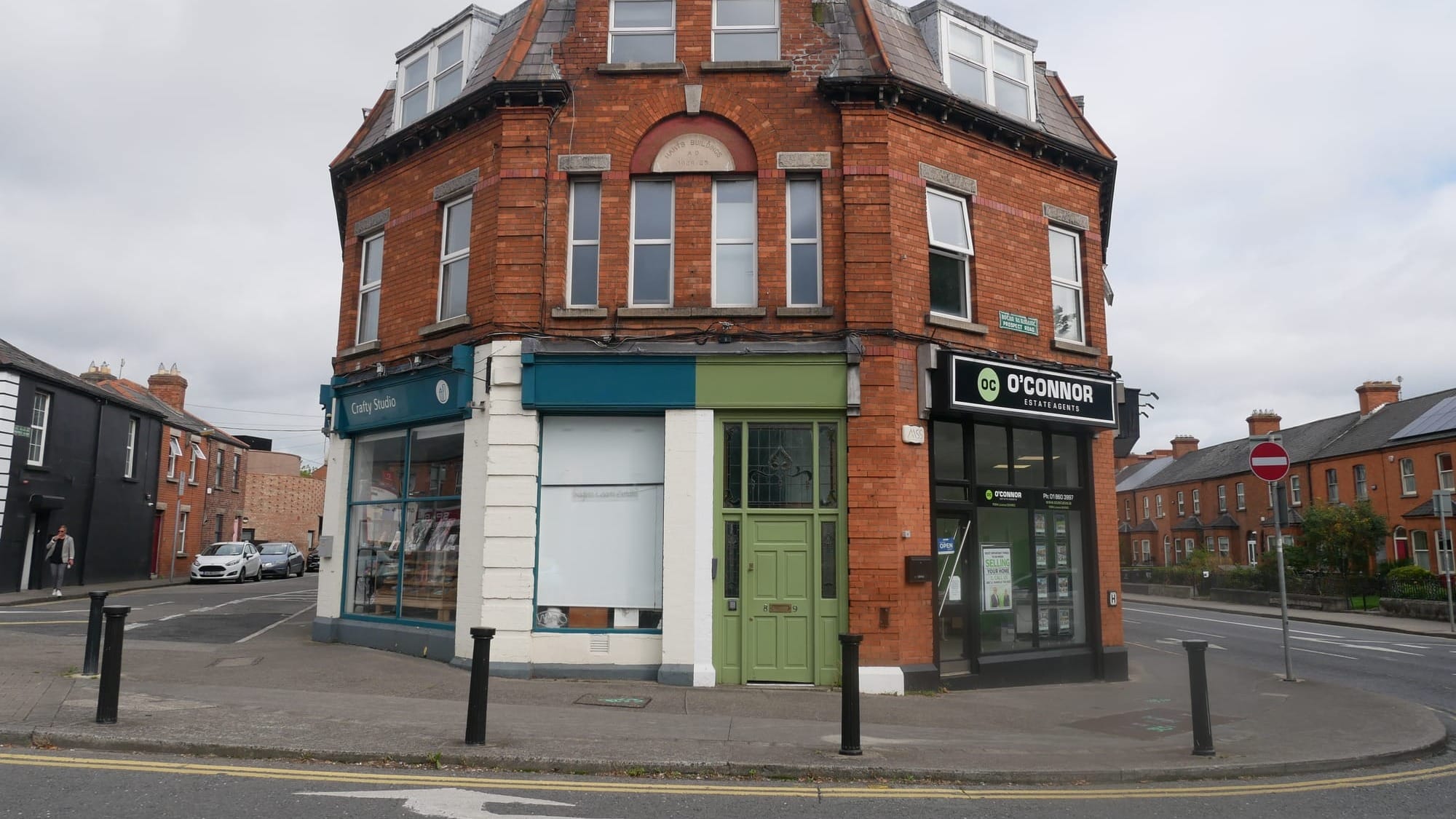
Still, having the planning exemption route does mean a project can move on faster, said Fiona Bready, a director of Stoneybatter Residential Limited, which has turned the ground-floor retail unit that it owns at the Tramyard Exchange in the Liberties into apartments.
"It was a very useful exemption to have in place," Bready said.
They had developed and built the Tramyard Exchange and adjoining Flag Alley complex in the first place, she said, and sold off the apartments above but kept ownership of some of the retail. "As quite a lot of property developers do."
Deciding what to do with it was tricky though because it was a big unit and supermarket chains didn't show any interest, she said.
They made other attempts to fill it, like a language school at one point, she said. But "they just never materialised". Uncertainty too with the Ukraine war and rising interest rates didn't help, she said.
When it had been vacant for so long, their architects and planners settled on the idea of converting to residential, she said. "We were glad to add on two more residential."
Bready said that, as a developer with in-house teams, it wasn't hard to redesign the commercial space to meet all the requirements and regulations for homes, she said.
But for individuals who aren't professional developers, projects can be harder to navigate. Converting the upper-floors of 26, 26A and 27 Meath Street has been a head-wrecker, said Norina Fusco, earlier this week.
They had put in a planning exemption notification in January 2023, to make four apartments above the chip shop that they run, and next-door shops.
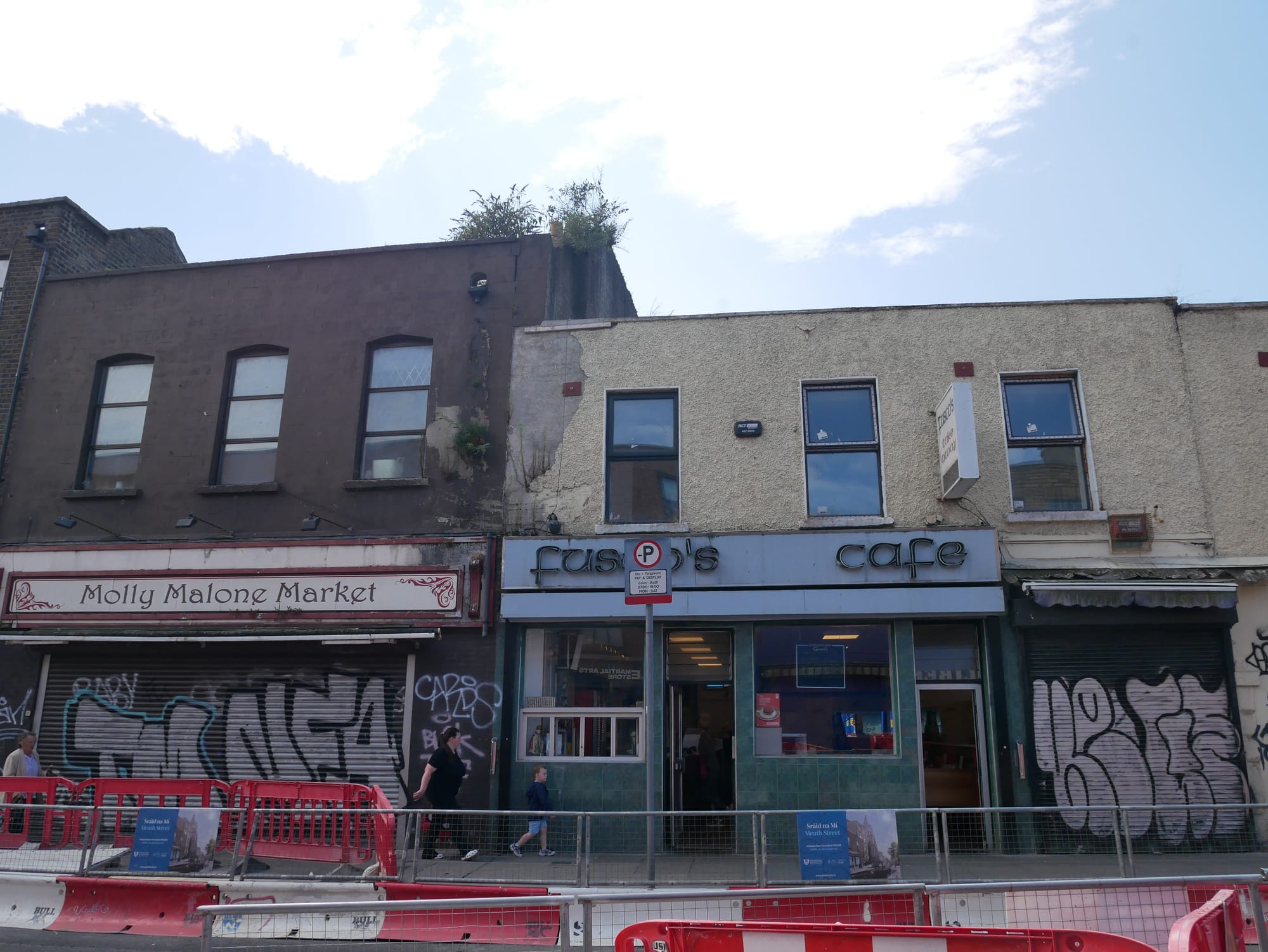
She stops to think about the planning process behind it all. They later put up site notices and the like she said – that was for planning permission for some of the works that needed to happen alongside the change of use, for stairs at the back for access, and opening up some blocked-up side windows.
They wanted to do the project because they were conscious of all the empty space, she said. But it has taken a long time.
The hard bit wasn't the planning, she says, but all the back-and-forth paperwork connected to the council grant to help pay for the works. There has been so much bureaucracy around that, she says.
Since 2022, vacant property refurbishments grants have been available for property owners looking to renovate vacant commercial buildings and turn them into homes, with the scope of the scheme gradually expanding over time.
In April, Browne, the Minister for Housing, announced that he had again upped the amount available through grants like these for private property owners.
In response to the motion from Jackson at Monday's meeting, the council's head of housing Anthony Flynn said that a lot of work and resources have been put in place to streamline planning, but that economic viability issues with refurbishing vacant and derelict properties have never really been tackled.
The Dublin City Taskforce – the new entity tasked with rejeuvenating the city centre – plans to make a submission to the department for even greater grants for works to reuse existing buildings, said Flynn, although he didn't say whether that was for council projects or private.
There's an "unlevel playing field" at the moment with funding between renovations and new builds, he said. "That has to be, in some way I suppose, counterbalanced by way of enhanced grants."
Fusco says that the Meath Street project has so far cost three times as much as they first thought too, with rising material costs and jobs that came up as they progressed.
But they're almost there, says Fusco. "I expect it to be finished before Christmas."
Outside, red and white construction barriers block of bits of Meath Street as works underway to widen footpaths, and plant trees.
The area is changing a lot, says Fusco – and so is the trade at the chipper. They're thinking about updating the menu a little, adding beer maybe, she says. "It's becoming a foodie place."
They expect to rent the flats out once they are finally done and it all seems timely, she says. "It's perfect timing. The street is completely changing."
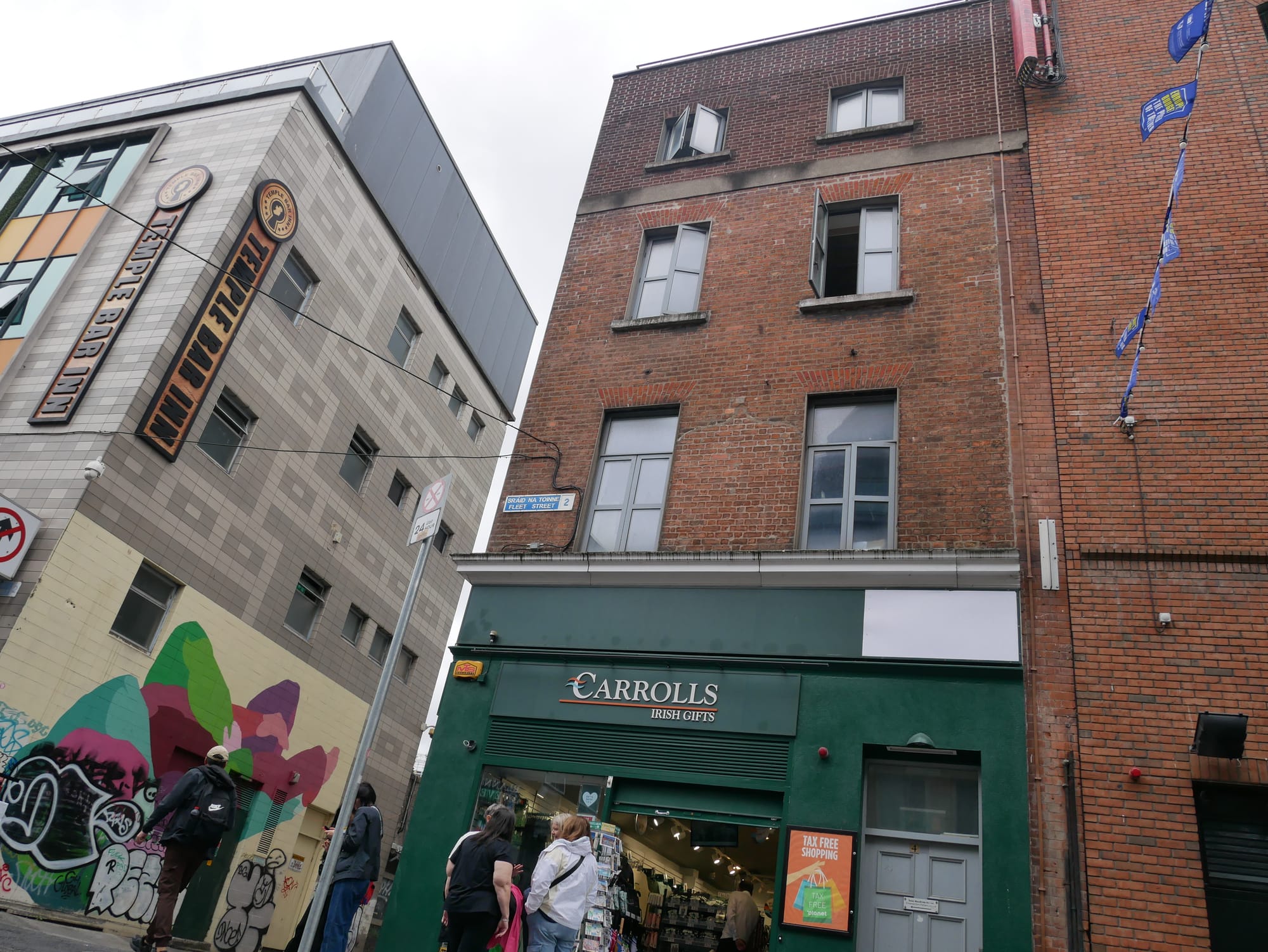
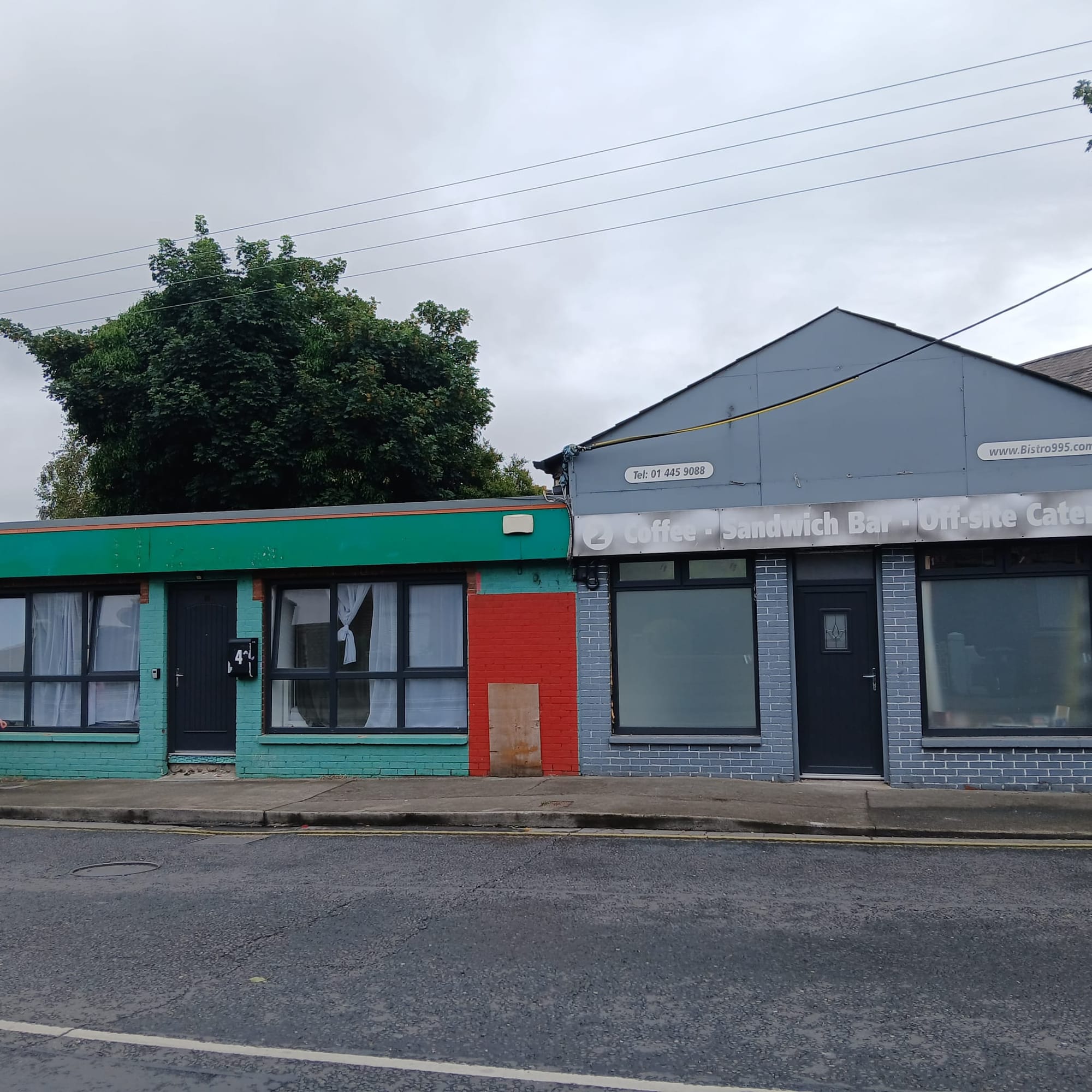
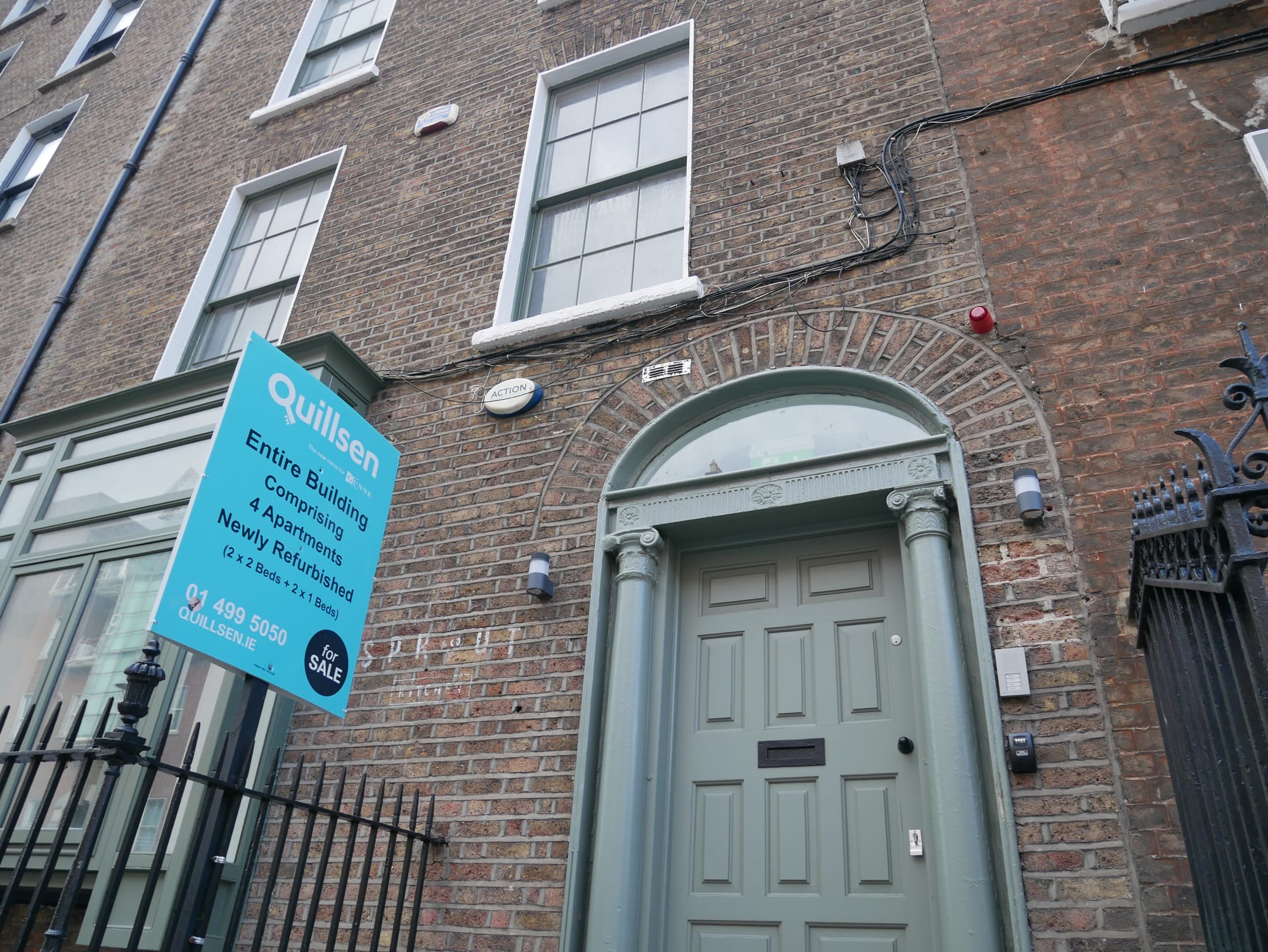
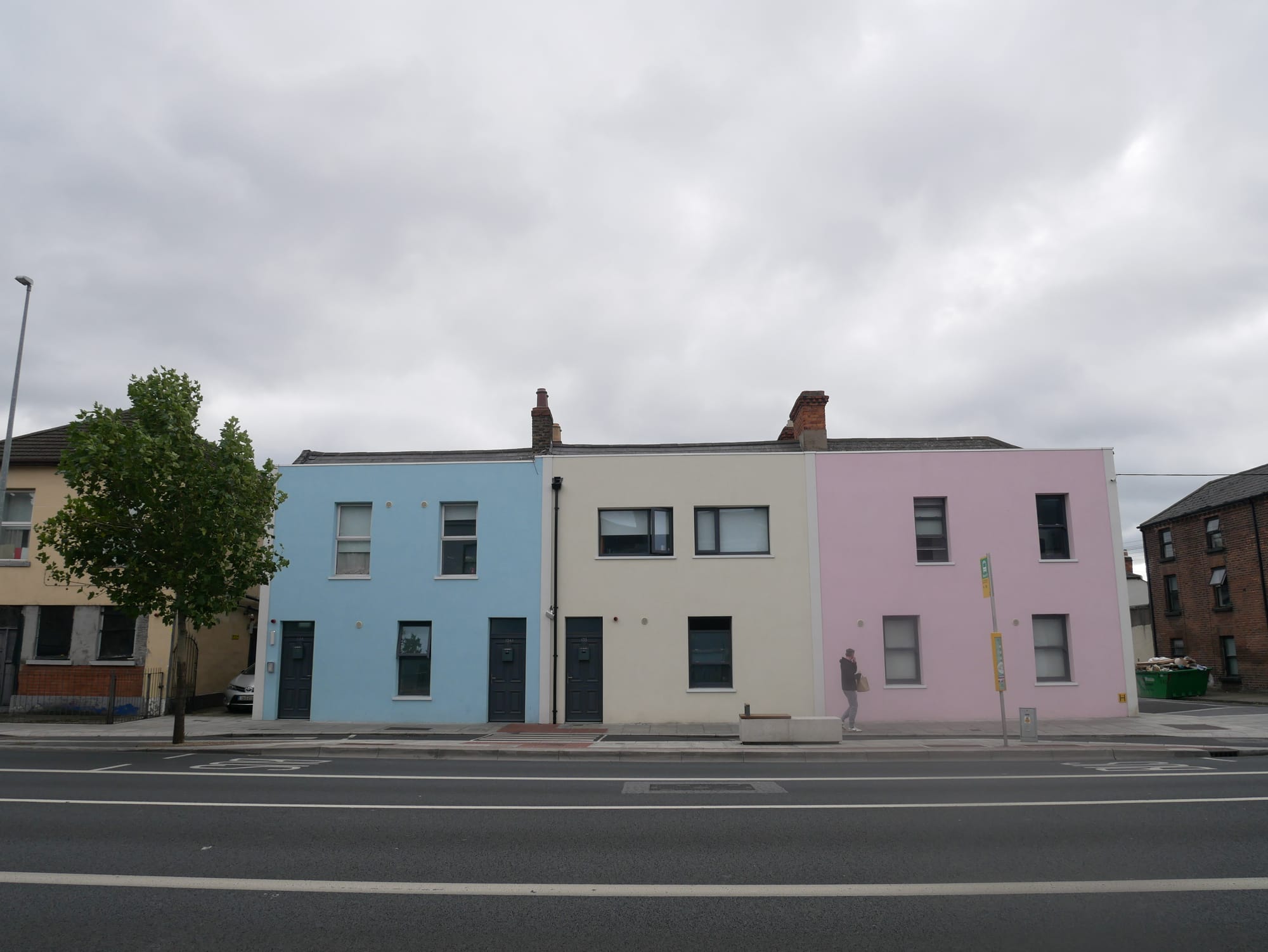
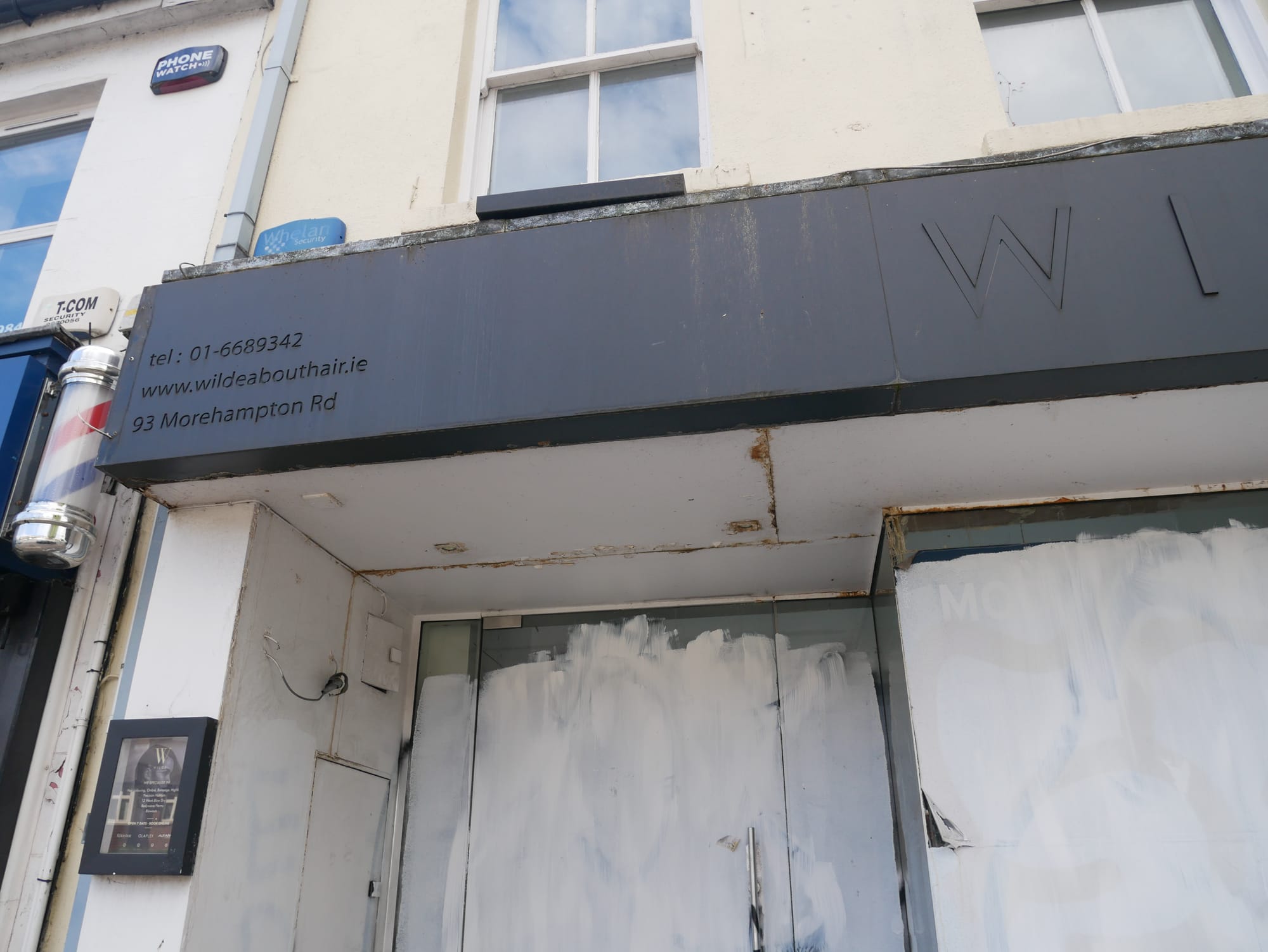
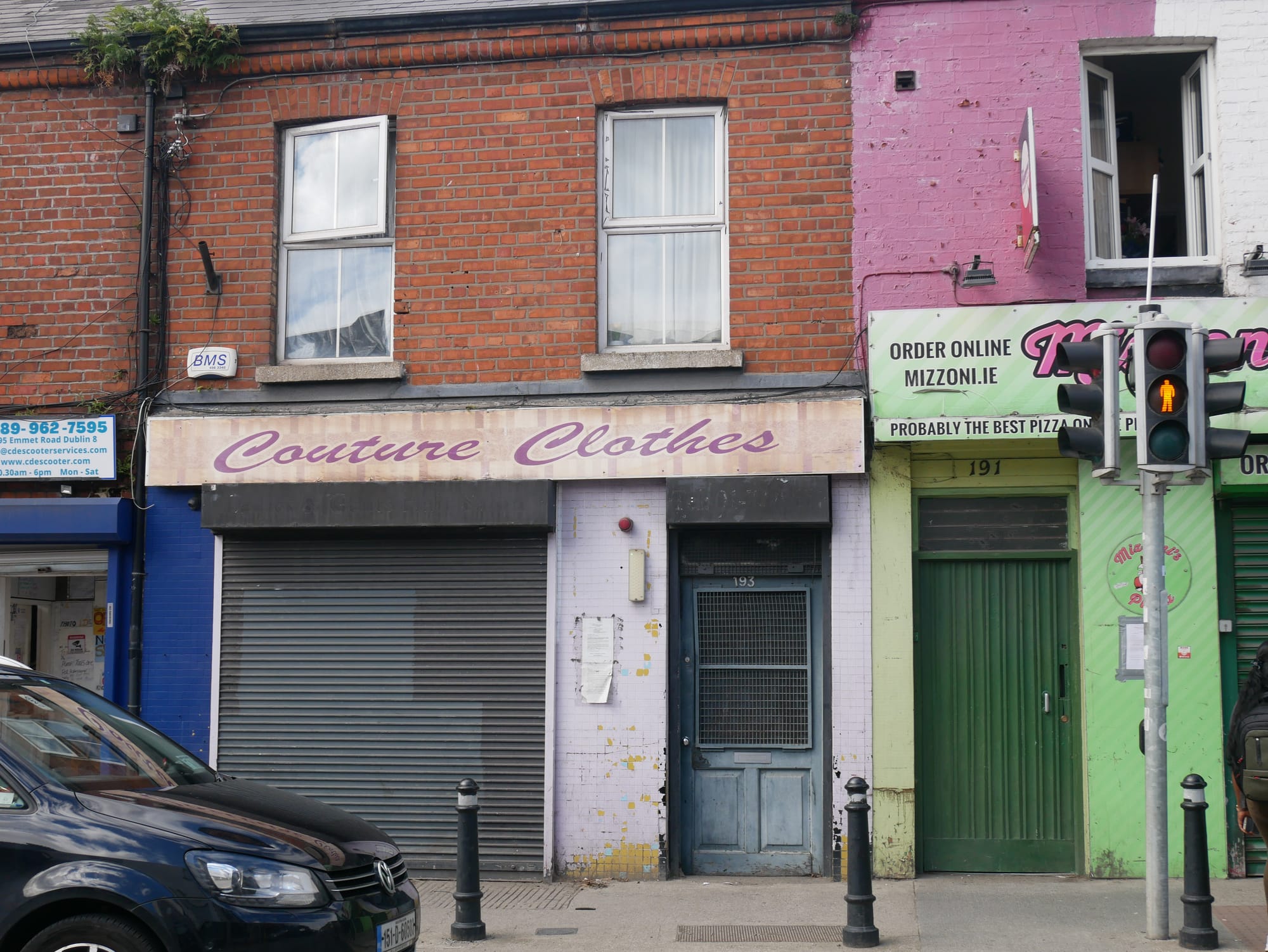
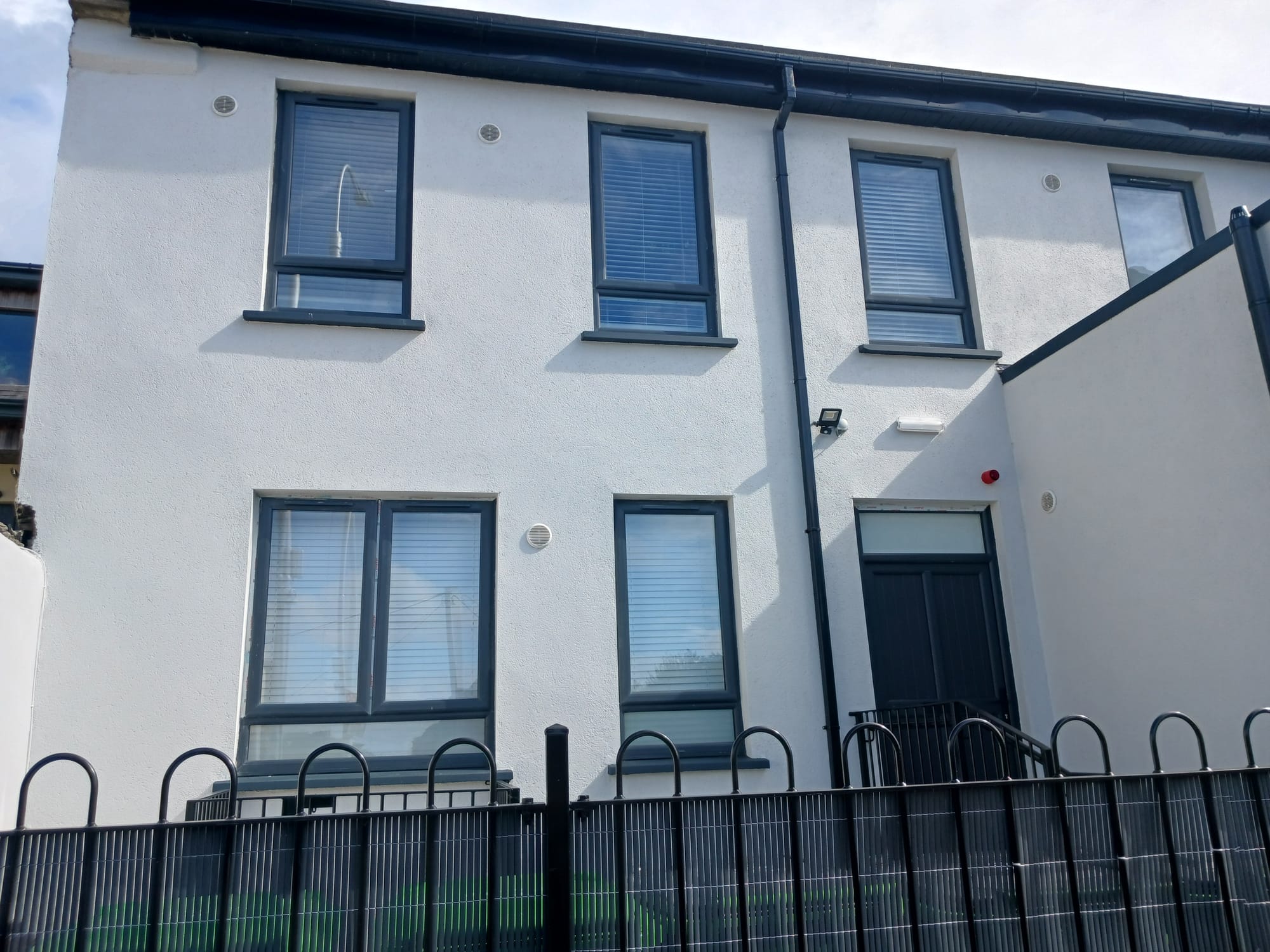
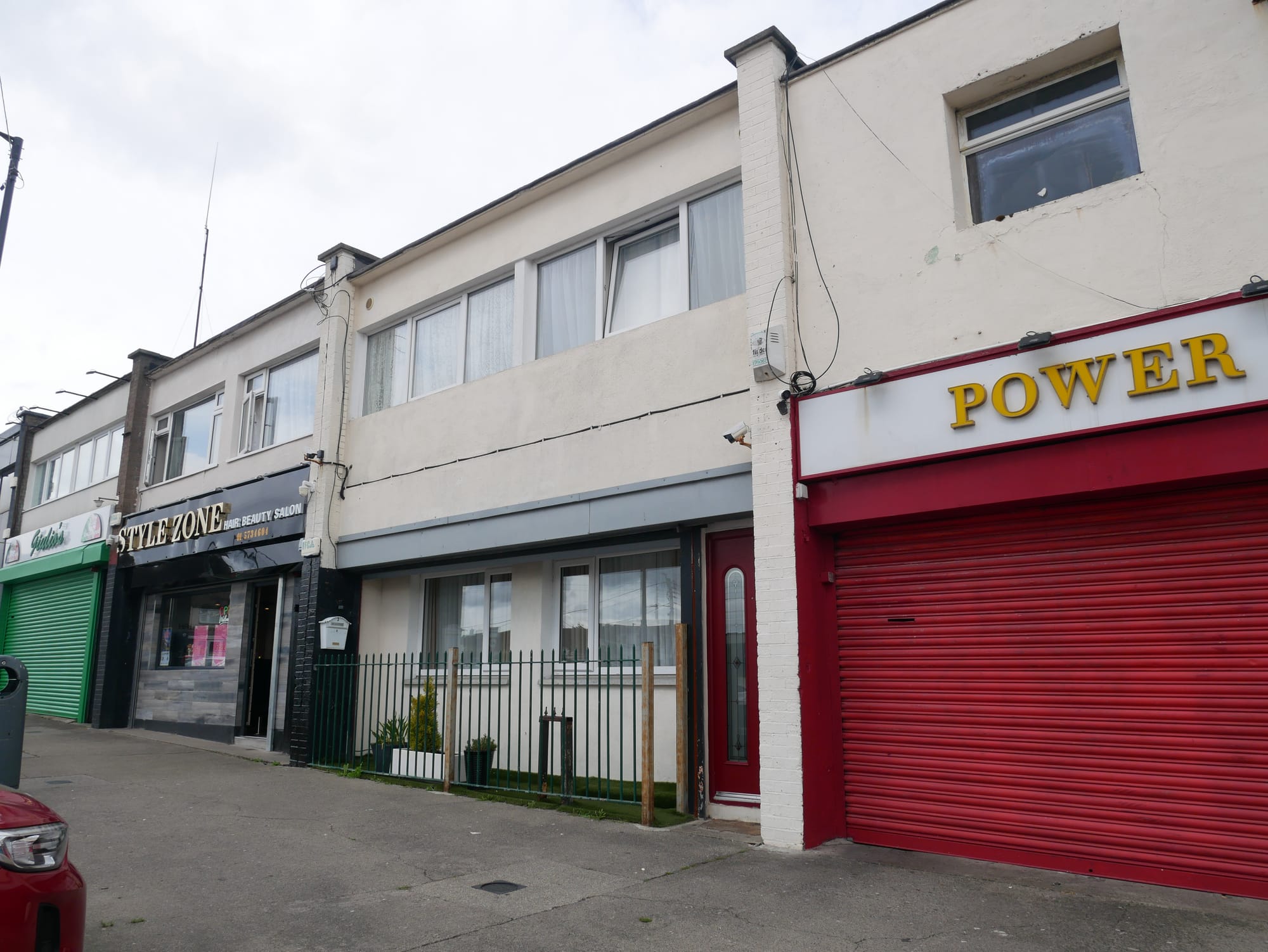
A selection of sites, where property owners have notified the council of planned conversion. Top row: Fleet Street; Herberton Road; Mount Street Lower; Middle row: North Strand Road; Morehampton Road; Emmet Road; Bottom row: Clanbrassil Street Upper; Edenmore Shopping Centre.
The numbers on what has happened to properties for which owners claimed the commercial-to-residential conversion exemption show that if the government just relies on changing planning rules, and waiting for individual owners to do the projects, it's going to be piecemeal and slow, says Ó Broin, the Sinn Féin TD.
"You need to be more ambitious," he said.
It needs more interventions such as the pilot project planned for Middle Abbey Street and North Frederick Street in Dublin city centre, he said, focusing on "a block in partnership with owners".
Farrell, the Social Democrats councillor and head of the planning committee who spearheaded the new approach, said that work on the pilot has been gearing up.
An introductory letter went out last November to property owners, tenants, and businesses on the streets that fall under the project, he said.
The "concierge service" kicked off at the end of June and beginning of July, said Farrell. That's the team at the council that can help property owners with financial wayfinding – navigating grants, for example – and with the planning process and derogations. Those kinds of things.
They're starting off with Middle Abbey Street. Street number two is North Frederick Street. Now, they've added a building on Parnell Street, which the council plans to develop as cost-rental housing, to the project, too.
Farrell has been thinking about the potential role of the "concierge team" in other parts of the city, down the line, he says.
He is conscious of the changing uses in the older Georgian squares and streets, where buildings have long been carved up into offices which may, with growing "office obsolescence", lie empty or underused. Could they become quality studios and one-bed homes?
Imagine a crack team from the council to help people with these partly vacant office spaces, and to turn them into the tenure mix that is needed, he said. And "is there scope for us to redevelop, to buy for cost-rental?"

An Post has been struggling to find a new contractor in the area, said its spokesperson on Monday. “Even finding a suitable premises has been a huge issue.”

“Any organisation that does not rigorously enforce Garda vetting for every adult working with children is failing in its fundamental duty of care," says Terry Dignan, of the Children's Residential and Aftercare Voluntary Association.

Reviving 114 to 116 Capel Street is part of the council’s wider effort to meet recommendations around tackling vacancy made by the Dublin City Taskforce, a council spokesperson said.

"We shouldn't be having a shit fight about who is getting the scraps of our housing system," says one researcher.