The tender document for the design says the framework has a maximum estimated value of €7.5 million. It also gives a tentative construction estimate of €25 million.
Social tenants, including children, are often locked out of communal areas in their complexes. Would it help if they were represented at the OMCs' meetings?
There was a lull in customers so Manuela Carvalho had a minute.
She stepped out from behind the window of the post office counter, right at the back of the Centra in Terenure, to chat.
It had taken her a couple of years to stop in at The Brown Pig – the butchers shop just a few doors down from where she works – to ask if they sell Brazilian cuts of meat, she says.
"I never thought of it, actually," says Carvalho.
She had been looking for quality picanha, the tender cut of rump with a thick layer of fat that is one of the pieces favoured by Brazilians for churrasco, for barbecues.
Brazilian cuts of meat differ from traditional Irish cuts. So, it wasn't usually available in the pack-and-play shelves of Irish supermarkets.
That was a while back. Now, she's like the picanha dealer, said James Kenny, who runs the butchers. "People text her. She has a burner phone and all."
Yep, says Carvalho, keeping up the patter. She buys picanha from Kenny by the kilo and she drives it over to friends in Dundrum, and to friends in Tipperary, she says.
Enquiries from new customers have helped the business to keep evolving, says Kenny. They learn from each other, he says.
Butchery in time
Training as a butcher, Kenny would learn the backstory of cuts that he was taught, usually involving some lord somewhere, he says. "You do learn the history."
Take chateaubriand, the French cut and recipe which uses tenderloin, he says.
It is widely thought to have been created by Montmireil, the personal chef of the François-Auguste-René, vicomte de Chateaubriand, a French aristocrat and diplomat.
"Imagine having a cut of meat named after you that goes on for generations, you know," Kenny says, laughing.
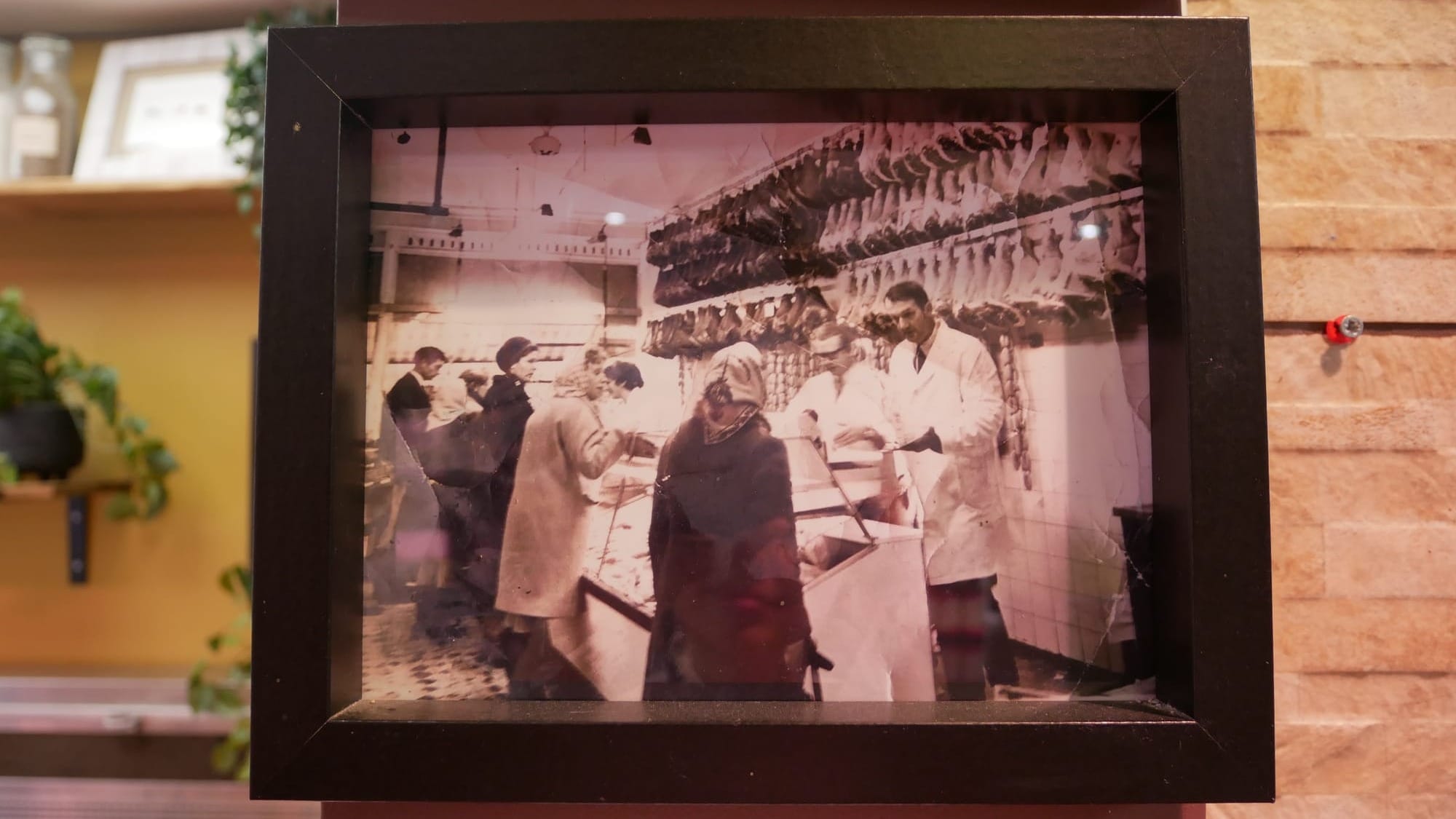
A photo on the wall of The Brown Pig.
Brazilians cuts, meanwhile, have been shaped by environment, technology, commerce and colonialism, says Oscar Broughton, a teaching fellow at SOAS University of London who researches the history of Brazilian meat markets.
There's the cut known as cupim, he says. "This is a particular cut which is basically the hump of the Zebu cattle. So we don't tend to find this in Europe so much."
Zebu cattle comes originally from India, says Broughton.
But in the late 19th-century, Brazilian entrepreneurs travelled to India – at that time, part of the British Empire – to learn the latest in imperial science around cattle breeding, he said.
There, they came across Zebu cattle, he said. "They had things like long eye-lashes, quite thick skin which made them more resistant to the sun and the dust and tropical pests."
They exported them to Brazil, where they did better than other cattle in the hot and tropical climate, says Broughton.
That cupim cut is fatty and delicious and ideal to barbecue, says Broughton. "It's very very tasty."
"It also is quite prominent in Nigeria, because it's a similar story there of Indian cattle migrating, or being moved over there, because of colonial forces," Broughton says.
Changing foodscape
When he arrived in Ireland 10 years back, finding Brazilian cuts of meat was tricky, said Wesley “Tatu” Corrêa, last week.
Translating what he was looking for was a barrier, he says. "It was hard for us to explain," Corrêa said.
A friend eventually pointed him towards Brady's Butchers on Belvedere Road in Dublin 1, where he got picanha, he said.
Others describe a similar obstacle. During her early years in Ireland, Lily Ramirez-Foran would be looking for cuts for Mexican dishes.
She runs the Mexican food store and cookery school, Picado, which has two outlets – on South Richmond Street and Cork Street in Dublin.
She would to drag her husband into the Brady's Butchers in South Dublin that her Irish in-laws relied on, she said, and prod at his body parts to show which cuts she wanted. "This! This part of the pig I need!"
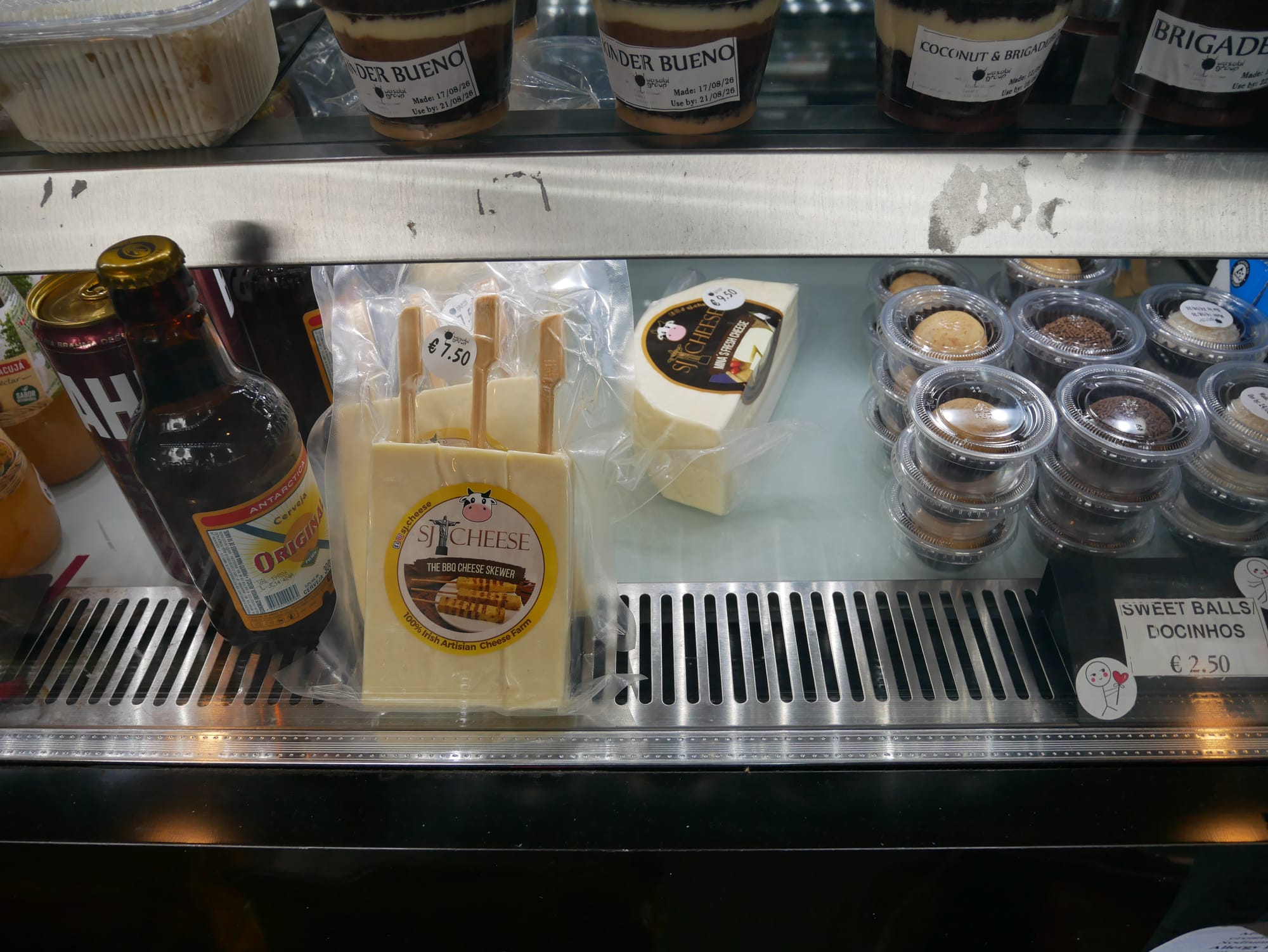
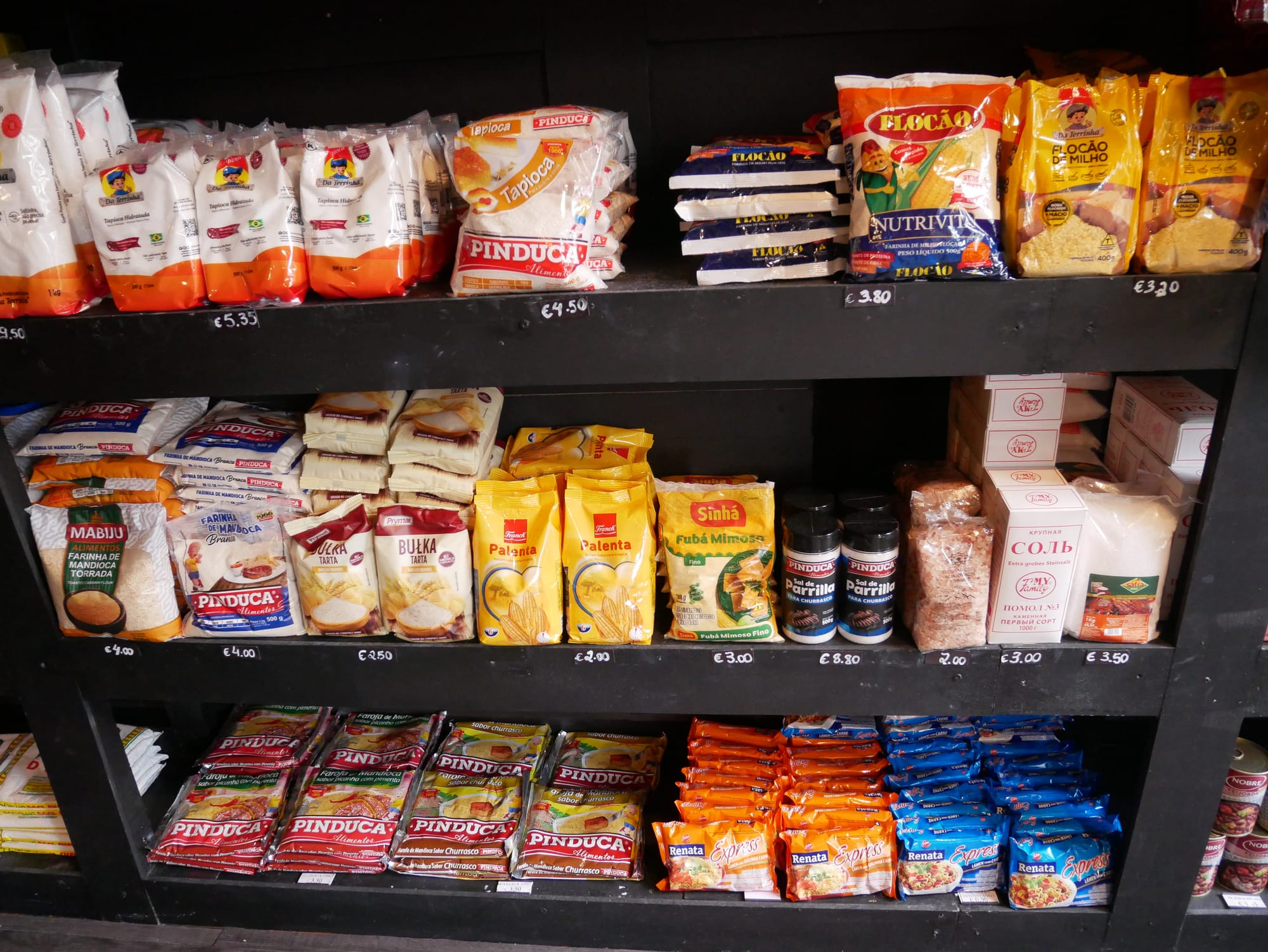
These days, the Brazilian shops scattered about town – Real Brazil on Thomas Street, the store at Wasabi on Dorset Street, and others – hold vacuum packs of Brazilian cuts for barbecue: maminha, and fraldinha, and of course, picanha.
Skewered cheese and seasonings, at Wasabi on Dorset Street. Photo by Lois Kapila.
"There are lots of Brazilians working in the companies of the meat. So they do this for us now," said Kenia Ferreira, who runs the store in Wasabi on weekdays.
She works through the different kinds that sit on the refrigerator shelves, explaining which are for barbecue, which are for stove cooking.
Right for the grill
By the time Carvalho came into The Brown Pig, the team knew what she was talking about, said Kenny. He had begun to get people asking for Brazilian cuts a few years earlier, during the Covid-19 pandemic, he said.
Many South Americans work in tech, and those in the area were working more from home and so cooking more at home, Kenny said.
People began to come in and ask for different cuts, he said. "They were actually nearly teaching us as well."
When something is new, they will hop onto Google with a customer, he says. "They're saying, 'No, this part!' And we're like, 'Oh yeah, we can do that for you!'"
Nowadays, he gets three or four enquiries a week for Brazilian cuts, he said.
Both picanha and maminha are part of the rump, he says. In Ireland, butchers would generally have called it all the rump and sold it whole, he says. "But they separate it into the different muscles."
Costela ribs, meanwhile, are beef ribs that are cut the width of two or three rashers, and – if you imagine the ribs are a ladder – sawn from top to bottom as if through all the steps, he says.
Traditionally in Ireland, he would cut ribs along the bone, as if on a ladder step – to continue the analogy, he says. That makes the thick short-ribs, that are nicknamed Jacob's Ladder in the trade.
But Brazilian cuts make sense for barbecues, he says.
Picanha is tender, he says. "It has the right fat content."
And the costela ribs cook faster, he says. "They cook quicker, because you're going against the grain."
The story of picanha
Go back to the late 19th century and early 20th century and Brazil was actually a small producer of beef globally, says Broughton, the teaching fellow at SOAS University of London.
But as more countries industrialised and urbanised, and populations grew and grew, so did demand for beef and other economies in the region, such as Uruguay and Argentina, started to specialise in it, Broughton says.
Brazilians looked over at their neighbours and saw a lucrative business to get in on, he says.
That took investment, which came from big American and British meat-packing companies, he says. Alongside Brazilian elites who were diversifying away from coffee plantations, he says.
The investment built slaughterhouses and shopping lanes and refrigeration units, he said.
Refrigeration meant fresh meat, rather than the dried salted beef or carne sec, that has been around since the start of the colonisation of Brazil in the 16th century, when the Portuguese used it to feed enslaved populations in the sugar plantations.
The two world wars create further demand for both beef and leather for soldiers, Broughton said. In Brazil, beef production expanded into new areas of the country, he said.
Broughton talks about the "protein frontier" and the encroachment of cattle pastures into the Amazon basin, and accompanying spread of soybean plantations.
These days, agrobusiness is a powerful force in the Brazilian National Congress, and activists, researchers and journalists who look into some of these companies are at risk, he says.
But it was on the wave of all this, in the 1950s or '60s, that picanha was invented, Broughton says. Its backstory is a tale of business rivalries, he says. "It's really a commercial story."
As the beef industry grew, restaurants serving it spread. Many were set up by immigrants from beef-producing regions in the south of the country, Broughton said.
"They take with them their sort of knowledge of cooking, of aesthetics of the south, and gaucho kind of culture," he said.
Picanha was born in these restaurants, he said. It "becomes this very, very popular dish because of this competition between different restaurant owners basically," says Broughton.
Picanha is one of the most popular cuts in Brazil today, Broughton says. "It seems to have a very prestigious place in people's minds."
But as prices have gone up, many working- and middle-class people are turning to cheaper cuts, he says. "They just can't afford picanha on a regular basis."
That's been a big issue in Brazil, Broughton says, one marbled with national identity and politics.
In the last election in Brazil, Luiz Inácio Lula da Silva, who is now president, campaigned on giving back to every Brazilian beer and barbecue basically, Broughton says.
Because for many Brazilians, to eat barbecue is short-hand for living the good life, he says.
Although, not for all, of course.
Maurício Brunner is from the south of Brazil, he says. His family would barbecue every Sunday growing up, he says, and his house – as others – had a built-in grill.
But he became vegan about 10 years ago, before he moved to Dublin, while still living in Brazil, he says, as he read more about food production. "It was quite gradual."
He doesn't feel any tension with his Brazilian identity, he says, and still goes along to barbecues – just with vegetables to grill, or watermelon. "Culture, you bring certain things, you change certain things you don't agree with anymore."
Tell me more
Don't forget linguiça sausages on the barbecue, says Matt Sant, on the small shop floor at Real Brazil on Thomas Street. "Some people like to cut the sausage in half and put a slice of cheese in the middle."
Kenny has been working on a new version of this pork sausage, he says. "We've infused it now, we're trying to put an Irish twist on it, so we've put Irish mature cheddar cheese chunks into the sausage."
For Kenny, requests from customers about different cuts – and sausages – is a way to learn and evolve, he says.
Of course, it goes the other way too. "Brazilian people and South Americans have started to buy our cuts and our sausages as well, so its crossing over a lot as well," he said.
It's good for trade and it's good for staff, says Kenny, who has been a butcher since a summer holiday job in Payne's Butchers in Ballyfermot when he was 16 years old and he found himself drawn to the hard-working and passionate mentors at the block.
"You have to be innovative, otherwise you stand still," he said.
Newer arrivals to Ireland have helped to revive butchers, and cuts traditional to Ireland too, says Máirtín Mac Con Iomaire, the food historian and lecturer at TU Dublin.
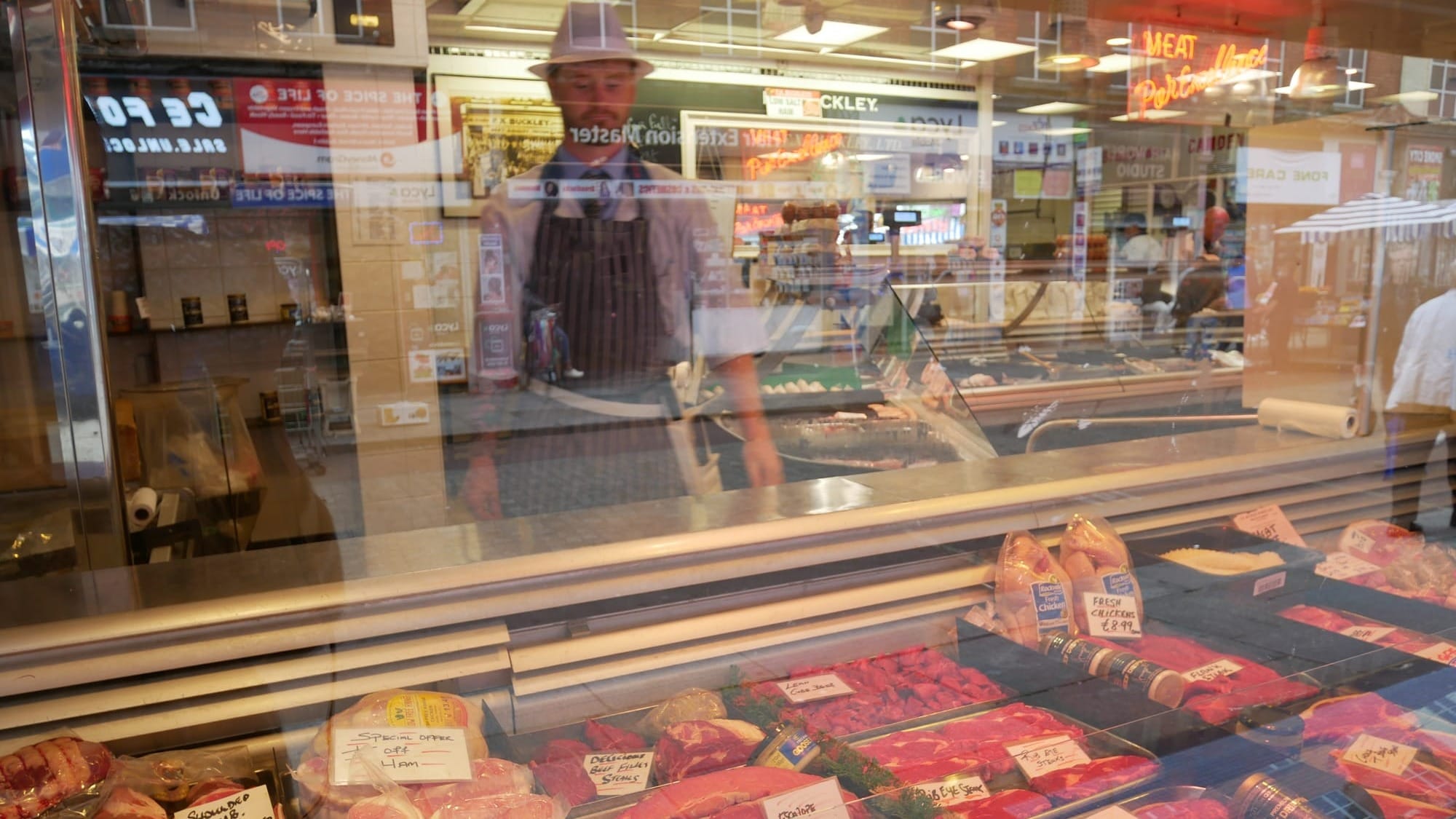
In the window of FX Buckley. Photo by Lois Kapila.
He regularly sends students down to FX Buckley's on Moore Street to look in the window and count types of offal, he says. "A lot of this stuff was about to disappear."
As families in Ireland got wealthier, and women started to work, and evening meal prep had to go faster, these bits and bobs had been going out of fashion, he says. But they're still around, he says.
At the back of the Centra in Terenure, Carvalho has been trying to convince Kenny to get in some chicken hearts for her. She wants to barbecue them, she says.
He isn't too into the idea. He has questions, he says.
Being able to speak to a butcher about what you want is so important, says Ramirez-Foran, who runs Picado.
For example, a chef came to trial at Picado recently, she said, and asked for "coulette" – another name for picanha. It's pricey for a trial, though, she said, so the butcher advised her on slightly cheaper equivalents.
Supermarkets can't offer that, she says.
"You have a relationship with your butcher," says Mac Con Iomaire, the food historian and lecturer at TU Dublin.
"We all had a pattern of shopping that you would buy this from there and that from there, and trust from there," he says. "The supermarket knocked a lot of that on the head."
Knowing the provenance of meats too, he says. "Quite often butchers were farmers as well, or else the animals were coming from the neighbourhood."
Kenny is clear where the meat he sells come from, he has relationships built over years: beef from Gordon Quinn, organic chicken from Margaret McDonnell, both in Kildare.
Ramirez-Foran has to know what she is buying is local and organic, she says, to know how the animals are treated and fed. "So they've led a very happy life."
Carvalho had planned to dip the barbecued chicken hearts in farofa, she tells Kenny. She brushes her hands together, as if coating the palms.
"What is it? It's like a ... a butter?" says Kenny.
"No, no, no, no," says Carvalho, quickly. "It's like a bread, you could say it's more like a stuffing that we have here."
"So it's a breadcrumb?" he says, his head tilted a little. He keeps asking questions. So you dip into it? You add herbs?
"See how much you learn about," says Kenny, still trying to wrap his head around the request. "I'm only learning about this now."