

“It’s giving colonialism”: Ireland still owes rent to dukes and earls
Although, even though the OPW lists these rents as payable, some of the named beneficiaries say they haven't been getting them.
"Moving countries, I had a job, college, a place to live. But I didn't have a purpose. Now I feel like I have an impact and I know I have.”

On a recent, sunny afternoon in an apartment on Bachelors Walk, João Fernandes Lelis is on a mission.
He navigates through his rented flat toward the kitchen, grabs a can of wet cat food from the fridge, and locks eyes with Romeu.
Romeu follows Lelis toward the glass door near the balcony. The windows are thrown wide open to battle the heatwave overtaking the apartment.
But the stifling temperature isn’t the first thing you’d notice about the place. Rather, it’s the hundreds of Funko Pop collectible figurines all over the apartment.
Lelis bends down to serve the feast.
“Meow,” Romeu announces, instantly burying his face in the wet food.
This is Romeu’s final day with Lelis before he goes to a permanent home following an adoption.
Having fostered cats for about four years, Lelis is a long-time volunteer of a grassroots rescue network that started with just one person: Aline Serafini.
Years ago, in 2018, Serafini began rescuing strays while crammed into a 25 sqm flat near Mountjoy Street. But her solo efforts didn't stay solo for long.
She rallied a dedicated crew mostly from the Brazilian community, all fiercely committed to giving Dublin’s stray population a second chance. Today, this network is backed by a charity, the Cat and Dog Protection Association of Ireland (CDPA).
Together they run a trap-neuter-release collaboration for stray cats in the city, feed colonies of stray cats, and rescue some from the streets, foster them, and find them permanent homes.
Serafini’s cat journey in Dublin began with a bit of tactical landlord-testing back when she and her husband, Lucas Rossi, were living around Mountjoy Street.
Noticing the landlord didn't put up a fight when she minded a friend's dog, Serafini found the gap she was longing for.
In 2018, she adopted a cat named Jimmy – and informed Rossi of the decision while the cat was already en route to the studio, she says, in a cheeky, endearing voice.
Like many street cats, Jimmy carried underlying health issues, and he passed away. Serafini channeled her grief into helping more street cats, she says.
Rossi recalls how he regularly found himself out on the streets of Dublin at 1:30am, helping Serafini feed strays, he says.
The night shift came with hazards: Serafini occasionally faced harassment from late-night passersby, says Rossi. And questions from gardaí.
At first, guards routinely pulled over the couple's late-night operations to check what they were up to. But after a while, they became part of the landscape and they would just drive past, Rossi says.
Serafini didn't have a vehicle. She ran the operation relying on Dublin Bus, her bicycle, a scooter, or the occasional lift from someone at the CDPA, she says.
She managed several colonies across the city centre, feeding a group of about 35 neutered cats daily.
Her “currency became cat food”, she says. With limited resources, every time she was thinking about buying something for herself, she started to think, ‘Oh, but with this money I can buy a week of cat food,’” she said.
Serafini couldn’t just look the other way when she saw the state of the strays, she says. She was concerned about their hunger, how skinny they were, “the risk of them going out to look for food and getting run over”, she says.
“I also have limited resources for this,” Serafini says. She earns “just a little more than minimum wage”, she says.
She didn't compromise her livelihood or skip out on her rent; instead, she sacrificed her own disposable income, Serafini says.
“I take away from myself to give to them – not from my basic needs, but from things that can wait, or things I won't die without, like having a top-tier phone, or spending money on beauty treatments or new clothes,” she said.
“There were months when I spent more on them (including my indoor cats, of course) than I spent on my own rent,” she said.
Does she worry that the cats she’s feeding will be eating birds and other critters trying to get by in the city?
Their trap-neuter-release programme limits the number of cats, but beyond that, “these are things you just can't control, just like when people let their pet cats go outdoors. They will still hunt; it's just animal instinct,” Serafini says.
“I also think that having a cat colony nearby prevents rat infestations, especially in those old, dirty, and abandoned places, and/or trash areas of houses, buildings, and gated communities,” she says.
At the beginning, Serafini spent months cold-calling cat rescue organisations across the city, asking for traps and support to neuter local strays.
Eventually, she connected with the Cat and Dog Protection Association (CDPA) – a registered, no-kill charity.
The CDPA provides low-cost spaying and neutering, supplying affordable veterinary care for families when finances are tight, and runs trap-neuter-return programmes to stabilise street colonies, says Tanya Higgins, a director at the organisation.
A huge part of their work is supporting independent rescuers like Serafini, Higgins said. The charity recognises that independent rescuers are the frontline of animal welfare, she said.
Serafini has been connected with CDPA since 2019, Higgins says. “Her relationship with CDPA has grown into a trusted partnership built on shared values and a deep commitment to animal welfare.”
By absorbing some of the medical costs and logistical weight, the charity allows local groups like Serafini’s to reduce pressure on traditional shelters and manage community cat populations, Higgins said.
Once the cats are trapped, vaccinated, and neutered, the next job is finding them homes.
For Serafini, turning to the Brazilian community was a natural choice. Language was a huge factor, but there was also a cultural alignment.
“Brazilians normally tend to keep their cats indoors”, which is much safer for them, she said.
The grassroots network relies also on people willing to get their hearts broken just a little bit every time a cat moves on.
Letting go of the cats can be difficult, but Lelis says he has discovered a secret to coping with this.
He says, with every new foster, he ends up liking the cat even more than the previous one, despite having thought that wouldn't be possible – and he holds on to this idea.
Beatriz Oliveira, a volunteer originally from Portugal, has fostered more than 70 cats in the space of just a year and a half, she says.
“When the fosters leave, it's kind of bittersweet,” Oliveira says. “I'm happy that they are going to their happy forever homes, but with some kittens, it's just really hard.”
Annie Ramos, who began fostering for Serafini in 2022, says “people end up being afraid to do it because they say they'll get too attached and won't be able to let go”.
“But it's just a matter of getting used to it,” Ramos says. “There are several kittens I still miss to this day, but I get updates on how they are doing in their permanent homes, and that is more than enough to warm my heart.”
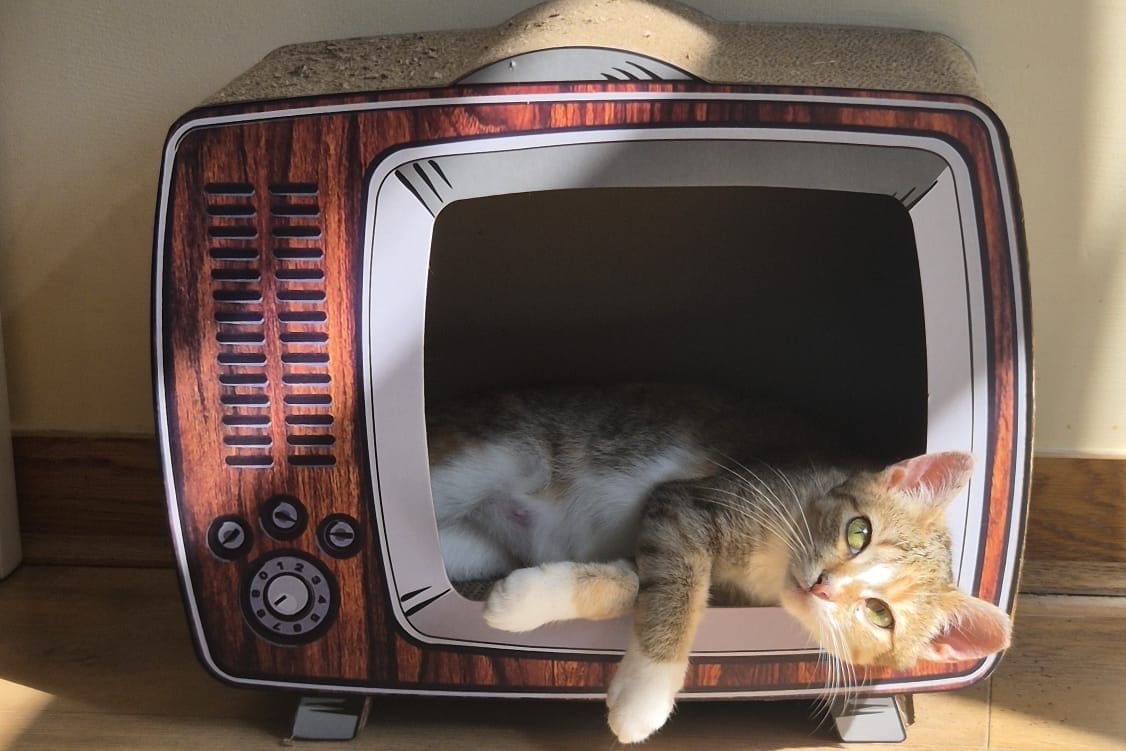
Serafini also fostered some cats herself.
Rossi, her husband, is fully on board with his wife’s mission, though he notes, dryly, that she sometimes lacks a stop button. “Aline will always double the target,” he says.
At one stage, they had seven cats crammed into their 25sqm studio, Serafini said. “Lucas said the whole building was starting to smell like cat pee,” she said.
In 2023, Serafini and Rossi packed up their urban operation and bought a house in County Kildare, which now serves as a full-blown sanctuary for more than 20 cats.
Serafini named it The Feral Farm Dream, a name born from her long-held vision of a sanctuary dedicated to the city's feral population.
It serves as a refuge for the shy, the elderly, and the often-overlooked felines who might never find their way into an adoptive family home, she says.
Most people, she says, do not welcome feral cats into their homes, she says, about 7pm on Monday, just after work when she managed to trap eight cats and was still pursuing a ninth in Kildare.
That is why she traps and releases some of them, Serafini says. If the ones she just trapped are friendly, she will seek a foster home, she says.
Serafini’s status as the community's go-to cat woman grew after she posted some advice in a Facebook group, encouraging other people to try independent rescuing.
“After that, everyone just started tagging me in posts and reaching out,” says Serafini.
Not even pregnancy could slow her mission. A week before her son Miguel was born, she was still out trapping.
Serafini went into labour on a Sunday night just after organising a foster home for a newly rescued cat, she says.
“I was pregnant, rescuing, almost giving birth, then I had him, and a week later I was rescuing again,” Serafini says. “It's something that can't be explained.”
Today, the scale of the operation has grown beyond her expectations. They are rescuing over 100 cats each year, Serafini says.
All while working a full-time warehouse job, while her husband works as a commercial photographer, and together they look after more than 20 cats in her home and raise a small baby, with some much-needed assistance from her mother.
Both Serafini and Rossi work in Dublin, facing a 90-minute journey home to Kildare every evening, says Rossi.
Serafini coordinates rescues and answers an endless stream of messages.
“Sometimes I wish Aline would do a little bit less, because she spends hours on her phone solving cat problems,” Rossi said.
For the volunteers who rallied to her side, the network quickly evolved from a practical rescue group into something resembling a family.
“This community had a huge impact on my life,” says Manoela Martins, whose journey with the grassroots network offered comfort through a difficult period of depression following the loss of her cat, Sammy, in 2023. “The project gave me a purpose again,” she says.
Martins now helps with a bit of everything, coordinating the collection and transport of essential donations from Dublin’s northside to the Kildare sanctuary, while also providing hands-on support to foster homes, fostering herself, and managing the flow of daily administrative tasks that keep the mission moving, she says.
Oliveira, the volunteer from Portugal, has also found purpose in the network, she says.
“This community means everything to me,” says Oliveira. “Moving countries, I had a job, college, a place to live. But I didn't have a purpose. Now I feel like I have an impact and I know I have.”
"I’m so grateful to be part of the group, because besides doing something that gives my life purpose, I found friends. People to talk about everyday things with, to vent to, and to count on. We help each other out a lot,” says Debora Andrade, who helps with fostering, social media and feeding stray cats.
Ultimately, the grassroots movement isn't just about moving animals from a Dublin street corner to a Kildare sanctuary or an adoptive home, says Alessandra Dianin, who helps with social media.
“Aline ended up creating this cat community and we formed this friendship based on this purpose of ours,” she says. “It's a daily motivation to wake up and connect with the girls.”
It brings hope to both the cats in need and people who rescue them, and it also “means family”, Serafini says.

Although, even though the OPW lists these rents as payable, some of the named beneficiaries say they haven't been getting them.

They're set to back the creation of a special purpose vehicle he's been picked to head, which is meant to play a major role in regenerating the city centre – but how major is in dispute.

Social tenants who live in the private Liberties complex Grand Canal Harbour say they're not allowed to use many of the common facilities there.

Gone is the hardman shtick, the macho bravado once associated with hip hop, rapper and producer Michael Ward, who goes by Mickzart. “We’re after something true.”