

Things To Do: Embrace ambiguity, admire the creative process, visit many buildings, read about them
Our latest recommendations, and community noticeboard listings.
"To be honest I have not encountered a case like this in seventeen years."

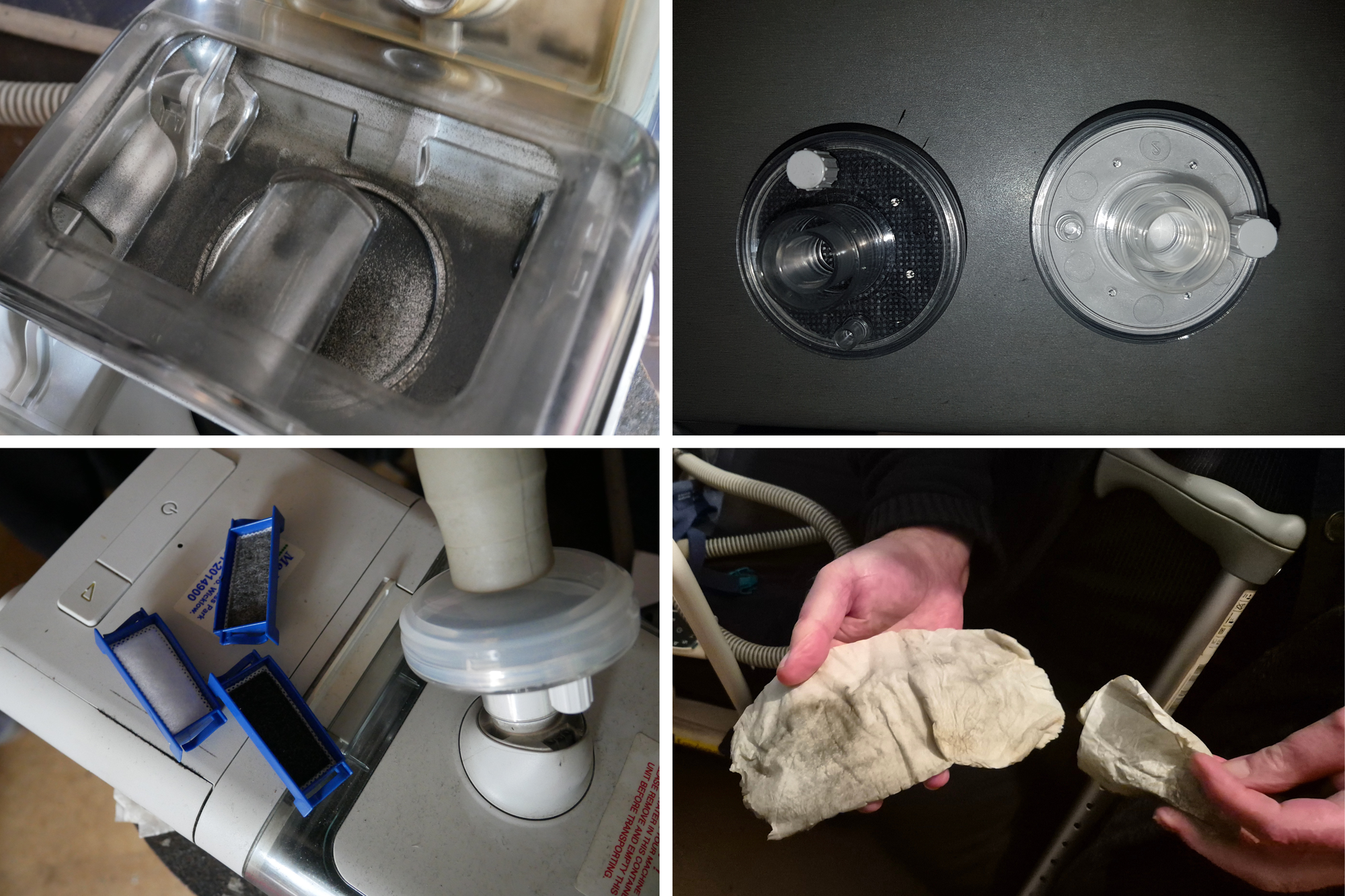
Michael Ellis, a tenant of Dublin City Council, shouldn’t have to change the filters on his sleep apnoea machine as often as he does.
They should last a month, he says, but after a few days, they turn from bright white to pitch black.
The filters of that continuous positive airway pressure (CPAP) machine are not the only things in his apartment affected.
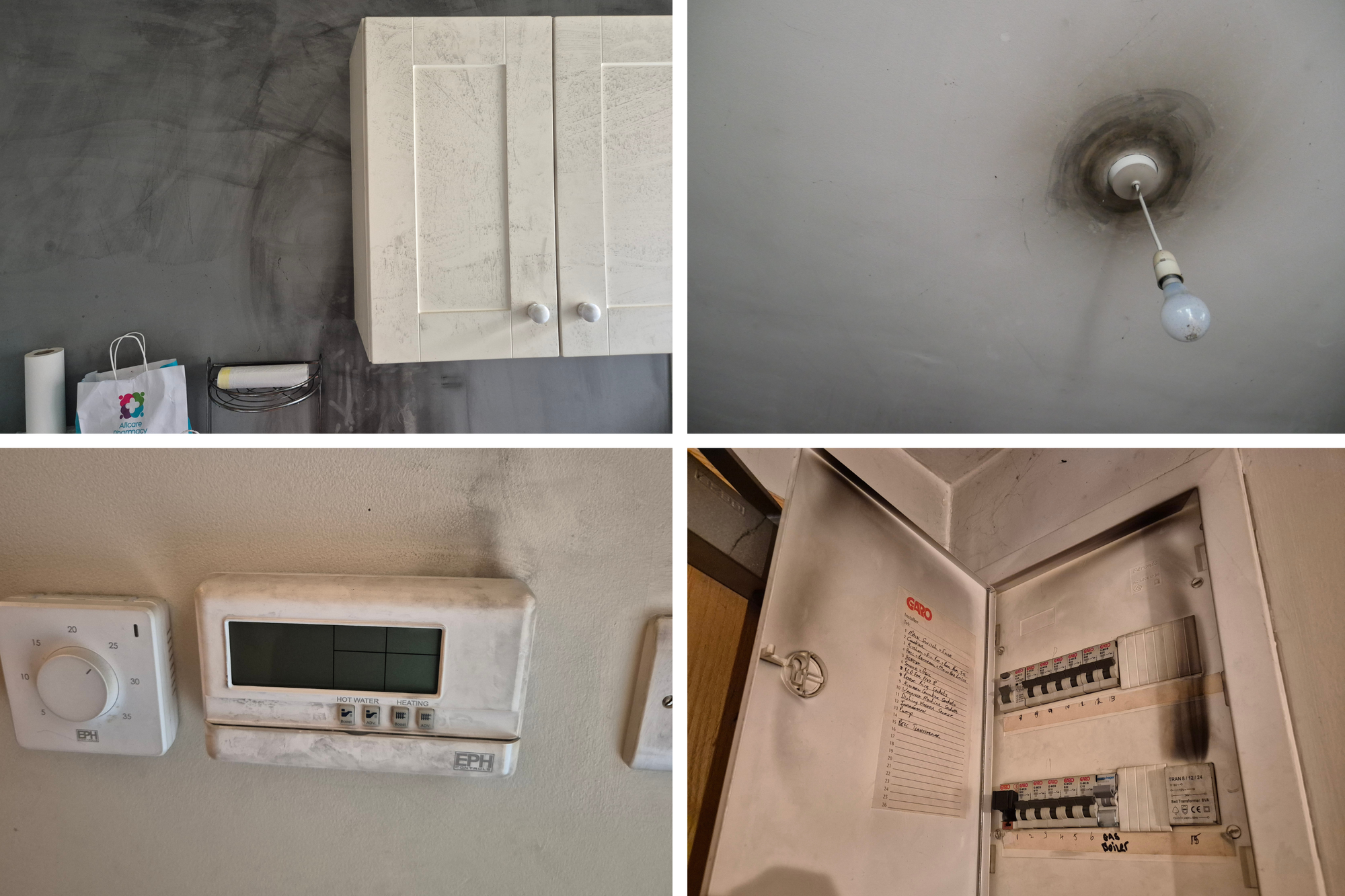
Around his walls and floors, around the light fitting in the ceiling, a strange black residue has gathered.
It’s in wardrobes, cupboards, in his fridge, inside CD cases, all over his Dyson air purifiers, and large blotches of it are even visible inside the screen of his television.
He lines the mask part of the CPAP machine with toilet paper to try and further filter what he is breathing in. The toilet paper also turns black in no time, he says. "It's in my spittle in the morning."
The black stuff seems to accumulate most intensely around heat sources, like lightbulbs, or the small air vent on his thermostat.
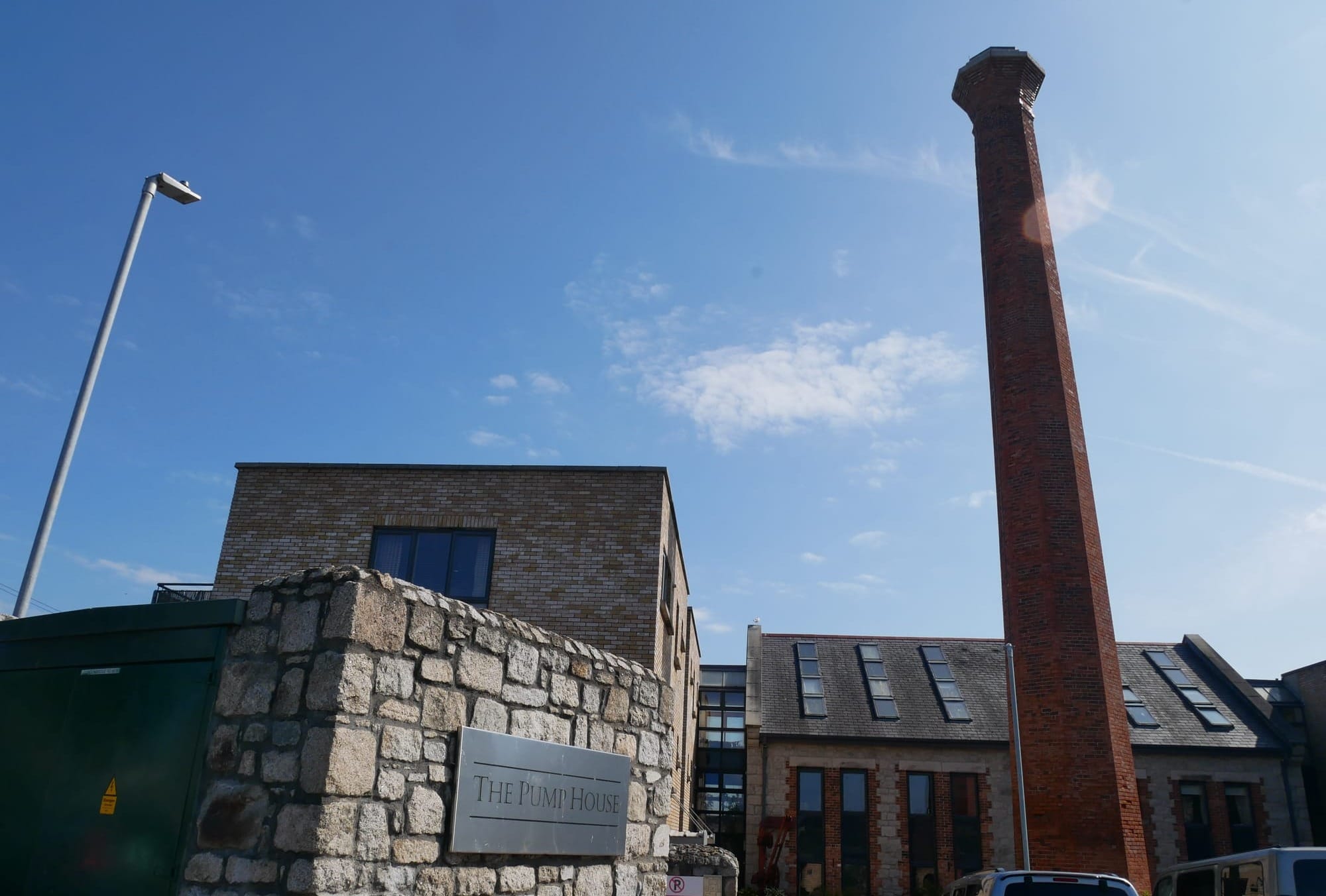
Ellis, now 78, lives in The Pump House complex in Irishtown. The development, as its name suggests, is a former facility for pumping sewerage from one place to another.
Today, the apartment block sits in a U-shape, with a large, disused chimney stack in the middle of its courtyard.
The black substance seems to resemble soot or fly ash, that could become dislodged from a chimney stack like the one at the Pump House.
But a spokesperson for the council said on Tuesday that it has tested the substance twice, and while they wouldn’t say what it is, they did say it is not soot.
When asked if the substance might be coming from the huge chimney stack and blowing into the apartment, the spokesperson said, “This is extremely unlikely.”
An independent analysis of the substance was inconclusive.
However, it confirmed the stuff was carbon-based – like coal, soot, or mould would be.
Is it mould?
Well, while mould is carbon-based, results from an air-purity test organised by the council in early 2023, say that the levels of Total Volatile Organic Compound (TVOC) – which is the gas that things like mould, but not only mould, can release – were “fine”.
The manner in which the black stuff is concentrated in certain places, like around heat sources, seems to be consistent with how soot would react.
Dense soot staining around heat sources can be indicative of “thermophoresis”.
This is where microscopic airborne particles are driven towards and deposited on cooler surrounding surfaces by differences in temperature.
Ellis says he suspects it is rising in from underneath his ground floor apartment, from an old coal bunker.
During the planning process about 20 years ago, an industrial heritage survey conducted by Mary McMahon makes reference to “underground chambers”, and also says that “a coal shed was located beside the entrance to the complex, next to the boiler house”.
But, if it was entering his apartment that way, it is likely it would also be affecting at least the apartments of his next-door neighbours.
Valerie McDonagh, who lives next door, said on Wednesday that it hasn’t impacted her home.
The council spokesperson similarly said, “We are not aware of this issue in any other apartment”.
The council has tested the substance twice, and "it wasn’t soot in the samples", the spokesperson said.
Ellis began contacting the council about this issue around five years ago, he says. "I said, 'My filters on my machine are turning black.'"
In that time, the council has since offered him three other apartments to move to.
When he visited them, he says, none were accessible for him – they were up flights of stairs, or had small spaces within which he would be unable to manoeuvre his wheelchair.
Ellis suffers from peripheral arterial disease, a circulatory problem where narrowed arteries reduce blood flow to the limbs. Recently, he says, the lower part of his right lung collapsed.
Other older council tenants have also said they've been offered homes unsuitable for their conditions.
Ellis is currently fifth on the council’s medical priority transfer list, but that fluctuates, he says. “Every time I ring up, I’m seventh, I’m thirteenth.”
“People are joining the queue ahead of me because they're more of a priority because I have a place, and I'm left here to suffer,” he says.
The council has also offered to have the apartment cleaned.
Ellis says that after any attempts to clean the stuff, it eventually gathers again.
So, a council engineer told him that they wanted to install two extractor fans in the wall of his sitting room.
As a former aircraft engineer with Aer Lingus, he says, he doesn’t believe extractor fans will sort the problem.
But that it will simply let the council off the hook, and leave him to continue breathing in the black substance.
"I already have four fans sucking in dirt, what's two more going to do?" he says.
Against the advice of the council's engineers, he's refused so far to let them put in the extractor fans.
A letter for the council from St Vincent’s University Hospital Heart Failure Unit dated 20 March 2023 asked the council to urgently review Ellis’ housing situation.
“As you know, Mr. Ellis had recent admission to St. Vincent's Hospital due to trouble in his breathing. He was thoroughly investigated with a conclusion that his lungs were affected due to the presence of black soot in his house to the point that his CPAP filters were full-with black material,” it says.
“It was concluded that his breathlessness was related to the chemical exposure of that material.
“He is known case of Heart Failure with reduced efficiency and has internal Defibrillator as well. We strongly recommend finding a solution to his housing condition which is affecting his general wellbeing as soon as possible,” it says.
Again, the council says it tested the black stuff, and it's not soot.
Another letter from St Vincent’s, dated 2 May 2024, says Ellis was “undergoing treatment for a medical condition that is sub optimally managed due to persistent chemical environmental exposure at his residence”.
It asked that alternative accommodation be provided as soon as possible, “to improve his health”.
A letter to the council from the Sleep Disorder Clinic in St Vincent's from September 2022 says Ellis has "obstructive sleep apnoea" and requires a CPAP machine.
“He has informed us that his apartment is covered in a thick mold," the letter says, though the council's later tests suggested the substance was not mould.
“He applies a filter to his device on a regular basis and because of the mold and damp the filter is becoming black within a number of days," it says.
“To be honest I have not encountered a case like this in seventeen years looking after patients with obstructive sleep apnoea. I strongly support his request for alternative accommodation,” the letter concluded.
Among other letters of concern from medical professionals, is one from a HSE public health nurse, dated 28 March 2023.
“I called to review Michael today for home supports and was shocked to see the dire state of his ground floor apartment," it says.
“I observed back substance all over the walls, inside cupboards, wardrobes and presses," it says. “This black substance was also seen in the filters of his heater, sleep apnoea machine and in filter in the fan in bathroom."
The nurse then informed the council that she was so concerned about the environment he was living in, that she would not even allow her staff to enter the apartment.
She said his apartment in the Pump House was not safe for Ellis, given his “multiple chronic health and breathing issues”.
If the material's not mould, and it's not soot – what did the council's two tests identify it as?
The council spokesperson wouldn't say.
"We are aware of the issues and measures to address these are being considered but cannot comment publicly on the specific details of the matter," they said.
Funded by the Local Democracy Reporting Scheme.

These days, a growing cohort of clients see the translator's job as just cleaning up after the machine, they said.

It depends, in part, on whether the owners can prove they've been holiday lets for more than seven years – and whether planning enforcement noticed.

The tender document for the design says the framework has a maximum estimated value of €7.5 million. It also gives a tentative construction estimate of €25 million.

Social tenants, including children, are often locked out of communal areas in their complexes. Would it help if they were represented at the OMCs' meetings?