

As campaigns gear up in central Dublin, how sound is the voter register?
It isn’t hard to find people registered to the wrong addresses and zombie entries.
The government seems to be considering making helmets and hi-vis mandatory for people using some category of bikes, though it’s not totally clear which.

A helmet mandate for cyclists would be problematic for Bleeper, which operates a bike-share scheme in the city, says Kieran Ryan, its communications manager.
The government seems to be considering such a mandate, for people using some category of bikes, according to statements from the Department of Transport this week.
Many people decide on the spot to jump on a shared bike because Google Maps says cycling is the fastest way to get where they are going, said Ryan, of Bleeper, which provides both ebikes and regular bikes.
“They are not going to be carrying a helmet and a high-vis in their back pocket,” Ryan said on Thursday.
And, “from our point of view, it is not practical to provide that PPE as part of the service", he said.
How would the company provide a secure place for the helmet to be stored? he wondered.
“How would you weather-proof it?” he asked. Would the last person get a wet high-vis to wear at the end of the day?
“There are a lot of practical implications that don’t seem to be considered,” he says. “It would be an extra cost and extra hassle.”
And even if it figured out a solution to those issues, there could be hygiene issues with people sharing helmets, Ryan said.
Bleeper is one of three bike-share schemes operating in Dublin city, along with Moby and Dublin Bikes.
Rules mandating cyclists to wear helmets would “kill bike sharing schemes”, said Councillor Feljin Jose, the Green Party’s spokesperson on transport.
And if people are discouraged from using shared bikes, and from cycling in general, they won’t all walk, says Ryan, of Bleeper. “It could put a lot of pressure on public transport, which already has a capacity issue.”
IrishCycle.com reported that on Wednesday afternoon, a Department of Transport spokesperson said that “Requirements for mandatory helmets and high-visibility equipment are currently being considered for e-scooters, bicycles and e-bikes.”
But asked about this, on Thursday afternoon, a Department of Transport spokesperson said the mandate would not include ordinary bicycles.
“Proposals are being developed and will be subject to Ministerial decision,” the spokesperson said. “Requirement for Personal Protective Equipment on e-scooters and e-bikes will form part of any consideration.”
“The introduction of mandatory PPE for users of bicycles is outside the scope of the current measures,” she says. “Measures to protect the safety of all road users are kept under constant review.”
Some users of electric bikes are already required to wear helmets.
At the moment, those that can go more than 25km/h – “e-mopeds” – require a licence, and the user must be over 16, register it, pay motor tax, and wear a motorcycle helmet. If they can go even faster, over 45km/h the user must also have a driving licence.
However, “e-bikes” which don’t go faster than 25km/h – “will be treated the same as bicycles”, says a 2024 government statement on new regulations for them. Users aren’t required to be over 16, or register them, or pay motor tax, or wear helmets while riding them.
So it’s presumably users of those ones that the government is considering requiring to wear personal protective equipment.
Jose, the Green Party spokesperson on transport, said he cannot understand the rationale behind separating e-bikes that go less than 25kmph from regular bikes.
“That would be madness,” he said.
Those e-bikes, which cannot go faster than an ordinary bike, are commonly used by older cyclists, long-distance commuters or those carrying cargo, says Jose.
“They help you to get started and give you a boost to get up a steep hill,” he says. “I don’t know why the government would go after them."
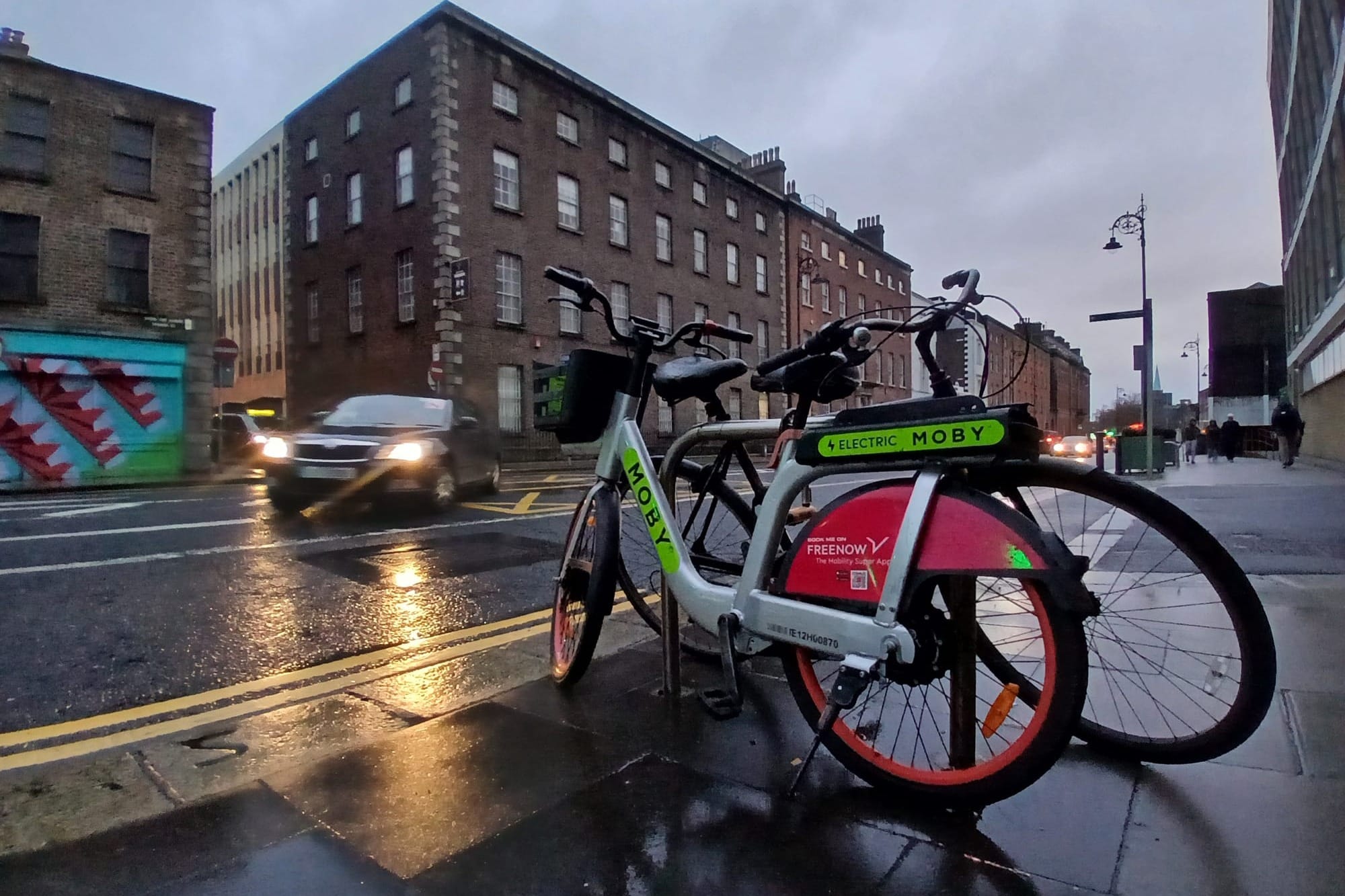
Also, rules applying to one but not the other would be virtually unenforceable because they look the same, Jose says. “How would you even tell them apart?”
Jose says that the Department of Transport officials appear to be confused this week.
“I genuinely don’t understand what they are trying to do,” he says. “They are just creating more and more laws instead of getting the Gardaí to enforce the laws that exist.”
The authorities should focus on enforcing existing laws: clamp down on dangerous driving, “take the e-scooters off the children. Seize the scramblers”, he says.
“The issue is not with people who use cargo bikes or electric bikes, it's teenagers on scramblers who should not have them,” he said.
There have been various updates to legislation introduced in the last few years in an effort to regulate the use of scramblers.
And now, after 16-year-old Grace Lynch died earlier this month after being hit by a scrambler, the government says it will ban the use of scramblers in public places.
But Gardaí have said in the past that while they try to do so, they can struggle to apprehend those driving them illegally because it would be dangerous to chase young people on scramblers through busy city streets.
If the goal of the proposal to require helmets for cyclists is their safety, then the government should focus on providing safe cycling infrastructure to keep cyclists separate from motorised traffic, says Ryan of Bleeper.
Any proposal to mandate the use of helmets makes cycling seem like an abnormal activity, Ryan says. “Cycling to the shops should be the same as walking to the shops.”
“There’s an underlying message being sent to the public that the act of cycling is dangerous, whereas in reality it's the interaction between people on bikes and motor traffic that the danger arises,” he says.
In the early 1990s, Australia and New Zealand introduced requirements that cyclists wear helmets, for safety reasons.
Over 90 percent of all cyclists in those countries wear helmets, Alena Høye, of the Institute of Transport Economics, wrote in a 2018 paper.
Based on an analysis of 21 studies, she writes that “mandatory bicycle helmet legislation can be expected to reduce head injury among crash involved cyclists”.
Helmet mandates might deter some people from cycling. But “People who may be deterred from cycling, are among those with the highest injury risk and the smallest health effects from cycling”, she writes.
In a 2024 paper, Robyn Gerhard, of the London School of Hygiene and Tropical Medicine, reviewed the results of her interviews with 21 cyclists in Melbourne, Australia, about their use of bike-share schemes.
The company Lime, for example, operates a bike-share scheme in Melbourne. It provides helmets along with its bikes.
Gerhard found that bike-share schemes “act as an entry to bike riding for people who do not own a bicycle”, and that “Mandatory helmet legislation creates a barrier to using bike share schemes.”
“Interviewees expressed concern about hygiene when using a shared helmet, and regular users of bike share schemes found that helmets are not reliably attached to the bikes,” she wrote.
Australia’s 2021 census found that 2.2 percent of commuters in Melbourne, and 0.7 percent nationally, travelled to work by bike.
Ireland’s 2022 census found that in Dublin city, that figure was five times as high: 10 percent.

It isn’t hard to find people registered to the wrong addresses and zombie entries.

The Department of Housing was reviewing whether it was good value to develop them under public private partnership. It isn’t, it decided.

While costs of basic items have risen, including snacks bought from the prison shop to fill long gaps between meals.

“Pump tracks are very fun,” says Oran Wood, who discovered the hilly tracks while visiting his cousins. Pump tracks can be traversed on bikes, skateboards, skates and scooters.