

Dublin city councillor proposes reducing contacts with US government, given its crimes
Although it’s unclear exactly what the council could do on this front.
“I was advised that one deportee had been restrained in order to have him escorted through airport security.”

In June 2025, when immigration officials were deporting several people to Nigeria, one of them had to be restrained.
That’s been noted in a report by an observer, who’d turned up “to protect the human rights and dignity of the deportees” by bearing witness.
The human rights observer, invited by the Department of Justice, didn’t see what had happened before officials restrained the man, says the report released under the Freedom of Information Act.
“I was advised that one deportee had been restrained in order to have him escorted through airport security,” it said.
The reason why the observer hadn’t seen the incident with their own eyes is that they aren’t allowed to witness security check-ins, “as this is an area under the control of the aircraft police”, they wrote.
But the medics had told them that the man might not have “received his prescribed medication earlier that morning in the prison”, according to the report.
They had said they plan to follow up and “administer the medication if necessary”, the observer noted.
Aboard the plane, the man, who had been handcuffed, continued to unravel, sometimes shouting and cussing, said the report.
“I understand this to have been the same person who had been restrained during check-in, and who may not have been given his medication earlier,” the observer wrote.
There were five children on the flight, being deported with their parents, it said.
Though the observer couldn’t stay on to see how things unspooled as they flew away, they offered their email address to escorts who could.
No one wrote to them to report a problem after, so “I assume they encountered no particular problems with that individual deportee”, wrote the observer.
The observer had handed in their passport to the Department of Justice back on 26 May 2025 to apply for a visa to Nigeria so they could travel along, said the report.
“The Monitor must be present on the aircraft and seated in the best position that allows for clear visibility and hearing what is happening during the transport,” said the Department of Justice’s internal guidelines.
It’s not clear why that couldn’t be arranged. A spokesperson for the Department of Justice said the matter was outside of its control.
The observer was “debriefed by a nominated Garda escort on the operation of the flight”, they said.
The Department of Justice doesn’t have any legal obligation to ensure there are human rights observers on board deportation flights, but it has embraced the practice anyway, the spokesperson said.
As more people were arrested, reportedly for forced return last week, human rights non-profits say the June 2025 report illustrates shortcomings in the deportation regime, from haste to fly people away without human rights monitors, to inadequate access for observers, and detention in overcrowded prisons beforehand.
“The report highlights how vulnerabilities can be missed, particularly in high-pressure situations when monitoring relies on assumptions and limited information,” said John Lannon, CEO of migrants-rights non-profit Doras.
A spokesperson for the Irish Prison Service (IPS) didn’t address queries about the specifics outlined in the report about the man’s access to medication as he was released to immigration officials.
It offers ex-detainees a short-term supply of their needed medication until they reach community doctors or pharmacists, they said.
For those being deported, the spokesperson said, it records their medical needs and conditions, and passes that on to immigration officials.
A spokesperson for the Department of Justice referred queries about those procedures to the IPS.
The observer of last June’s deportation had visited a room where one of the families sat with three kids waiting to be hauled away, supervised by a woman garda, said their report.
There were food, beverages and toys in the room, which also had a toilet, it said.
“While I did not enter into a dialogue with any members of the family themselves, it
appeared to me that they were being treated well,” said the report.
The fathers who were held elsewhere rejoined their partners and kids on the plane, the report suggests.
“The Department of Justice is keen to align its procedures for the monitoring of the welfare of deportees with best practice across the European Union,” says an internal briefing document.
It lists a volley of international human rights laws that are relevant to that practice, including the UN Convention on the Rights of the Child.
The observer of the June deportation to Nigeria wrote that they had consulted three guidelines for monitoring forced return in preparing for it, including a Frontex document from 2021 titled “Forced Return Monitoring”.
Frontex, the EU’s border protection agency, has been accused of serious human rights abuses itself, with an investigation prompting then-director Fabrice Leggeri to resign back in 2022.
Among the observer’s recommendations from witnessing some parts of the deportation routine in June was requesting access to the security check-in area for future flights, even if it is under the control of “aircraft police”.
“This strikes me as something that, through appropriate communication, could be permitted in future operations. Some form of temporary identity card may also be considered appropriate,” said the report.
A spokesperson for the Department of Justice said, “any learnings from that operation are used when planning any future operations”.
In their report, the observer concluded that, “I observed nothing in the course of the operation which would give me cause for concern that the rights and dignity of all deportees involved in this operation were not respected”.
At least two deportation flights to Georgia in February and April 2025 had an observer who got to travel along, too.
Immigration officials allowed the Irish Examiner to tag along and watch the lead-up to a third deportation flight to Tbilisi. They took images and videos to run alongside a story.
Although the June 2025 observer’s report said they were briefed about, among other things, a ban on “recording any part of” the deportation routine.
An observer who gets to fly to people’s country of birth, doesn’t currently keep up with what happens to them after touch down, according to the Department of Justice’s guidelines.
“Monitoring the treatment of the returnees by the national authorities upon arrival after ‘hand-over’ is not within the forced-return monitor’s mandate,” said the report.
Lannon, the CEO of Doras, said the June 2025 observer report underscores the need to amplify their role.
“For independent oversight to be meaningful, the role must be empowered to monitor all relevant stages, including pre-removal detention and the flight itself,” he said.
He said it’s important that the pain of deportation isn’t worsened by other layers of vulnerability. “When individuals are distressed, unwell or lacking access to medication, the consequences can be serious.”
The Department of Justice’s internal guidelines said the observer “should gather information on any specific vulnerabilities among the returnees and verify whether special attention is given to their needs”.
Saoirse Brady, CEO of Irish Penal Reform Trust (IPRT), said the IPRT believes that the aircraft carrying people away against their will should be classified as a place of detention itself, and so it welcomes the role of human rights observer.
“However, we would urge the relevant authorities to ensure that the monitor can accompany the flight and observe the whole operation from beginning to end, including when people are brought through security,” she said.
It is concerning that one passenger was so agitated because he might not have been able to take his medication, Brady said.
Clear handover protocols between IPS and immigration officials should bridge potential information gaps about the medical needs of those who are being hauled away, she said.
A spokesperson for the Irish Human Rights and Equality Commission (IHREC) said generally, “where the State deprives a person of their liberty, there is an obligation to ensure access to appropriate healthcare”.
It is concerning that the plane took off without the observer, they said.
It had previously corresponded with the Department of Justice officials outlining its worries around that, and also about the detention of people who’d been plucked for deportation, the spokesperson said.
 Shamim Malekmian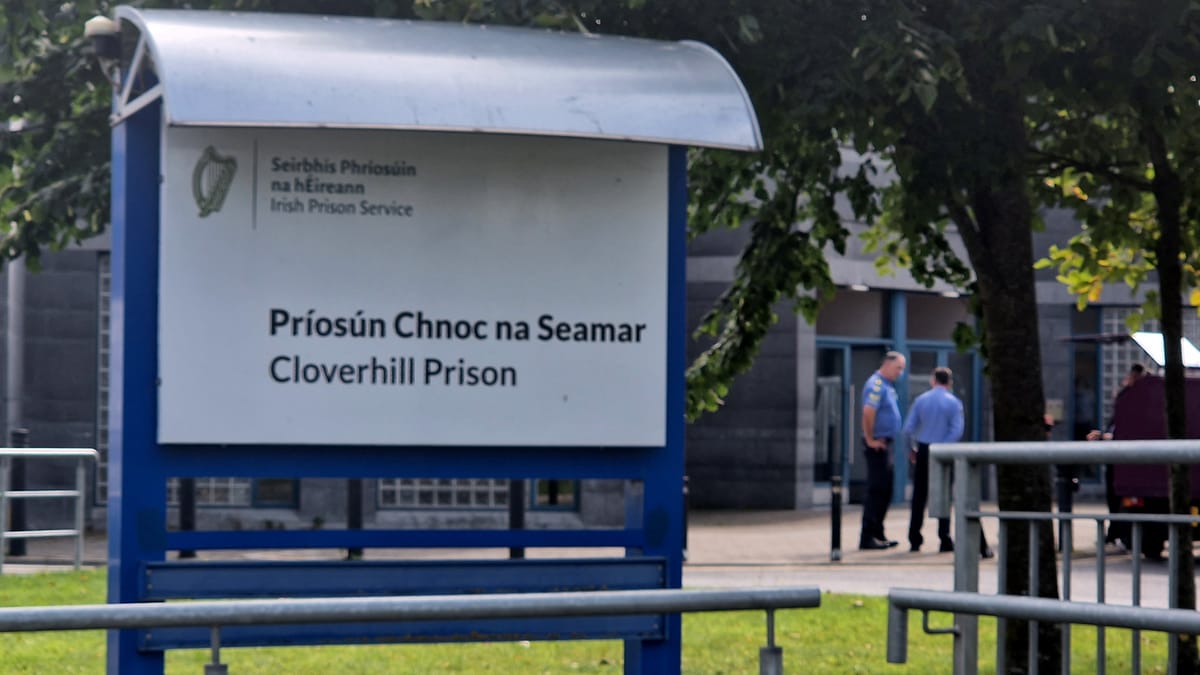
The letter dated July 2025 had also asked who the observer is.
The Department of Justice had argued before the Office of the Information Commissioner (OIC) against releasing their name.
In negotiating the withdrawal of an appeal we had lodged to the OIC, a Department of Justice staffer offered reassurance by phone that the person was not a former immigration official and had a background in human rights.
They also expressed concerns about the observer's safety and privacy if their name were disclosed.
On Friday’s stormy morning, a knot of people gathered outside Mountjoy prison on North Circular Road.
Their signs and banners fluttered in the wind.
They had heard, they said, that some of the people who had been recently arrested for deportation were now inmates there. “Please don’t deport people to their death,” read one of the signs.
Most of those protesting either have a deportation order or are in some kind of immigration limbo, and their hopes are growing dimmer, they said.
Mahfoud Cherrugui, a skinny guy in jeans and a bomber jacket, said that as far as he knows, a few of the people who had been arrested were still waiting on the outcome of judicial reviews.
“We would like to understand what’s this kind of practice from the Department of Justice,” he said.
The Department of Justice has been issuing hastier deportation orders in recent years – even as people wait for appeals to be adjudicated or as they try to lodge them.
For people who have one, the ground can give way at any time.
They can get arrested sometimes when they show up at the city’s immigration office to sign paperwork and prove they’re still cooperating with immigration officials and haven’t dropped off the radar.
Some people may not turn up if told to pack up their belongings for deportation, but if they’re in detention, officials can just deport them.
The Department of Justice has also carved out an exception for immigration detainees, asking the IPS to exclude them from temporary release even as prisons grapple with overcrowding because that would undermine a policy for prosecuting undocumented arrivals, internal documents showed last year.
The IPS had asked it to reconsider that position or offer some kind of workaround because otherwise it was releasing people who could be a danger outside to make room.
“In light of recent deportations, we are concerned by the use of detention in prison for this purpose and would question its absolute necessity, particularly in the context of the prison overcrowding crisis,” said Brady, the CEO of IPRT.
In October 2024, a man facing deportation died in Cloverhill prison, reportedly of “suspected natural causes”.
Among the protestors on Friday stood Mostafa Mihi, who had been arrested and held in Cloverhill Prison last June, despite telling the cops who came for him that he had an active appeal, he said, last year.
Djamal Abdoun, who has been campaigning for the rights of people like himself, whose crime – he says– is that they want to live here, not to be placed in Irish prisons, also stood nearby.
Abdoun is still stuck in the big wait-and-see phase of his own asylum-appeal journey.
“Nothing, I’m still waiting,” he said, shaking his head. His eyes were red. He looked exhausted.
Both Mihi and Abdoun have now joined Abolish Direct Provision Ireland (ADPI), a group that has been controversial for its protest tactics, and promises it has floated to the Department of Justice in return for immigration papers.
One position it has put forward is that if granted the right to stay, its members would refuse social safety nets like mainstream housing support.
Cherrugui said that’s a way to counter anti-immigrant hardliners who accuse them of coming to Ireland “looking for houses”.
Mihi and others said they’d joined because the group seemed to be in action mode, and they’re desperate for an off-ramp and any support that feels real.
On Friday at about noon, they remained standing outside Mountjoy Prison, the rain beating down on their banners.

Although it’s unclear exactly what the council could do on this front.

“You could get 500 emails, and I do recall my friend saying ‘God, why don’t you get Copilot?’”

It has until 2030 to roll out points for ships to plug into the electricity grid, if it is to meet an EU deadline.

The bones are thought to come from the major medieval monastery at St Mary’s Abbey, and further excavation works are ongoing.