

Tusla says it's an offence to run an unregistered children’s home, but it places children in them anyways
So how does it square the circle?
And 100-year-old Eoghan Ó Ceallacháin has been there for the whole journey.

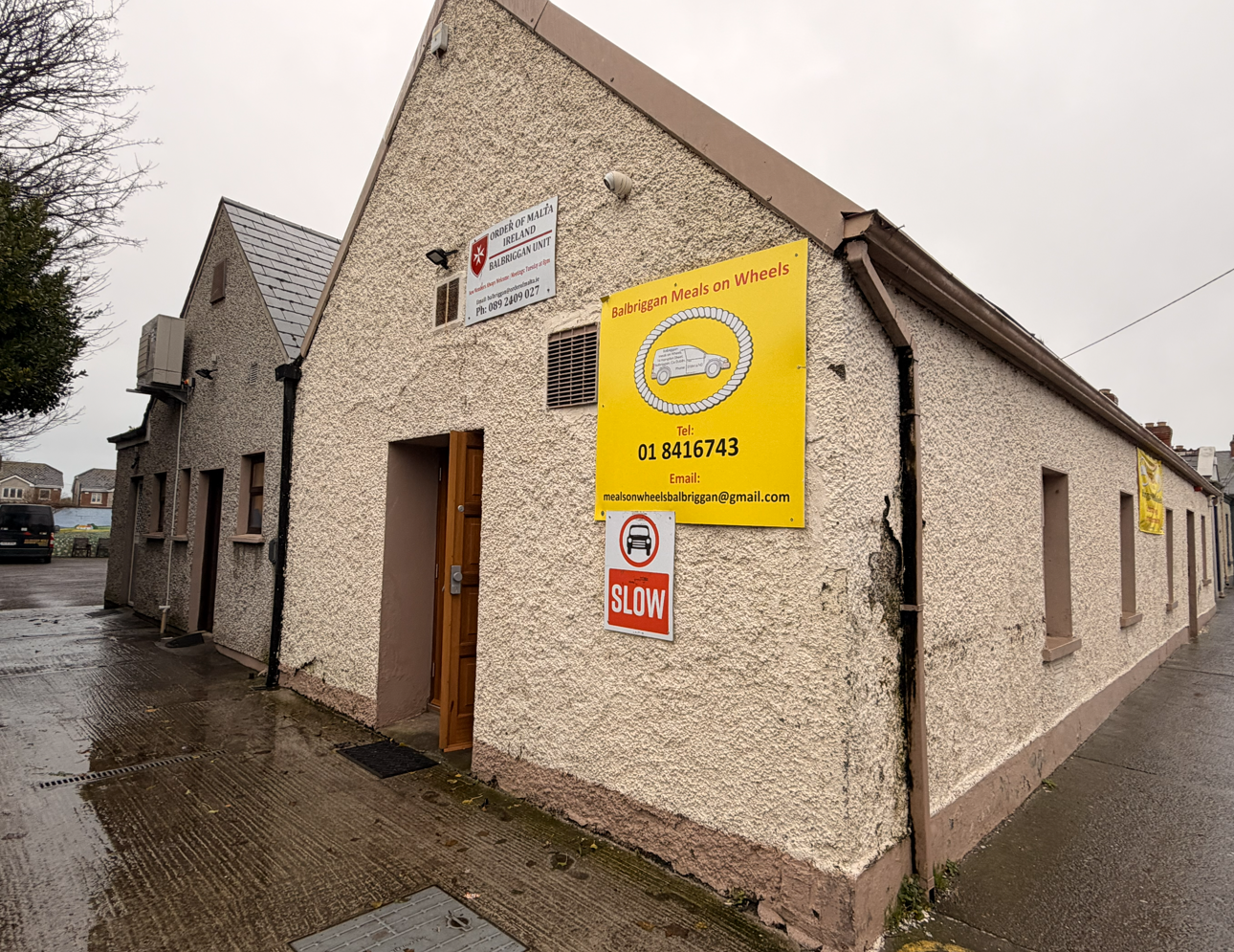
Bridie Carr stepped into the Meals on Wheels building in Balbriggan from a gravel car park lined with colourful murals, fluorescent vest in hand.
It was just after 12:30pm on Thursday, and she was just back from her twice-weekly volunteer shift delivering meals around the town.
Another volunteer returned at the same time, also in a neon Meals on Wheels vest, both bundled up against the weather.
It’s raining, miserable. The whole week has been the same.
But Carr said it was fun, it always is. “There's always chats and laughter.”
This Meals on Wheels kitchen is open six days a week – run by a small number of part-time paid staff and around 40 volunteers – delivering between 120 and 140 meals each Tuesday, Thursday, and Saturday.
"If for whatever reason, if you can't just cook a dinner … we will give you a dinner,” said volunteer secretary Alice Davis. “There's no prescription or rules around it.”
Then they have the dinner club on Mondays, Wednesdays, and Fridays, that’s maybe 20, and they also deliver about 35 meals on those days.
A bus goes out and collects and brings in residents for the dinner club. “So it's a social gathering,” Davis said.
This month, as Meals on Wheels marked its 50th year delivering meals in Balbriggan, one of its founders, Eoghan Ó Ceallacháin, turned 100, he said on the phone on Sunday.
Ó Ceallacháin was born and has lived his whole life in Balbriggan, he said on Sunday. He still remembers when he got the idea to open a Meals on Wheels branch there.
An older woman had died in town. He heard rumours that she’d died of malnutrition, Ó Ceallacháin said.
“I asked the local doctor, and he told me, oh yes, yes, and lots more, there are lots more people suffering from malnutrition in the town,” he said.
The town at the time was very small, he said, and “everyone knew everyone”. The 1972 census counted only 3,741 people.
The woman’s death stirred something in him, Ó Ceallacháin said. He went to the parish and asked them if they would help create something to prevent this from happening again.
“And they told me that, well, they had no finances, nothing,” he said. “I said, well, I will see what I can do to raise the money.”
He organised a committee to help build a facility to make and distribute meals from, he said. They approached a builder’s supplier looking for the materials they needed.
“And I said, I don't have money to pay for it, but I will raise it – and we started,” he said.
He asked the parish for a portion of their garden on Hampton Street, and they agreed.
Yes, Davis said. Where the kitchen is, the church had an orchard back then.
Volunteers built the building themselves, Ó Ceallacháin said.
“I approached a few people, I guessed they would help, and I had a builder, a brick layer, who said he would come every evening,” he said. “And if the bricks were there, he would lay them.”
On Thursday afternoon, in the now completed and well-used building, Davis gestured to a photo on one of the posters laid across the table, of those early days with men standing in a dirt patch with large cement blocks where the building now stands.
“And eventually we had a kitchen built. And I – we– had the place all set up and ready, and we started off on the first of January, 1976,” he said.
“Some people gave me extra pots and pans”, volunteers started coming by and helping out, figuring out their jobs – and local farmers provided provisions.
“A local farmer, Maurice McAuley, who was a potato grower. He offered me four bags of potatoes a week, free gratis,” Ó Ceallacháin said.
“And Tommy Moore, a vegetable grower. He offered me a couple of bags of carrots, parsnips, turnips, etc, a week – and onions – if I could use them. And I could use them,” he said.
A woman who lived across the street from the Meals on Wheels kitchen would get out of bed at 7am and “run across in her dressing gown”, and “light the gas underneath the ham so that by 10 o'clock, when the ladies would come in, that ham would be nearly ready, and that was the way we worked”, he said.
And then volunteers started delivering the hot meals straight to people’s doorsteps.
Over the years, Balbriggan has grown, from fewer than 4,000 people when Meals on Wheels started delivering there, to 24,322 people as of the 2022 census.
As the town has grown, so has the service. In the early 2000s, Meals on Wheels Balbriggan raised €120,000 to expand.
On Thursday, in the main room of the Meals on Wheels building, Davis, the volunteer secretary, leafed through a stack of posters laid out for the 50th-year celebration.
The posters trace the organisation’s history.
There are black-and-white photos of the first committee in the 1970s, a dozen-odd men and two priests.
There are colour photos of recent fundraisers run by local sports teams, and banquets the volunteers held for themselves.
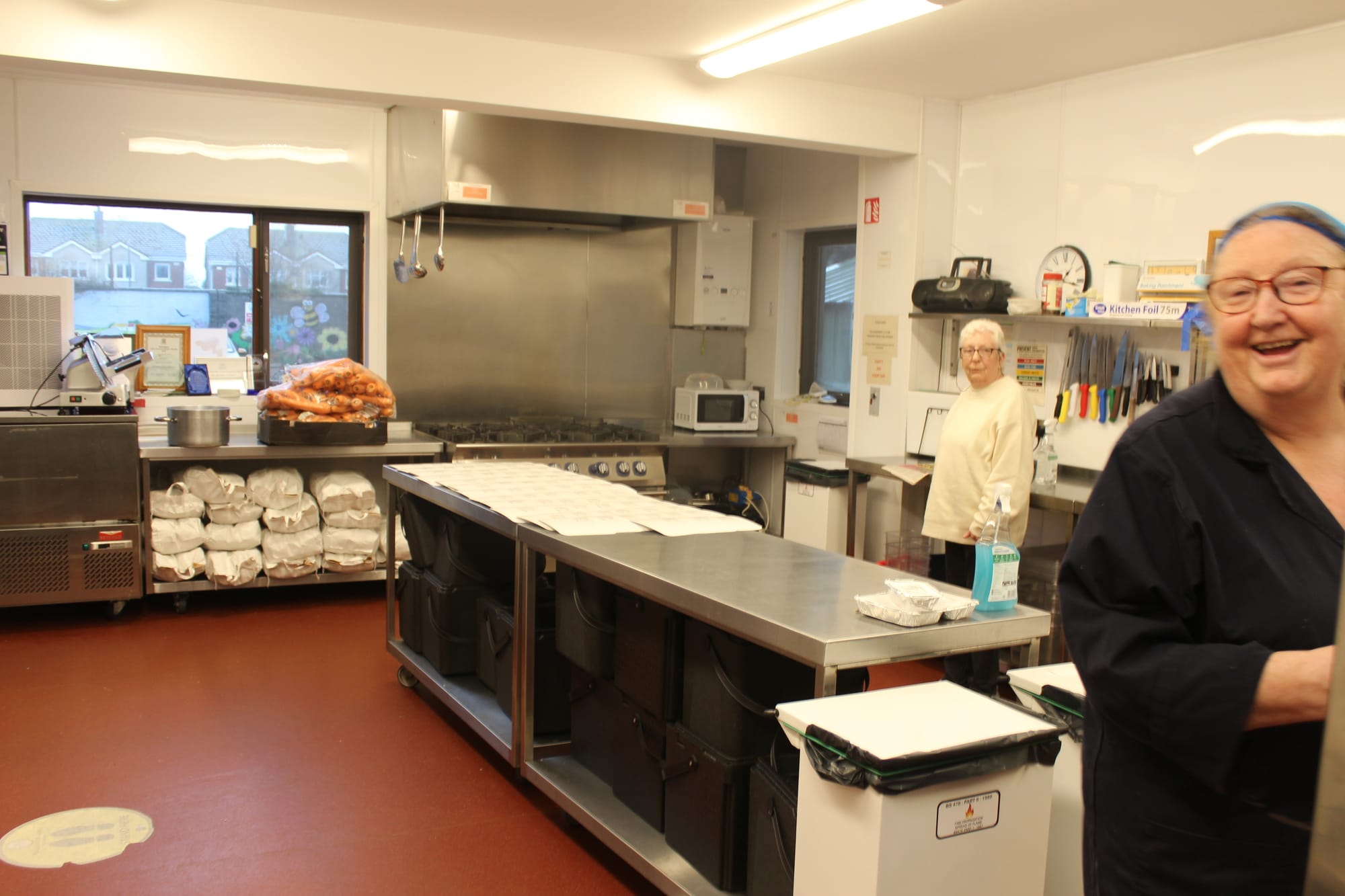
In the next room, in the kitchen, cook and manager Helen Davis is in the kitchen, talking about her work.
Every ingredient is tracked, she says. Every bushel of potatoes, chicken, dairy product. Meals must be nutritionally balanced, and tailored to individual needs, she says.
She has print-outs listing dietary needs: diabetes, kidney disease, allergies, religious restrictions, those who don’t eat pork, don’t like gravy, chicken, lactose.
“Renal failure, kidney disease, diabetics. Cancer and gluten-free,” Davis said, pointing to the lists. “We have them all.”
Still, “it’s an easygoing kitchen”, she said. They play Sunshine radio on a boombox, the volunteers and community employment scheme workers pick what they’re going to do.
“If a volunteer wants to do a certain job, we stand back and let them,” she said. “We had one person come in today — she’d lost a friend and didn’t want to be alone at home — so she spent the day with us.”
Alice Davis and Helen Davis have been thinking about how Balbriggan’s changing, and what that means for how its Meals on Wheels will need to change.
The town is still growing fast, there’s new homes being built at pace, says Alice Davis.
Sometimes the issue is reaching the west-siders, in the newer areas, she says.
The next generation of Balbriggan is a lot more diverse, says Helen Davis, and tastes in food are changing.
As the aging population evolves, she’s thinking about ways the kitchen will adapt the meals for the next generation.
Funded by the Local Democracy Reporting Scheme.

The council closed the pool after its roof was damaged in Storm Darragh in December 2024. In January, it put out a tender to fix the roof.

It isn’t creating any problems, said a council spokesperson. Some councillors aren’t too sure.

“It shall be a condition of planning that the developer must ensure the facility is fully delivered and operational,” Labour Councillor Mark Boland's motion says.

The walls are stacked with games. Familiar ones like Catan, and Dungeons and Dragons, and less familiar ones such as Calico, Sushi Go, and Cascadia.