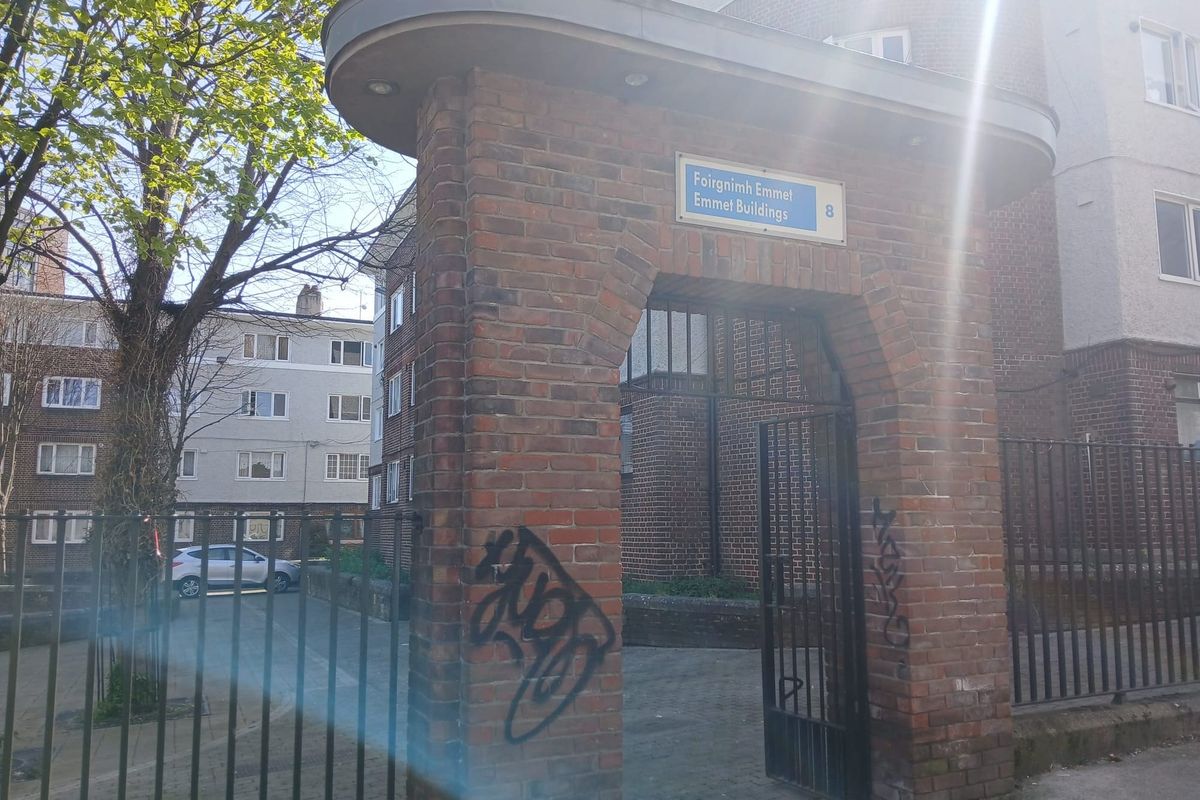
"There is just a ridiculous overconcentration of short-term accommodation," in the Blackpitts and Newmarket Square area, says Sinn Féin Councillor Ciaran Ó Meachair.
The Department of Housing is reviewing social housing rents across the country with a view to standardising them nationally.
This could affect around 250,000 social tenants nationwide, and would likely mean increases for many.
Rents are currently set by councils, and so they differ from area to area – and sometimes, within council areas, between tenants of the council and tenants of housing charities.
The government’s housing plan for 2025 to 2030, Delivering Homes, Building Communities, says it plans to smooth out the differences and develop a “fair and equitable social housing rents system”.
The Department of Housing, together with the Housing Agency, is carrying out a detailed analysis of rents schemes to explore potential options for reform, a department spokesperson says.
But some public representatives say they're not in favour of a standardised national system, which takes the power to decide rents away from local councils.
“Government should set national parameters, and each council should determine the scheme,” says Labour Councillor Dermot Lacey.
Sinn Féin TD and housing spokesperson Eoin Ó Broin says standardising rents across the country would be politically controversial, and he also favours leaving the power with councils.
The main issue that should be researched and debated is how to fund councils to maintain their social housing, Ó Broin says.
“The real issue isn’t the rent,” says Ó Broin. “The real issue is how do we fix the financing of maintenance for social housing.”
Should rents be standardised?
At the moment social tenants pay a differential rent, which is a percentage of their income.
Each council sets the percentage and it can vary significantly. A 2022 paper from ESRI, showed them ranging from 10 percent to 24 percent.
Some councils bill everyone in the household for rent, while others mostly focus on the highest earner in the home.
Councils cap the total rent for a household at different levels. The ESRI paper showed some counties with a maximum of €130 or €180 a week, while others did not have a maximum.
Different councilsmake different assumptions about the incomes of their self-employed tenants.
And some people who live in social housing managed by housing charities pay a different rent depending on the model of funding the charity used to finance the homes.
The differential rent scheme “is a critical piece of the State's welfare apparatus”, says the Department of Housing spokesperson. While the system has strengths, “it is characterised by inequity”, he says.
“Rents vary widely with disparate approaches meaning social tenants on similar incomes pay significantly different rent for similar properties merely because of the local authority area they reside in,” he says.
That needs to be remedied, says the spokesperson.
But People Before Profit Councillor Conor Reddy says he is totally opposed to the idea of a national social rent scheme. “I think it's a terrible idea,” he says.
He thinks the move will involve increasing social rents to levels that will be unaffordable for many tenants, against the wishes of local councillors.
“Anything that brings social rents closer to market rents is essentially undermining social housing," he says.
Lacey, the Labour councillor, says he thinks the government should apply certain safeguards but let councils work out the details of their own rent schemes.
Councils should have flexibility because different councils may face different challenges, he says. For example, other councils own a lot of newer houses, while Dublin City Council has a lot of older flat complexes.
“We have to have a rent strategy that ensures the regeneration of those flats,” Lacey says.
Rent to fund maintenance
Dublin City Council raised rents late last year, with officials saying it needed the money in order to fund maintenance of social housing.
Fingal County Council also raised social housing rents late last year, as did Dún Laoghaire-Rathdown County Council.
"Local authorities have adjusted their schemes to meet the ongoing maintenance needs of current properties which have increased over the years," a Dún Laoghaire-Rathdown council spokesperson said.
One argument in favour of a national rent model could be to help ensure a reliable funding stream which councils could use to better maintain social homes.
Reddy says councils need more money for maintenance, but he doesn't think rent increases within the existing social housing system is the way to get it.
Instead, he points to the Vienna housing model, a system of public housing available to people of all income brackets.
As a result of including more higher earners, the rent intake would increase and then become sufficient to fund maintenance, he says.
Another item on the department's agenda is to look at the possibility of merging social and cost-rental housing, into a single tenure.
Ó Broin, the Sinn Féin TD, says that councils definitely need more money to fund maintenance of social housing.
“They don’t get enough money in the rent to maintain the properties and they don’t get enough from central government to maintain the properties,” he says.
But recent increases introduced by Dublin City Council “will only raise a drop in the ocean” of what they need to regenerate the older council flats he says.
He would like to see research done to work out how much funding would be needed to fix the problems. “What is the scale of the deficit?” he asks.
Dublin City Council has started to catalogue conditions in its social housing with what is being called the ADDjust survey, a council official said in April.
As it does, council staff expect more funding to be released, gradually, by the department to carry out planned maintenance and resolve underlying issues.
Also, thereare around 68,000HAP tenants across the country, says Ó Broin. Those tenants face rent hikes when social-housing rents are raised, but won’t get better maintenance as a result.
And many of those HAP tenants are also paying additional rent top-up payments to landlords, as well as the differential rent.
“I’m not against government looking at the differential rent schemes,” says Ó Broin. But “unless there are very compelling reasons, those powers should be left with councils”.
Will it happen?
The recently published report from the government's Local Democracy Taskforce mostly argues for increasing the councils’ powers.
One of the key objectives is “local government that is more empowered with enhanced devolved functions”, says the report.
But that doesn’t apply when it comes to rent-setting. Instead, the taskforce says the government plan to streamline social rents nationally “should be progressed expeditiously”.
It also says councils should be empowered to deduct rent at source, from tenants' wages or social welfare payments.
Lacey says he thinks national legislation should be introduced to allow councils to deduct rent at source, which he says would help people on low incomes, who cannot afford to get into debt.
The idea of streamlining social rents nationally has been floating around for years, Lacey says.
Ó Broin says the plan has been contained in every government housing plan for the last 10 years.
It was included in the government's Housing for All plan, brought in in 2021. As well as Delivering Homes, Building Communities, which covers 2025 to 2030.
But Ó Broin says he isn’t expecting any imminent changes to the system. “Its politically very controversial,” he says.
The government’s implementation plan for that Local Democracy Taskforce report says it will develop a “consistent national rent scheme” by the end of 2026.
But the spokesperson for the Department of Housing said the results of the review will be presented to the Minister later this year. After that, the government will consider any reforms, he says.
“It is essential that any potential options place sufficient emphasis on achieving the best blend of equity, progressivity and sustainability,” says the spokesperson, “and critically, protect those on lowest incomes and at greater risk of poverty.”
"There is just a ridiculous overconcentration of short-term accommodation," in the Blackpitts and Newmarket Square area, says Sinn Féin Councillor Ciaran Ó Meachair.
“I don’t think we do have a policy on displacement,” says Labour Councillor Darragh Moriarty. “But there probably should be something in light of the private rental market being so volatile and so precarious.”
But councillors wonder whether the new-ish Residential Zoned Land Tax will prompt Dublin City Council to build more homes – or just push it into selling off its lands.