

Against a backdrop of policy shifts, Ukrainian refugee children embrace their Irish life
Ireland is the place they started school, joined sports clubs – yet their parents worry about how changes to citizenship eligibility may haunt their future.
Ireland is the place they started school, joined sports clubs – yet their parents worry about how changes to citizenship eligibility may haunt their future.

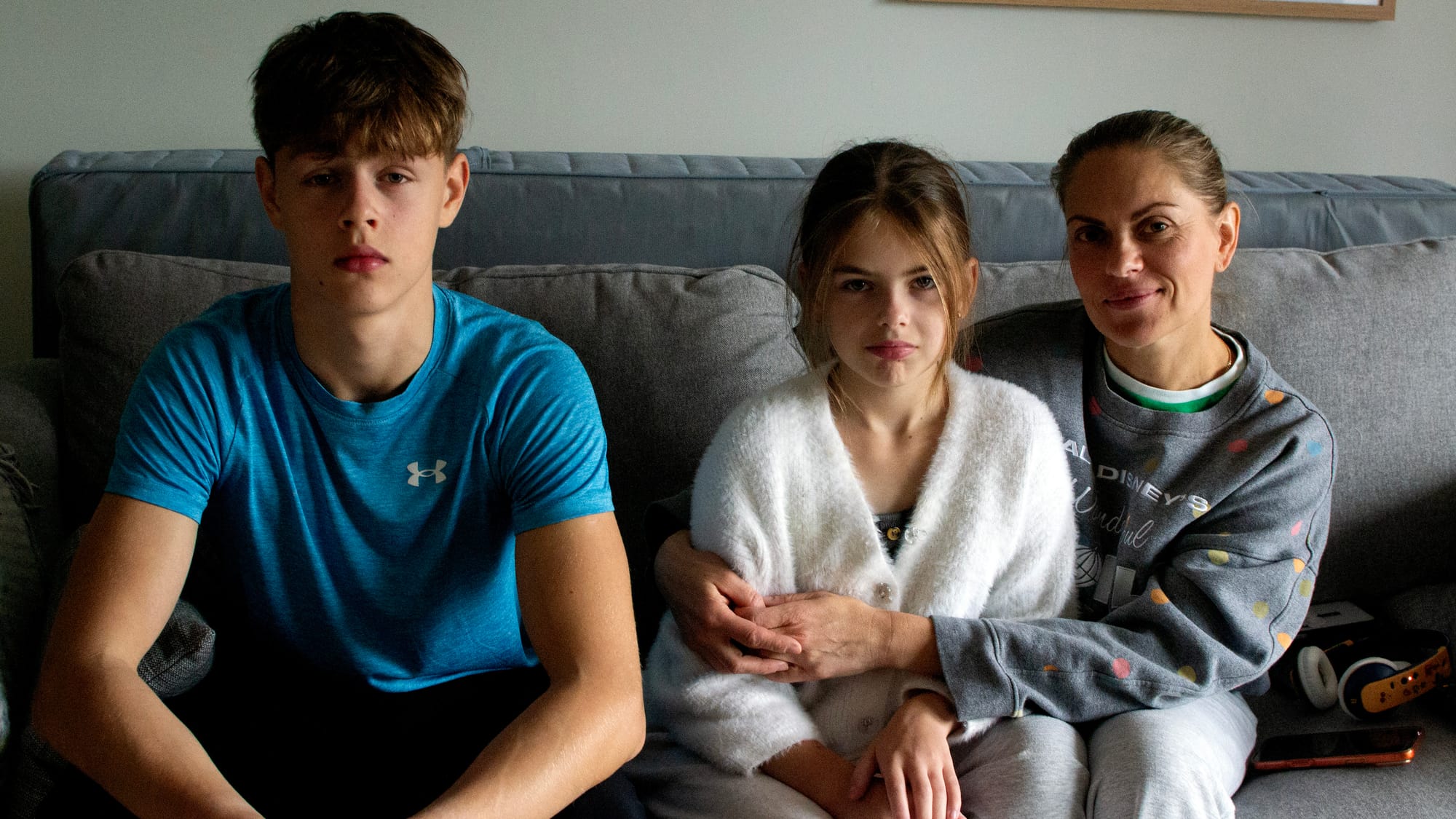
Inside their dimly lit living room, Olena Tinhaiev-Kovtun stood in silence in response to small talk.
“She doesn’t speak English,” said her 10-year-old daughter Patricia, stepping in front of her mum.
The little girl wore a fuzzy white sweater over her pyjama bottoms. Olena smiled and nodded.
Both Patricia and her brother Misha, a sporty 14-year-old boy, are used to chiming in as interpreters for their parents.
The family took shelter in Ireland from the war in Ukraine almost five years ago now.
During this time, Patricia started school for the first time. Misha blossomed into a promising gymnast with an inner-city accent that freaks out his parents sometimes, said their father, Vlad.
A gaggle of medals Misha has won dangle from the side of a bookcase in their apartment on Harold’s Cross Road.
Patricia doesn’t remember their home in Ukraine, even when they try to jog her memory with pictures, said Vlad.
But Olena and Vlad have are still trying to adjust. Olena has struggled to learn the English language. Vlad spends hours on Duolingo every day, trying to improve, he said.
“As you can see, he speaks okay, but he’s saying he needs to be more fluent,” said his son Misha. And their mum is doing her best, he said.
The boy wore a blue t-shirt with the white logo of the Under Armour athleisurewear brand stitched on its chest.
The couple watch as their kids drift away – sometimes forgetting how to say certain things in Russian – and disappear into a world of Irishness that still feels alien to their parents, they say.
It’s for their kids that Vlad and Olena had hoped their years here so far would have counted towards their eligibility to apply for citizenship, so they could have sealed their kids’ future – keeping them on the path they think they are on, said Vlad.
“I don’t think about it for us,” he said, pointing to himself and his wife.
But the Department of Justice's planned changes would mean the family's nearly five years here haven't brought them any closer to being eligible to apply for citizenship.
Among other tweaks, it aims to exclude people with temporary asylum permissions from qualifying for citizenship, no matter how much its holders have integrated – or, like Misha, how often they’re mistaken for an Irish kid.
Instead, the government is requiring families like this now to apply to a new Temporary Protection Transition Scheme. And, if they meet its income requirement, start their clock again at zero.
Though in hardening the rules, the government has talked about the salience of integration for people who hope to become Irish citizens.
The Department of Justice has said in response to previous queries about the issue that it was always an “established policy” not to count years on temporary stamps towards qualifying for citizenship. Immigration lawyers have contested that.
On a recent evening, Misha and five other boys, sat in a circle at Excel Gymnastics' gymnasium in Cherry Orchard. They did splits, upward dogs and other stretches to warm up.
Two other boys later joined them. Sometimes, they gabbed and giggled.
On the other side of the gym, little girls, some in costumes and with their faces painted for Halloween, were bobbing up and down all over the place.
Some girls did cartwheels on large mats that filled the entire gymnasium.
Later, Misha and the other boys walked over to another side and dipped their hands in chalk powder for better grip, and then began to practice.
Misha, in an orange T-shirt and black shorts, dangled from two small rings upside down, then balanced himself into a split.
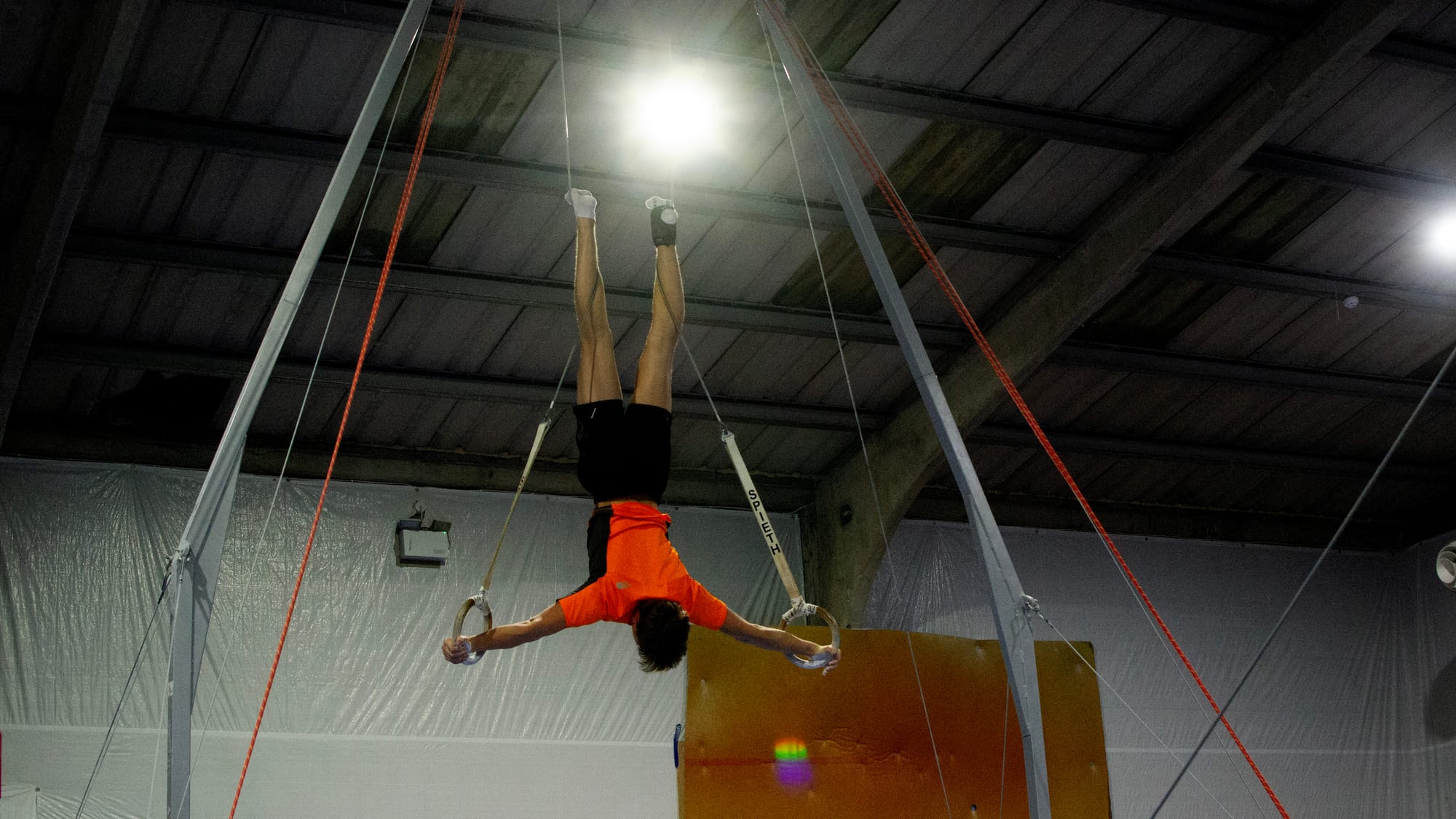
Hugo Lopes, Misha’s coach, in a pirate costume, holding his hat in his hands, supervised the kids.
Both Lopes and Natasha Condell, a former professional gymnast, who has been running Excel Gymnastics for two decades, said Misha used to be introverted when he first joined the club almost four years ago.
“Obviously, his English wasn’t as good. Now, looking at him, he’s nearly more Irish than we are,” said Condell, smiling.
Misha has travelled internationally to compete in gymnastics contests, even to the United States, where officials initially rejected his first visa application, maybe not clocking that he was going with the club, said Condell.
“So, the second time, we helped more, and he got his visa; it was nearly tears of joy, you know, the parents and him were just so happy, and it was just such a big deal for him to go because they probably thought he'd never go there,” she said.
He’s talented and has come a long way, Condell said.
“The aim would be if he gets his Irish passport, he would be a member of the national team,” said Condell.
Right now, he’s sort of an affiliate member who can train with other juniors at the national centre “because he’s been recognised nationally”, Condell said.
Condell laughs, mentioning his accent. “He goes to school in the city centre; that’s how they speak in school,” she said.
In his school, new teachers are thrown when they realise Misha hasn't lived here his whole life, he said in their home.
In Ukraine, Vlad, who is in his fifties, used to run his own business.
He had a sports club, he said. “I never thought about moving to another country."
It never crossed his mind to learn English. He knew maybe two or three words before they moved here. “Like 'hello',” he said, chuckling.
In an email that he and his wife sent later – worried they couldn’t express themselves in real life – they wrote that as a couple they might go back to Ukraine eventually “if circumstances allow”.
“But our children’s lives are now inseparably linked to Ireland,” they wrote.
Misha was still pretty young when they moved here, and Patricia has never been taught in her first language, they wrote.
They had heard that the government is talking about the need for people to integrate if they wish to become citizens, and their kids have done just that. “Our children are already part of the fabric of this country,” they wrote.
Back in their living room, Vlad said he has struggled to get another business off the ground here, wrestling with language barriers, he said.
But he’s working hard to set up a cleaning business, buying equipment right now, he said.
“I really like it here, we’re hoping, as my dad says, to like, open a cleaning business, to like just have money and hopefully we can stay in this apartment for a long time,” said Misha.
Misha and Vlad said they had to find the rental when the government withdrew accommodation support for Ukrainian refugees – as part of a gradual reduction of supports for them in recent years.
Misha likes it better in this apartment, he said, because it makes him feel like “normal people”.
Maybe one day they can buy a home so they’re not renting, he said. “I really don’t want to go back.”
The Temporary Protection Transition Scheme for Ukrainian refugees – which Olena and Vlad said in their email that they would apply to if they could qualify – requires applicants to be in employment or self-employment for at least six months before the scheme opened in late September, with an average gross income of €29,432.
“And must continue to be in employment both at the date of application and at the date a decision is made on their application,” Colm Brophy TD, a Fine Gael Junior Minister at the Department of Justice, told the Dáil recently.
His response didn’t directly address the question posed by People Before Profit-Solidarity TD Ruth Coppinger, who’d asked if the department would soften the scheme’s employment conditions for disabled people, carers and single parents.
Misha is pushing himself really hard to both study and train, he said.
“Straight after school I go to gymnastics, to my like gym, and like I train there every day for four hours, and I get back home at like 9:30.”
And he's doing “higher-level English and maths because it's really good for me", he said.
Sometimes, Misha struggles to understand everything his parents say in Russian, looking up English translations of some stuff, they said.
That means he feels as if he and his mum are growing apart, said Misha. “It’s crazy, and it’s like … kind of sad,” he said.
Vlad is often spooked just listening to his son speak with his inner-city twang, worrying about his future. That if their kids had to go back to Ukraine, they would be strangers there.
“Sometimes I’m scared; I worry about ... I moved him to this. I would like to do the best,” he said, crying.

While tenant complaints about the e-bike, and also noise, were referred to in the notice to quit, that was to illustrate the breakdown between the occupants at the property, said the landlord's agent to the tenant.

In other jurisdictions, residents count many upsides from such a streetscape design, but maybe not those intended in this case.

The plan as voted through has 82 social homes, and a small "community hub".

Also known as Dolphin House and Bottler’s Hall, Bottlemaker’s Hall was built as a recreational hall by the Irish Glass Bottle Company in 1915.