

As campaigns gear up in central Dublin, how sound is the voter register?
It isn’t hard to find people registered to the wrong addresses and zombie entries.
It’s one of the initiatives being pursued by the Dublin 10 Food Alliance, in a push to help ease the acute food poverty in the area.

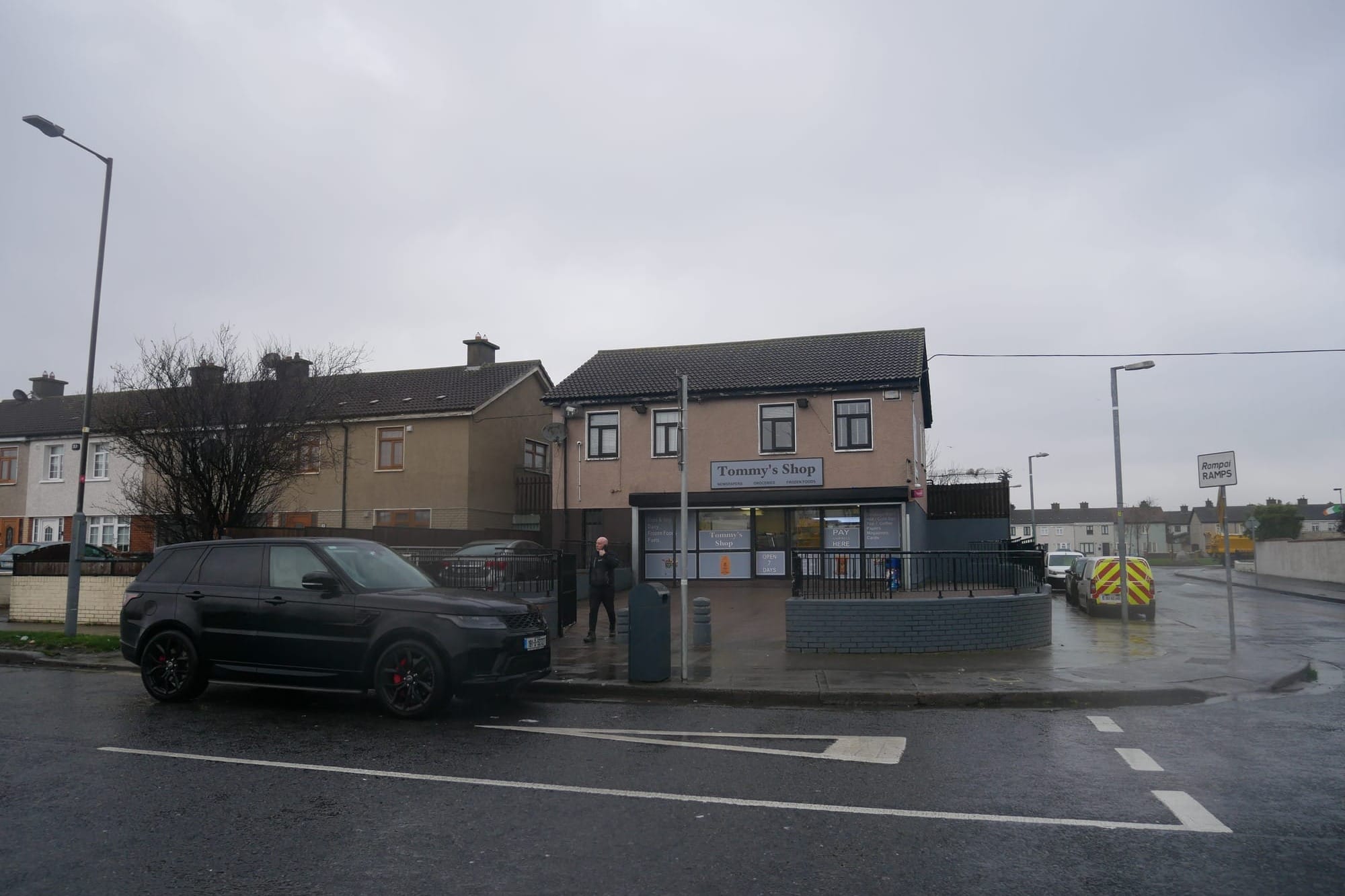
Staff are midway through changing up some of what they sell at Tommy’s Shop on Cherry Orchard Avenue.
They’re adding more frozen foods, more vegetables, and healthier readymade meals, and stripping back on sweets, says Paula Power, who runs the place.
She has just come out from behind the new deli station which sits along one side of the small corner store.
The freezers and fridges are still being stocked, she says, gesturing at half-filled cases behind her. “It isn’t even kitted out yet properly.”
But it’s what people have been asking for. The challenge of course, she says, is making it all affordable.
“Every time we get a delivery in, everything rises in price,” she says. People are just looking for value for money, she says, not luxuries.
In the coming weeks, Power says, she is due to chat with members of the new Dublin 10 Food Alliance, about their efforts around exactly this: the struggle to provide access to healthy, and affordable, food in the neighbourhood.
The alliance has grown out of research published in May last year by the Liffey Partnership, says Lauren Corbet, a community food and nutrition worker with the partnership.
The headline findings were stark.
Food poverty in this pocket of Dublin is acute. More than two out of every five people in Cherry Orchard and Ballyfermot experience it, the research said – nearly five times higher than the national average.
The alliance hopes to move on from those findings, to do something about it.
Healthy food is both too expensive, and – particularly for residents of Cherry Orchard – simply too far away, said the Liffey Partnership research last year.
The nearest supermarket for them is more than a mile away.
“Many people knew how to be healthy and wanted to be healthy but cannot afford to be,” the report said. “Simply, healthy food cannot be prioritised when rent and bills were of concern.”
Those are the two issues that the Dublin 10 Food Alliance is focused on, says Sinn Féin Councillor Daithí Doolan, who is a member of the group and was at its first meeting. “It’s availability and affordability.”
Initiatives planned by the alliance include collective advocacy, using local data to drive changes in national policies, and coordinating existing local services – which Corbet has already started to map.
Others include not-for-profit meal kits, to make healthy food affordable and convenient for people in the neighbourhoods.
They also hope to get an open community kitchen up and running, which could serve as a hub for cooking clubs and community dinners.
There are semi-commercial community kitchens already in some different services, says Corbet. But there can be a hesitancy to open them up to more groups, she says.
She has been talking to the Matt Talbot Community Trust in Ballyfermot, as they are keen to open up their space more, she says.
If cooking clubs could go there a couple of times of week for a start, she says, that would be great. Who would be involved in those groups would be community-led, she says. “What people want.”
There is homeless accommodation in the area, where people don’t have facilities to cook for themselves, she says. “Maybe there could be a group for the people living there,”
Older people living alone, meanwhile, may not feel that they want to make a meal-for-one, she says. “I’m open to whatever feels right. It would be nice to mix people up as well.”
The most ambitious item on the alliance’s agenda is to open a community-owned grocery store. They’ll be working up to that, says Corbet.
A community grocery store may first appear as a pop-up or they may set up community fridges and pantries that are simpler to get going, she says. “The idea is to start small.”
But whatever moves the alliance makes, they will be driven by people in the community, says Corbet.
In Tommy’s Shop, Power says she would support more food stores in Cherry Orchard. “It would be needed. I mean there isn’t enough shops in the likes of Cherry Orchard.”
The neighbourhood needs more amenities in general – more childcare spaces, a secondary school, she says. Especially as Park West expands in the years ahead.
Corbet says she is conscious of how much work it will take to open a community grocery store, and how important getting the right structures in place are.
Her hope though is that it would be ready and running in time to slot into one of the retail units to be built in the new town centre in Cherry Orchard.
The council’s proposals for the new town centre opposite St Ultan’s School are currently out for public consultation, and show 171 homes, four retail spaces, two arts and culture spaces, and a community space.
Community groups have said that they want to see social enterprises, not extractive chain stores and empty units, at its heart.
 Lois Kapila
How the town centre will shape up remains to be seen, says Corbet. “But our fear around it, is that commercial shops will only go where money is to be made, so is a health-promoting business going to want to move in there? Not necessarily”
If they have a community-owned grocer ready and ramping up by the time that is built, maybe they could move into one of the spaces, she says.
Until then though, they would need a space that makes sense in terms of where the food deserts are in the catchment area, she says.
She errs towards the approach taken by places such as Bohemians FC in Phibsboro, to offer community amenities where people are going already.
So maybe a sports club or a school would work, she says. “Where you get footfall.”
Doolan, the Sinn Féin councillor, says he expects the town centre project to move fairly swiftly, given the planning process is underway.
“It could happen within a couple of years,” he says, which is not so long in the greater scheme of things.
It would take time to get governance structures and funding in place for any community-owned store anyway, he says.
Doolan says that it is never easy to get, but there are funding streams for social enterprises. He points to the success of Frontline Bikes, which has a storefront in nearby Inchicore and a factory in Bluebell.
Corbet says that when the alliance talks about a community-owned cooperative food store, they don’t want to create another foodbank.
Foodbanks are needed for people in crisis, she said, but they can also be experienced as disempowering.
There might be space to incorporate surplus from an organisation such as FoodCloud – which would bring cost benefits – but they don’t want to be overreliant on that either, she said.
They want to make sure that this is a co-op that is shaped by members, that people pick foods that they want.
“We need a base in the community, and we need our first cohort of members to get it going, and suppliers,” she says. “We want to open it up to everyone in the community.”
There are lovely co-ops around, she says, but they can often be coded as middle-class.
Organic or whole-food can feel as if it is for some people and not others. ““I’d like to challenge that a little bit,” she says.
Doolan, the Sinn Féin councillor, says he has been watching the progress of a giant new social supermarket in Flint in Michigan where he visits from time to time.
That’s Aldi-size, he says. “We won’t get that big, and we probably don’t need it for that population, but it’s that model.”
Starting small, even with five or six of the basic items that are quality but affordable – some vegetables, pasta, potatoes – would be good, he says. “It doesn’t have to be exotic.”

It isn’t hard to find people registered to the wrong addresses and zombie entries.

The Department of Housing was reviewing whether it was good value to develop them under public private partnership. It isn’t, it decided.

While costs of basic items have risen, including snacks bought from the prison shop to fill long gaps between meals.

But there’s still no sign it’s going to reopen – and now the nearest one’s 3km away, on Parnell Street.