

Maybe people shouldn't be able to collect social welfare at GPO, Arnotts lobbies
The company behind the Henry Street department store raised the idea with the man in charge of the regeneration of the city centre, returns show.
“Thousands of people live in the city, and it appears they have been overlooked,” says Noel Wardick, CEO of the Dublin City Community Co-op.

On 15 June, a new 16-member advisory board met for the first time in the Mansion House.
The group is meant to guide the implementation of the Dublin City Taskforce report – which promised "10 Big Moves" to transform the city centre.
The makeup of the board raised a few eyebrows: it includes councillors, business people, institutional investors and finance experts.
But almost fully absent are the voices of the inner-city community development organisations, homeless and drug services, residents of social housing, Gardaí or anyone working in community safety.
Dermot McCarthy, a former secretary general of the Department of An Taoiseach, who is also the chairperson of the board of St Andrew's Resource Centre on Pearse Street, is the only "community sector" representative.
At the moment, it seems that the council's plan for the city centre is focused on tackling dereliction it is easy to forget that the Dublin City Taskforce was set up in the aftermath of the November 2023 Dublin riots.
The taskforce, led by David McRedmond, who was then CEO of An Post, initially had a focus on safety, and the 10 Big Moves it announced in October 2024 recommended that 1,000 extra Gardai be stationed in the city centre.
The taskforce also called for the total regeneration of social housing flat complexes and an overhaul of services for vulnerable people, tackling dereliction and waste, sprucing up O’Connell Street, overhauling transport, and marketing the city centre as a destination.
The Department of the Taoiseach announced on Tuesday that it had settled on a process for redeveloping the General Post Office on O'Connell Street. But neither the department, nor the council have responded to queries about progress on the other Big Moves.
“At this stage, the focus is on the public realm,” says McRedmond, who is now chair of the advisory board, and former CEO of An Post. “Essentially what is under the council’s direct control (real estate; streetscape; litter, dereliction, etc.),” he said by text.
“But as the SPV becomes established, it will deal with the other big moves,” he said, referring to the plan to set up a council-controlled "special purpose vehicle", a kind of company, to take charge of the effort.
Mark Fay, a spokesperson for the North Wall Community Association, said he was sceptical that the taskforce would focus on the things that working-class communities in the city actually need or want.
The needs of the working-class residents of the inner-city are often not aligned with the desires of the business community, Fay said.
“Clean-up operations mean pushing problems out of the business districts into other areas,” says Fay. “It's all optics.”
He also fears that the remit of the SPV is gentrification and the erasure of working-class communities from the city centre, he says.
The Department of the Taoiseach, council officials – and later councillors – decided that the best way to roll out projects in the city centre is not through the normal council channels but through a new council-owned company.
So they started a process to set up an SPV to steer efforts. But instead of waiting for that all to be done, they set up a new Project Management Unit within the council, to get started in the meantime.
What the Project Management Unit and the proposed SPV are being established to do really depends on who you ask.
Council officials have told councillors at meetings that the purpose of the SPV is solely or primarily to tackle dereliction.
Green Party Councillor Janet Horner says councillors have been told repeatedly by council officials that the SPV is being established solely to buy up derelict properties, renovate them, and bring them back into use. “There have been constant warnings about mission creep,” she says.
The makeup of the board appears to fit with that, says Horner. “This is where I’m just concerned about the whole entity,” she says. “It is trying to be a property development company, not a community development company.”
The Department of the Taoiseach didn’t answer a question about whether it is progressing all of the 10 Big Moves, or which ones have been abandoned.
The promise of much-needed council flat regeneration has been significantly watered down in the roadmap, and the promised 1,000 additional Gardaí are rarely, if ever, mentioned.
More than 18 months on, Garda numbers show only about 40 additional gardaí stationed in the city centre.
 Laoise Neylon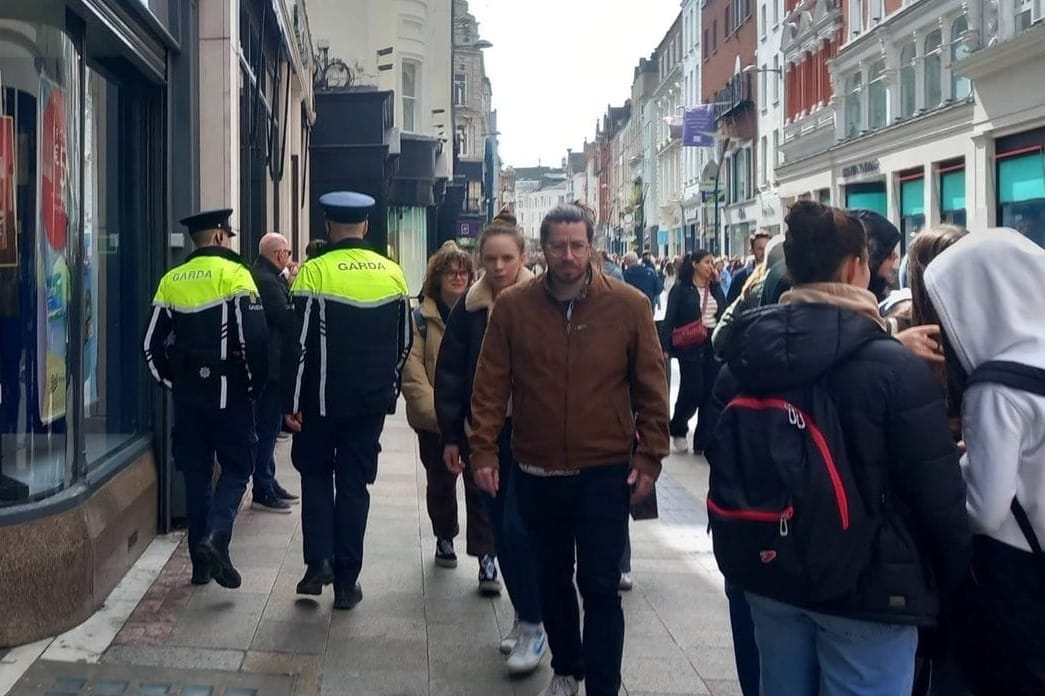
The Department of Justice hasn't responded to queries on its plans to increase Garda numbers in the city centre further, and a timeline for that.
A spokesperson for the Department of the Taoiseach redirected questions to the council, and pointed to a Dáil statement by the Taoiseach in May.
In it, Fianna Fáil's Micheál Martin, said that an oversight board, including all relevant departments and agencies, and chaired by the Department of the Taoiseach, is overseeing the roadmap to deliver Dublin City Taskforce report.
Fay, of the North Wall Community Association, says residents of Sheriff Street wonder if part of the plan is to ultimately to flatten their area to make way for private development.
In May of last year, McRedmond wrote in a Business Post column about plans to completely rebuild Sheriff Street.
“If we transform the core, there are other amazing adjacent plans, such as [property developer] Ballymore’s, to completely rebuild the Sheriff Street area from Amiens Street to Spencer Dock," he wrote.
In July of last year, McRedmond spoke about how he saw the regeneration of working-class areas of London as examples of successful regeneration.
Although, others have seen changes in London as gentrification and displacement, with large numbers of social tenants having to leave homes and neighbourhoods, to make way for development.
Independent Councillor Cieran Perry says he is backing the SPV as a similar initiative in Limerick has had success in tackling dereliction.
“The idea is to provide housing for frontline workers, while also tackling dereliction,” he says. “I support it if it does what it says on the tin.”
 Lois Kapila
Other things, like social housing regeneration, could become part of the remit later, says Perry.
He is worried that the SPV answers to the chief executive of Dublin City Council, not to councillors. “Ideally, it would be run by the councillors, but that is not the case,” he says.
But he says the benefit is that it would be more agile and flexible than the council itself.
Councillors want to buy the Moore Street Terrace, he says. There is a longstanding campaign to preserve the terraced houses on Moore Street, which were used by the rebels in the 1916 Rising to access the GPO.
Perry says that he hopes that the SPV would be able to do things like that as well as provide housing more quickly.
A council official proposed, and councillors in February approved, a list of the areas of expertise to be represented on an advisory board.
People should be picked based on their backgrounds in finance, real estate, banking, “retail/new communities”, institutional investment, the law, and politics, they agreed.
Members of the advisory board
Former An Post CEO David McRedmond chairs the advisory board, and the new Project Management Unit is led by Robert Watt, former secretary general of the Department of Health.
The elected members on the advisory board are Fine Gael councillors Ray McAdam and Colm O’Rourke, Social Democrats Councillor Cian Farrell, Sinn Féin Councillor Kourtney Kenny, independent Councillor Nial Ring and Fianna Fáil Councillor Deirdre Heney.
The other members are Pat Burke, CEO of the Mercantile Group; Jason Murphy, CEO of Centrus Advisors Limited; Eva Pau, managing director of Asia Market and TV host; Deirdre Hayes, head of property for Irish Life Investment Managers; and Davina Saint, non-executive director with board memberships at Stripe, NAMA, Blackrock, Northern Trust Fiduciary Services and Nearwater Capital.
As well as Dermot McCarthy, a former secretary general of the Department of the Taoiseach, who is also the chair of the board of St. Andrew's Resource Centre on Pearse Street; Anne Graham, former CEO of the National Transport Authority; Vincent Wall, former financial journalist and communications executive; and Kathleen Stokes, assistant professor in urban geography at Dublin City University.
Noel Wardick, the CEO of Dublin City Community Co-op, an alliance of 12 grassroots, Dublin inner-city, community development organisations, says he is surprised that residents' groups and community groups are not represented.
He welcomed the appointment of former Department of Health secretary general Robert Watt as CEO of the board. “We were very concerned for the last couple of years that the whole process appeared to be in limbo,” he says, so it is good to see movement.
“However, we are disappointed that not all stakeholders appear to have a voice or representation on the board, and we would ask that that be addressed,” he says.
“At the moment, it seems top-heavy on the corporate and commercial side of things,” says Wardick. “That is a huge component of the city, but also thousands of people live in the city, and it appears they have been overlooked.”
Perry, the independent councillor, says he agrees that the overall makeup of the board is business, financial and developer-oriented, but he says councillors are there to represent the views of the community, and he has full confidence in UCD assistant professor in geography Kathleen Stokes, another member.
Perry says he is putting his trust in the board that this is not a gentrification project, but he is concerned about councillors losing control of public land. “That is my biggest concern,” he says.
 Laoise Neylon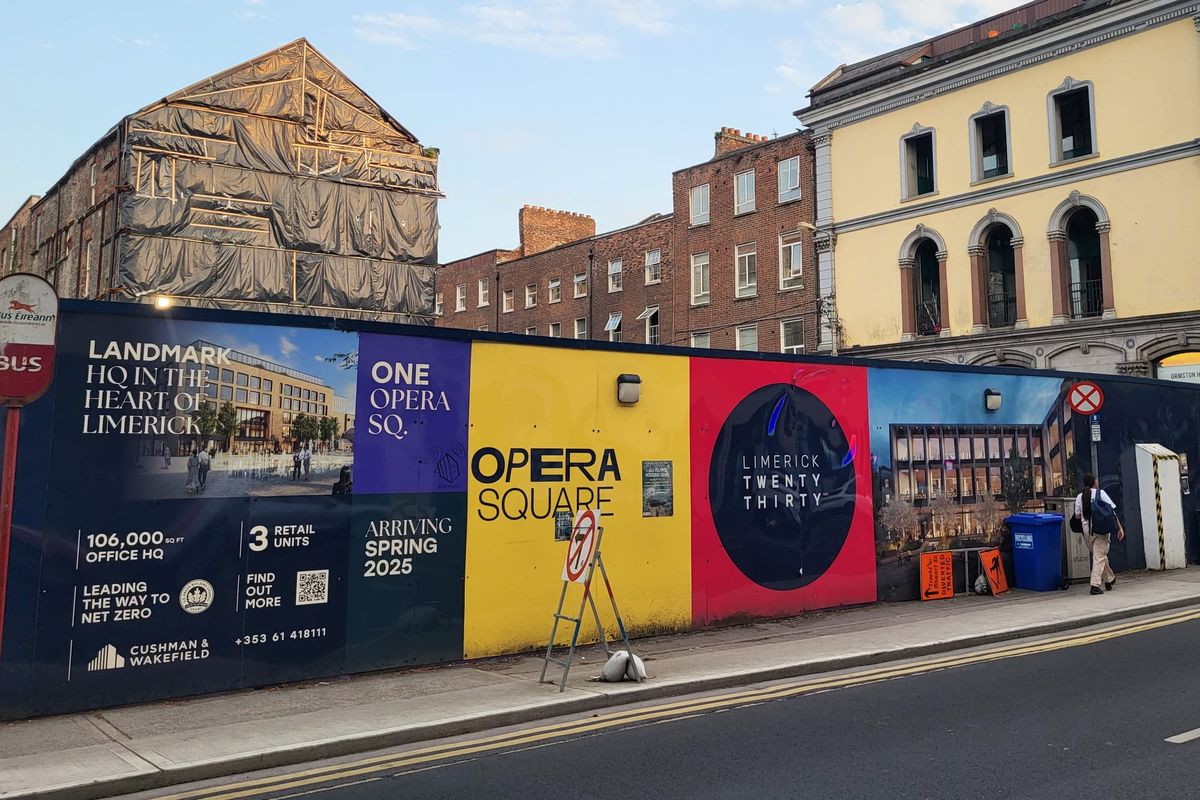
Fay, of the North Wall Community Association, says that in the past, initiatives focused on sprucing up the business district in Dublin 1, and policing campaigns, only pushed drug dealing and anti-social behaviour into neighbouring residential areas like Sheriff Street and Sean McDermott Street, he says.
In particular, he says, An Garda Síochána's Operation Spire around 15 years ago made things worse in disadvantaged inner-city communities. “The people in the inner-city communities are becoming anaesthetised.”
Fay says he currently sits on the Dublin Docklands Oversight and Consultative Forum, where it is evident that there are groups in the city centre community that are worlds apart in their thinking about what is needed.
Forum members regularly discuss plans for an open-air swimming pool in George’s Dock, he says. “I'm at the table saying, hang on for a second here, lads, before we talk about George’s Dock, can I talk about Sheriff Street?”
All that separates the two places is a thick wall, he says. “On my side of the wall it is bedlam and mayhem.”
He is trying to get a community centre reopened for an early years service for toddlers, he says. And to get funding for drug counselling services that help people to get sober, and stay sober, he says.
“Where are the priorities here?” says Fay. “I don’t see a line of people standing down Amiens Street in Speedos and bikinis.”
“I do see two and three-year-olds growing up looking at drug dealing,” he says. “That conversation goes into the air.”

The company behind the Henry Street department store raised the idea with the man in charge of the regeneration of the city centre, returns show.

It's been in place on buses in Waterford since July, and is due to be rolled out now nationwide – including on Go Ahead's Naas-based Dublin commuter services this past weekend.

"His inability to work will have a direct impact on the provision of the medical services and our ability to maintain adequate staffing and patient care,” reads a letter from the Rotunda to the Department of Justice.

"Please note, I am only looking for the restitution of €2.75 – the fare cost."