"There is just a ridiculous overconcentration of short-term accommodation," in the Blackpitts and Newmarket Square area, says Sinn Féin Councillor Ciaran Ó Meachair.
Tenants in Northbank in the north inner-city are being evicted from their home of 15 years so the developer can sell their apartment to Dublin City Council.
Two tenants challenged their eviction at the Residential Tenancies Board (RTB) and lost the case. Under the rules that governed their tenancy, landlords are allowed to evict tenants to sell the home.
Their home is one of 40 that their landlord, a fund, is selling to Dublin City Council to meet its obligations under Part V legislation, according to the RTB tribunal report.
Part V of the Planning and Development Act 2000 is a mechanism for councils to clawback some of the uptick in land value that comes from a grant of planning permission, and turn that into social and affordable homes.
Councils can, among other options, buy zoned land from the developer, buy some of the homes in the new development, or it can buy off-site homes, whether new or second-hand.
The RTB tribunal report says the adjudicators are satisfied there is a contract between the landlord, KW PRS ICAV to sell 40 homes in the development to Dublin City Council.
It is not clear how many of the 40 were already empty when the agreement was struck and whether more than nine eviction notices were issued. The tribunal report doesn’t mention the issue of mass evictions from the same building, which is not permitted under law.
KW PRS ICAV, a fund, was controlled 50/50 by Kennedy Wilson and Avicdale Limited, according to a 2024 filing by Kennedy Wilson with the US Securities and Exchange Commission.
Kennedy Wilson also manages the development, and has not responded to queries sent Monday in time for publication.
Architect and housing commentator Mel Reynolds says that under Part V legislation, developers can offer councils second-hand homes elsewhere to meet their social housing obligations for new-build developments.
But deals that displace existing tenants are counterproductive, he said.
Councils shouldn’t do that, otherwise effectively the council's social housing programme is outcompeting other working families, he said, "adding to housing insecurity and quite possibly driving families towards homelessness”.
Independent Councillor Cieran Perry said he struggled to believe the council would do that deal and wondered whether the council knew the homes were occupied.
However, this issue has arisen before, albeit with slightly different shades. In the past, in different buildings around the city, tenants have been evicted to clear out properties so they could be used by the council as homeless accommodation.
At the RTB tribunal in January, the parties agreed that the tenancy in Northbank started in 2011 and that the rent was €1,837 per month for the three-bedroom apartment.
Northbank is a large residential development in the north docklands, off Sheriff Street and Castleforbes Road.
The tribunal report said that the notice of termination was issued in February 2025.
The tenants told the tribunal that they struggled to find suitable alternative accommodation. So they filed a dispute with the RTB, they said.
The landlord, KW PRS ICAV, said it had offered the tenants an alternative property, which the tenants told the tribunal was not big enough for their household. They described it as “very basic”.
The landlord was represented at the tribunal by four people, including a barrister and solicitor, a representative for Kennedy Wilson, which manages the complex, and a staff member for the Lansdowne Partnership, which is the estate agent for the sales of the homes.
The Lansdowne Partnership staff member told the tribunal that the sale to the council was subject to vacant possession, and that the deal was done before notices of termination were served on the tenants.
“The developer was fulfilling that obligation by way of an agreement with Dublin City Council for the purchase of 40 apartments over a period of time as and when they are vacated by sitting tenants,” according to thelandlord's representativesays the report.
The tribunal report indicates that the members weresatisfied that there is a contract between the landlord and the council.
“The Tribunal is satisfied that this is a bona fide intention on the part of the landlord, having regard in particular to a Part V Agreement entered into on 30 January, 2025 between KW PRS ICAV and Dublin City Council for the acquisition, subject to the exchange of contracts, by the latter of 40 apartments at Northbank House, Castleforbes, Dublin 1.”
A Dublin City Council spokesperson later confirmed this deal. The council took those apartments at Northbank in lieu of apartments at another complex, he said.
"In October 2022 , the City Council agreed to acquire second hand apartments off-site in Northbank House, Dublin 1 as off-site Part V compliance for City Block 3, Dublin 1," the council spokesperson said.
"In the first instance 32 units were acquired, with a further 7 acquired at a later date," he said. "One tenant is due to leave in September and Dublin City Council will acquire the last remaining apartment."
Could cause homelessness
“It would be a bizarre scenario if, in their attempt to house people on the social housing waiting list, Dublin City Council was to be involved in the potential eviction of existing tenants,” says housing lecturer at TU Dublin Lorcan Sirr.
“It's very strange,” says Perry, the independent councillor.
In his experience, Dublin City Council doesn’t usually buy homes where tenants are already living, “because of the possible consequences of people being made homeless”, he says.
He doesn’t think the council should do deals that involve anyone being evicted from their homes. “I’m assuming the council don’t know that they are still occupied,” says Perry.
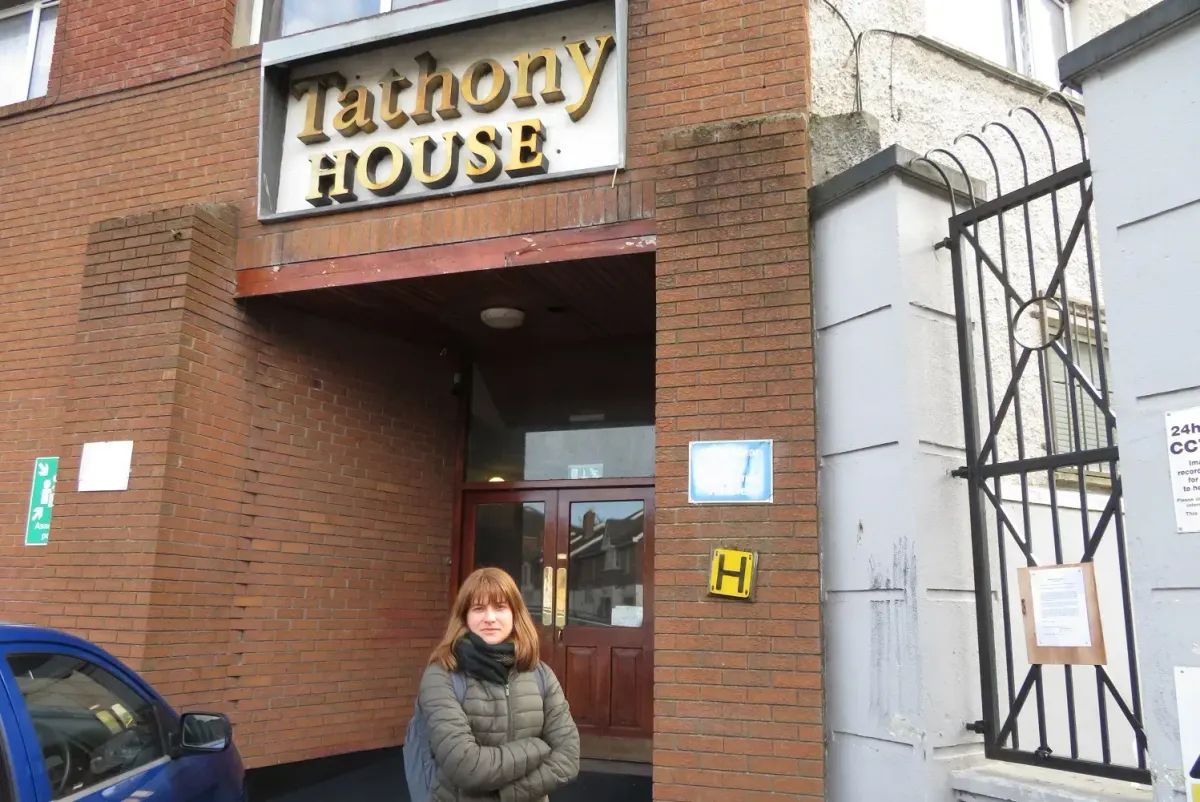
Tenants have previously been evicted from Tathony House in Dublin 8, the Tramco building in Rathmines, and a converted warehouse in Glasnevin, as part of efforts to lease them to the council for use as homeless accommodation.
The council does tender for vacant properties, a council spokesperson has said. But it doesn’t appear to have a way to check and ensure that they are not powering evictions and the displacement of long-term tenants.
If it does buy apartments with people living in them, though, maybe the council could let the tenants stay, says Reynolds. Were the tenants at Northbank assessed as to whether they qualified for one of the tenant-in-situ schemes? he wonders.
Reynolds says the council and the Department of Housing should carry out an analysis of the costs involved when people are displaced from their homes.
If any of those households become homeless, it could cost the council more for homeless accommodation, or Homeless HAP payments to help them rent private accommodation, than it saved on the Part V discount when buying the homes, he says.
“In this instance it would appear that DCC may have been better off not doing Part V at all,” says Reynolds. “At least the long-term tenants would have stayed in their affordable accommodation.”
Reynolds says that if the council doesn't want to cough up the high prices for new-build apartments in the city centre, it has other options. Under Part V legislation, it can buy land at a discount from the developer, he says.
One issue that the tribunal report doesn't go into is whether the Tyrrelstown Amendment comes into play at all, in the Northbank sales and evictions.
The tribunal report says the council is buying 40 apartments in Northbank.
Under the Tyrrelstown Amendment, if a landlord intends to sell 10 or more “units” inhabited by tenants, within a single development, within a certain period, the tenants have the right to remain in their homes even though they’re sold.
UPDATE: This article was updated at 16.26 on 20 August 2026 to include a response from Dublin City Council received that day, to queries sent on 3 August and 5 August.
"There is just a ridiculous overconcentration of short-term accommodation," in the Blackpitts and Newmarket Square area, says Sinn Féin Councillor Ciaran Ó Meachair.