

Who will sit on the advisory board set to shape the future of Dublin city centre?
Seven areas of expertise should be represented, said a recent council report.
Andrii Stepanov says some people don’t want to return to what was once their home, and is now Russian territory. “Why are they pushing us to Russia?”

In the nearly four years that he’s lived in Ireland, Denis Henesky has taught himself its laws and politics, weathered an eviction, made new connections and found a path to education, he says.
“Everyone said, ‘integrate, integrate, integrate,’” said Henesky, resting his hands on a cane.
Gradually, he’s come to realise that tallying his experiences here doesn’t amount to much if he can’t bank on it for stability, he said.
That makes him feel invisible, said Henesky.
Right now, there’s nothing in the citizenship law that would stop people like Henesky from applying for citizenship after five years of living here.
But that’s about to change.
Last month, the Minister for Justice, Fianna Fáil’s Jim O’Callaghan, told the Dáil that as part of a slate of legislative tweaks and policy shifts, he plans to revise the citizenship law to exclude time spent under the EU’s temporary protection directive, activated in March 2022.
People like Henesky and those who have been part of efforts to help Ukrainian refugees integrate say that makes it all feel pointless and unsettling.
“Over the past four years, they have learned the language, entered the labour market, sent their children to Irish schools and become part of local communities,” said Lelizaveta Karamushka of Ukrainian Action in Ireland, a Dublin charity focused on collecting aid for the front lines in Ukraine.
They’re not guests on a short stay anymore, she said.
“Was all this investment into integration for nothing?” said Karamushka.
Olga Dowd, an intercultural worker in Co. Cavan – who was born in Ukraine but has been living here for the past two decades – said most people she’d supported are mothers and children, and she worries about their future.
Some have kids who were born here, she said.
As of 3 November 2025, about 83,600 people lived in Ireland under the EU’s temporary protection directive, excluding thousands who either left or changed their status to something else, according to the Central Statistics Office.
The Irish government ramped up support for state agencies and non-profits to help them integrate since the Kremlin's full-scale invasion of Ukraine in February 2022.
A spokesperson for the Department of Justice did not directly respond to a query asking if it would consider softening its position by counting some of the time spent on temporary protection, so those moving on to other statuses aren’t starting from scratch.
But it will thoughtfully consider the impact of not counting it at all “as part of the ongoing work across Government on approaches to managing the exit from Temporary Protection”, they said.
At the moment, the law only excludes time on Stamp 2 – an immigration permission granted to students from outside of the European Economic Area (EEA) – for citizenship.
But unlike the temporary protection status, Stamp 2 comes with few rights for its holders. Students from elsewhere often have to pay steep tuition fees and can only work 20 hours per week during term time, and longer in the summer.
Unlike temporary protection holders, they aren’t eligible for any kind of government support and must hold private health insurance to renew their immigration permit each year.
Temporary protection holders can still access some government support if they need it, and can work any jobs they can get without restriction.
The Department of Justice spokesperson said it had always been an “established policy” not to count temporary stamps toward citizenship.
But, says immigration solicitor Wendy Lyon, “[Citizenship] eligibility is not determined by established policy. It’s determined by legislation.”
That’s why the government is looking to change the law, she said.
Besides, Lyon said, all immigration permissions are temporary if they have to be renewed. That doesn’t mean time spent on them doesn’t count.
Andrii Stepanov arrived in Ireland in 2022 with his wife. He works as a music teacher.
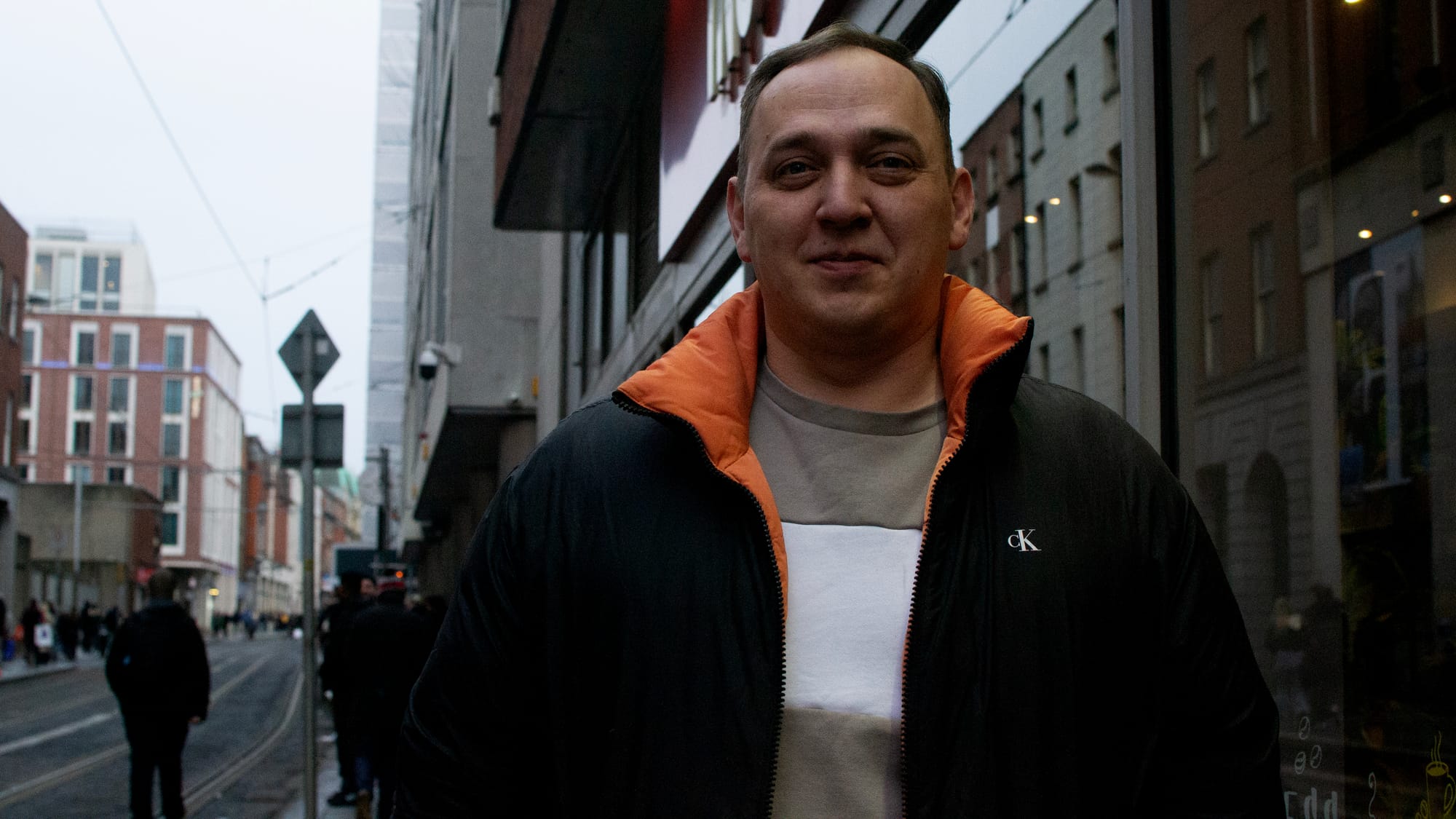
During his years here, he has taught kids from all over the world how to play the saxophone, he said.
And they go on to win accolades, play in concerts and make him proud, said Stepanov, at a city café recently.
As their first year faded into three, Stepanov grew anxious about the uncertainty of their status as someone who’d worked and paid taxes for a few years, he said.
Then he began to notice a gap between the services offered by charities and non-profits to people like him, and the limbo he was feeling, said Stepanov.
“They had a lot of courses, like yoga, mental health, knitting, okay, I know that’s really important, but that doesn’t help everyone,” he said.
So, he took things into his own hands, drew up a petition asking the government to count Ukrainian refugees’ time toward citizenship.
It collected a little over 2,700 signatures. And he’s heard back from the Department of Justice through a case manager at the Joint Committee of Public Petitions and the Ombudsman.
Stepanov pulls up a letter that the case manager sent him in November on his phone.
It says EU member states have agreed on a set of recommendations to help displaced people from Ukraine once temporary protection ends.
One is helping people move on to other immigration statuses, though it doesn’t lay out any details. Re-integrating people back into Ukraine is another.
They’re hammering away on formulating a policy to manage the end of temporary protection with those options in mind, it says.
Stepanov says some people don’t want to return to what was once their home, and is now Russian territory. “Why are they pushing us to Russia?”
Henesky, the other Ukrainian refugee in Dublin, says that where he lived is also occupied. His mother, who grapples with asthma, is stuck there, he said.
Like Stepanov, Henesky has tried to galvanise support for their cause.
He’s pitched up banners and protested outside the Dáil where he says People Before Profit has been supportive, but mentions Sinn Féin – which had called for the exclusion of time on temporary protection for citizenship – as unhelpful.
He says some Ukrainians are shy about turning to Irish people for support, worrying they’d see them as “greedy” for wanting their years to be counted.
A spokesperson for the Irish Human Rights and Equality Commission (IHREC) said that while it waits to see a draft of the Department of Justice's pitch to change citizenship law to exclude those with temporary protection status, it’s concerned about the proposal.
It is “regressive”, they said.
At a recent conference on the future of Ukraine at the European Policy Centre in Brussels, Ilona Havronska, Ukraine’s Deputy Minister for Unity of Ukraine for European Integration, said some people who’d returned to the country struggled to feel at home again.
Of course, Ukraine needs its people, Havronska said. And “I want my friends to live with me in Ukraine”, she said, smiling.
But the Ukrainian government hopes to work with the EU governments to help refugees who wish to stay abroad to do that, said Havronska.
Both Stepanov and Henesky say that when they first arrived here, officials didn’t explain other options beyond temporary protection to them.
“They said, if you’re from Ukraine, you get temporary protection,” said Henesky.
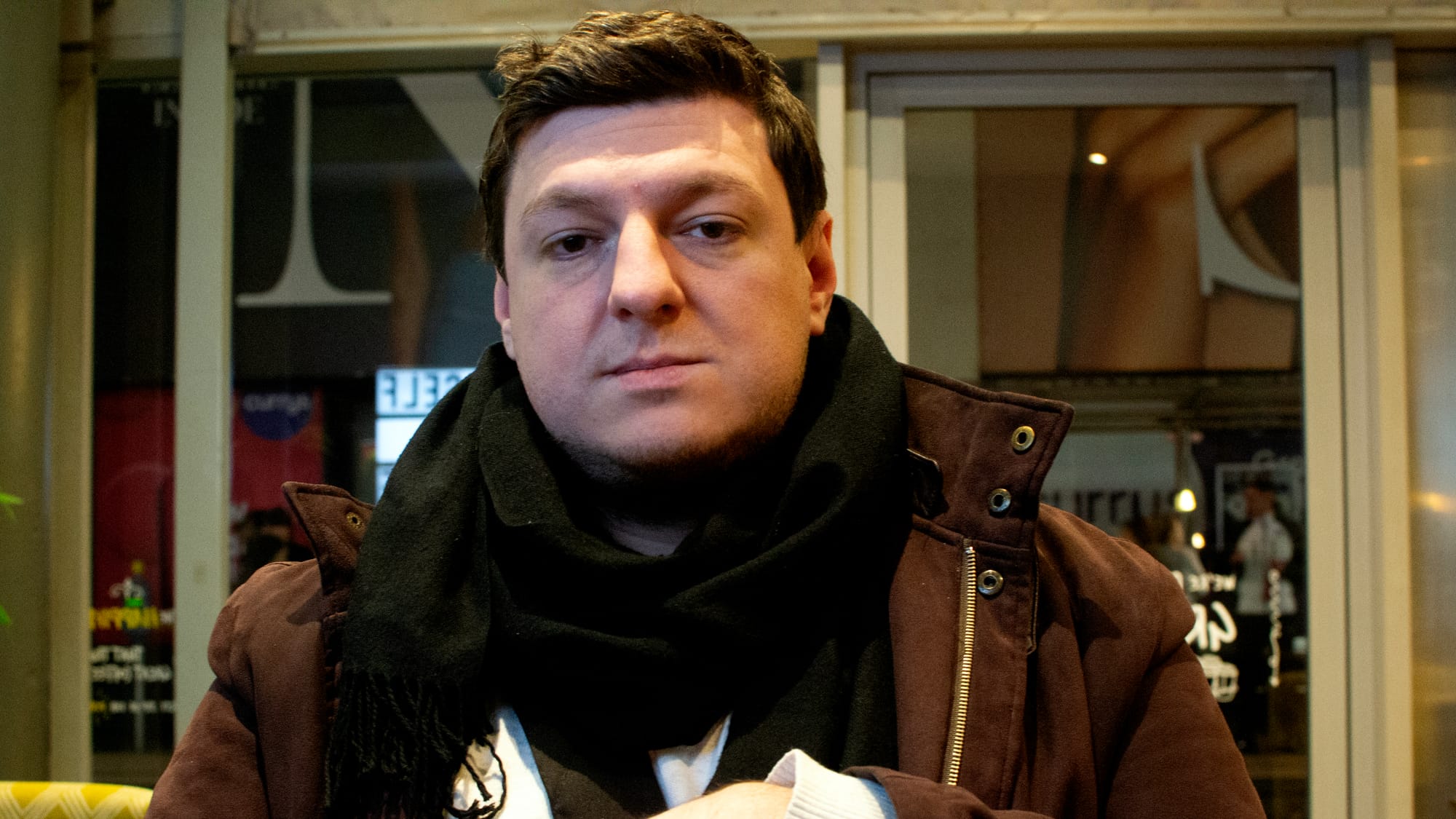
Stepanov says he can try to get a work permit, which is hard anyway. But the idea of losing his years on temporary protection and starting from scratch is too painful to reckon with.
To get work permits, workers should find jobs with salaries that reach the thresholds set by the Department of Employment, even if they have an employer who’s willing to sponsor them.
Dowd, the intercultural worker in Co. Cavan, said there are Ukrainian medical workers whose degrees aren’t recognised here.
And to get a work permit for skilled workers based on their Ukrainian credentials, they have to take exams and get certified before they can do that.
Right now, she said, everything they’ve built here has started to crack around them. “It’s very hard to persuade them to integrate,” said Dowd.
A spokesperson for We Act, an organisation dedicated to spotlighting the work of charities and community groups, said that alongside the Irish Red Cross it has spent a year to knit together stories of Ukrainians who are changing their communities for the better.
“Iryna who volunteered as a translator with Gort Cancer Support and has since secured a staff role. Natalia who volunteers in a Castlebar charity shop alongside caring for her mam full time,” they said.
Ireland has also invested so much in helping them to do that, they said. “Supporting people to find permanency would be a natural follow-on from that.”
On Friday night, Henesky sent a text message, saying he forgot to say what he really wanted to. “I was counting on starting a new life, but I never started living because they don’t allow it,” it said.

Seven areas of expertise should be represented, said a recent council report.

Children who live in homes run by private companies and charities are not included in the HIQA consultation because HIQA doesn’t inspect those services.

“There is just so much confusion,” says Sarah Lawless, who has been on the housing list for 20 years. “The whole system doesn’t make sense.”

It’s been six years since the area was listed as a priority for improved traffic management.