

Dublin City Council, again, bans poster to spare US president's feelings
Even a version which made no direct reference to Trump and removed his image, and simply read: “No welcome for warmongers” was turned down.
“The original character of the area is quite special,” says Tenters resident Marie O’Reilly, who recalls spotting unique design features on neighbouring houses as a young child.

As a young child, Marie O’Reilly says she noticed the unusual embellishments on the houses on her street and the neighbouring ones in the Tenters in Dublin 8.
She spotted that some of the houses “have these fabulous little red brick features”, she says.
The houses on her street are similar, but they are not the same. Many of the houses in the Tenters have different detailing on the walls, roofs, gables, railings, windows and even on the rooftops.
“The original character of the area is quite special,” says O’Reilly, by phone on Tuesday. “It’s a mishmash of design styles.”
The Tenters area is officially called the Fairbrother’s Fields Estate and was the first estate in Ireland to use garden-city design, says O’Reilly. So the houses have generous gardens front and back.
It was a public-housing project, and the local authority blew its budget, says O'Reilly.
Her family moved in when the homes were completed in 1922 and her mother still lives in the original family home. “We got really, really lucky,” she says. She is the fourth generation of her family living in the Tenters.
O’Reilly is among the Tenters residents who campaigned for the area to be designated as an architectural conservation area (ACA) to protect the character of the buildings.
The neighbourhood is on a priority list for the designation in the council's city development plan, 2022 to 2028. And this week, a council spokesperson said that the council is pushing ahead with the plan.
“It is anticipated that the statutory public consultation for The Tenters ACA will commence in September when a full suite of documents about the area will be published,” says the council spokesperson, “with a final decision by the Council in December.”
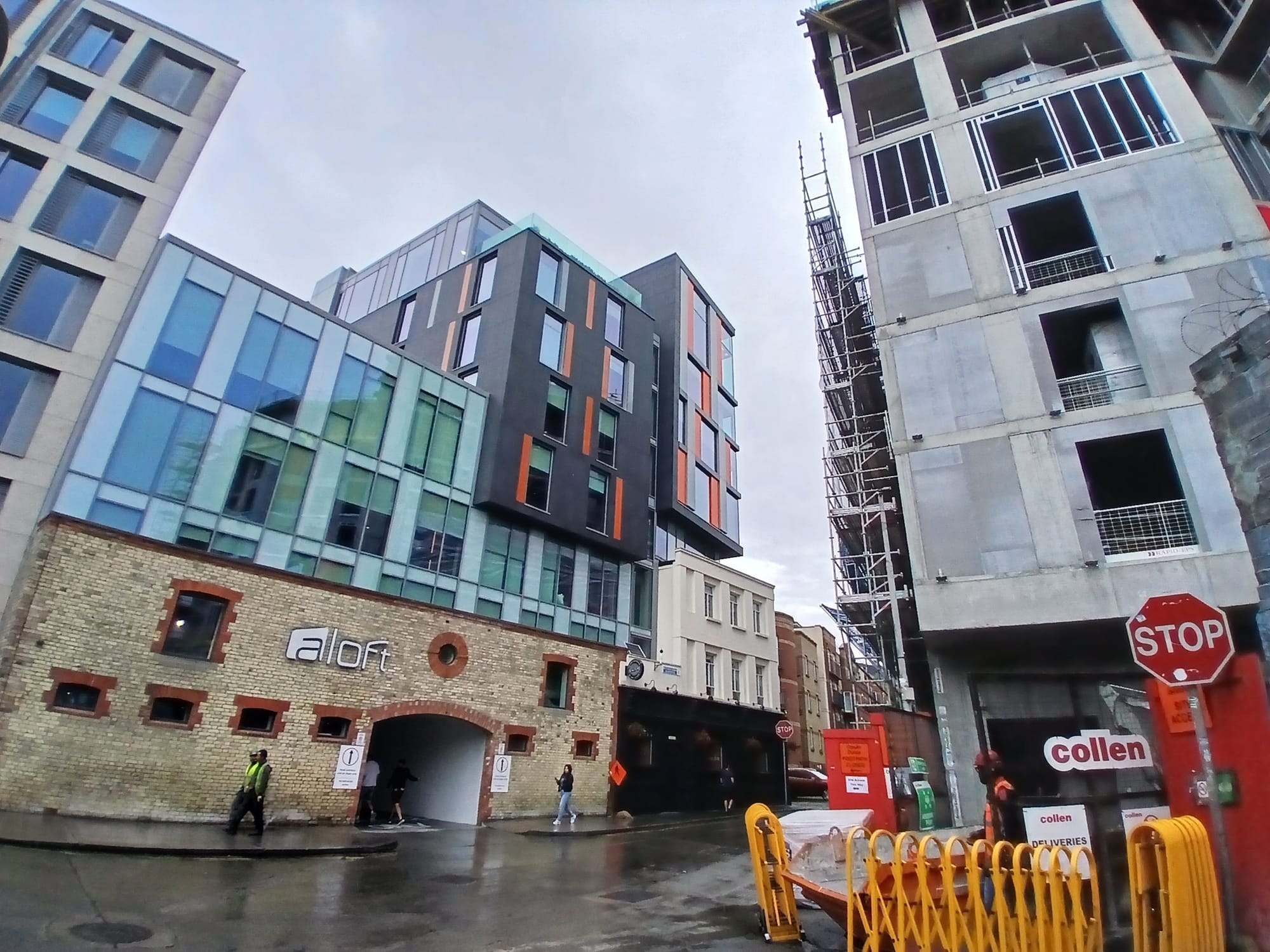
The Tenters is a historic, low-rise residential area, but next door, a stone's throw away, the Blackpitts area is shooting up with high-rise student accommodation and hotels.
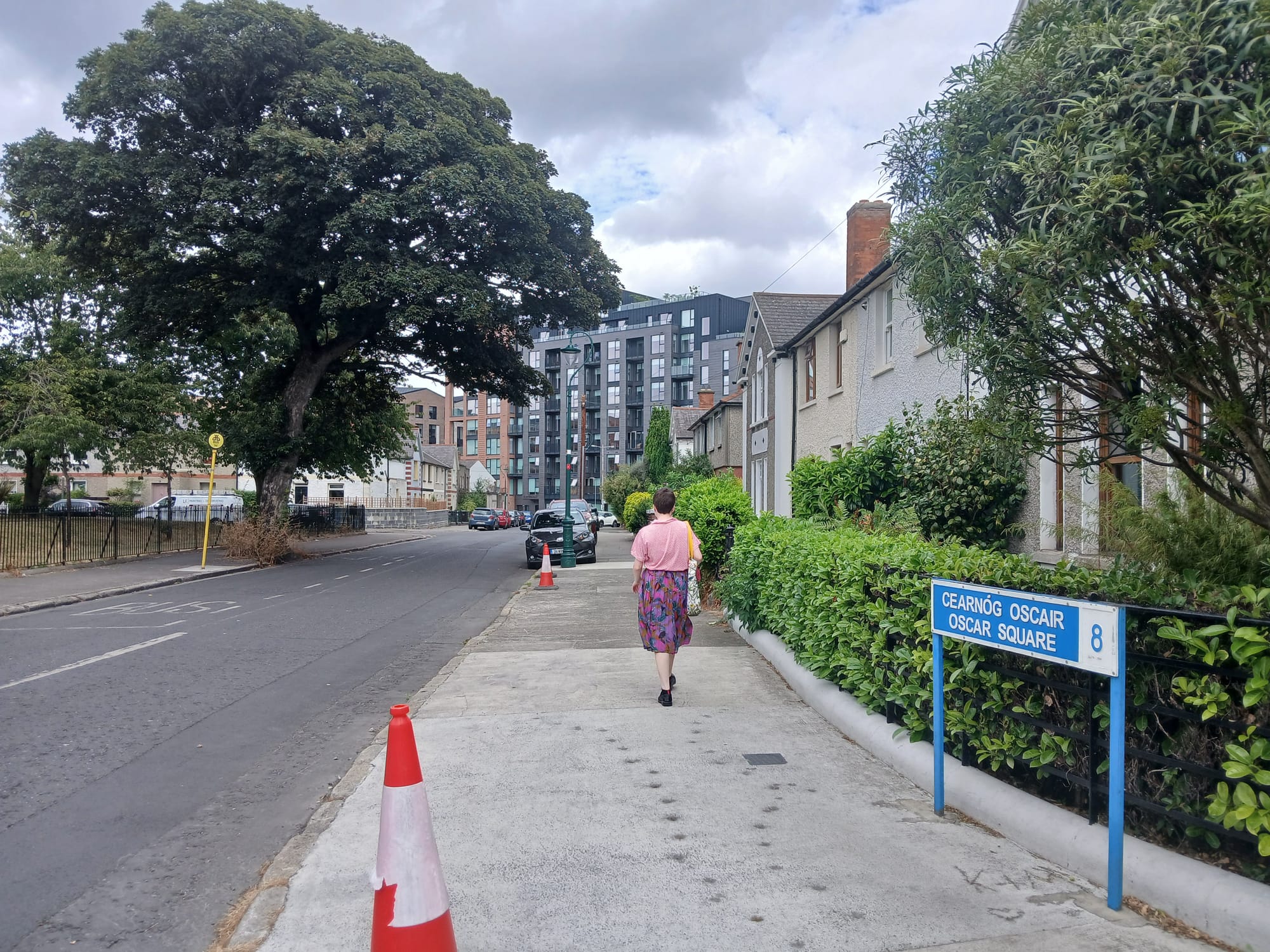
The Fairbrother's Fields Estate was the name of the original housing project, which was completed in 1922, according to a Dublin City Council documentary commemorating its centenary, in which O’Reilly is featured together with council conservation officers and historian Cathy Scuffil.
The name "the Tenters" is a much older name for the area as it derives from the French Huguenots who lived in the area and were often employed in the weaving industry, says Scuffil in the documentary.
When the housing project was completed in the 1920s, it was like winning the lotto for residents of public housing moving out of slum tenements, says Scuffil in the documentary.
The new homes got front and back gardens, inspired by garden-city design, an urban planning movement at the time, and the architects designed different features on each house.
In some streets, similar houses sit side by side but have different types of brick on the facade of houses; some have detailing in the windows. Some chimney stacks have ornate brick designs, and some front doors have stained-glass detailing.
There are differences in the railings around the front gardens too. Some have plain railings while others have arched entryways, all of which is shown in the documentary.
“This was a housing scheme for the general public, but there was a real aspiration to provide good quality architecture,” says council conservation officer John Beattie, in the film.
Over the years, some homeowners have renovated in ways that erased some of the original design features, says O’Reilly by phone.
She hopes that the new designation as an architectural conservation area will “retain the character of the variety of architectural features of the homes”.
Designed and built by the British government, the estate fell into the hands of the new Free State government in 1922, and they used it as "one of the residential schemes for tenant purchase in the new state", said council conservation officer Niamh Kiernan, in the film.
While some of the surrounding streets have been developed as high-rise, at times overshadowing the Tenters, none of those tall buildings is inside the new architectural conservation area, says the council spokesperson.
“An Architectural Conservation Area (ACA) is a designated area of special architectural, historical or cultural interest,” says the council website.
The designation as an architectural conservation area could mean that some types of new development are not allowed, and it could restrict the changes owners can make to existing houses, says Ciarán Cuffe, a former Green Party councillor, TD, and MEP, who is also an architect.
The detailed plan the council agrees will outline the specific rules, but he expects it could cover things like the heights permitted for new buildings and the types of materials that can be used when renovating the fronts of houses.
“It might say you can’t lash in a six-storey building next to a two-storey house,” says Cuffe.
The architectural conservation area also helps keep the council on track by outlining rules for street furniture, he says. Street furniture might be things like bins, benches, lighting, and signs.
“It gives greater protection to an area,” says former council planner Kieran Rose. “There is an additional requirement to maintain the character of the building,” he says.
The council will introduce a set of rules for any building that impacts the appearance of the street from the front, says Rose.
The designation is totally different from a building being on the record of protected structures, though, he says, because the restrictions are “purely external”.
There are no restrictions on what can be changed inside the building and the rules are unlikely to extend to the back garden, he says. “This is not a protected structure,” he says. “A protected structure is very strict.”
Protected structures sometimes remain vacant for a long time because it is expensive to refurbish them. But Rose says he doesn’t think being a conservation area would significantly impact the cost of refurbishment work to homes.
However, some work that is currently exempt from planning permission might not be exempt in the architectural conservation area, says Rose.
For example, a homeowner won’t be allowed to remove sash windows and install PVC windows, because that would significantly alter the appearance of the house from the front, he says.
O’Reilly, the Tenters resident, says she thinks the new rules will mean homeowners need to get planning permission to install a small porch, whereas in other areas they wouldn't.
Whether things like installing solar panels are allowed or require planning permission would depend on the rules the council introduces, says Rose, the former planner.
Cuffe, of the Green Party, says it is positive that the council is moving to protect the Tenters area but it's a pity that it hasn’t done more to protect the surrounding area, pointing to all the changes to nearby Newmarket.
There has been a huge amount of development nearby, he says. “Are they closing the stable door after the horse has bolted? In some respects, yes,” he says.
Dublin City Council currently has 25 architectural conservation areas.
Under the city development plan 2022 to 2028, the council committed to prioritise the designation of 16 more areas as architectural conservation areas in total.
They've already introduced an ACA in Iveagh Gardens in Crumlin last December, leaving 15 more on their priority list.
Local councillors recently agreed plans at the Central Area Committee to designate Collins Barracks Museum together with Arbour Hill and Croppies Acres park, as an ACA. That will come to the full council for the final seal of approval in September.
The 13 areas that remain on the list are, in alphabetical order: Aungier Street; "Brú Chaoimhín & Environs" on Cork Street; Ceannt Fort in Kilmainham; the CIÉ Estate in Inchicore; Grove Park in Rathmines; Harold’s Cross; Henrietta Street; James's Street and the west end of Thomas Street; Marino; Moore Street; Parnell Square; "Rialto Court & Environs"; and Stoneybatter.
“The Development Plan was adopted in December 2022, and we are progressing with the workload outlined in the plan as resources permit,” says the council spokesperson.

Even a version which made no direct reference to Trump and removed his image, and simply read: “No welcome for warmongers” was turned down.

"As you can imagine, you've got 20 parking spaces, and we come along and say we're going to take out two of them or something like that to give spaces for people on bikes, it doesn't go down particularly well."

Louth County Council passed a motion calling for other local authorities – including Dublin City Council – to join it in pressuring the government to change national planning regulations.

“I don’t think we do have a policy on displacement,” says Labour Councillor Darragh Moriarty. “But there probably should be something in light of the private rental market being so volatile and so precarious.”