

What to do with the horses of Darndale?
Grazing in public parks means other uses are being pushed out, and adding momentum to calls for an equine centre and stable club to properly support horse culture in the area.
Switching to the US big tech provider, for phone systems and more, comes at a time of fierce debate about tech sovereignty.

There isn’t a landline phone in the office anymore, Sinn Féin TD Máire Devine said, speaking via her mobile on Tuesday afternoon. “All gone. All gone.”
The Houses of the Oireachtas have been moving their telephone system over to Microsoft Teams. But Devine says she isn’t even sure what she ought to call the new system. “Is it a telephone?”
“It just all of a sudden, this appeared,” she said.
The change-over is part of a wider shift over recent years in which the Oireachtas has been adopting Microsoft systems to handle the day-to-day tasks of parliamentarians, independent Senator Alice-Mary Higgins said by email in early June.
That has included using Microsoft software for emails, document storage and internal messaging, she said. “Even our telephone systems are now run through Microsoft products.”
This dependence front-crawls against the tide, with European countries and bodies like the European Parliament charting paths away from reliance on US Big Tech, and searching for either home-grown or European alternatives to platforms and tools, wary that their use makes them vulnerable.
This move gained momentum early in 2025, when US President Donald Trump signed an executive order sanctioning the International Criminal Court (ICC), because it had issued a warrant for the arrest of Israel's Prime Minister Benjamin Netanyahu for war crimes and crimes against humanity.
ICC Chief Prosecutor Karim Khan soon found himself disconnected from his Microsoft email, although the court as a whole apparently wasn't.
A spokesperson for Microsoft on Tuesday said "at no point did Microsoft cease or suspend its services to the ICC".
After Khan was disconnected, the ICC confirmed it was moving away from Microsoft altogether to a German alternative.
By November of last year, 27 EU member states – including Ireland – had signed the Declaration for European Digital Sovereignty.
Higgins, the senator, voiced her concerns about the widespread use of Microsoft software within the Oireachtas during a meeting of the Joint Oireachtas Committee on Artificial Intelligence on 21 April, focused on defence, security and cyber security.
The Oireachtas and a number of government departments were moving all of their telephone systems onto Microsoft Teams, she said. “Is that a security risk that we should be examining?”
The use of Microsoft products in public, university and other organisations poses a tremendous number of threats, said Liliana Pasquale, an associate professor at the school of computer science in University College Dublin.
These technologies aren’t secure, she said. “They have been aggressively integrated without sufficient testing, I believe, as demonstrated by recent attacks.”
Take EchoLeak, said Pasquale by phone on Friday. That saw an attacker send a crafted email to trick large language models into providing confidential data, she said.
The company can access personal data and potentially violate General Data Protection Regulation, Pasquale said at the committee in April. “There are also geopolitical threats because the US could be targeted by third countries, which could target US products that are also used in Europe.”
A Microsoft spokesperson said their products are rigorously tested before deployment, fully GDPR compliant, and designed to give organisations full control over how their data is managed. "This is backed by contractual safeguards and commitments to store and process data in the EU."
A spokesperson for the Oireachtas did not respond to emails sent on 19 and 26 June, asking about this switch and the reason why it was being rolled out.
Replacing the old telephone system was first flagged in the Houses of the Oireachtas Service Action Plan 2024 as part of its effort to modernise its infrastructure.
Led by the Oireachtas’ Information and Communications Technology team, the change was slated for delivery during the second quarter of 2024, the plan says.
Fianna Fáil TD Catherine Ardagh, a current member of the Houses of the Oireachtas Commission said, on Friday, that the move to Microsoft Teams pre-dated her appointment to the commission.
Members of the Oireachtas have been using Teams for many years, including throughout the Covid period, she said. “Albeit, primarily on desktop devices rather than as the integrated telephony platform now in use.”
Higgins, the senator, said she was used to Microsoft Teams as one way of communicating. “But the telephones really were something that was just a different level of concern.”
Allowing the Oireachtas telephone systems to be dependent on a particular software provider is something that needs to be reviewed, Higgins said on Monday.
“Until that has really been carefully examined, we need to have a question mark around moving these telephone systems online,” she said.
It’s not simply using phones through Teams that needs to be examined, Higgins says.
“Even the fact of having so many systems dependent on a single provider is in itself something that maybe might seem straightforward from a procurement perspective. But maybe it merits more consideration,” she said.
Right now, Microsoft is the standard provider of software for the Houses of the Oireachtas, with each of its members provided a laptop and PC that include such products as Windows 10, Office 365, Outlook and Teams, according to the Oireachtas website.
Labour TD Robert O’Donoghue says his office uses Teams. "We still have a landline. I think it's set up to operate on Teams."
Teams seems to function well, even if it's just handier to use his mobile when making calls, he says. "My staff sometimes use the landline. But I don't."
But, he likes what is happening in France, he says. There, the French Directorate for Digital Affairs has mandated that the civil service wean off Microsoft Windows and move to the Linux operating system “to protect digital sovereignty”, he says.
Linux is an open-source operating system, and one option for reduced reliance on major tech companies in the United States, he said. “And as a by-product, encourage the use of EU-based alternatives.”
The issue isn't solely confined to Microsoft, said Pasquale, of UCD, on Friday. “This applies to any US vendor generally.”
The US and EU have different regulations, she said, pointing to an example where, last June, at a hearing in the French Senate, Anton Carniaux, director of public and legal affairs for Microsoft France, reportedly said the company could not guarantee data sovereignty to European customers.
It is a problem to be reliant on a provider from a country in which legislation differs from that within the EU, she says. “It’s not possible to guarantee that the data isn’t fully protected.”
A spokesperson for Microsoft said the company does not provide any government with "direct, unfettered access" to its customer data. "Any data access request is subject to rigorous review, according to a strict process, by internal and external legal teams to ensure it is legally valid and compulsory, compliant with all applicable law, and strictly limited to specific account identifiers."
While O’Donoghue says his office uses Teams, his staff don't use Microsoft’s generative AI chatbot.
Copilot has already been adopted by staff in Dublin City Council, which, as of June 2025, had seven licences for its use.
 Michael Lanigan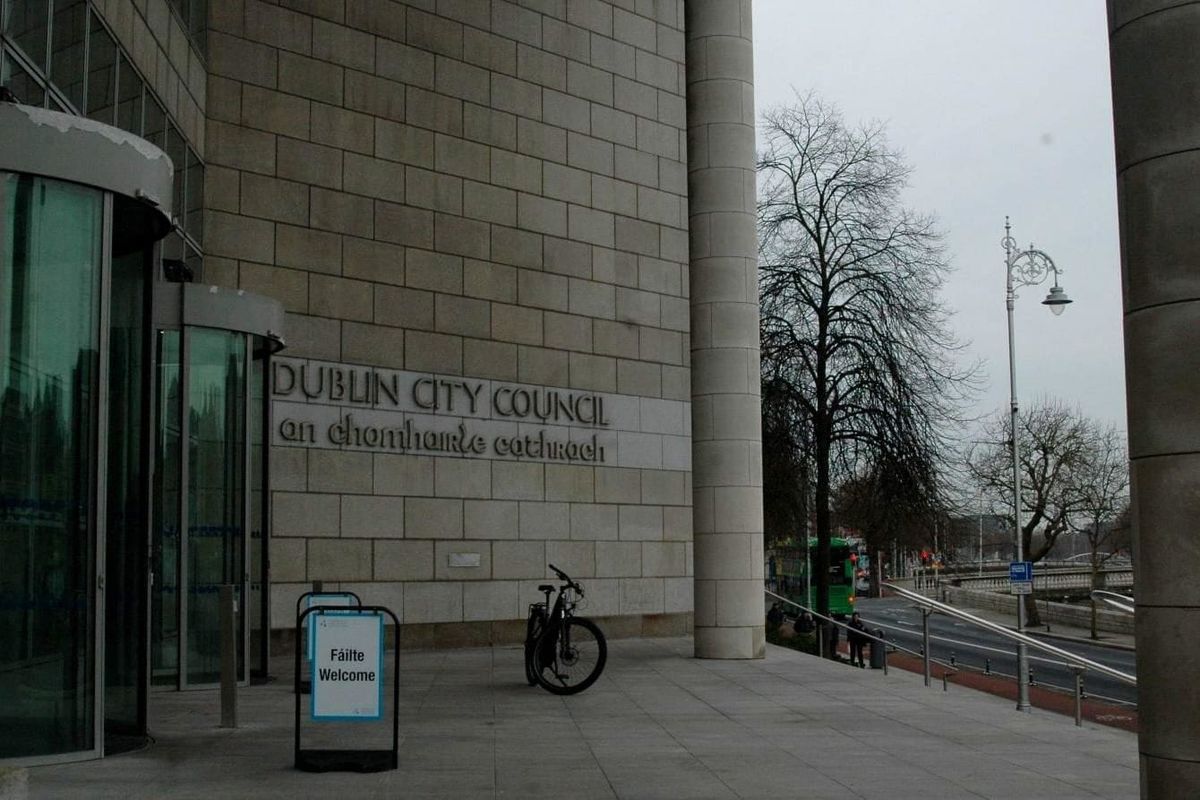
More recently, on 14 April, Minister for Housing, Local Government and Heritage James Browne confirmed that his department is trialing Copilot Chat via Microsoft Teams as a potential technology to assist in productivity.
His department has both an AI policy and governance committee that provides guidance on its responsible use, he said. “AI training is also mandatory as part of this deployment."
Pasquale, at the Joint Oireachtas Committee on AI back in April, said Copilot was a security risk, however. “Attacks to Microsoft Copilot and its related tools have already been documented.”
It is also risky to be overly reliant on a single provider, she said on Friday. “It makes an exit strategy more difficult in the future.”

Grazing in public parks means other uses are being pushed out, and adding momentum to calls for an equine centre and stable club to properly support horse culture in the area.

Like, what'll be the route to dig up the footpath and lay down a wire?

The chapel on the ground floor is too small for a theatre “but it's the kind of place where you could have recitals, a piano player or string quartet”, says Diego Fasciati, the executive director.

Dublin City Council's planning committee backed a motion on Monday to call on the Minister for Housing to broaden the legal definition to include long-term vacancy.