

Across the city, parents snatch their kids out of the way of red-light-breaking drivers
Despite years of talk, a promised national strategy on red-light cameras is yet to be published – let alone implemented.
The change would make it more costly to deliver cost-rental and affordable-purchase homes for middle-income earners in Dublin.

Dublin City Council officials have proposed applying the development levy to the construction of cost-rental and affordable-purchase homes in the city, as a way to bring in more funding for new amenities.
Until now, they have been exempt.
The development levy is a per square metre charge on new builds, which the council draws on to help fund facilities and infrastructure across the city – from roads, to plazas to leisure centres.
These kinds of affordable homes are trending in the city, often on sites that the council had estimated would be private-market builds – and that is expected to continue, said assistant chief executive Tony Flynn to councillors at Monday’s monthly meeting.
As such, they need to be subject to the levy so that the council can still fund infrastructure and amenities, said a report from Flynn to councillors. And, these homes already benefit from state supports, the report says.
But the change would make it more costly to deliver those homes for middle-income earners in Dublin – and at the meeting some councillors asked who would be expected to absorb that knock-on.
Cost-rental projects are already launching with rents that leave some middle-income renters out in the cold. Two-bed homes at Oscar Traynor Woods in Coolock launched at €1,547 a month.
Opposition parties have long criticised the costs of affordable-purchase homes at O’Devaney Gardens in Stoneybatter as not affordable.
 Lois Kapila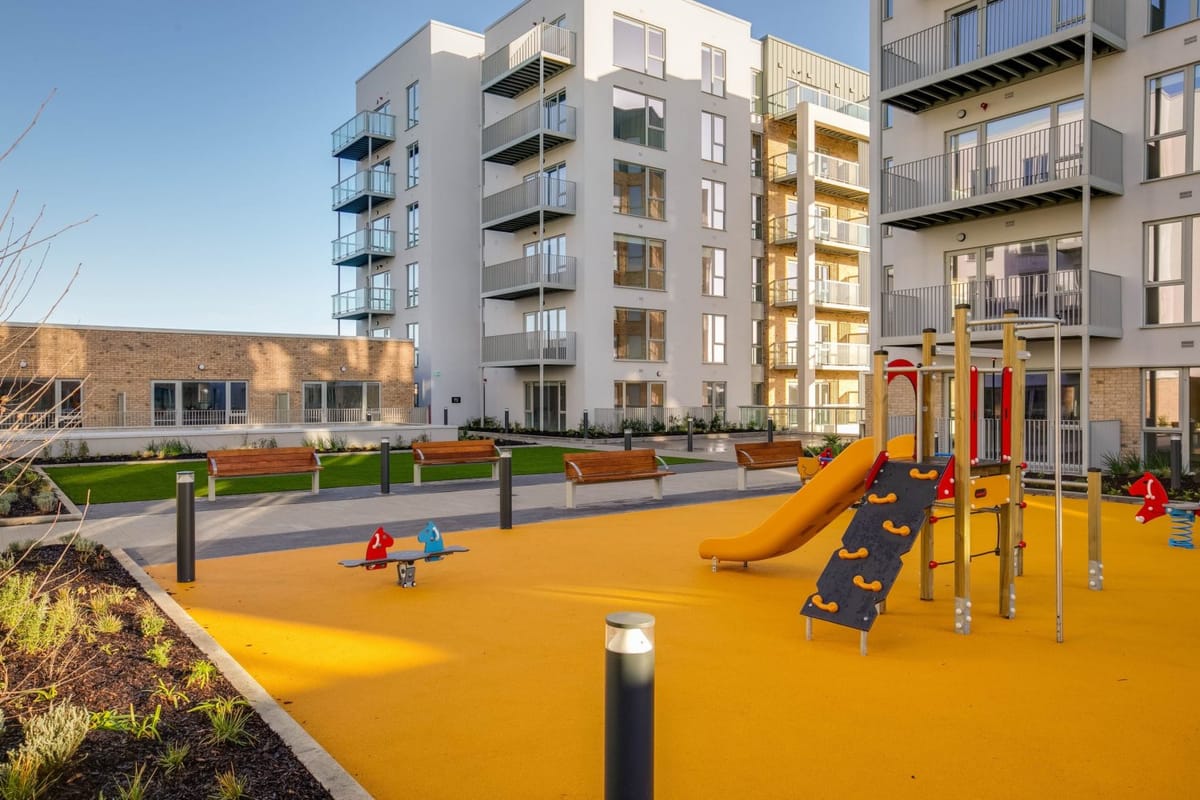
Some councillors nonetheless voiced support for the changes given the constant clamour and need for amenities, especially in fast-developing and long-neglected northern and western fringes of the city.
Others said that it should be the central government that funds this kind of infrastructure.
Flynn said that council officials would give more information about how cost increases would “manifest”, to councillors during a “workshop” – a meeting closed to the public and press – in the coming weeks, based on a report done by consultants.
But he didn’t want to get into all the planned changes in the chamber on Monday, he said. “Because it’s quite detailed.”
A council spokesperson hasn’t yet responded to a query sent on Tuesday morning asking for a copy of the report.
A spokesperson for the approved housing body Oaklee said that it recognises the need to fund essential public infrastructure.
“However, removing the exemption for development contributions for cost‑rental and affordable‑purchase homes would risk undermining the viability of these schemes,” they said.
“Adding development levies would increase costs and ultimately reduce affordability for the very households these tenures are designed to support,” said the spokesperson.
Meanwhile, a spokesperson for the Department of Housing said that it is still planning its own broader review of development levies, but officials are looking at how to go about that.
“This review will consider the impact of contributions on the viability of housing projects,” said the spokesperson.
“It will also consider the need for the State to be resourced to provide the infrastructure that is necessary to support the delivery of housing, and the facilities that will result in the creation of sustainable and well-balanced communities,” they said.
Under the current capital programme for the city, which covers 2025 to 2027, development levies are projected to provide €257 million – or about 7.7 percent – of the €3.3 billion needed to fund projects like library refurbishments and sports centres.
And, at the moment, the council is looking to spend €80 million to €100 million to buy a site on Kevin Street to build a new headquarters on. The council’s chief executive said recently that he planned to fund this through capital spending and borrowing.
 Laoise Neylon
On Monday evening, Flynn’s report said that council departments had sent in cost details for projects that need development levies over the coming three years. They would cost €957 million, with €248 million needed from development contributions, it says.
At the meeting, Flynn told councillors that of 4,500 completed homes last year in the Dublin City Council area, 80 percent of them were social housing – and so didn’t contribute funds through levies.
At a meeting of the council’s finance committee in January, its head of finance, Rory Flannery, said that with the Land Development Agency buying big land banks, the council has had to revise its estimates of development-levy income – because it won’t pay the levy for the homes it builds.
Cian Farrell, a Social Democrats councillor who is head of the council’s urban planning and development committee, said on the phone on Tuesday that the council has seen a trend in planning applications.
More private developments are being offered to the council and approved housing bodies to take as social and affordable housing, he said. “Which the state is obviously delighted to do. Which is independently great.”
But it does result in less money from development levies to fund amenities and infrastructure, he said.
Officials also want to nudge up the rate of development levies.
Current rates of development levies in Dublin city are €117 per sqm for homes and €112 per sqm for industrial and commercial developments.
At the meeting, councillors didn’t seem fussed about the idea of a 5 percent increase in those rates for eligible homes.
That general increase is welcome, said Sinn Féin Councillor Daithí Doolan. But he had questions about expanding the eligibility.
“In my head, I need to understand how that cost will be absorbed,” said Doolan.
Labour Councillor Dermot Lacey said he supports local taxes and he would be happy for this to go out for discussion.
But at the same time, housing is the most significant national emergency that the country faces, he said.
“I find this really baffling to balance the need for more housing with imposing an additional charge for the provision of that housing.”
It should not be the responsibility of a struggling person who tries to buy or rent a house to pay for infrastructure, he said. As he sees it, national government should be covering that.
Government keeps saying that all the money in the world is available for infrastructure, he says. So why are they having to do this, he said.
Hazel de Nortúin, a councillor for People Before Profit, said they should ideally find another way to fund amenities other than passing on the costs to those who are buying and renting.
But she welcomes making cost-rental and affordable purchase homes subject to development levies, she said.
She represents areas with big land banks, and large projects with cost-rental and affordable homes, she said – but that just don’t have the infrastructure that is needed.
The lack of amenities in Cherry Orchard is well-documented, she says. They need to be looking at ways to build sustainable communities, said de Nortúin.
A council report published last May that looked at building out amenities in Belmayne flagged similar issues – lots of homes in the pipeline, but many of tenures that are exempt from development levies.
 Eoin Glackin
Although, development levies can be spent outside of the area in which they are paid, so funds connected through the levy collected from the south-eastern part of the city, for example, could be spent to build amenities in Cherry Orchard and Belmayne.
Deirdre Heney, a Fianna Fáil councillor who chairs the housing committee, said she doesn’t think the council should take any action that would increase the costs of affordable-purchase and cost-rental homes.
From April 2023 to December 2024, the Department of Housing led by Fianna Fáil ministers had brought in a waiver, just for a while, on development levies even for private housing projects to nudge developers to start on sites.
At the meeting, Flynn said that one internal suggestion had been to provide some kind of discount for affordable-purchase on council lands in some areas.
He didn’t elaborate. “The details of that will be included in the draft scheme,” he said.
The spokesperson for Oaklee said that “Under current funding arrangements, unless central government adjusts CALF/CREL supports to compensate,” – referring to funding streams from the department – “these additional charges would fall on tenants or purchasers, directly contradicting affordability objectives.”
“Rather than imposing new costs on affordable housing, more sustainable solutions lie in multi‑year infrastructure investment and greater certainty in national funding streams,” they said.
Some councillors questioned whether it would be possible to raise the additional funds needed in other ways which wouldn’t drive up delivery costs for cost-rental and affordable homes.
As of July last year, developers owed €97 million in development levies to the council that hadn’t been collected.
“Are we going to up our game in terms of our actual collecting of them?” said Sinn Féin Councillor Mícheál Mac Donncha at Monday’s meeting.
Said Flynn: “I’ll be very very, kind of, open and honest and upfront with regards how we have collected the funds from the scheme over the past number of years.”
They have analysed that and are going out robustly to collect the funds, he said. He didn’t give details at the meeting, though.
Development levies aren’t the only revenue stream which the council has soft-pedalled on for the past few years. Another is the derelict sites levy, which central government now plans to move under Revenue’s remit.
A council working group last year blamed low levels of collection of the derelict sites levy on “difficulty in tracing ownership, unwillingness to take potentially expensive court action for what might eventually be recovered upon sale, and sometimes political reluctance to pursue certain owners”.
“We usually just put a charge with Tailte Éireann, which we hope then will recoup the levies at a later stage,” said Margaret Mooney, an administrative officer, at a council meeting in October last year.. “But we are going to be more proactive.”
The proposals for changes to the development levy in the report at the meeting didn’t look exhaustive, said Michael Pidgeon, the Green Party councillor at the meeting.
“I presume it’s acceptable to come back in and amend things before we go out to public consultation?” he said.
One idea he put forward was to charge more for planning applications around retention – as Fingal has done. “There are things that we can do that are interesting here,” he said.
Pidgeon, and his party colleague Donna Cooney, both also pointed to the potential of new revenue streams such as a hotel bed tax – if the central government were to allow such a move which it has long resisted.
Flynn said that officials plan to hold a workshop with councillors to go over the detail of possible changes in the coming weeks, before they go out to public consultation.

There are over 1,000 households on the council’s social housing lists for the area.

As the government courts more international money for Ireland’s rental sector, tenants say they want more transparency around who they are renting from.

Is the issue paperwork? Attention and will? Money? The department?

It’s one of two prominent sites in Dolphins Barn that the Iveagh Trust has been prepping to build out.