But a spokesperson for the charity said the position articulated by its deputy chief operations officer at a council meeting recently is not its current policy.
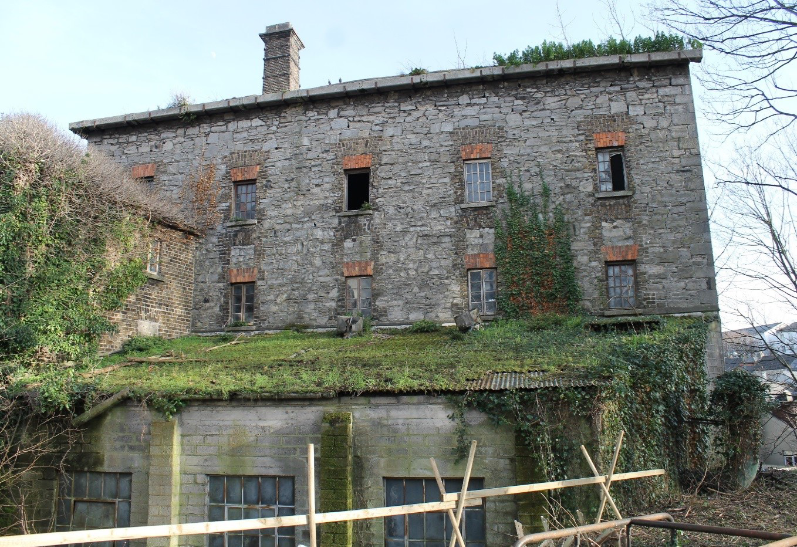
Patrick Kavanagh, one of the owners of the Patriot’s Inn, near Kilmainham Mill wants to know what Dublin City Council is doing with the mill, which it bought in 2018.
The council did “stabilisation” works on the building, which cost €2 million and were completed in 2023, a council official told councillors in October of that year.
But since then, the site has been left disused again, says Kavanagh. “There is no sense of urgency,” says Kavanagh. “The property will slide back into dereliction if it's not used.”
Local councillors agree that the council urgently needs to get the site back into use.
The project stalled due to staff changes in the council, says Green Party Councillor Michael Pidgeon.
If the building isn’t used, it could deteriorate again, and then the public money spent on it would be wasted. “We need to keep it on the agenda,” says Pidgeon.
In response to a query a year ago about the mill from Sinn Féín Councillor Ciarán Ó Meachair, the council’s head of parks, Leslie Moore, said the building is “is weather proof and secure and it will be maintained as such”.
But doing it up fully would be expensive, and the council has yet to settle on a vision for what the mill should become.
In 2023, Donncha Ó Dúlaing, then “project lead” for Kilmainham Mill project at that time, reportedly told the Irish Times that the full cost of restoring the mill was estimated at €25 million to €30 million.
Ó Dúlaing has since then moved to the Department of Housing. In response to Ó Meachair’s query last year about the project, Moore described it as “in abeyance”.
The council had weighed up many projects competing for funding across the city and “has decided that Kilmainham Mill is not one that will progress in the current capital programme”, Moore said. That document, the council’s multi-year budget for big one-off projects, runs from 2025 to 2027.
In June 2025, Minister for Housing, Local Government and Heritage James Browne, a Fianna Fáil TD, said the council had been awarded €200,000 for the Kilmainham Mill project from a central government fund but could not use it “due to resource constraints”.
“Eventually it will be done,” said independent Councillor Vincent Jackson, who chairs the South Central Area Committee. “It's very expensive to get it to a standard that it can be used for cultural and commercial uses.”
In the meantime, Michael O’Flanagan, spokesperson for the Save Kilmainham Mill Campaign, says he met council officials recently and hopes the council will move on renovating some smaller buildings on the site soon, for “meanwhile use”, he says.
Of course, back in 2023, Ó Dúlaing told councillors that the council was looking at a programme of meanwhile uses for the site, including “pop-up markets, for events, for maybe pop-up cafes, exhibitions et cetera”.
Saving Kilmainham Mill
The existing Kilmainham Mill building was built in the 1800s.
For hundreds of years before that, the site was used for milling according to records created by Cromwellian soldiers in 1540, says a 2002 council-commissioned conservation plan.
In 1974, weaver Noreen Kennedy “resurrected this mill from the industrial graveyard”, according to a short TV piece on the RTÉ archive, Resurrecting Kilmainham Mill.
Kennedy wove 100 percent wool and hoped to keep the traditional method alive, she said. “They are a quality item that we can ask the right kind of price for,” she said.
In 1984, Damien Shine bought the mill, according to the 2002 council-commissioned conservation plan. His company, Charona, did specialist finishing, and later, fireproofing of high-quality textiles, the report says.
In 2003, Shine’s company had a plan to redevelop the site with 48 apartments, but that didn’t happen and the property ended up owned by NAMA.
In 2016, locals got together to form the Save Kilmainham Mill Campaign group and in 2017, councillors moved to rezone the mill, which was already on the record of protected structures.
At that time, Shine was living on the site as its de-facto caretaker. In 2018, the council bought the mill for use for heritage purposes, said the Lord Mayor at the time, independent Councillor Nial Ring.
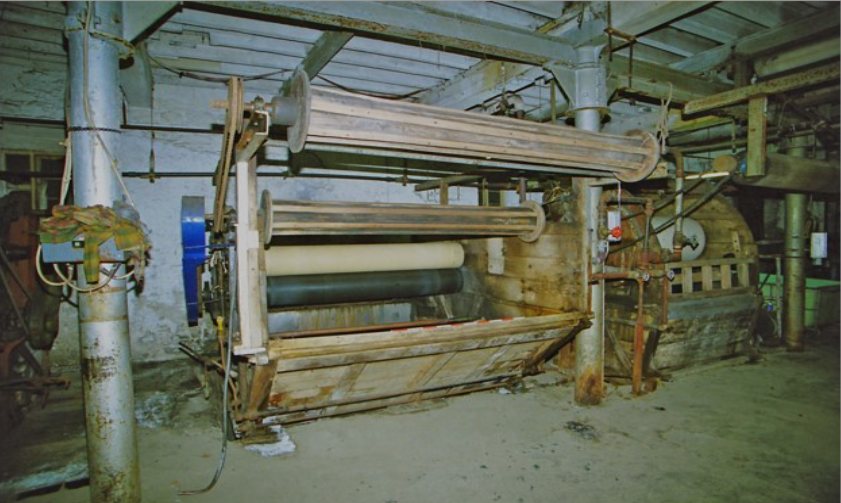
Old images of inside Kilmainham Mills. Source: Dublin City Council 2020 presentation, from before stablisation works.
In October 2023, Ó Dúlaing told a council committee that the council had “put in place a process to establish a master vision that will inform the ultimate reuse of Kilmainham Mill. This will involve community and stakeholder engagement”.
Kavanagh, the local publican, says that after the council fixed the roof of the mill, it cleaned up the building and lands inside and out. “It was pristine,” he says.
He thought the council was going ahead with encouraging business and community groups to use the site, he says
There were ideas pitched for cultural spaces, facilitating talks, use by historical groups, and summer-time picnics, he says. But then nothing happened.
The Patriot’s Inn would like to lease outside space on the site along the riverbank, he says, but the council doesn’t seem interested. “It's a very attractive property, and it's just lying there with a big lock on the gates,” says Kavanagh.
Pidgeon, the Green Party councillor, says he thinks the project stalled because of a change of staff within the council. “After the stabilisation works, the project went quiet,” he says.
The council never published the result of that, the “master vision” – but it has now committed to doing that soon, says Pidgeon.
The future of the mill
There is currently no timeline in place for the restoration of the main mill building, says Kavanagh, who runs the pub. He learned this at his recent meeting with the council area manager, he said.
“It's going to cost an absolute fortune,” says Jackson, the independent councillor. The council has not yet sourced that funding, he says.
There are other, smaller outbuildings on the site, which could be repaired and brought back into use more easily, says Kavanagh.
The council needs to install toilets and carry out some repair works to make those suitable, he says. “The likely next steps would be to get some occasional uses,” he says.
Even to do that, the council has to apply for funding, he says. It hasn’t yet decided if it will do those in-house or tender for a private contractor, says Kavanagh.
“There is no talk at the moment of applying for grants to do restoration of the mill proper,” he says. “We’re anxious that would happen.”
The council needs to decide what the future of the building would look like, he says. “No decision has been made about a vision plan,” says Kavanagh. “They don’t have a plan.”
Jackson, the independent councillor, says the site has huge potential. The location is excellent, beside the Irish Museum of Modern Art and Kilmainham Gaol, and quite close to the city centre.
“There is something very romantic about it,” says Jackson. “It has so much potential.”
To carry out the full restoration, the council will need funding from the central government, says Jackson. And the end users need to generate income to keep it running. “It needs to be self-financing,” says Jackson.
Ultimately, he would like to see a high-quality independent cafe, perhaps a small museum, cultural uses and maybe a market or craft shop, he says.
Kavanagh says that council officials have committed to publishing a report on the findings of the public consultation “after Easter”.
A spokesperson for Dublin City Council says it has done a technical assessment of the works required “to optimise the functional use of a number of buildings on the site”.
“These measures will facilitate increased use of the facility and support the continuation of meanwhile-use activities,” she says. “Engagement with relevant DCC departments is ongoing to determine how best to progress the required works.”
But a spokesperson for the charity said the position articulated by its deputy chief operations officer at a council meeting recently is not its current policy.
A spokesperson for the board said it redacted accounts that weren’t “evidence-based” and had not tried to “hide or trivialise the scale of any crisis”.