

Start of construction at Guinness Quarter is near, says developer – as it seeks tweaks to planning permission
Proposed changes include dropping three-bedroom homes, in favour of more smaller ones in the block of future social housing.
Archaeologist Patrick Wallace, who led the 1970s excavation of the site, said he would love to see the area fully excavated – but he doesn’t support the demolition plans.

Archaeologist Patrick Wallace led the excavation of Wood Quay in the 1970s. Later, he wrote the book Viking Dublin: The Wood Quay Excavations.
Around 1970, Dublin Corporation – as the council was known then – bulldozed part of the site, Wallace said.
When he dug underneath the layer of earth that had been bulldozed, “I got below that and found the banks,” he said by phone recently.
Under the rubble and dirt, he discovered the embankments of the original town of Dublin, from around 1,000 years ago.
On the site where Dublin City Council’s headquarters now stands, Wallace’s team found thousands of artefacts from the Viking era and since. Viking Dublin features photos of Viking-era coins, jewellery, toys, and more.
But the key discoveries were the foundations of buildings and the pathways through the original town, Wallace said. “It was my life's work, to paint a picture of the original Dublin,” he said.
Dublin City Council’s management team is now working to move the council’s HQ to new offices it plans to build at the Camden Yard site on Kevin Street, which it recently bought for €104 million.
Council officials told councillors recently that the move would allow it to develop a big housing project with 532 homes at the Wood Quay site.
A council spokesperson said on Tuesday that it has not yet decided the future of the Wood Quay site, but it has the “potential to deliver substantial housing”.
“But that opportunity must be progressed in a way that is legally compliant, properly sequenced and respectful of the site’s historic and archaeological importance,” they said.
A large chunk of the site to the south of the old walls, however, has not yet been fully excavated, said Wallace, the archaeologist.
So any effort to develop the Wood Quay site will inevitably face delays, he said. “There will be a slowdown, and there will be controversy, and there will be discoveries that will hold the job up,” he said.
Councillors have been split on the big plans.
For those who are wary, one major worry is what might happen to the Wood Quay site if the Department of Housing doesn’t provide funding to build housing there.
Back in the 1970s, Wallace and his team of archaeologists were subjected to serious pressure to excavate the Wood Quay site quickly – because Dublin Corporation was impatient to press ahead with building its new offices, he said.
“We worked weekends,” Wallace said. “We had floodlights and worked at night.”
Luckily, they were young. “It was the best years of my life. I had great energy,” Wallace said. “And the staff I had were phenomenal.”
But there are parts of the site that they never got to explore, and what is under the ground there could still help to paint the picture of the original town of Dublin, he said.
Before Wallace’s dig began, Brendan O'Riordan had already led a very thorough excavation of part of the site, on the hillside by Winetavern Street, Wallace said. Wallace dug up the southern side along Fishamble Street.
But a large part of the site still remains to be excavated. Much of the area to the south of the old walls, and along all of John’s Lane – between the Civic Offices and Christ Church Cathedral – remains untouched, he said. “It's a rich site, it's a graveyard, and below that graveyard is the remains of a late Viking town.”
Where Fishamble Street meets John’s Lane is a crucial area that has not been excavated so far, says Wallace.
While he would like to see the area excavated, Wallace doesn’t support the council knocking its offices down, and says it should not proceed with the plan without carrying out a public consultation process.
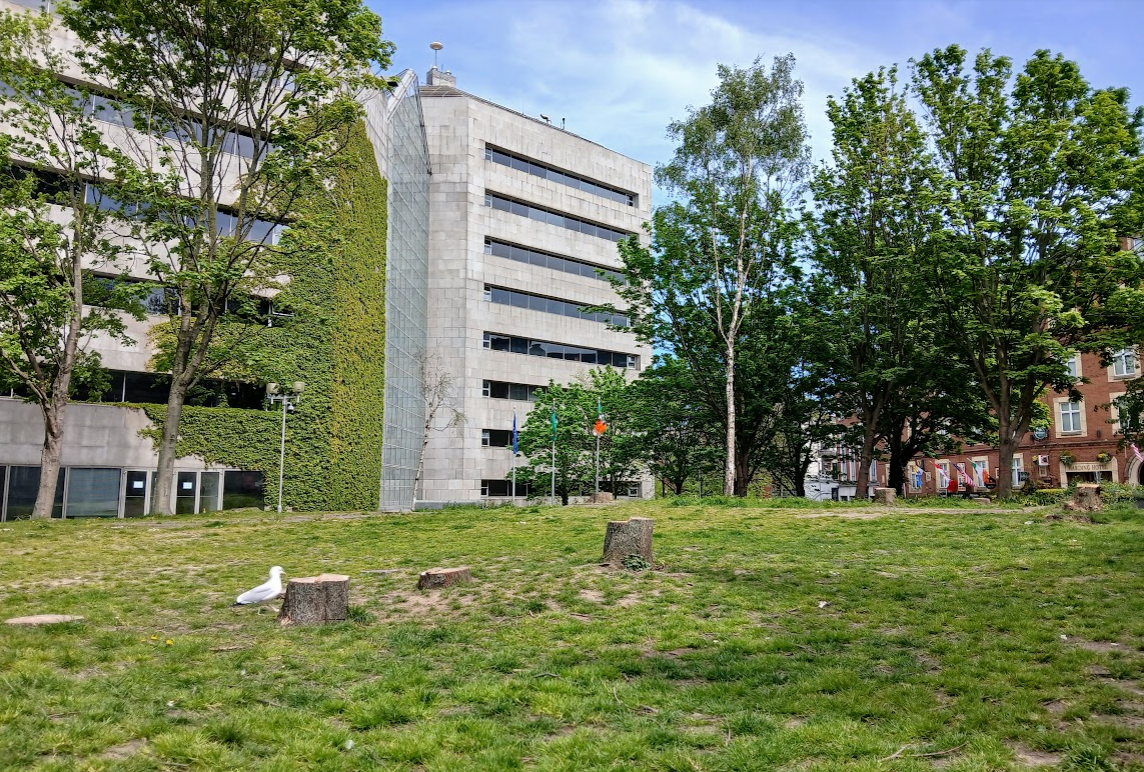
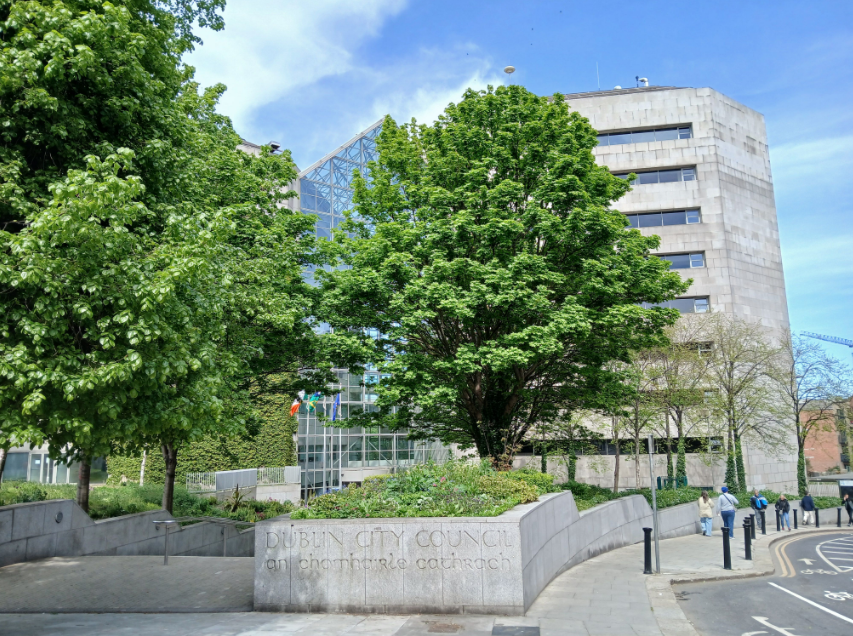
Council executives’ plan for Wood Quay is to demolish all the Civic Offices buildings, according to a presentation given to councillors at the Mansion House in February.
In their place, the presentation shows, in a “design concept/capacity study”, blocks of apartments covering most of the site, with several courtyards and green spaces around and among them.
A block to the south of the site would be social housing, it says. Three blocks to the north of the site would be cost-rental.
“Design Option 05”, shows 401 cost-rental apartments, and 131 social apartments, for a total of 532 homes, and 1,229 bedrooms.
If the existing buildings are to be demolished, Wallace said, it needs to be done very carefully. “They have to be careful of the city wall,” he said. “That is a sacred part of Dublin’s heritage.”
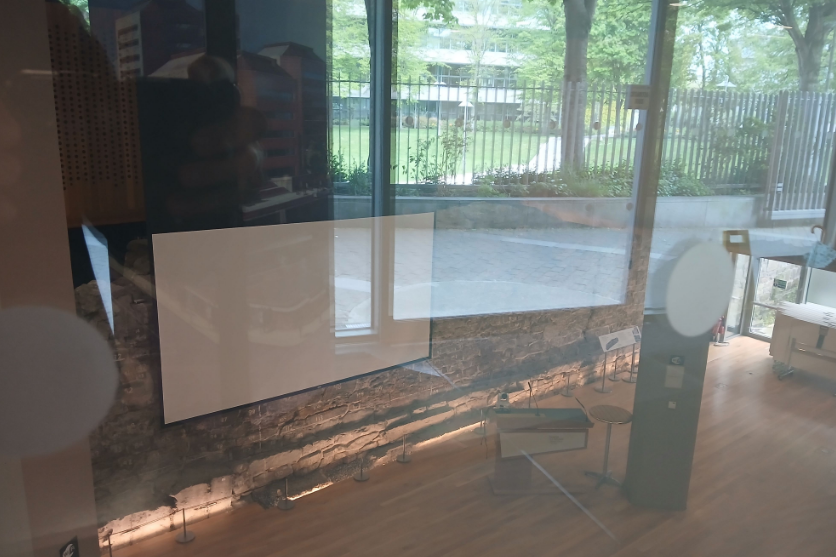
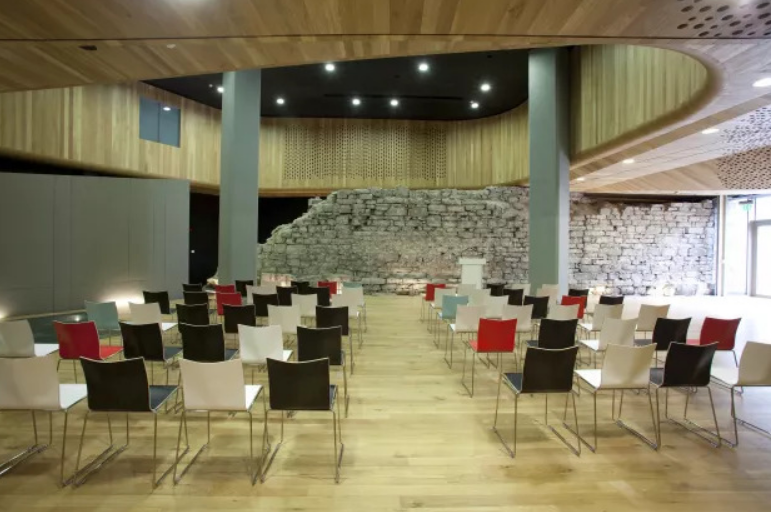
That is the oldest town wall in Ireland and dates to the later part of the 11th century, he says. Part of it can be seen in the council’s Wood Quay Venue, which is part of the Civic Offices.
Sinn Féin TD and housing spokesperson Eoin Ó Broin said that “one of the features of the Wood Quay building is that it's built on a platform which has preserved, albeit under the building, a significant portion of the archaeologically significant site”.
High-density housing needs deep foundations, so preserving the old walls would add to the complexity, Ó Broin said.
It would take a couple of years to excavate the rest of the Wood Quay site if it is done carefully and properly, Wallace said.
The council spokesperson says it cannot provide a timeline for demolition, excavation or redevelopment of the site.
“The scale, complexity and archaeological sensitivity of the site mean that any future proposals will require detailed assessment, including archaeological evaluation, statutory approvals and engagement with relevant authorities,” the spokesperson said.
Future proposals for Wood Quay “will be brought forward through the Council’s established statutory and governance processes, including engagement with Elected Members, and will be subject to the normal planning and consultation requirements”, he said.
Whether the council gets funding to build 500 and some homes on Wood Quay would depend on whether the government backs the project, said Ó Broin, the Sinn Féin TD.
“My strong view is the department should not fund anything that would involve the demolition of the existing Civic Offices,” he said.
The presentation the council executive gave councillors at Mansion House in February said the Wood Quay housing project would cost more than €200 million, and be classified as a “Major Project”. That means it'll be subject to a different set of guidance, the Infrastructure Guidelines.
The guidelines for drawing up a preliminary business case require risk assessment and flag the potential for optimism bias. “Optimism bias occurs when project analysts overestimate the benefits and/or underestimate the costs and timings for a project or programme,” it says.
In any case, Green Party Councillor Donna Cooney says the plans for housing at Wood Quay would obviously face major delays.
She has asked council managers whether the Department of Housing would fund housing at Wood Quay, she said, and didn’t receive any assurances that they would.
The Department of Housing is usually very conservative about which sites it agrees to fund, Cooney said. “I can’t see them saying, ‘Yes, we are going to fund that.’”
If the council goes ahead and builds its offices at Camden Yard and then doesn’t get funding for housing at Wood Quay, then “we’re left with this huge, huge development of offices that nobody wants,” Cooney said.
The council would also be in debt for the overall project, she said. “I think it would be very irresponsible to agree to fund that.”
The council shouldn't take on any financial risk to build itself new offices when there is already an oversupply of offices in Dublin, Cooney said. “Nobody else wants to invest in office space at the moment, so why would Dublin City Council want to, using public money?”
Cooney says the council could change the design of the Camden Yard site to build more homes there, which she thinks would be more likely to attract funding than homes at Wood Quay. “The social need is for housing,” says Cooney.
The council shouldn’t build itself new offices at Camden Yard and redeveloping Wood Quay with housing, said Ó Broin, the Sinn Féin TD.
Instead, it should retrofit its offices at Wood Quay and stay there, he said, and make the Camden Yard development 100 percent public housing – a mix of social, affordable purchase and cost-rental.
The council has said it’d be too costly to retrofit the Civic Offices on Wood Quay, and so it makes financial sense to build and move to new offices at Camden Yard, but has declined to share its homework on how it arrived at this calculation – even by request under the Freedom of Information Act and Access to Environmental Information Regulations.

“They’ve no money for windows, but they’ve how much to fill this field with even more apartments and houses?” says Charlene Paget, in Darndale.

Changes to the timeline are particularly sensitive because of wider concerns about a lack of council investment in the north-west of the city.

"If you ask, you'll be told this is part of the BusConnects project, we can't touch it until then," says Ray Cunningham, a Green Party councillor.

Will they be gone? Should they be kept?