

“It’s giving colonialism”: Ireland still owes rent to dukes and earls
Although, even though the OPW lists these rents as payable, some of the named beneficiaries say they haven't been getting them.
The team behind the Comics Lab are taking their comic-book artwork off the page and onto the stage.

On Tuesday evening, Elida Maiques was knelt on a stage downstairs in the Liquor Rooms reading to a crowd of two-dozen comics enthusiasts sat in velour chairs.
The comic-book artist spoke in hushed tones at first. Later, her voice modulated with each new frame of the comic strip flashing on screen.
“This is something that really took off,” says Comics Lab co-founder Debbie Jenkinson, of the live reading event.
“We just started something that we thought we’d like to do and then other people, artists working on their own, came along,” she said.
With illustration, sound effects, and speech, the idea is to gather other comic-book artists from around the city to witness, or partake, in this particular breed of performance art.
The show goes something like this: a comic-book artist will sit on stage with a computer and a mic, talking the listener through the strip, its images enlarged on a projector screen behind.
Jenkinson co-founded the Comics Lab with another artist, Sarah Bowie, as an offshoot of the Stray Lines comic collective. Jenkinson and Bowie organise monthly meet-ups as a means to foster the community of Dublin’s comic-book scribblers.
Tuesday was the launch of the second Stray Lines anthology, a collection featuring the works of contemporary Irish comics artists.
Another round of applause precedes Maiques’ final performance, a short strip entitled “Self-Hate”.
In a childlike voice, Maiques takes the audience through her comic, frame by frame, her black-and-white drawings paired with her soft-spoken Spanish accent. Some frames are detailed portraits, others simple doodles or stick figures.
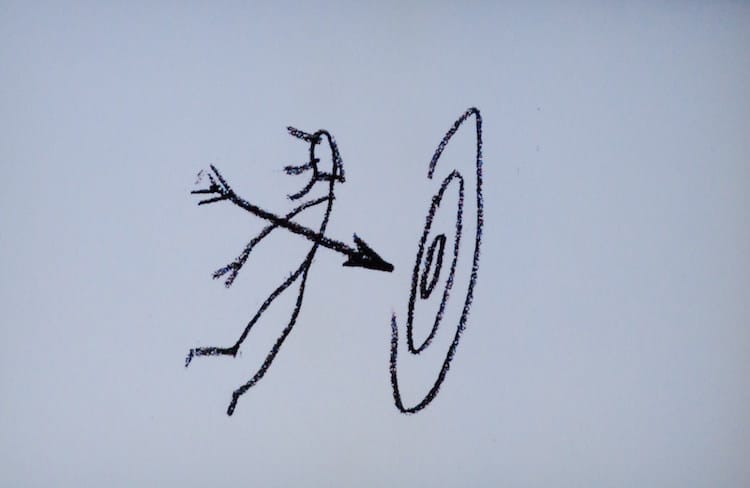
Afterwards, she explains the performance. “You are counting the beats and the rhythm all the time,” she says. “So there’s one frame, then a second and then I’m showing some frames together.”
It makes comic strips that bit more accessible, says Maiques.
The first live reading of comics was held by the collective back in March. The next will be on Saturday 19 November at 2 pm, as part of the UNESCO “Dublin in the Coming Times” project. The venue has yet to be confirmed.
Jenkinson and Maiques are pleased with the response so far to the initiative.
People assume that comic books are just superhero fables, says Jenkinson. The live readings and the “five-minute doodle” on the night go some ways towards elevating the art form, allowing others to join in, skill or no skill.
“We want to create a community,” says Jenkinson. “This can provide people with one avenue to show their work.”
Recently, Jenkinson and Maiques travelled to Helsinki to perform a comic-book reading.
While Finland has a sustained comic-book scene, the problem in Dublin is that the scene waxes and wanes, according to Jenkinson.
“The difficulty is that there isn’t always enough activity in Dublin,” she says. “Often one person will run a festival or something for a few years, but then they burn out.”
Monthly gatherings, and now live performances, are a more chilled approach, says Jenkinson.

The musician says her new album, Draw the Outline, brought her “great solace and peace in writing it. I hope it can do the same for whoever needs it.”

Ross McClean’s new documentary is playing on Saturday as part of the Irish Film Institute’s Documentary Festival 2026.

She didn’t expect to become "Facebook famous" at 61. “It's gas. I don’t like front-of-house,” she says, “keep the head down.”

But viewers seeking a beat-by-beat summation of jazz musician Bill Evans’ career will be disappointed by Grant Gee’s film, which is not meant to be a biopic.