

Maybe people shouldn't be able to collect social welfare at GPO, Arnotts lobbies
The company behind the Henry Street department store raised the idea with the man in charge of the regeneration of the city centre, returns show.
In Kilmainham and Santry, planning applications show a couple of the different approaches being taken by employers navigating the affordable-housing crunch in the city, and its impact on staffing.

There's a "To Let" sign fixed to the front of Camac House, advertising a "high spec own door office".
On 5 August, Dublin City Council planners bounced back a planning application from property owners Liam and David Hanlon, for a kind of co-living, guesthouse accommodation for staff at the National Children's Hospital, on the first floor of this building on Bow Bridge.
They needed more info, they said, on the project just over the Camac River from James's Hospital in Kilmainham.
It's not the only permutation of "staff accommodation" that has been proposed to council planners over the summer.
On 25 August, Helgian Limited – whose director owns the SuperValu on Lorcan Avenue in Santry – filed for planning permission to build three modular buildings, tucked behind the supermarket for staff accommodation.
The applications show a couple of the different approaches being taken by employers navigating the affordable-housing crunch in the city, and its impact on staffing.
Planning documents for Camac House show council planners continue to grapple with how kinds of "staff accommodation" fit within types of accommodation that are permitted in the city – which standards this proposal should have to meet, what controls there would be on how the spaces are used.
As well as asking for more detail, planners mooted an alternative idea too.
Could the applicant not consider just putting in apartments instead? they wrote, "which would provide better quality living standards for workers and would be more suited for longer stay period if necessary. The applicant is requested to submit any revised proposals they may have in this regard."
Liam Hanlon, the owner of the office space at Camac House, said on the phone on Wednesday that he wasn't ready to talk about the planning application right now.
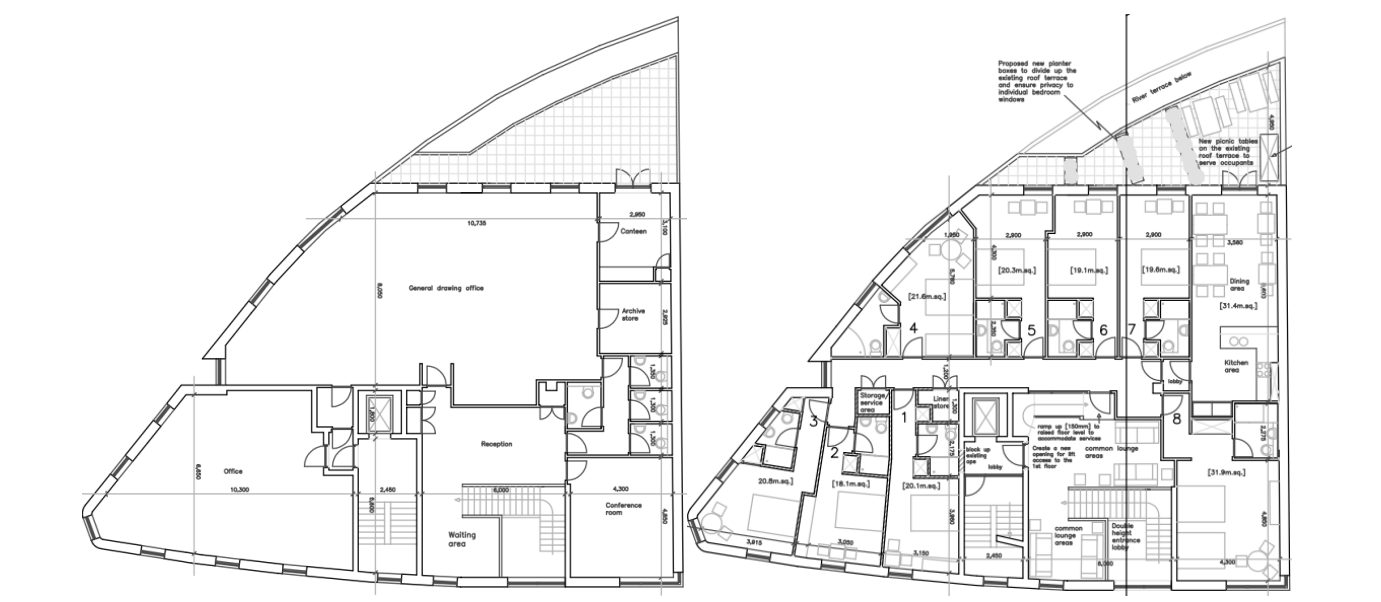
The idea is that the first-floor office space at Camac House would be converted into temporary accommodation for staff anticipated at the new National Children's Hospital, says the planning application.
Plans show eight en-suite bedrooms, and shared facilities.
Children's Health Ireland supports the idea of "studio-type residential accommodation", said a letter from Shane Russell, the deputy chief executive, filed with the application.
Once open, the new National Children's Hospital (NCH) is anticipated to have 5,000 staff, the letter says.
"That increase in staff working in the area will naturally bring an increase in housing need," Russell said. So, "Children’s Health Ireland is supportive in principle any measure which makes accommodation more available and affordable".
The site is a short walk from the hospital campus, and there will be high demand for this kind of accommodation from hospital staff and other campus users, they said, while there is a "scarcity of modern, compact accommodation of this type in this area".
A spokesperson for CHI didn't respond before deadline with answers to queries sent on Wednesday about why this kind of accommodation would be needed, in particular, rather than standard apartments.
An account in the planning file of the pre-planning discussions says that "it is noted that the applicant has been approached by NCH to provide accommodation for staff of this hospital".
The CHI spokesperson didn't respond to queries as to whether it is correct that the project had been initiated by CHI, or they had just chimed in, in support.
John McCamley, the sector organiser in the health division at the trade union SIPTU, said that healthcare workers are struggling to find affordable accommodation in the city. "It is something we've raised over and again."
So "people are travelling massive distances for work," he said. Meanwhile, the public transport infrastructure also doesn't work well-enough for a lot of people, he said.
He isn't familiar with the application for Camac House, he said. But in general, SIPTU would favour long-term affordable homes, he said, over short-term accommodation where people could easily end up stuck for longer than intended anyway.
Council planners, meanwhile, have been grappling with what type of staff accommodation, exactly, is being proposed for Camac House, the documents show.

Just as they did two years ago, when the tech company Phorest applied for permission for overnight pods for remote-working staff to kip down in when they come in for meetings.
That application was ultimately refused. But at the time, several councillors raised concerns about an underlying current of falling housing standards.
During pre-planning discussions around Camac House, planners asked questions as to what kind of homes exactly were being proposed – and how they fit with the council's current city development plan, and national guidelines.
The applicants would need to submit details for how the development would operate, how long staff would stay there, and what facilities would be on-site, it says.
If the floor is to be a hostel, the type of hostel has to be defined – which is usually either a tourist hostel or emergency accommodation, it says.
If it's to be short-term lets, meanwhile, that proposal would need to be assessed in line with the development plan, too – which is done on a case-by-case basis, based on location, and housing-stock availability, it says.
Following these pre-planning discussions, the final application the Hanlons put in said that hospital staff would stay there for up to two months while they hunt down long-term accommodation.
It isn't a hostel, they said, so it doesn't fall at all under that definition "and instead seeks planning permission to provide limited-term staff accommodation".
But there's no specific policy guidance for a special type of staff accommodation, they said, so the council should consider it a kind of co-living and guesthouse proposal rolled into one. Those are "considered partially relatable to the subject proposal", they said.
But also, "it is not considered that the proposal is representative of the shared accommodation/co-living model", it says. There's a presumption against granting planning permission for those, in the city development plan.
Indeed, the proposal has been designed with regard to the Registration and Renewal of Registration Regulations for Guest Houses 2003 and the Fáilte Ireland Guest House Classification Scheme (2019), the application says, "and so will provide for a guesthouse of a high standard providing high levels of amenity to the occupiers".
There were a few parking spaces and bins tucked down the side of the big SuperValu on Lorcan Avenue in Santry on a recent Tuesday.
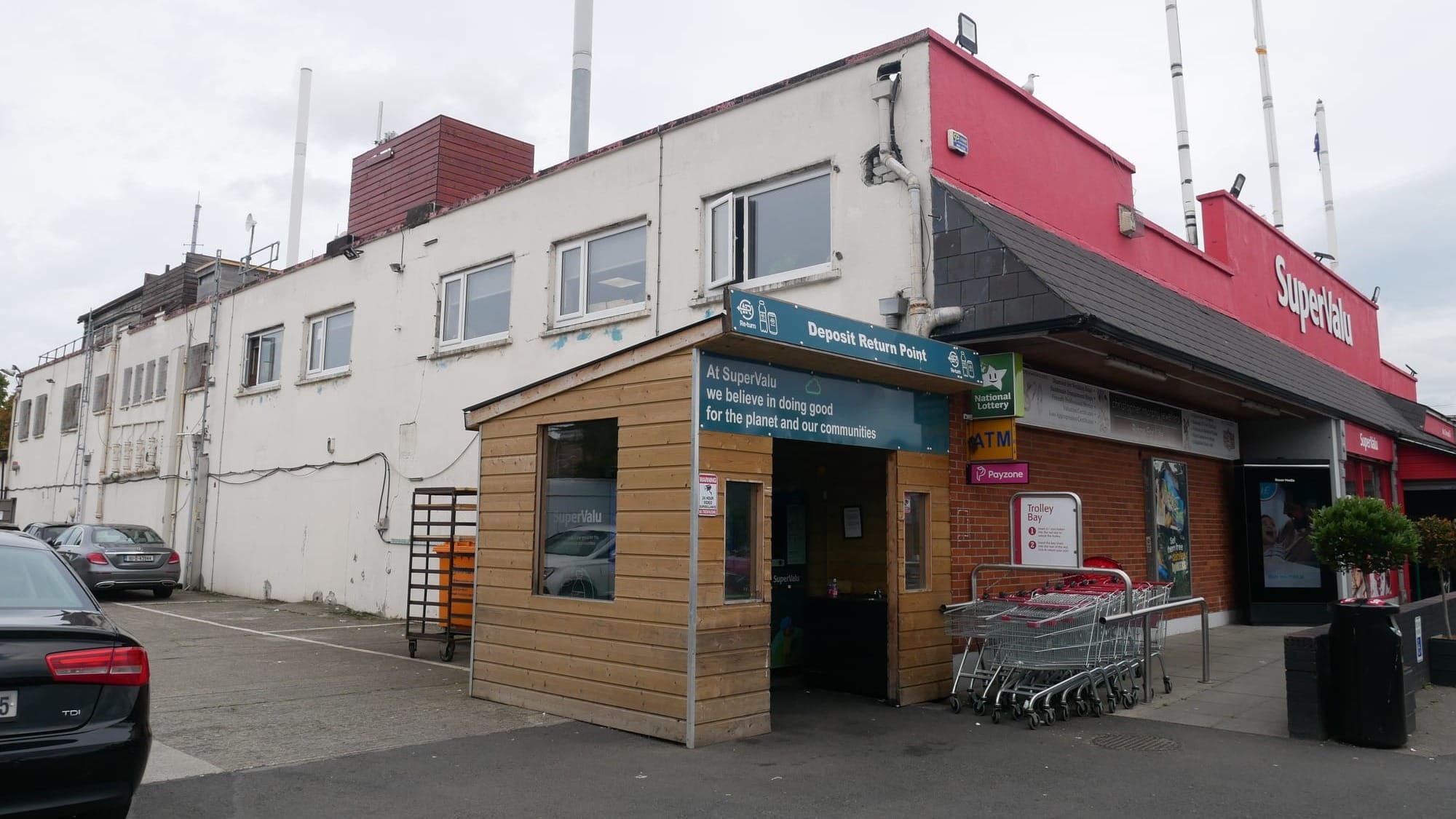
On 25 August, Helgian Limited filed for planning permission to build three modular buildings on the site as staff accommodation.
They're needed because staff sometimes face long commutes right now, and the affordable-housing crisis has made hiring and retaining staff a struggle, says a supporting letter from the owner of the SuperValu in Santry, Ian Mc Donnell.
One of the units would be two-bed and 59sqm. Two of the units would be one-beds at 47sqm – so about the same size as required for houses under departmental guidelines and the development plan.
It's a bit unclear from the plans how much open amenity space there is. But the landscaping shows green and blue roofs, and a green wall, and plants all around – chives, lavender and sea pink.
For the Camac House project, one of the points of further information that council planners have asked for is how the accommodation would operate in practice.
How it would remain temporary, and "particularly how occupancy would be restricted to hospital workers, including details of any legal agreements, management arrangements, or other enforceable mechanisms proposed to ensure compliance with such occupancy restriction", they said.
Neither planning application mentions what the rents would be for the accommodation, and who would cover them, and what kind of contract the renter would have with the landlord.
Mc Donnell, the SuperValu owner, didn't respond to attempts to reach him. But his letter with the planning application emphasises how the cost and scarcity of rental housing in the area is a struggle for staff hiring and retention at the shop – and says having the housing on-site would bring well-being improvements for staff.
Key personnel have to start work early, at 4am, his letter says, and accommodation on-site would get rid of long pre-dawn commutes, and reduce fatigue-related safety risks, among other benefits.
Also, the shop has extended hours, it says, and night-shift personnel could rest in their safe, secure on-site accommodation, "significantly improving roster reliability and health and safety compliance regarding rest periods".
Graham Martin, the representation lead at the housing charity Threshold, said that "tied accommodation" – as accommodation that is linked to a job is often called – does fall as a tenancy under the Residential Tenancies Act.
But it is precluded from the bit of the act that relates to security of tenure, Martin said.
"The security of tenure of a tied accommodation agreement is usually linked to the person's contract of employment, which may be in writing or verbal, depending on the employment," said Martin, by email.
"Some employment, like hospitality, can be fairly casual and accommodation may be provided while the employee is carrying out their duties, but if employment is terminated, so is access to the accommodation tied to it," Martin said.
Also, there are cases where those living in "tied accommodation" don't have tenancy rights though, Martin said.
"Tied accommodation may also deny the client exclusive access to a self-contained dwelling," he said. "In these cases, the rental may also be defined as a licensee, and therefore not come under the Act at all."
 Lois Kapila
But if the employee gets exclusive access to a self-contained dwelling as part of their job, "then the other part of the Acts relating to the right to submit a dispute are intact on issues such as breaches of the landlord’s obligations, for example standards, repairs and rent", Martin said.
Just not on termination of the accommodation, where this is linked to the employee’s ongoing contract of employment, he said.

The company behind the Henry Street department store raised the idea with the man in charge of the regeneration of the city centre, returns show.

The council's chief executive said their changes would slow down delivery of thousands of homes.

It's been in place on buses in Waterford since July, and is due to be rolled out now nationwide – including on Go Ahead's Naas-based Dublin commuter services this past weekend.

"His inability to work will have a direct impact on the provision of the medical services and our ability to maintain adequate staffing and patient care,” reads a letter from the Rotunda to the Department of Justice.