

Maybe people shouldn't be able to collect social welfare at GPO, Arnotts lobbies
The company behind the Henry Street department store raised the idea with the man in charge of the regeneration of the city centre, returns show.
The council's chief executive said their changes would slow down delivery of thousands of homes.

Changes to plans for a new town in Dunsink that councillors backed during marathon meetings Monday and Tuesday will slow the delivery of housing there considerably, Fingal County Council Chief Executive AnnMarie Farrelly told them Tuesday.
Particularly motions to make the build-out of later phases of the project contingent on the construction of a Luas line through the area. Something, Farrelly pointed out, the council has no control over.
At the pair of six-hour meetings, Fingal councillors were trying to work through an agenda of 240 proposed changes to the council's draft Dunsink Urban Area Plan.
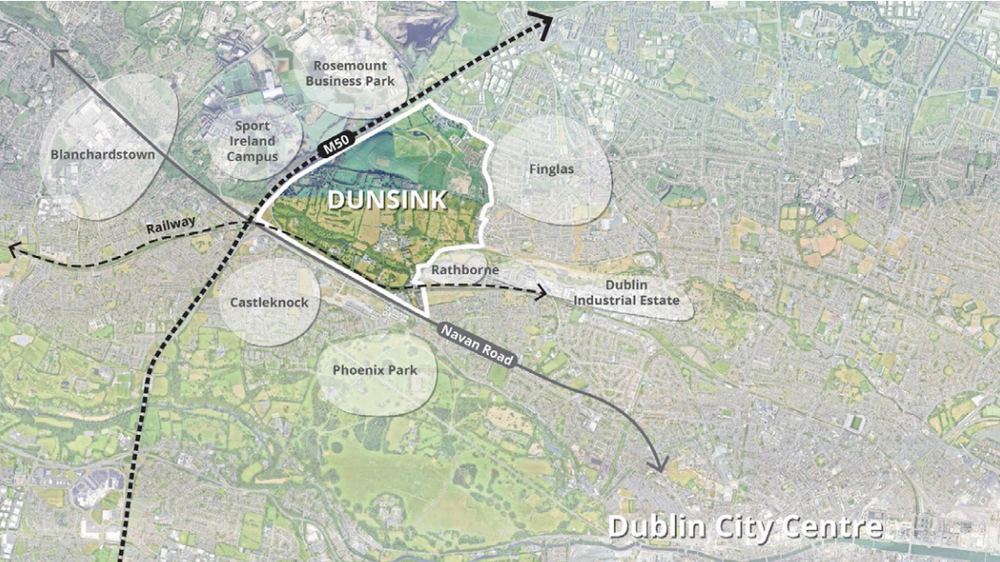
That plan maps out what should be built in the years ahead on 425 hectares, a giant triangle inside the M50, west of Finglas, and north of the Navan Road. A version put out for public consultation in June foresaw about 18,500 homes, built in phases over time.
But that draft was overtaken by a version published in September that factored in more than 1,160 submissions made by members of the public and state bodies during public consultations and a report by Farrelly, the chief executive, told the chamber on Tuesday afternoon.
The updated draft has made a series of changes, including a reduction in the density of homes permitted across the planned lands, Deirdre Fallon, a council senior planner said on Monday.
As well as the addition of a buffer between the eastern edge of the new town and established communities in Finglas, among other changes.
Those and other amendments meant lowering the range of homes expected to be built from between 17,500 and 18,400 to between 7,500 and 16,200, according to slides shown at the meeting.
But, while the council has aspirations to begin the first of three planned phases up at the major underdeveloped landbank by 2029, expanding the Luas is at least another decade away.
Waiting for the Luas to be built could cause considerable delays, Farrelly said at the Tuesday session. “That has the potential to leave two and a half thousand units built on the site, and the plan stalled,” she said.
Despite Farrelly's cautions that their interventions could slow housing delivery, councillors continued proposing, debating – and in some cases backing – changes they said would make the new "urban quarter" a better place to live in, and near.
As the chamber was unable to cover all 240 items on their agenda, the meeting is set to reconvene on Wednesday evening ahead of the statutory deadline for agreeing the plan by midnight on Thursday.
At Monday's meeting, several councillors expressed their concerns with how the planned timeline for the construction of homes wasn’t adequately lining up with the planned delivery of transport infrastructure in the area.
According to the draft plan, a bus service and active travel infrastructure would help get people get to to Ashtown’s Dart station from the new homes to be built during Phase 1 of the project.
An expansion of the Green Luas line to Tyrrelstown would eventually “represent a defining feature” in the lands, particularly for the final western phase, the plan says.
But, the National Transport Authority currently has the Tyrrelstown scheme indicated as “post-2042 project”, the plan says.
Currently, there are four light rail proposals identified for development by the NTA in their Transport Strategy for the Greater Dublin Area 2022 to 2024, Minister for Transport Darragh O’Brien said in the Dáil recently: extensions to Finglas, Lucan, Poolbeg and Bray.
The NTA will be reviewing that strategy next year, the urban area plan says. “This will represent an opportune time to reconsider the timeframe for delivery of [the Tyrrelstown Luas] project.”
On Monday, Aontú Councillor Ellen Troy tabled the first of two motions which asked for the plan to include an integrated transport infrastructure strategy.
No major development phase should proceed without demonstrating that the transport infrastructure necessary to serve that phase has been appropriately planned, funded and programmed, her motion said “This should be completed no longer than one year from adoption of this plan.”
Too often the houses in communities have been built before any infrastructure goes in, she said. “We should be striving to avoid that scenario in Dunsink.”
Fine Gael Councillor Kieran Dennison said looking to get a Luas extension in the area before any houses were built demonstrated a certain lack of urgency in the chamber. “I thought the whole idea of us sitting here today was to have two and a half thousand units ready before 2029, and I don’t see any urgency about that.”
But Labour Councillor John Walsh said that public transport needs to be built in tandem with housing. “It’s extraordinary to me that advocating for public transport is seen as anti-housing. Quite a primitive understanding of development, I would say.”
The plan envisions Phase 1 of the Dunsink town being served by buses, and the Dart+ West scheme, Deirdre Fallon, a council senior planner said. “There is a commitment at the government level for funding. The design work has commenced for the detailed design in the project, so it is happening.”
The Luas isn’t a requirement in the early phases, Fallon said. “It is required for Phase 3, and that’s reflected in the phasing strategy.”
But councillors agreed Troy’s motion by a vote, with 17 supporting it, and 16 opposed.
Green Party Councillor David Healy later introduced a motion requiring the construction of the planned Tyrrelstown Luas station before the construction of Phase 2 of the Dunsink town.
The current phasing requires the station to be under construction or operational in Phase 3, but Healy’s motion would look to push this forward, he said.
Phase 2 is a further 8,000 homes, he said. “And I think it’s absolutely essential that we have the Luas in Phase 2 and not put off to Phase 3.”
Roisin Burke, Fingal’s director of planning and development, said the council wants to have the 2,500 homes in Phase 1 permitted and under construction by 2029.
Healy’s motion essentially said the council would stop development in 2029 because the Luas expansion hasn’t started, she said. “Because that’s the space we’re in here.”
A major piece of construction like the Luas extension won’t happen over night, she said. “There’ll be a railway order. There’ll be detailed design. There’ll be consultation. There’ll be different processes as it goes through its own statutory process.”
That is going to take time and nobody wants to be rushed, she said. “But what we’re doing here is starting a development and then stopping it. And just to be under no illusions, that’s what the impact of these motions are.”
However, Healy put his motion to the chamber, with 19 councillors voting in agreement, while 15 voted against it, and one abstained.
Bumping the Luas extension up a phase wasn’t the only talking point at Monday’s meeting which prompted criticism from Farrelly, the chief executive, on Tuesday.
She expressed her bewilderment at some of the councillors who criticised a proposal to widen Dunsinea Lane and Scribblestown Lane, due to their worries that this would impact local biodiversity.
The draft plan foresaw changes to the lanes to improve bus access to the homes to be delivered in Phase 1, it read. These upgrades would also provide active travel connections to Ashtown Station, it continued.
But, the lanes were the subject of a number of submissions which highlighted their biodiversity, ecological, landscape, cultural and amenity value, and noted their contributions to the local character, heritage, culture and community well-being, it said.
The plan’s transport strategy and assessment had identified these two lanes as essential for Dunsink, especially during Phase 1, Deirdre Fallon said at the meeting on Monday.
The council has received funding for the upgrade of these routes, she said. “And that’s necessary in order to provide the connections to the public transport services, particularly at Ashtown Station.”
Without upgrading the lanes, the Phase 1 lands couldn’t be developed, she said. “It is essential infrastructure. It is recognised in the phasing strategy as essential infrastructure.”
Any upgrades would be subject to detailed design, transport and environmental assessments, and the statutory consent process, she said.
“And those assessments are required to consider the protection of the biodiversity, landscape, heritage features, as well as the need to provide safe and sustainable access arrangements,” she said.
Still, Sinn Féin Councillor Angela Donnelly introduced a motion asking for planned upgrades to be omitted from the early stage of development.
She also put forward a motion alongside her party colleagues Breda Hanaphy, Malachy Quinn and John Smyth asking that the council acknowledge the lanes' heritage as rural country roads.
“Scribblestown still has the old hand-built stone walls," Donnelly said. "Both have tree tunnels with narrow twisting characteristics.”
Any future works should seek to protect its mature trees, hedgerows and stone walls, she said. “Any upgrade work on these lanes will destroy the biodiversity value, will destroy the ancient stonewalls, will destroy that rural feel that these magical areas have.”
They also have four species of bats, she said. “As well as badgers, foxes, frogs and ancient forested green belts.”
Green Party Councillor David Healy said there was an opportunity to use the existing lane for active travel because there were alternative options available for vehicular traffic. "We can take the buses through a bus corridor up into the development again separate from using these lanes."
there was an opportunity to let buses through a corridor separate from the lanes. “And therefore we have an opportunity to look at an existing lane and to use it as an active travel access route.”
Dunsinea was vital to the plans for developing Dunsink and there are no alternative options, Fine Gael Councillor Ted Leddy said. “We don’t have a biodiversity crisis in this country. We have a housing crisis.”
Although, in fact, in May 2019, Dáil Éireann did declare a national climate and biodiversity crisis.
And Solidarity Councillor John Burtchaell disputed Leddy's claim at the meeting saying there was both a housing and a biodiversity crisis. "The root of both of them is the same thing. Our society, our economy is run on the basis of profit."
Dunsinea would help provide bus services off the N3 into the area, and the two lanes would be local link streets, Fallon said. “So the maximum width of those roads would be six metres. Three metres per lane either direction and that’s enough to accommodate buses.”
They weren’t arbitrarily selected either, Burke said. “If we’re going to create a new community and a new town and a new neighbourhood, all of those access points are required.”
However, both Sinn Féin motions were agreed by the chamber following a vote.
It was unusual, Farrelly said on Tuesday. “In all my time working on development plans, I’ve never heard of a proposal where a new road to run in parallel to an existing road is a better way to protect biodiversity from simply enhancing and widening the roads there already.”
###Deadlines
From the outset of the meeting, a point of frustration among councillors was the lack of time they were provided to discuss the 240 items on the agenda for the urban area plan.
The statutory deadline for completing the plan is midnight on Thursday 22 October, Burtchaell, the Solidarity councillor, said at the meeting.
An initial meeting had been set for Wednesday, 14 October, but they had to change to Monday 19 October due to the public sector industrial action, Roisin Burke, Fingal’s Director of Planning and Development said.
So if the plan wasn’t passed before the deadline, it would be deemed made in accordance with the draft plan and the recommendations of the Chief Executive, she said.
By half past seven on Monday evening, the council had covered 53 out of 240 items.
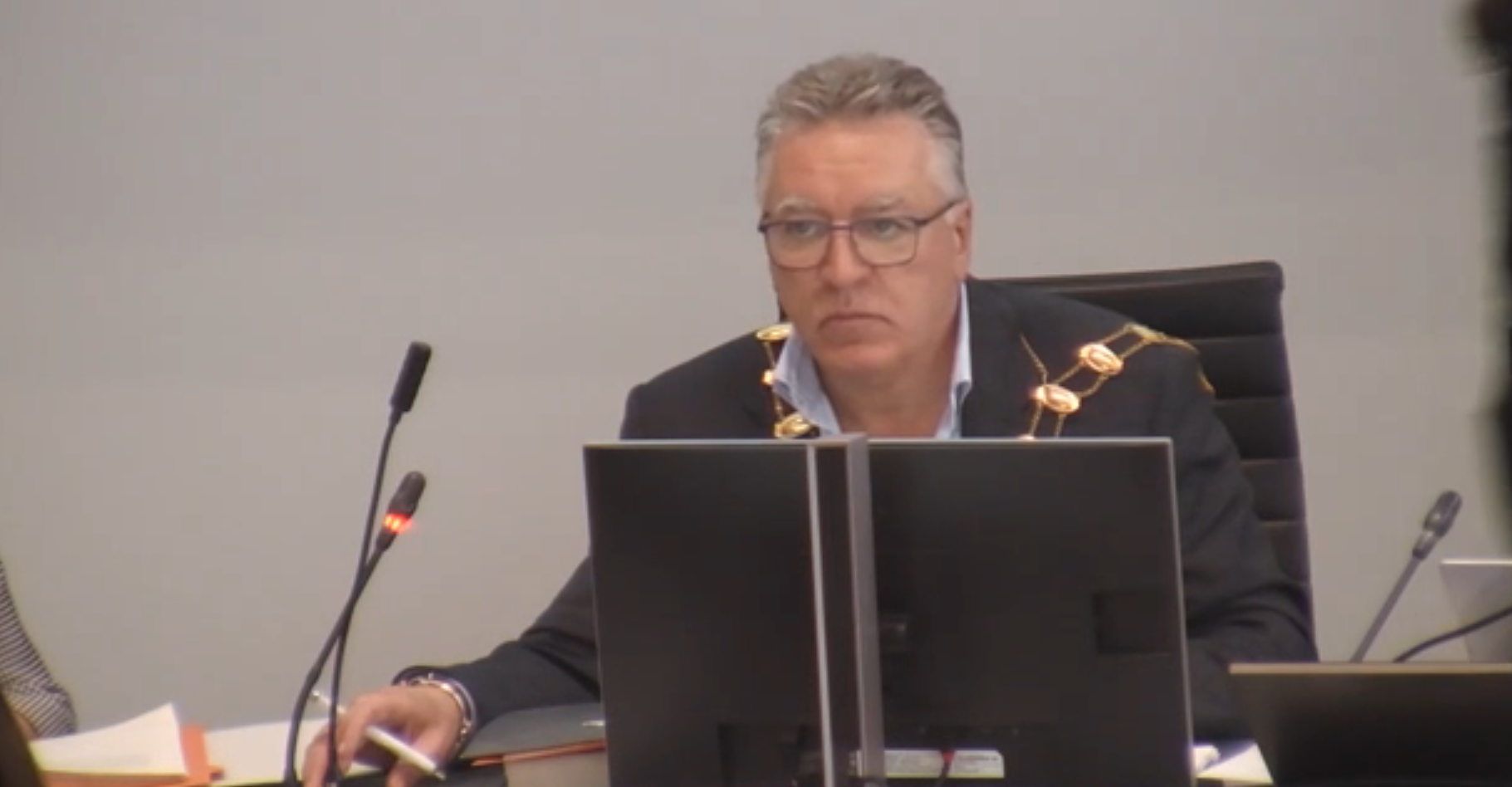
The chamber had three options once, independent Councillor Tony Murphy told the room. As Mayor, he'd been chairing the meeting, which he said from the outset would conclude at 8pm.
Council staff, as part of the public sector industrial action which commenced on 30 September would be strictly working within their contractual obligations, a SIPTU statement from 16 September says
After 8pm, councillors could continue the meeting, but they would only have a skeleton staff, he said. “We will have no webcast. And we’ll have no microphones. So it’s going to be challenging to do it manually.”
They could re-convene the next day or they could “guillotine the meeting” and conclude business without reaching all of the motions, he said.
The latter option would be an agreement to adopt the draft plan, including motions and items agreed that day, Burke said.
It would be favourable to meet on Tuesday, because it would be wrong to continue further into Monday evening without staff present, said Walsh, the Labour councillor. “We’d be at least implicitly crossing a picket line by doing that.”
Murphy, when asked by Troy, the Aontú councillor, what would happen if they didn’t complete the meeting on Tuesday, said that they would. “We will complete it tomorrow. We haven’t got more time.”
But they didn’t complete it by 8pm on Tuesday evening.
After a heated dispute on whether to adopt the draft with the amendments they'd agreed so far, or meet again on Wednesday to continue tweaking the plan, councillors voted in favour of re-convening by 21 to 14.
If councillors do not manage to adopt a resolution amending the plan with their changes, the council executives' version will go into effect automatically.
Even once this plan is done and approved, though, that won't mean the houses – or parks or other amenities – it envisions are built straightaway.
Council projects will need to be designed, and approved and funded by central government.
For lands under private ownership, developers will have to take an interest in the area, find financing, and get planning permission and infrastructure in place – which is all likely to take many years, and happen bit by bit over time.

There are questions about who's doing the monitoring, what they're checking for, and whether all the monitors are even working.

Chief Executive AnnMarie Farrelly had suggested nudging it up a bit.

Councillors were brought through the council's capital programme for 2027 to 2029 at the meeting on Monday.

It depends, in part, on whether the owners can prove they've been holiday lets for more than seven years – and whether planning enforcement noticed.