

Some children in state care struggle to get Tusla sign off for their education courses of choice
The underlying problem, it seems, is a lack of residential places near to their proposed classes.
Dublin city councillors say outreach about the major project has been to residents in the Fingal County Council area – leaving locals in affected city neighbourhoods, such as Finglas, without a proper voice.

The new Draft Dunsink Urban Area Plan covers 425 hectares, a giant triangle of lands south-east of the M50 and north of the Navan Road, in Fingal.
But the major developments that the plan forsees into the future will have a big impact on Finglas, and residents in the northern fringes of the Dublin City Council area too, says Niamh Lambert, a local campaigner behind the Dunsink Development Group.
And they've been overlooked so far, she said.
Fingal County Council put the plan out for public consultation on 19 June, giving until 31 July – the end of the day this coming Friday – for submissions.
As part of that, Fingal officials held a public information evening at Blanchardstown library on 13 July. But no event was held for the people of Finglas, says Lambert.
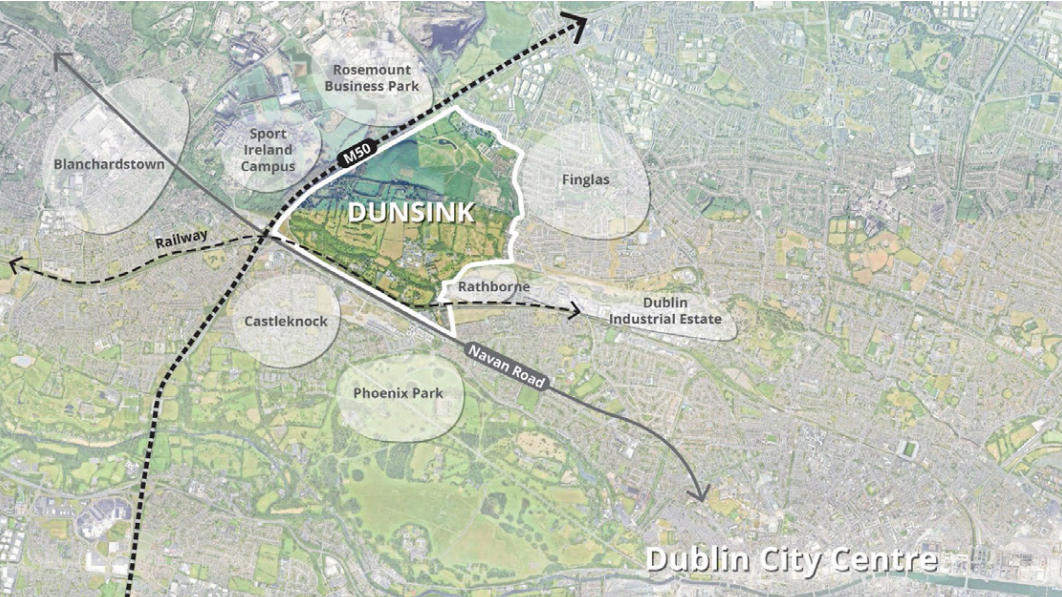
Lambert’s family home is on Scribblestown Lane. While part of the lane is under Dublin City Council control, the Lambert home is just inside the Fingal border, she says.
She went to the Blanchardstown event with her sister and mother, who is in her late 70s. They were all totally shocked to see the extent of the plans for the site, she says.
They always knew development was probably coming, but never expected something this massive, Lambert says. Meanwhile, other Finglas residents who made it to that event were also unhappy, she said.
To try to make up for the gap in outreach, Lambert organised a public information evening for Finglas, in Rivermount Hall, last Thursday 23 July.
“We took over three different rooms, and there were people waiting outside to come in to see the maps,” she says. “It was huge.”
Local Dublin city councillors have said they think there should still be more public briefings for their constituents, and changes to weigh in, ahead of any plan being finalised.
All six councillors for the city's North West Area – which includes Finglas – co-signed a letter to Fingal County Council asking for the submission deadline for the current public consultation to be extended, and for a public information event to be held in Finglas, in partnership with Dublin City Council.
“In our view, meaningful, informed engagement from Finglas residents has been substantially limited in this context," the letter said.
"The situation is made more difficult by the fact that we are in the middle of the Summer, when many constituents are away and less engaged than they would be at other times of the year,” it said.
But a spokesperson for Fingal County Council said on Tuesday that it can't give more time for people to weigh in at this stage.
“As the plan-making process is governed by statutory requirements and timelines, and the consultation period has been publicly advertised in line with legislative requirements, it is not possible to extend the consultation period,” they said.
As of Tuesday lunchtime, 229 observations on the plan had been filed with Fingal and published on the council's portal.
The lands under scrutiny in the draft Dunsink Urban Area Plan make up one of the biggest underdeveloped landbanks in the Dublin area, says the draft plan.
At the moment, the Dunsink lands are a mix of greenfield areas, institutional uses and strategic lands with long-term development potential, the plan says.
Peppered across the area are important facilities, too. The Dunsink Observatory, National Orthopaedic Hospital Cappagh, Teagasc Ashtown Campus, New Cross College, the Royal Canal and the River Tolka corridor, it says.
"A former landfill area within the northern portion of the lands presents both constraints and opportunities for restoration, landscape integration and recreational use," says the plan. For example, on the east side of the county, near Lusk, Fingal County Council is turning the old Ballealy landfill into Rogerstown Park.
The plans for Dunsink have been a long time coming. Back in September 2024, local councillors in Blanchardstown were pushing for faster progress on planning out, and building on, the lands.
That push dovetailed with orders from the central government to make more land available for residential development. Fingal councillors in April rezoned a bunch of sites across the county to make way for up to 2,500 homes.
They also took the Dunsink lands out of their strategic reserve, and committed to come up with a local area plan for developing them – which was to make possible the construction of another 2,500 homes there by 2029.
Later phases should see another 16,000 more homes on top of those, the draft Dunsink plans now show.
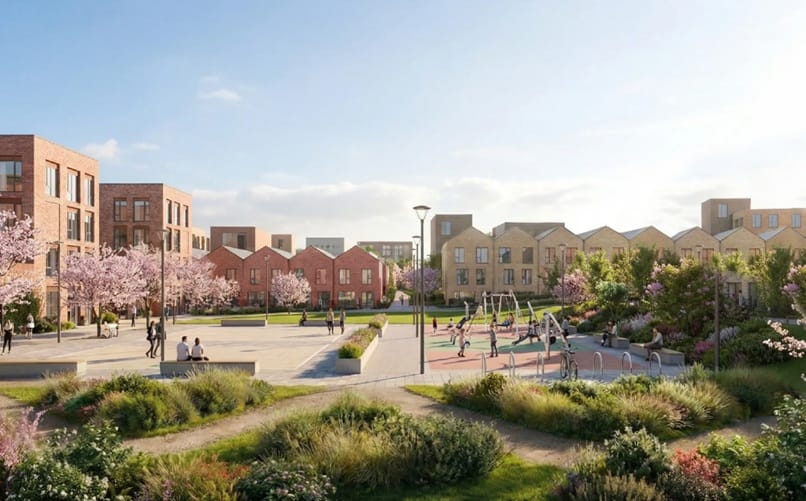
The point of the plan is to encourage sustainable and compact development, it says. More broadly, "a residentially led, mixed-use urban quarter that integrates housing, employment, community, infrastructure and green infrastructure in a coordinated manner".
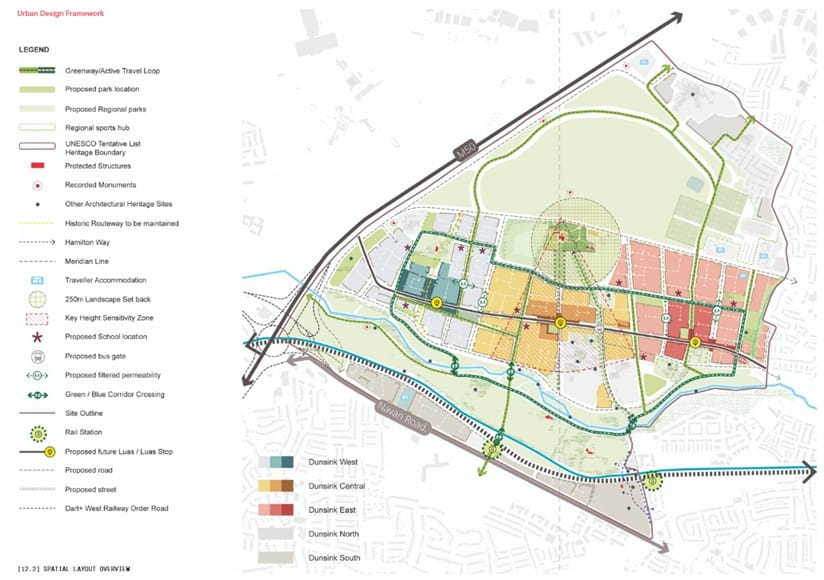
It carves the Dunsink lands up into eight areas, and charts out transport links, different uses, amenities and greenspaces, and rough building heights.
The entire area could eventually fit as many as 18,500 new homes, the plan says. But even once this plan is done and approved, that won't get houses built straightaway.
Council projects will need to be designed, and approved and funded by central government. For lands under private ownership, developers will have to take an interest in the area, find financing, and get planning permission and infrastructure in place – which is all likely to take many years, and happen bit by bit over time.
Lambert says she's not against housing being built on the Dunsink lands. “We do want housing,” she says. “We want it done sustainably.”
Some common concerns have emerged already from residents on the Finglas fringe of the plans, Lambert said.
Traffic in the area is already chaotic, she says.
Indeed traffic is an issue, says Sinn Féin TD Dessie Ellis, who co-signed a lengthy submission to the public consultation along with his local party colleagues, councillors Anthony Connaghan and Leslie Kane.
“They're talking about a number of entrances and exits [for cars] to this plan, right? Two of them are onto the Finglas end,” he said by phone on Monday.
Surrounding roads, including the Navan Road, Ratoath Road and the Junction 6 of the M50, are already heavily congested, Ellis says.
As he sees it, the planned development needs more access points and stronger public transport provision to avoid worsening traffic and pressure on neighbouring communities. “You know, they need to relook at that.”
The draft plan does mention congestion, in its chapter on transport. It maps out more cycle and walking routes, new bridges and road upgrades, and mentions negotiation with the National Transport Authority on more bus routes.
The plan also says the area will be serviced by a future Luas network expansion. But that might not arrive until after 2042, according to government statements.
"They have a picture of the Luas in the middle of their plans," Lambert says. "We're going, 'Jesus Christ, when's the Luas ever going to make it there? We're waiting a long time for it to even get to Finglas.'"
Safeguarding local green spaces and biodiversity is also key, said Ellis, the Sinn Féin TD, and can be done without losing new homes.
“We're not against the housing, but we want to protect certain areas, and the likes of Scribblestown Lane would be one of them,” says Ellis.
There are concerns for the natural beauty of the area, Lambert says. “The biodiversity around here is ridiculous.”
On a recent organised bat-walk with locals on Scribblestown Lane, they spotted at least three bat species, she said. “We got an expert to come out.”
There are otters, foxes, owls and frogs, she said, around the land itself and by the Tolka River.
The draft plan talks about "leveraging its location near Phoenix Park and Tolka Valley Park" which means that "Dunsink is uniquely positioned to become a central hub within Dublin’s metropolitan green infrastructure network."
A chapter on "Green Infrastructure and Natural Heritage" charts a "vision and framework for protecting, enhancing and integrating these landscape assets as part of the future development of the area."
This includes, it says, "plans to strengthen ecological corridors, improve access to waterways, create new parks and greenways and embed sustainable drainage and climate adaptation measures into the structure of the urban environment."
Lambert says locals living along the eastern periphery of the Dunsink lands, where they touch Finglas, are also worried about their homes being overlooked.
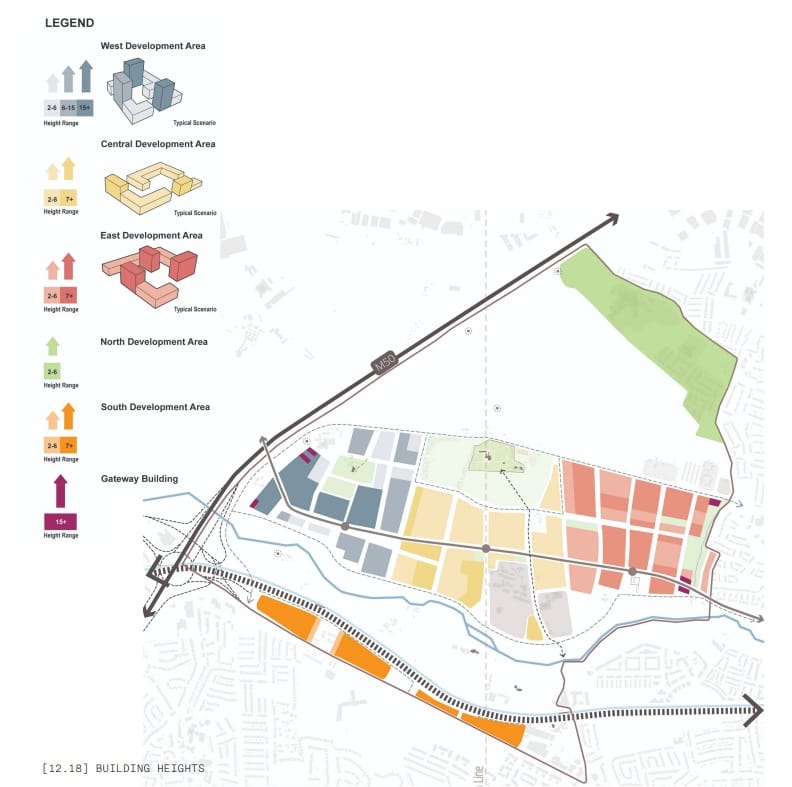
Plans along the northern edge of the lands show heights of between two and six storeys, while along the east they sketch out a mix of blocks of two to six storeys, seven and more storeys, and a few flagship "gateway" buildings of 15 storeys or more.
The draft plan suggests the 18,500 homes should be delivered in three phases.
Phase 1 will see the construction of an initial 2,500 homes, with Phase 2 delivering a further 8,000 homes and the final phase adding another 8,000 homes, it says.
A council press release added: "The development will include a range of designs and tenures including social, affordable purchase, cost rental and private sales."
Lambert says that locals also want concrete assurances that any new development on Dunsink will come with community infrastructure, the important amenities that have lacked when similar builds have happened in other places.
There are three horse and pony clubs in the area, of which the Lamberts operate one, she says. “And none of them have been talked to.”
“They built developments up in the Charlestown, Meakstown, Lanesborough area – that's a Fingal development – but they didn't put in a proper school and doctors and all the type of amenities that should be there for a community,” she says.
Lambert says that she already has to wait up to six weeks to see her doctor. “Which is nuts.”
Funded by the Local Democracy Reporting Scheme.

The current regime just isn't working, they said.

They agreed a motion to review the impact of the plan, within a couple of years, and to compel the council to amend it, if the review finds it is needed.

The company, Micromedia, says it'll help spread the word about arts and culture. An objector says it'll be "yet another glaring, distracting, blinding and intrusive nuisance".

Although, even though the OPW lists these rents as payable, some of the named beneficiaries say they haven't been getting them.