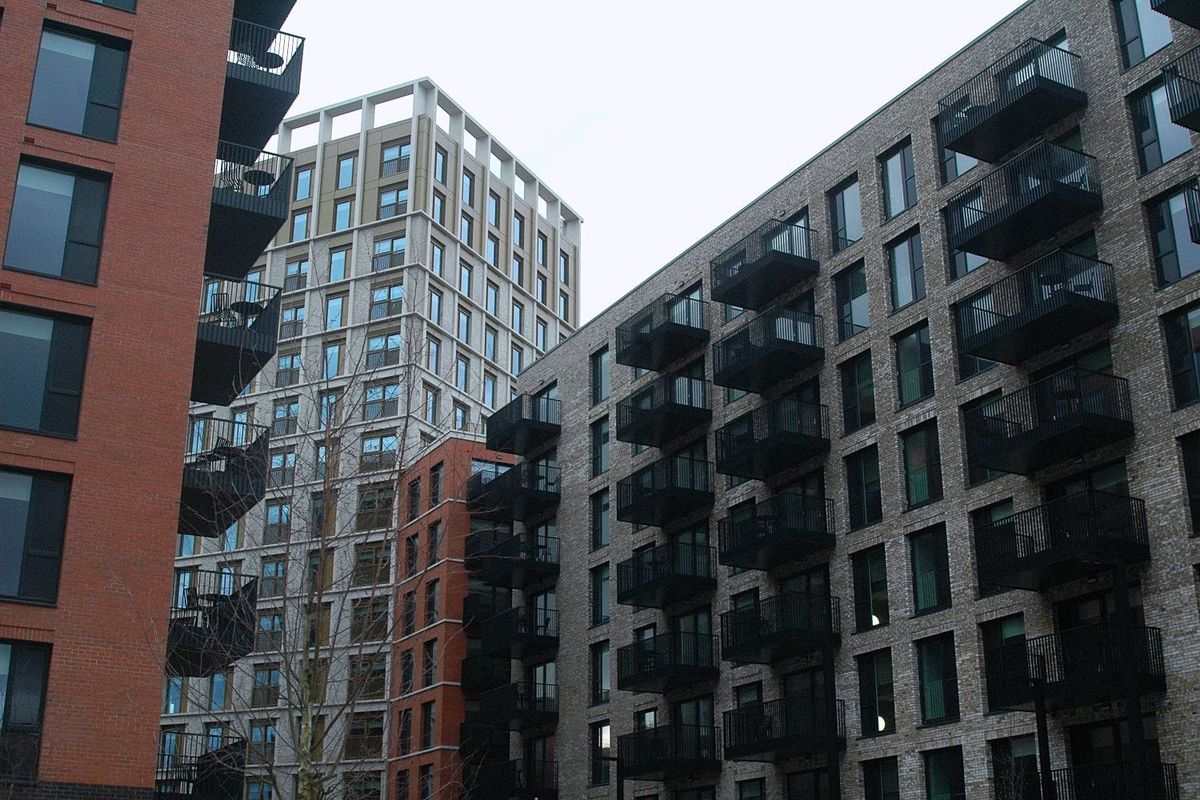
"There is just a ridiculous overconcentration of short-term accommodation," in the Blackpitts and Newmarket Square area, says Sinn Féin Councillor Ciaran Ó Meachair.
On Railway Street in the north inner-city, a six-storey red-brick apartment complex occupies part of the site where Liberty House, a council housing project, used to sit decades back.
In January 2020, Circle Voluntary Housing Association was granted permission by An Bord Pleanála, as it was then, to redevelop the lands here, as Railway Court.
It now holds 47 apartments -- and a community space.
The space is one of the latest to be cited by Dublin City Council as coming on stream through its “5 percent policy,” which it rolled out as part of its 2022 to 2028 city development plan in an effort to help fix the city’s shortage of cultural spaces.
Yet, like others across the city, it's been a struggle to move from existence to activation.
The cost of fitting out spaces in these new buildings remains a major barrier to actually using them, according to minutes from the Artists' Workspaces Committee, a subcommittee of the council’s arts strategic policy committee.
While Circle Housing offers an affordable long-term lease, with a rent of just €600 a year plus charges, the costs to bring it up to a usable standard is about €60,000, say the minutes of the committee’s meeting on 18 May.
A spokesperson for Circle Housing declined to comment on the record about the fit-out costs and who is to cover them.
But they said, on Tuesday morning, that they are working with a local cultural organisation in the space. “We’re just waiting to finalise the lease agreement.”
That €60,000 is also just a fraction of the millions being looked for, to kit out the spaces in other shiny new buildings in the city centre.
Time consuming and costly
As it currently stands, the council’s 5 percent policy applies to developments that are larger than 10,000 square metres, as long as they aren't mostly residential.
It also applies in areas of the city known as Strategic Development Redevelopment Areas, and areas where local plans have evidenced a need for such spaces.
Elsewhere in the north inner-city, over on Upper Sheriff Street, a four-storey cultural centre known as the Juno Building is being developed as part the Carriage Works scheme, a big complex with 700 apartments.
A fit-out could entail filling artist workspaces or a venue with very basic infrastructure, like water and electricity, says Siofra Murdock, the founder of Throwing Shapes, a ceramic studio that operates out of a ground floor space on Mill Street in the Liberties.
When she took over the lease in the space in early 2024, it was a concrete space, she said. “We didn’t have floors. They were concrete slabs. Nothing had been finished.”
Getting electricity meters in was a long process, she said. “It was time-consuming, we didn’t have any certs. And it was quite costly. I just used loans and my personal savings.”
It took about two months, she said. “But I had about ten people helping me.”
Karen Walshe, a creative producer with SoSimpatico, a creative consultancy that is assisting developers with the 5% policy said, in late May, that she is working with some developers where the fit-out wasn’t included in their original plans.
That creates an issue, she said. “If it’s not included in the budget, it means we’re at a point of asking how are we going to fund it?”
There isn’t a blanket solution for these vacant spaces, City Arts officer Ray Yeates said by phone on Tuesday morning. “We have to consider each one. Like Railway Court is a small fit out. Juno is a landmark.”
Each case will need to be looked at on its own merits, he said. “Maybe, departmental funding. Maybe more from the developer. Maybe some from ourselves.”
Railway Court is expected to be in use in the near future, he said. “It’s pretty far along.”
But any fit out should really be included from the very outset of a development, Green Party Councillor Donna Cooney says.
"I really don't see the point in having this in our development plan if it doesn't include the fit out. Like, basic things; lighting, toilet facilities, sinks, heating. We don't give planning permission for apartments without a bathroom."
But viewers seeking a beat-by-beat summation of jazz musician Bill Evans’ career will be disappointed by Grant Gee’s film, which is not meant to be a biopic.