

“It’s giving colonialism”: Ireland still owes rent to dukes and earls
Although, even though the OPW lists these rents as payable, some of the named beneficiaries say they haven't been getting them.
“If they need to redact security information, then by all means, redact it, but not releasing any documents at all doesn’t instil confidence in the system here.”

The Department of Foreign Affairs (DFA) has refused to release 205 pages of documents, relating to the United States’ use of Shannon Airport as a stopover on its flights to deport immigrants.
The United States’ Immigration and Customs Enforcement (ICE) has used Shannon Airport to refuel its planes on the way to send people forcibly to places like Palestine, and South Sudan.
The documents – requested under the Freedom of Information Act and dating from between June 2025 and late April 2026 – are mostly briefing materials and correspondence, according to a “schedule of records” from the DFA.
The document lists a volley of existing records, but the DFA won’t release any of them, even in part.
It refused to release many of the documents with the argument that the department is deliberating on the issue – although that ground is sometimes applied together with another clause, such as security concerns, fear of harming bilateral relations, and, in a handful of cases, worries about prejudicing an investigation.
Fred Logue, solicitor and managing partner at the law firm FP Logue LLP – who specialises in information law – recently said that public bodies often turn to the deliberations clause because it’s convenient.
From their point of view, he said, they’re always deliberating on something.
But for it to fly, public bodies have to also argue that releasing the information “would be contrary to the public interest”.
Concealing how the issue is playing out behind the scenes is unfair, say activists and TDs worried about the treatment and fate of people detained on ICE deportation flights.
John Lannon, a member of Shannonwatch, said the schedule of records and the correspondence it lists suggest that the Irish government has been aware of ICE's stopovers in Shannon.
“Despite this, requests made by Shannonwatch to the gardaí to inspect known ICE flights when they were at the airport have all been ignored,” he said.
Social Democrats TD Sinéad Gibney said the lack of transparency around ICE’s use of Shannon Airport must end.
“If they need to redact security information, then by all means, redact it, but not releasing any documents at all doesn’t instil confidence in the system here,” she said.
It’s vital, Gibney said, that “we get transparency from decision makers when we see Irish airports being used by the Trump regime to execute their cruel immigration policies”.
Gillian Brockell, a former Washington Post reporter who now freelances with Mother Jones and other publications, has been tracking ICE’s deportation flights for a little over a year now.
Irish people have a right to know what their government did or didn’t do, she said.
One night in May last year, Brockell had called the guards, asking them to check on an ICE aircraft holding men in shackles at Shannon Airport. They were being shuttled away from the US “against federal judge Brian Murphy's orders”, she said.
A Garda supervisor told her she would send someone to check, Brockell said. “I asked her that night if their illegal transfer and the inhumane conditions they were being held in might violate Irish human trafficking laws,” she said.
A question she still doesn’t have an answer to, Brockell said.
Irish people have a right to know if the “Trump regime” is pressuring the Irish state to “allow these transfers to continue and to ignore the calls from Irish citizens”, she said.
The guys who were hauled away that night in May of last year first landed in Djibouti and were held in a US military base, according to Amnesty International.
Later, in July 2025, they were shuttled to Juba in South Sudan, where they’re being held in detention indefinitely, without being charged with any crime, Brockell said.
“They are arbitrarily detained in an undisclosed location with limited and monitored access to their lawyers,” Amnesty International has said.
Brockell points to Nyo Myint, one of those guys. “The last time Nyo Myint was allowed contact with the outside world, he said he was having suicidal thoughts.”
Obviously, the “Trump regime” is responsible for that, said Brockell. But “it needs collaborators to carry out this cruelty”, she said.
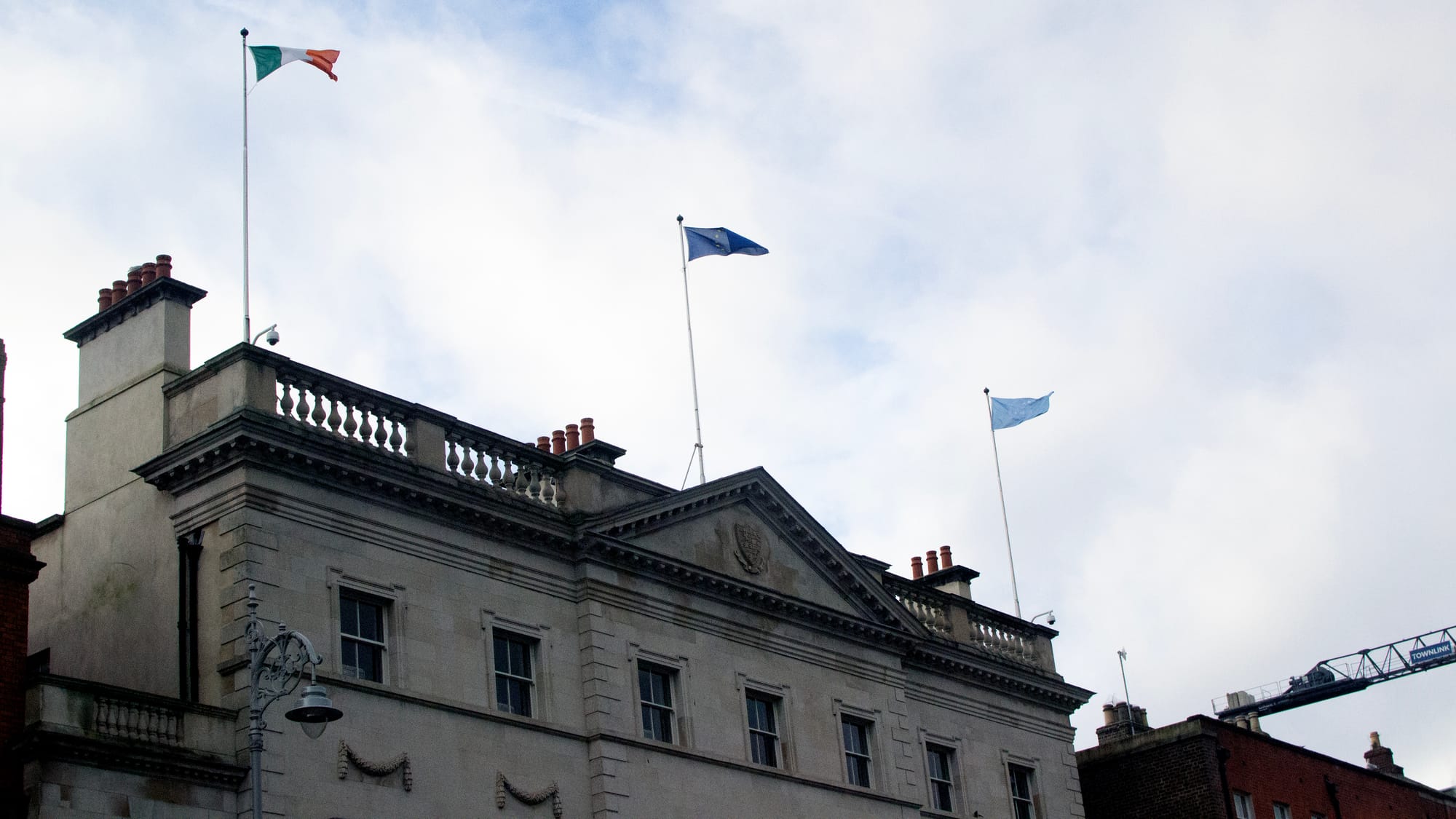
A spokesperson for the DFA said that in processing any FOI request, it follows the law and applies its relevant exemptions, “along with a public interest test”.
A request for an internal review of the refusal – basically, an appeal – has been lodged with the department.
If that’s unsuccessful, there’s the possibility of a third appeal to the Office of the Information Commissioner (OIC). But those can take a long time.
When the DFA refused to release its feedback to the Department of Justice on whether Algeria was a safe country – as the government sought to classify it as such – it took a little over a year for the OIC to partially overturn the DFA’s decision last year.
The Department of Justice pressed ahead with the decision to categorise Algeria as a safe country of origin, two years ago – which makes it harder for its citizens to be granted asylum here.
The DFA had argued that publicising its opinion about Algeria's safety would harm diplomatic relations with its government. It managed to sway the OIC – whose draft decision had fully rescinded DFA’s refusal– to keep some paragraphs private.
Still, what it had to release pointed to security challenges in the country.
Meanwhile, the Legal Aid Board had recently relied on the ground of ongoing deliberations to withhold on-the-ground accounts of the impact of a staffing crunch at one of its asylum law centres in Cork.
In that case, botched redactions led to disclosure anyway.
That ICE has arrested and deported people who held green cards and legal statuses and has mistreated people in its custody is well-documented.
When some immigrants went on hunger strike in protest of conditions at Delaney Hall detention centre in Newark, New Jersey, in recent weeks, ICE officials claimed they were all dangerous criminals.
But “people with criminal convictions account for just a fraction of the detainees at the Newark centre”, according to the New York Times.
As of 10 March, of the 844 people detained at Delaney Hall, “about 12 percent were convicted criminals”, it said, citing data analysed by Austin Kocher, a political and legal geography academic.
Of the 99 people with a conviction, “none had been found guilty of homicide, sexual assault or drug trafficking”, Kocher told the Times.
Between October 2025 and this April, 29 people have already died in ICE custody, according to NPR.
A recent memo instructed ICE to stop reporting and probing deaths of people who’d been newly released from its custody also– reversing a Biden-era protocol.
In Ireland, independent Senator Alice-Mary Higgins said the government has chosen an “eyes wide shut approach” by actively refusing to listen to members of the public who want it to inspect ICE deportation planes.
These planes likely carry firearms on board, too, Higgins said.
It “is particularly worrying given the vulnerability of the people involved and the legitimate concerns of potential human rights breaches in our jurisdiction”, she said.
Policing academics have said that while it is difficult to search ICE’s deportation flights as part of a criminal probe, cops have broad powers to enter an aircraft to check whether its security and safety is up to code.
An Garda Síochána had previously referred queries about that to the DFA and the Department of Justice. The latter said it can’t comment on police operations, the former didn’t respond.
It is in the public interest to at least learn more about what goes on behind the scenes, said Higgins, the independent senator.
Gibney, the Social Democrats TD said, it’s a shame “that we aren’t any closer to getting any kind of reassurance that we’re taking our human rights obligations seriously”.

Although, even though the OPW lists these rents as payable, some of the named beneficiaries say they haven't been getting them.

They're set to back the creation of a special purpose vehicle he's been picked to head, which is meant to play a major role in regenerating the city centre – but how major is in dispute.

Social tenants who live in the private Liberties complex Grand Canal Harbour say they're not allowed to use many of the common facilities there.

Gone is the hardman shtick, the macho bravado once associated with hip hop, rapper and producer Michael Ward, who goes by Mickzart. “We’re after something true.”