

“It’s giving colonialism”: Ireland still owes rent to dukes and earls
Although, even though the OPW lists these rents as payable, some of the named beneficiaries say they haven't been getting them.
As plans for the council to build it out progress, there remains something of a split among councillors as to what would be positive, and what would be possible.

There is an image of one future on the tall hoardings around the stalled construction site on the corner of Kevin Street.
It imagines how the office buildings would look if built to the current plans, with suited figures outlined in the windows of the upper floors.
Behind the hoardings, the thick concrete bones of the building’s lower floors are already rooted in place.
In December, news got out that Dublin City Council was lined up to buy this stalled site – with planning permission for a mix of homes and offices – and finish it off, rent out the apartments, and install its own headquarters.
Much of the focus of debate that followed has been on the future of the council’s current headquarters at Wood Quay, which it would leave behind.
But as the plans progress, there remains something of a split among councillors as to whether pressing ahead with the Camden Yard build as is, is the best way forward.
Part of the challenge is that the design of the building, already reaching a bit into the sky, is so inflexible.
Councillors have welcomed how council chief executive Richard Shakespeare jumped to buy the Camden Yard site.
The deal was attractive, said Karl Stanley, the Social Democrats councillor. And, it would have been awful for that prime plot to be left derelict for years, he said.
Buying it is good stewardship of the city, Stanley said. “Not leaving residents of Kevin Street looking at a carbuncle for decades.”
Shakespeare’s plan is now to finish building out that 3.6-acre site in line with the current planning permission.
So, with a net floor area of about 36,400 sqm of office and commercial space, and 299 homes (119 studios, 146 one-beds, and 34 two-beds).
To fill the office space, Dublin City Council would then move its staff out of Wood Quay – and a few other rented buildings in the city centre – and into two blocks, with 25,500 sqm of the office space.
It would sublet the remaining block of 10,900 sqm.
But Stanley has been digging more into the amount of office space that he estimates the council needs, he said.
He asked council officials why they need an office building with space for 2,800 staff – as presentations have said.
After all, the busiest day in Civic Offices over the past few years saw 1,309 staff members in the building for work, show figures released to him. Many staff have the option to apply to work two days a week from home.
Meanwhile, about 500 staff members are scattered around other buildings in the city centre, excluding area offices.
So, he wants to interrogate that need a bit more, he said.
And one suggestion he wants examined, he says, is for the council to build out the Camden Yard project as planned, with all the offices, so it doesn’t fester – but to sell those offices.
Shakespeare’s current plan is not to retrofit the council’s Civic Offices on Wood Quay and stay there, because of the cost of all the work.
But a chunk of that cost is the price of decanting staff, said Stanley.
So why not build out Camden Yard, and put staff into there temporarily during that refurb, he said, and then empty it and sell it.
“You don’t get the housing gain from Wood Quay,” he said.
Shakespeare’s plan includes building hundreds of homes there after the council leaves.
But you get the homes at Camden Yard, a space to decant, and then they should be able to flip it at a profit. “That’s a thing I would like to explore,” Stanley said.
Donna Cooney, a Green Party councillor said she had asked officials if it would be possible to sell the Camden Yard offices.
They said there wasn’t really a market for that, Cooney said.
Relying on being able to lease out one of the office blocks – the one the council doesn’t need – is also risky, said Cooney, given the current climate.
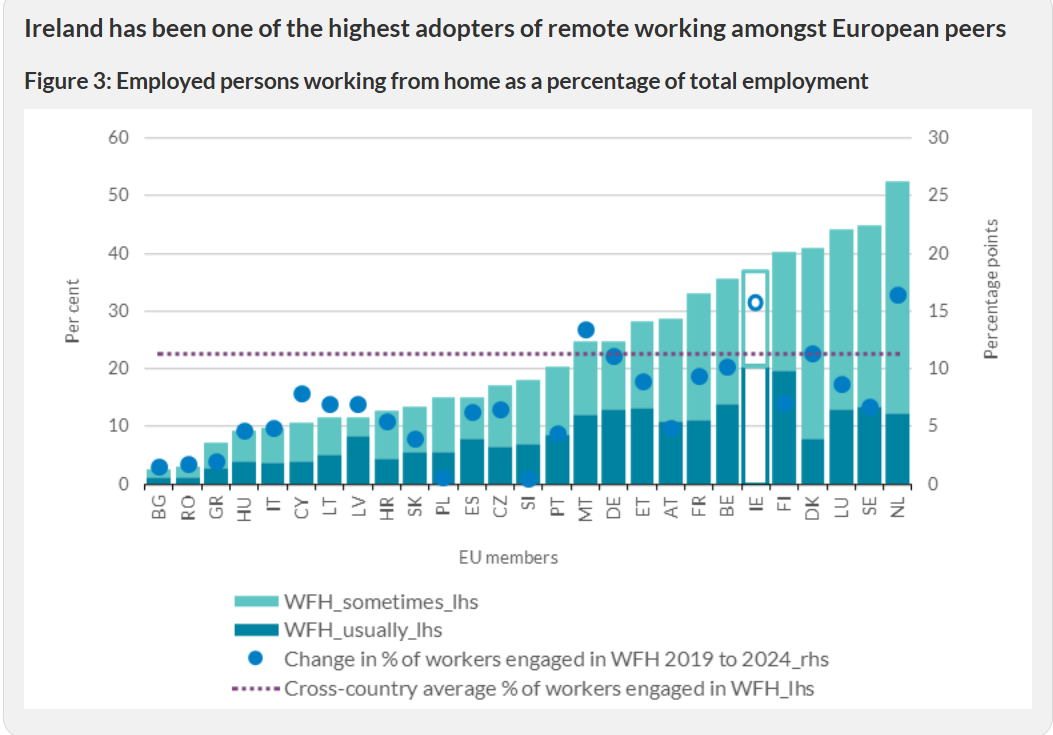
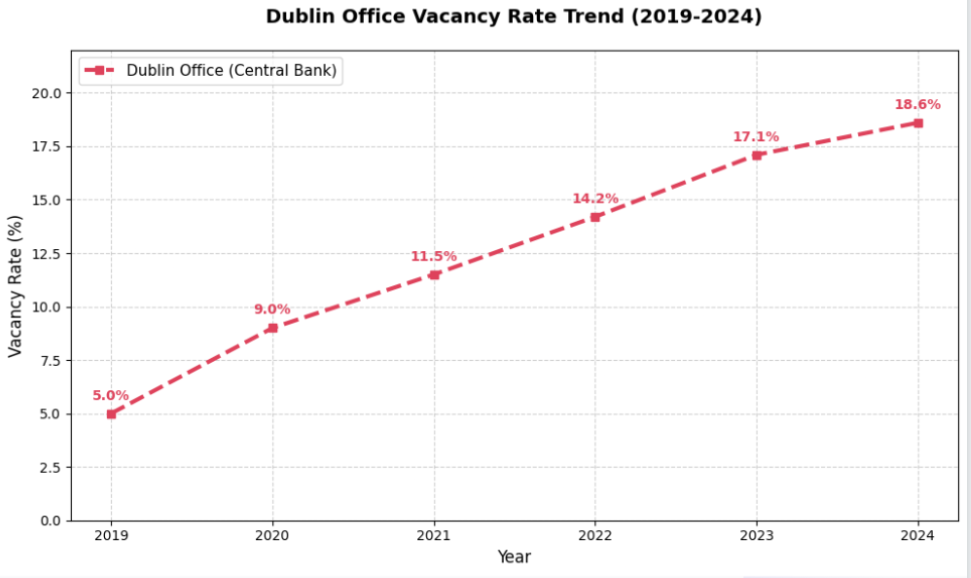
Yes, said Joseph Kilroy, head of policy and public affairs for the Chartered Institute of Building.
The lower uptake of office space across the city has only become more embedded in recent times, he said. “I just don’t feel it’s the kind of environment where you want to be in a position to let out offices.”
As office vacancy began to rise, some commentators suggested that only older office space wouldn't be in demand, he said, and that newer, more efficient builds still would be.
“But given more new office space has come on stream, it’s a flat fall-off in demand at this stage,” he said.
Stanley, though, doesn’t think councillors have the capacity to stop the proposal to build out Camden Yard as is, as mostly offices – even if councillors have to vote to approve any borrowing to backfill the money earmarked to buy and build it out.
To not go along with it would be irresponsible, he said.
And officials are moving at speed with the project, said Stanley. “I think they can create facts on the ground faster than we can discuss it.”
Not all councillors are against the current plans, either.
Labour’s Fiona Connelly says that after going into a meeting with officials earlier this week, she and her party colleagues feel good about the proposals for Camden Yard.
Budget constraints can mean that the city council has lacked ambition sometimes, she said. So she is happy to see this big-picture investment, she said.
She is also enthusiastic about the 299 homes that the Camden Yard site is to deliver, under the current planning permission, she said.
“The housing crisis is the biggest problem and it permeates every aspect of everybody’s lives in the city,” said Connelly.
The plan for Camden Yard seems fairly clear, said Clodagh Ní Muirí, a Fine Gael councillor. And a library extension and the homes are welcome as part of that, she said.
All that said, she would like to see a bit more detail on the demand for office space in the city though, she said.
If demand for the extra office space is high, great, but if not, maybe some of it could be tweaked for housing, she said – although she is unsure, she said, how much scope there is for that.
On Thursday morning, Kate Dwyer was just over the road from the stalled construction site.
Residents have voiced a few main concerns to her, said Dwyer, who chairs the residents’ committee in the Iveagh Trust flats just the other side on New Bride Street.
Her small dog scampered around at her feet. She tried to placate it with a tennis ball as she talked, but it really wanted a sausage.
She is planning to properly survey neighbours, she said, but has a read on on broad thinking so far.
Residents have always been worried about the buildings –which are to run up to 14 storeys – blocking light in some flats, she said. A bit lower would be good, she said.
They’re worried about transport measures too, she said. Making sure it’s safe for all the kids who walk to school, given the underground parking and the already busy junction.
And, some would prefer to see it just redesigned, and built out as apartments and amenities, rather than moving the city’s headquarters to the site, she said.
When it was Dublin Institute of Technology, it had a swimming pool where many in the area learnt to swim, she said.
Going back to the drawing board and tweaking the project would slow it down, she said. But “I would rather it was done properly, that the public is consulted”.
Cooney, the Green Party councillor, said that she too wants to see the plan for Camden Yard redesigned as apartments.
Give the council architects a run at that, she said. There are great architects in Dublin City Council, she says
Office spaces are just too risky in the current climate, she said, and she doesn’t want to see the council move out of Wood Quay and those buildings demolished.
They could start to build the 299 apartments at Camden Yard, while they redraw plans for the rest of the site, she said.
Council officials have told her that a new or amended planning permission could take 10 years given the possibility of legal challenges, she said – but she is sceptical.
“They would say it would be no problem if they wanted it,” she said. “I would still be urging that they would go for housing.”
Complicating that, though, is how much of the building has already been built – and its design.
Kilroy, of the Chartered Institute of Building, has a view of the Camden Yard site most days.
What has been built so far isn’t suitable to just retrofit into quality housing, he said.
The Camden Yard site has low floor-to-ceiling heights, and load-bearing partitions, he says.
Buildings that are adaptable have high floor-to-ceiling heights, and are open floor with non-load-bearing partitions that can be moved around as needed, he said.
In England, office blocks with load-bearing partitions that have been retrofit as apartments have ended up with rooms without windows, and hallways turned into bedrooms and bathrooms, he said.
Ciarán Molumby, of Islander Architects, says the biggest challenge to conversion would be the depth of the floor plans.
“Often, in order to maximise the site coverage to cover the risk of speculating on a real estate development, architects are asked by the owner of the land to design building typologies that can utilise deep floor plans more easily,” he said.
“Offering the greatest number of units more easily on a site is likely to be one of the reasons for the continued interest in developing new office buildings, even at a time when newly built options remain vacant across the city,” he said.
That, he said, and the government reliance on foreign direct investment.
“But in architectural terms, the building typology of a modern office is largely reliant on electric lighting and mechanical ventilation to overcome the dark, stale core that is a byproduct of a deep floor plan,” he said.
Kilroy says that if the idea is to make it into housing, he said, he would struggle to see a world where the existing concrete frame and slabs wouldn’t have to be knocked.
Molumby, of Islander Architects, said he and colleagues were conscious of the Camden Yard site, as they worked on their Demolition Take Down project a couple of years ago.
“The fact that this particular site, or collection of sites, have endured at least two large-scale demolitions already, within a 120-year period, is significant to the story,” he said.
Islander Architects’ project highlighted how the Irish construction industry generates about 48 percent of all waste produced in Ireland.
“We had a notion that there are buildings emerging from the ground today that are already becoming empty, unused, and more likely to be demolished in the near future,” he said.
The inflexibility of Camden Yard is exactly the kind of issue that Kilroy is trying to press the city and central government to address, with a recent proposal that politicians embed adaptability requirements into planning and procurement.
Among his recommendations are that big city-centre developments have to use standardised tools to guarantee that spaces are flexible for future uses.
And planning applications should have to submit future-use scenarios – to show how offices could transition to homes, for example.
Camden Yard isn’t the only development that has stalled because a developer paid buckets for the site, and then the office demand fell away, he said.
“The point we make is that this wouldn’t result in mothballed projects, if there were directions or mandates as to building more adaptably,” he said.
If there had been a world in which Camden Yard had been built in a less rigid way, other scenarios could have pertained, he said.
Maybe, the original development wouldn’t have gone bust, he said, as it could have been switched.
Or, the council could take up office space that it needed if it did want to move there, he said, and easily adjust the rest to housing.

Although, even though the OPW lists these rents as payable, some of the named beneficiaries say they haven't been getting them.

They're set to back the creation of a special purpose vehicle he's been picked to head, which is meant to play a major role in regenerating the city centre – but how major is in dispute.

Social tenants who live in the private Liberties complex Grand Canal Harbour say they're not allowed to use many of the common facilities there.

Gone is the hardman shtick, the macho bravado once associated with hip hop, rapper and producer Michael Ward, who goes by Mickzart. “We’re after something true.”