

“It’s giving colonialism”: Ireland still owes rent to dukes and earls
Although, even though the OPW lists these rents as payable, some of the named beneficiaries say they haven't been getting them.
Some tenants had been disconnecting window restrictors put in to keep people from falling out windows, which are required under building regulations, an email from the building manager said.

As temperatures outside began to climb in mid-June, renters at Liberties House, a co-living building on Cork Street, got an email from the building managers.
"We are writing to address a critical health and safety matter," said the email, from the team at Grayling Properties.
"It has come to our attention that a number of window restrictors within the building have been deliberately disconnected or tampered with," it said.
"Please be advised that window restrictors are legal safety requirements under Irish Building Regulations," the email said.
Disconnecting them put renters in serious breach of their licence agreements, the email said. The landlord may evict those found to have "tampered" with window restrictors, it said.
People living in the studios, the vast majority of which are 18sqm, had been disconnecting these to open their windows wider, to get some fresh air and try to cool down.
Hence the conflict.
The underlying issue isn't that the building regulations try to ensure safety in apartments, but rather that they don't deal much with measures to prevent overheating in the first place, says Jeff Colley, editor of Passive House Plus magazine. "There has been far too little attention paid to this issue generally."
The United Kingdom's building regulations – on which Irish building regulations are largely based – have a section that covers measures to prevent overheating in homes.
But there isn't one in Ireland, says Colley. "It does get a bit hotter over there, but there's no excuse for it to not have it here."
As the climate globally changes, Ireland is getting warmer. Overall, last summer was the second warmest on record, according to Met Éireann, and record highs are piling up this summer too.
Grayling Properties didn't respond to queries sent on 8 July about the need for renters to get more air during hot spells, and the rules around window restrictors. But they sent another email around to residents on 10 July to say they're looking at solutions.
A spokesperson for the Department of Housing pointed to some of the building regulations around overheating that are in place.
But also, "the Department is preparing a further report assessing overheating risk in dwellings under future climate change conditions using more extreme future weather files," they said.
The homes most at risk of overheating are "single aspect dwellings with large areas of west facing glazed areas that are unshaded and small window openable areas", says a review from the consultancy AECOM, carried out for the Sustainable Energy Authority of Ireland in 2019.
Apartments such as this "will inevitably require consideration of appropriate mitigation measures or a design review", it says.
Indeed, "over-heating in hot weather isn't just about comfort, it's also a significant risk to health", says Orla Hegarty, an assistant professor at UCD's School of Architecture, Planning and Environmental Policy.
At the moment, though, the building regulations that cover overheating are light and loose, said Stephen McGovern, director of the Cork Energy Consultancy.
Part L of Ireland's Building Regulations cover overheating in a few paragraphs.
Engineers run models using software called the Dwelling Energy Assessment Procedure (DEAP) to check that the designs meeting parameters in the regulations, he said.
If that throws up issues, designers can look to the guidance in another document, CIBSE TM59, on what to do, he said. But CIBCO TM 59 is just a recommendation at the moment, said McGovern.
As he understands it, the Department of Housing is finalising a brand new Part L of the Building Regulations, which is expected to be finished this year and brought in next year. It should say more about overheating, he said.
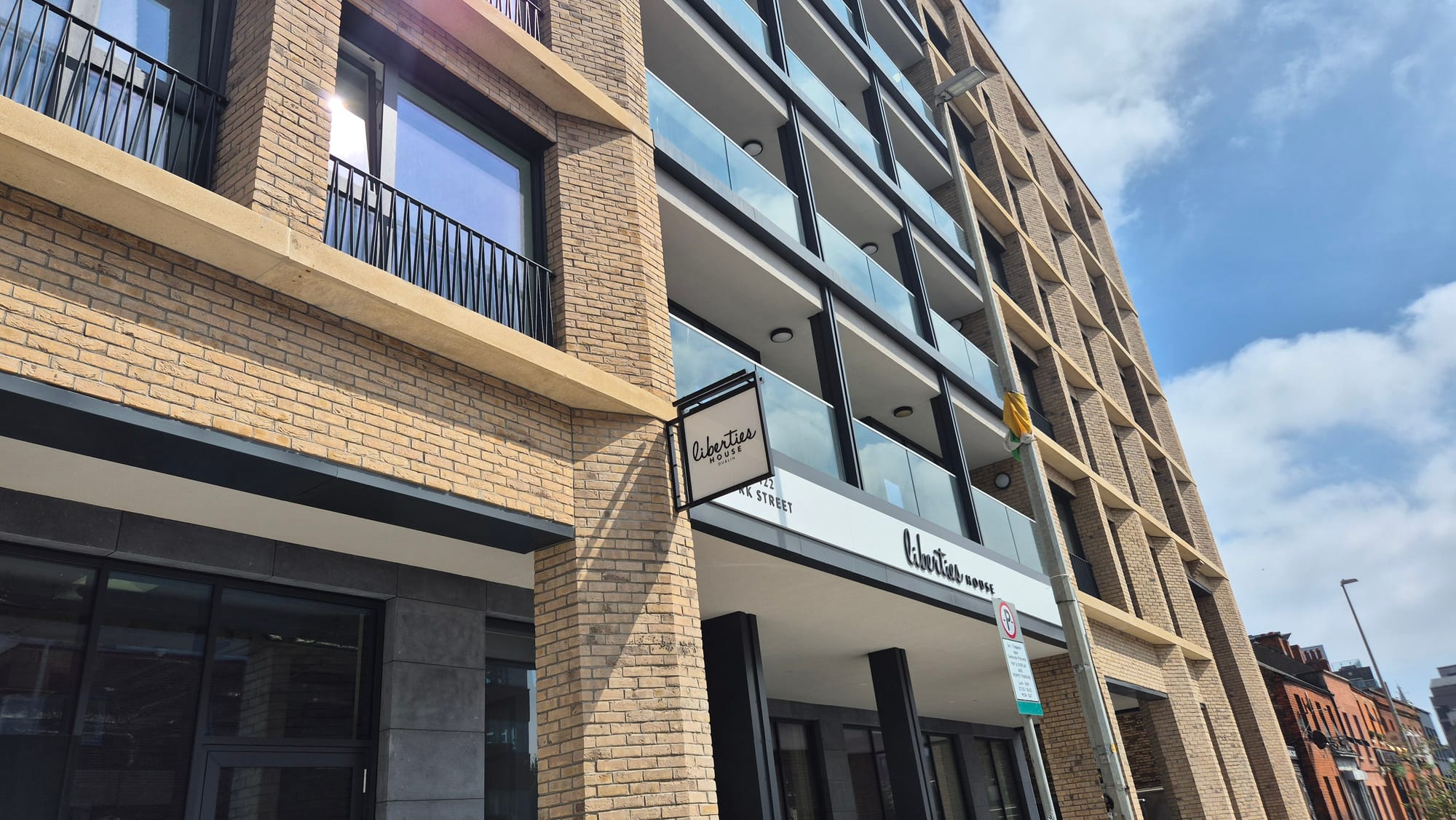
Ventilation, meanwhile, is covered by Part F of the Building Regulations, McGovern said. It says things like, if there's no mechanical ventilation, all habitable rooms must have a certain amount of ventilated area, he said.
There are two main ventilation-related factors that raise the risk of homes overheating, according to the AECOM review.
First, the amount of "window openable area". If it's a big home with only a small bit of the windows that opens up to let in air, it's more likely to overheat.
Second, if rooms are single-aspect. In other words, they only have a window on one side so a resident can't set up cross-breezes through the home.
Changing apartment standards in Ireland have allowed for more and more single-aspect homes, though, as developers seek to fit as many homes as possible onto sites.
Apartment standards brought in last year reduced the share of dual-aspect apartments to a minimum of 25 percent in new build blocks, with discretion to lower that further in refurbishment projects.
That overrides Dublin City Council's city development plan, which tried to set different standards. That plan said that typically, at least 33 percent of apartments should be dual-aspect in central areas of the city – although it tries to encourage more – and 50 percent in suburban areas.
Hegarty, the assistant professor at UCD, said that window restrictors are generally fitted when there's a risk of people falling out.
But "if this results in rooms that cannot be adequately ventilated the building operators should make modifications", she said.
"Balconies in apartments overcome all of these problems, giving residents large opening sections for ventilation, shading from balconies above, a space to go outside, and a place to be rescued from in the event of a fire," said Hegarty.
Outside Liberties House on Wednesday morning, in the baking heat, any window on the block that was open, was cracked just a few inches – which is what the restrictors allow.
No resident felt comfortable talking on the record about the temperatures and ventilation in the building.
As licencees, renters in co-living – alongside some renters in shared houses, and those who take up "beds in sheds" – are among the growing category of renters who fall outside of rent controls and security of tenure protections.
A few people said they had bought fans to try and manage the heat, but anyone living in the south-facing apartments said it had been difficult.
After its first email, with its warning to renters at Liberties House, the team at Grayling Properties sent a more conciliatory email to residents on 10 July.
The earlier correspondence hadn't been "up to the standard of service and communication we aim to provide, for which we sincerely apologise", the second email said.
"We appreciate that the current warm weather has created challenging conditions for some residents. Unfortunately, these restrictors are government regulations," it said.
They had mechanical and engineering consultants investigating the issue, to determine whether any additional measures could be implemented to help comfort levels during the heatwave, it said.
"In the meantime, a practical measure that may help reduce heat gain within apartments is to keep blinds or curtains closed during the warmest parts of the day, particularly where rooms receive direct sunlight," it said.
And complimentary cold drinks would be available the following weekend, the email said.
McGovern, the consultant, says that, generally in Ireland, overheating stems from design failure.
In which case, generally, an "assigned certifier" – the person who signs off that the building has been built in line with regulations – would be considered responsible, he said.
It would be down to the Building Control Section of the local authority to go in and check whether a building is overheating, and if it complies or not with CIBSE TM59, he said.
But CIBSE TM59 is just a recommendation at the moment, he said.
For renters themselves, putting out tall plants on balconies – if they have balconies – can help cool a place down, without annoying a landlord by hanging anything, said Colley, editor of Passive House Plus.
Building owners might want to look at putting in shutters, or brise-soleil on the ground floors, to cut out the high-summer sun, says McGovern.
There is a window rating – a "g-value" – which takes into account how effective glazing is at stopping the sun heating up a room, he said, but that isn't mandatory yet in Ireland. "We're very much looking at the heat escaping in Ireland."
Another DIY option has been mooted, jokes Colley. You could smear yoghurt across the windows.
Partly funded by the Local Democracy Reporting Scheme.

Although, even though the OPW lists these rents as payable, some of the named beneficiaries say they haven't been getting them.

They're set to back the creation of a special purpose vehicle he's been picked to head, which is meant to play a major role in regenerating the city centre – but how major is in dispute.

Social tenants who live in the private Liberties complex Grand Canal Harbour say they're not allowed to use many of the common facilities there.

Gone is the hardman shtick, the macho bravado once associated with hip hop, rapper and producer Michael Ward, who goes by Mickzart. “We’re after something true.”