

As campaigns gear up in central Dublin, how sound is the voter register?
It isn’t hard to find people registered to the wrong addresses and zombie entries.
While costs of basic items have risen, including snacks bought from the prison shop to fill long gaps between meals.

When Gerard Bowes was sent to Wheatfield Prison for four years on a drug charge, he had no financial support on the outside.
That is to say, nobody to put money in his prison account to buy himself things like toiletries, tobacco or snacks from the prison “tuck shop”.
“It’s bad enough on the outside not having a job. But when you get into prison and you’ve nothing, it’s brutal,” he said by phone on Wednesday.
The last meal of the day, provided by the prison, is served at 4pm, he says.
That leaves a long 16 hours until breakfast the next morning, he says.
So, Bowes explains, prisoners rely on the tuck shop to fill the gap – and that requires funds in your account.
To get those, they either need someone outside to send money. Or they need to earn it inside.
The Irish Prison Service provides prisoners with different levels of “gratuity” payments, depending on their behaviour, engagement with services, and whether they work.
All in, prisoner payments are subject to an overall limit of €21.28 weekly, assuming you are on the enhanced level for gratuity, and also work every day.
Although rates were increased in 2024, the low levels mean families on the outside are put under financial strain, having to help out their incarcerated loved one, says Saoirse Brady, executive director of the Irish Penal Reform Trust (IPRT).
“Costs, even in prison, have continued to go up,” Brady said, for “basic items like shower supplies and food to supplement mealtimes from the tuck shop”.
While prisoners will often want to work, as it beats sitting in their cell for most of the day, for Gerard Bowes, he says, there was no real choice in the matter – he needed the money or he’d be hungry.
So, he eventually earned a job in the laundry room in Wheatfield Prison.
The Irish Prison Service provides prisoners with daily “gratuity” payments, with three different levels – basic, standard, and enhanced.
Which level of “grats” depends on their “engagement with services and behaviour”, according to the Prison Service’s website.
After a review, gratuities were in 2024 raised for the first time since 2012.
Basic went from €0.95 to €1, while standard rose from €1.70 to €1.80. Enhanced was increased from €2.20 to €2.54 - per day.
To be considered for Enhanced Regimes Level, at a minimum the prisoner must participate in a minimum of five “constructive activities” per week, a spokesperson for the Irish Prison Service said last week.
These activities can include things like education programmes, metal or wood workshops, or staying consistent at the gym.
They must also have spent a minimum of eight weeks at Standard Privilege Level, and be of “consistently exemplary behaviour”, the spokesperson says.
Prisoners can earn more, on top of these gratuities, by working – for 50 cents per shift, up to a maximum of €3.50 per week.
This is nowhere near enough to meet the requirements of the Council of Europe’s recommended prison rules.
The Council of Europe is an international organisation that works to uphold human rights.
Its Committee of Ministers, which brings together Ministers for Foreign Affairs of the 46 member states – or their permanent representatives – in 2006 adopted a series of recommendations on prison rules.
“Prisoners shall be allowed to spend at least a part of their earnings on approved articles for their own use and to allocate a part of their earnings to their families,” one of the recommended rules says.
“Prisoners may be encouraged to save part of their earnings, which shall be handed over to them on release or be used for other approved purposes,” another says.
The idea of having enough funds left over to send out to your family is laughable, says Bowes, who was released from prison in 2022.
He would spend hours a day washing, pressing and folding clothes and sheets for the rest of the prison – and earn 50 cents for the effort, he says.
If the prisoners weren’t doing the necessary work to keep the prison ticking over, the Prison Service would have to hire staff in to do it, which would cost an awful lot more, says Bowes, the former prisoner.
Brady, of the Irish Penal Reform Trust, agrees.
“People in prison should be afforded a fair rate of pay for the work they carry out which is often essential to maintaining and operating the prison, including work in kitchens, laundry, industrial cleaning, grounds maintenance, painting, and stores,” she says.
But in practice, their earnings aren’t enough to buy much at the tuck shop.
When asked for a tuck shop price list, a spokesperson for the Prison Service said: “Prices between the contracted supplier and the Irish Prison Service are commercially sensitive information.
“Items sold in prison tuck shops are sold at cost +5% (excluding tobacco products) with profits generated being used for prisoner hardship payments or other prisoner related initiatives.”
The contracted supplier, BWG, has not yet responded to queries about tuck shop prices.
But McVerry says a tobacco pouch in the tuck shop costs more than the maximum weekly earnings of €21.28.
When someone is trying to keep themselves off of hard drugs, says Bowes, tobacco, or nicotine vapes, become important tools to stave off other cravings.
“When you’re coming off all them drugs that were pumping through your body, sometimes a cigarette is all you have,” he says.
Paula Kearney, through her work with the SAOL Project, visits the women’s prison at Mountjoy, the Dóchas Centre, every week.
She says the women there tell her a small disposable vape, that might last about a day, costs €11.
What happens is that hunger becomes an incentive that works in the prison’s favour, pushing people to work, even for meagre wages, says another former prisoner, who asked for his name not to be used as it may impact a potential work opportunity.
“They’re basically using hunger as a punishment,” he says.
This former prisoner worked a full-time job in the kitchen of Mountjoy Prison, he says.
Kitchen crew are first out of their cells in the morning, he says, and will work until around 5.30pm.
This, along with his involvement in the gym and other activities, eventually got him onto the enhanced level for gratuity – plus his extra 50 cents per work shift.
“Otherwise, you will literally starve. The food they give you is just not enough,” he says.
When the most vulnerable people arrive into prison, who have no outside support and are starting out on basic level gratuity, they become even more vulnerable, he says – and can quickly rack up debt in prison.
This is very common, says Peter McVerry, a social justice advocate with the Jesuit Centre for Faith & Justice.
According to the Irish Prison Service, upwards of 70 percent of prisoners in Ireland have a substance addiction.
However, accessing treatment while incarcerated can be extremely difficult – last September there were over 900 people on wait lists for addiction supports in Irish prisons.
 Eoin Glackin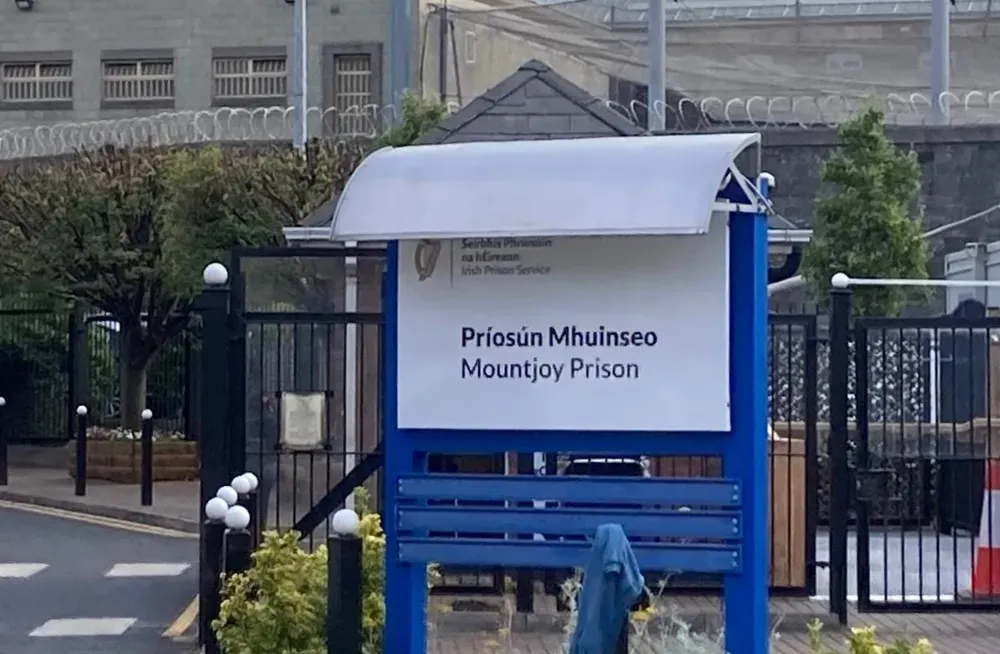
Often, says McVerry, the debt accrued in prison will be from buying drugs, but it can also be as simple as getting help to buy items in the tuck shop.
All of a sudden, someone is told they have to store drugs or a phone in their cell, or collect a drugs package thrown into the prison grounds from outside, he says.
If they’re caught, they are punished.
This could mean isolation, losing a coveted job, and being pulled back down to the basic gratuity level.
If stripped of a job, it can be hard to earn your way back to it, says Bowes.
There’s only so many spots in services, only so many jobs – so there are waiting lists, said a spokesperson for the Prison Service.
“Governors are encouraged to maximise the potential for prisoners to attend work, training and education through rotation of prisoners in conjunction with other activities,” they say.
Women are more likely to be isolated in prison than men are, says Brady of the Irish Penal Reform Trust.
She points to a report commissioned by the IPRT last year, Paying the Price: The Cost and Impact of Imprisonment on Families in Ireland.
The report shows gender in play, she says.
If a man is in prison, women on the outside will supplement his payments so he has what he needs in terms of clothes, runners and items from the tuck shop, Brady says.
This is less likely to happen when it is a woman in prison, she says. “Women are more often the providers on the outside.”
As there are only two women’s prisons in the country, she says, this also means women are more likely to be incarcerated far away from their homes – which means fewer visits too.
Paula Kearney is a formerly incarcerated person herself.
She says this was an obvious issue when she was in prison, over 15 years ago, but that it can be much worse for women in prison today.
“When women go into prison, they're very much abandoned and isolated, and that's been that way forever,” says Kearney.
When she was in prison, there wasn’t as much oversight on social welfare payments, she says.
The reality was that a prisoner could have someone collect her benefit payment for her, send her a few euros in prison, and have the rest put aside for their children’s upkeep, she says.
Now, social welfare payments are stopped immediately when someone goes to prison.
“She made sure that if Easter was coming up, or Christmas, communions, confirmation, that there was something put aside for her kids, and she'd get a small bit of it,” Kearney says.
It can be utterly heartbreaking for mothers, she says, when they can’t even afford to buy their children a bar of chocolate to give them as a treat when they do visit.
“They were always the provider, they were always the carer, the nurturer,” she says.
For the over-70 percent of prisoners who are living with addiction, Kearney says that, as well as nicotine products, they will crave sugary foods when they are trying to detox themselves.
When they can’t afford it, it becomes a further hindrance to their recovery, she says.
McVerry, the social justice advocate, doesn’t think the upping of the work payment, or gratuities even further, would garner much public or political support.
“The government would never go for it,” he says. Still, he thinks it wholly necessary, he says.
A lot of prisoners he speaks with, genuinely enjoy their work in prison, as they get to socialise with friends, he says.
But they should be paid a fairer amount, he says.
The current amount per work shift is grossly inadequate given the price rises over the 14 years since the rates were set, Brady of the IPRT says.
“While it acknowledges effort, the payment is too small to properly incentivise work or provide meaningful preparation for reintegration,” she says.
“IPRT would like to see these rates increased so that people in prison can meaningfully contribute to cover their own costs, to help support their families on the outside, and to prepare for life after prison when many are leaving without secure accommodation or a job to go to,” she says.
Funded by the Local Democracy Reporting Scheme.

It isn’t hard to find people registered to the wrong addresses and zombie entries.

The Department of Housing was reviewing whether it was good value to develop them under public private partnership. It isn’t, it decided.

But there’s still no sign it’s going to reopen – and now the nearest one’s 3km away, on Parnell Street.

A €2 per bed per night tax could raise more than €17.5 million a year, according to a council analysis.