

Tusla inspectors found problems with the use of physical restraint in seven children’s homes
In two cases, inspectors found that staff were using restraint to try to manage children’s behaviour, and one of those children was restrained 78 times.
Would it help or hinder affordability in the area?

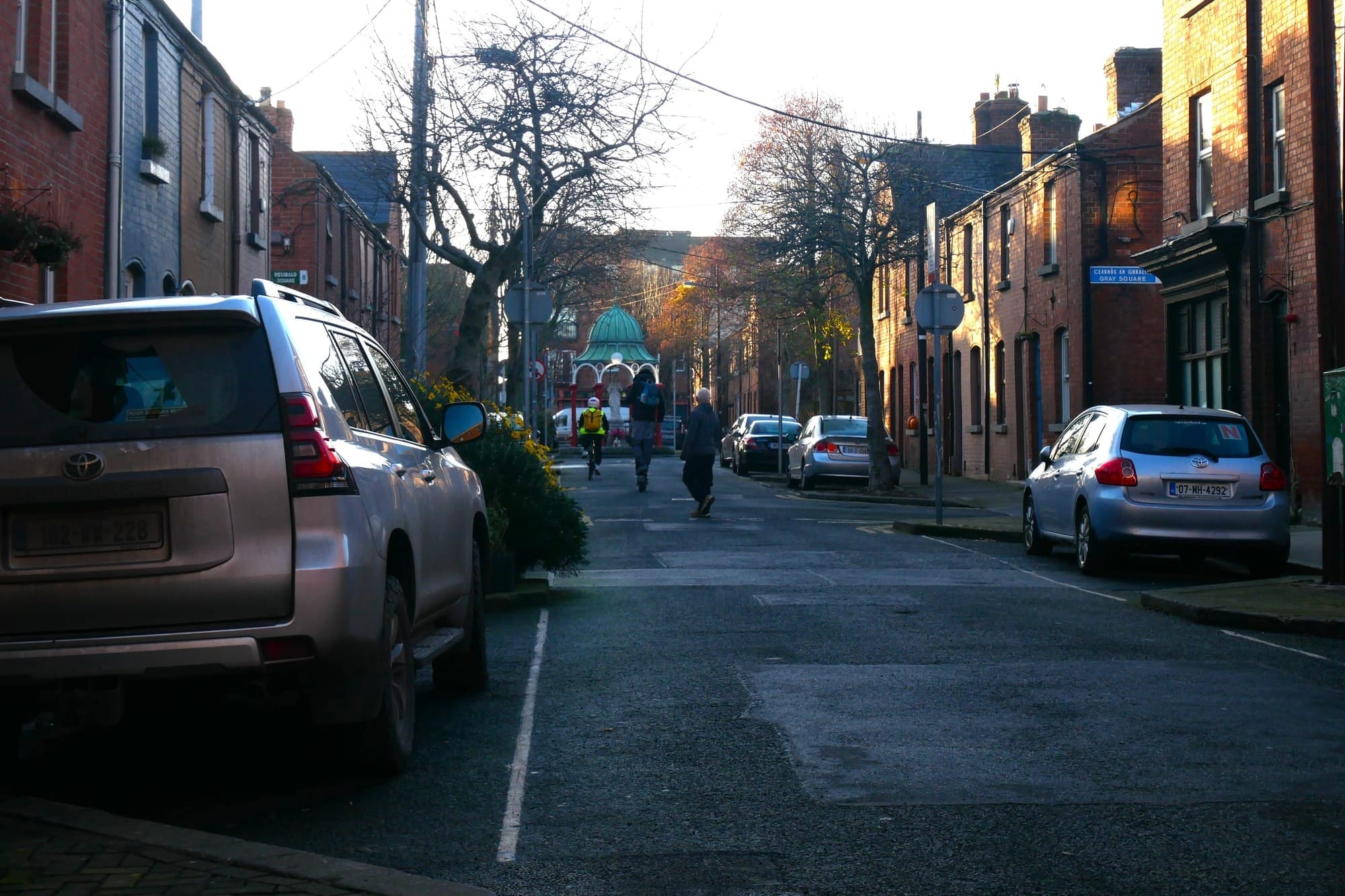
In 1966, The Liberties Association formed. Its aim was to push for the redevelopment of the area for the community rather than for commercial interest, says an RTÉ archival report.
After Dublin Corporation – now Dublin City Council – produced plans to drive a wider road through the heart of the neighbourhood, the association hired architects to draft an alternative, says the report.
The Liberties Association’s own plan rerouted the road, and fit in more housing, it says.
That’s the kind of self-reliant ingenuity that has long been a feature of community life in The Liberties, says Cathy Scuffil, Dublin City Council’s historian in residence for the area.
She gives another example.
In 1699, Britain slapped a hefty tax on wool exports from Ireland. The Liberties, where weaving was a major part of the economy, was hit.
“The reason they did that was because it was putting the British market out of business. We were too good,” Scuffil says.
But weavers in the Liberties regrouped, she says. They began to use silk to get around the tariff.
Britain put a tariff on silk, she says.
The Liberties Weavers switched to poplin – a blend of wool and silk, says Scuffil. “That became the production material for about 120 years.”
In a motion before Dublin City Council on Monday evening, Sinn Féin Councillor Ciaran Ó Meachair made the case that the culture of the Liberties is again under threat.
This time, though, from the overconcentration of “hotels, student-accommodation, co-living and short-term rentals”, his motion said.
In response, he asked councillors to back a call to apply for the “Culture of the Liberties” to be added to the UNESCO Intangible Cultural Heritage List.
As a way, his motion said, “to hold and protect the characteristics and memories of our city’s working-class traditions, in addition to our industrial, historical and social heritage”.
Councillors agreed the motion.
But still to be teased out are questions around whether it is possible to add the culture of a place, writ large, to the list, and whether such a designation would actually fuel the unaffordability that Ó Meachair’s motion opposes.
The UNESCO Intangible Cultural Heritage lists are global registers of living cultural traditions, skills, and expressions that communities recognise as part of their shared identity.
There are currently 788 entries to the lists, across 150 countries. This includes, funfair culture in Belgium and France; the tradition of Nabulsi soap making in Palestine; and skills of loincloth weaving in Côte d’Ivoire.
Ireland’s current entries include hurling, uilleann piping and Irish harping.
Once a piece of intangible heritage is on the list, it puts obligations on the government to adopt policies to monitor and promote it, to encourage research, and take safeguarding measures, with the consent of communities.
While the UNESCO World Heritage Sites focus on physical landmarks, the Intangible Heritage Lists celebrate practices such as oral storytelling, music, rituals, craftsmanship, and traditional knowledge.
The idea isn’t to preserve traditions in a fixed form, the UNESCO website says, but to support communities in keeping cultural practices alive into the future.
It’s unclear if the general culture of an area can be accepted on the list, or if it has to be a single practice at a time.
In his motion, Ó Meachair highlighted weaving, as well as markets and traders, as important cultural features in the Liberties.
It would be no problem to look at individual applications for weaving and also the markets and traders, Ó Meachair said by phone on Wednesday.
Weaving in the Liberties absolutely fits that bill for nomination, says Scuffil.
She has worked for several years with the Liberty Weavers, a community-led group that keeps up and promotes the practice.
To be added to the Intangible Cultural Heritage Lists, a cultural practice must first and foremost be alive – rooted in the people who practise it and transmitted from one generation to the next, according to UNESCO’s criteria.
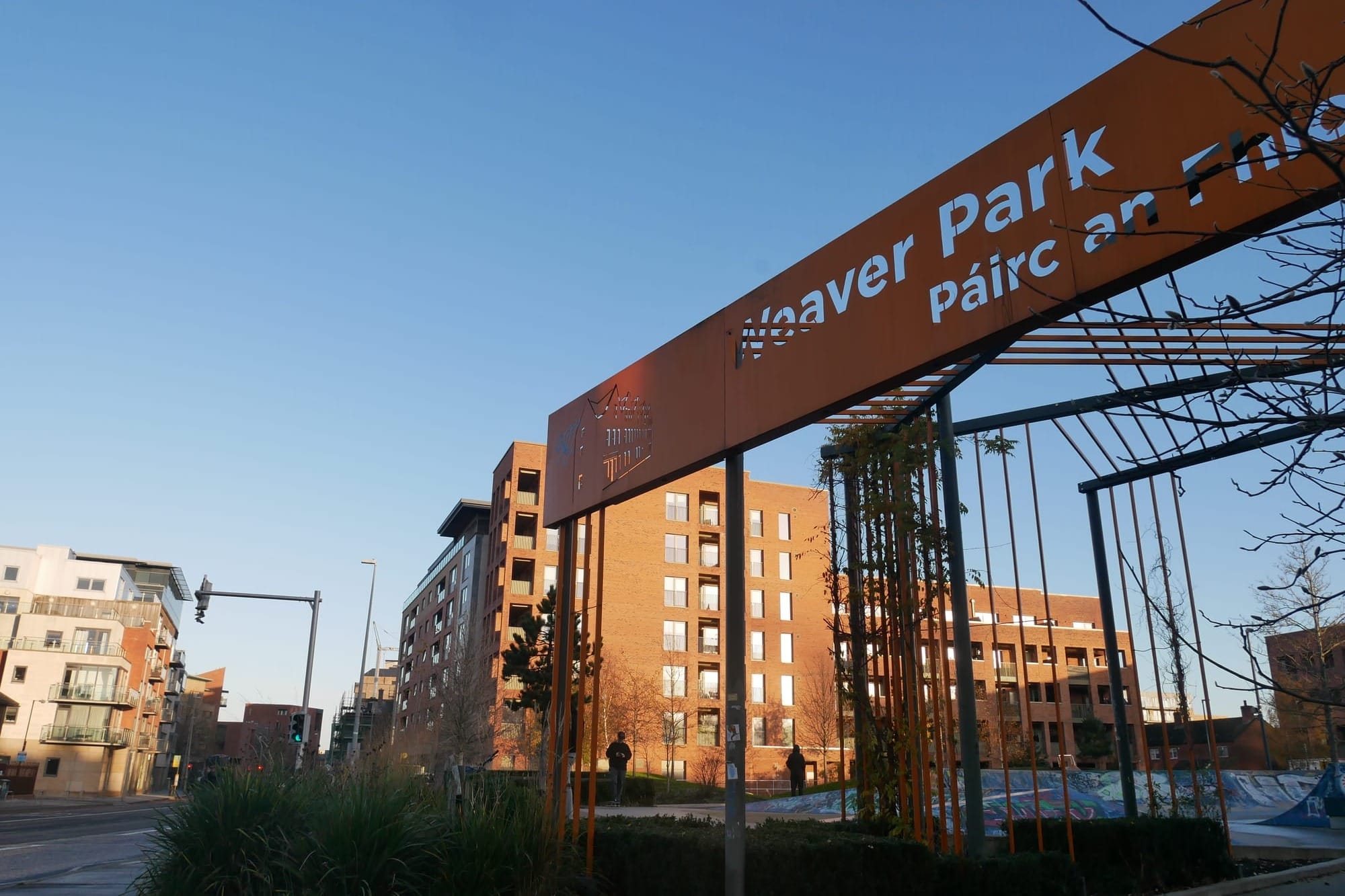
To understand how deeply weaving is embedded in the Liberties culture, just look at the many place names, Scuffil says.
Weaver Square and Weaver Park are obvious – but there is also the Tenters, says Scuffil.
The Tenters gets its name because it was once a huge field where weavers would stretch out cloth to dry and bleach in the sun, she says. It’s also the origin of the phrase “on tenter hooks”, she says.
Engine Alley, off Meath Street, near the Liberty Market comes from “Indian Alley”, she says – after Indian silk. But, in Dublinese, Indian became Injin, became Engine, she says.
Michael Malin, who was executed for his part of the 1916 rising, was a silk weaver in the Liberties, Scuffil says.
While the tradition may have faded over the years, the Liberty Weavers – now around 60 weavers strong – have been working to reinvigorate the tradition, she says.
If accepted onto UNESCO’s prestigious lists, it opens up more routes for financial support, expertise and training to help safeguard a particular practice.
Ó Meachair says he sees recognition from UNESCO as an important tool in the effort to halt erosion of the area’s culture.
Highlighting what makes the place wonderful, and worth preserving, should bolster arguments in favour of prioritising culture over the profiteering of developers, he says.
International research has thrown up mixed findings, when it comes to the impact of UNESCO heritage statuses on residential and commercial property prices.
Economists at University of Bologna found that ascribing UNESCO World Heritage status to the Dolomites led to a significant increase in residential property prices, but not on commercial.
Another study, involving economists at the University of Turin, found that heritage designation at sites across Italy may have driven gentrification.
Incomes in areas that they looked at went up, as did commercial property prices, while the prices of luxury dwellings increased significantly in urban areas, it says.
Those did look at the attachment of World Heritage Status to physical sites, rather than intangible cultural heritage. But, depending on what is included, could the impact be similar?
In response to concerns that UNESCO designation could drive up property prices and rents, Ó Meachair says the government and council need to make sure that doesn’t happen.
At Monday’s council meeting, he said traders at the Molly Malone Market on Meath Street had lost access to their units, so a gym could be put in.
Dublin has plenty of gyms, he says, but only one Meath Street.
“I think it's vital that we protect our street traders in the Liberties. UNESCO Intangible Cultural Heritage status could push back against all of this,” he says.
Ó Meachair’s motion received warm support from many in the council chamber.
“The Liberties is the front-line for gentrification, market-driven development of the city at the expense of working-class people,” said Conor Reddy, the People Before Profit councillor for Ballymun and Finglas.
“The erosion of culture is particularly vile, and I think this motion tackles that very well,” he said at the meeting.
Reddy said that if the Liberties is successful in its application, it would set a strong precedent to use this approach in other parts of Dublin. “To defend against market-led development.”
Under the Dublin City Development Plan the Liberties is recognized as a Strategic Development Regeneration Area, said Dublin City Council Assistant Chief Executive, Anthony Flynn, at the meeting.
“It’s an objective of the plan to recognize the unique role the Liberties plays in Dublin's character, and to ensure that regeneration safeguards the Liberties strong sense of community identity and cultural vibrancy into the future,” he said.
The council is currently reviewing the city development plan, Flynn said.
He would ask his team to consider what UNESCO designation would mean “with regards to that review”, he said.
Funded by the Local Democracy Reporting Scheme.

About €7 million went into a pot for projects for the surrounding area, when the Oscar Traynor Woods deal was struck.

They also, separately, backed a motion opposing the government’s plans to abolish the Triple Lock.

A muddy path is the only pedestrian link from Swords to Knocksedan – aside from walking on roads with cars whizzing by.

The Dublin DPO aims to bring together voices from across coalitions – groups for the blind, the mobility impaired, the autistic, and more.