

Construction is near on start of Guinness Quarter, says developer – as it seeks tweaks to planning permission
Proposed changes include dropping three-bedroom homes, in favour of more smaller, in the block of future social housing.
Proposed changes include dropping three-bedroom homes, in favour of more smaller, in the block of future social housing.

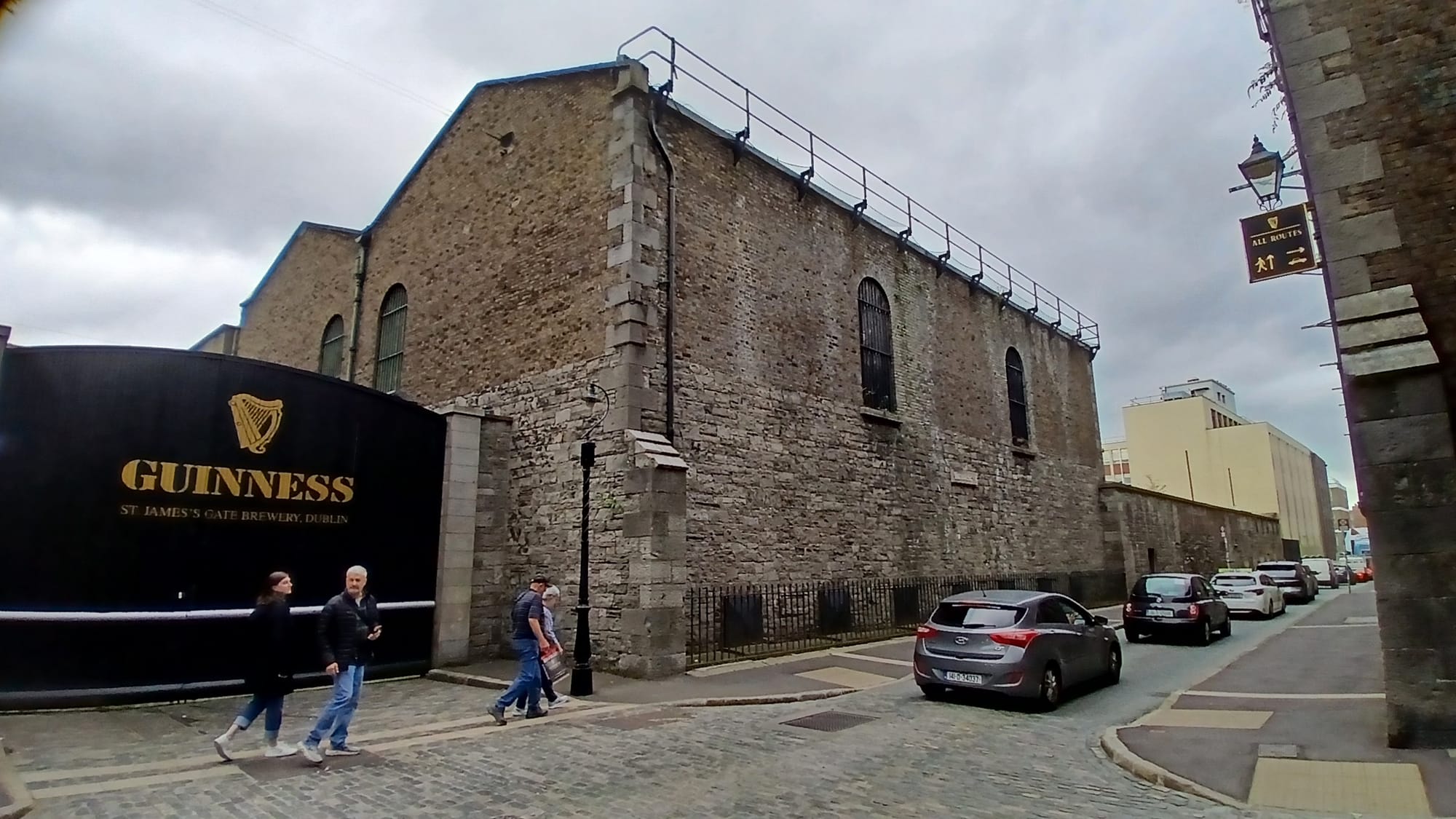
Construction is expected to begin early next year at the massive mixed-use Guinness Quarter development on Diageo lands in the Liberties, a spokesperson for developer Ballymore says.
She called it "one of Dublin’s most ambitious regeneration projects, with a mix of residential, commercial, cultural and community uses planned for the former brewery lands at St James’s Gate".
The project's designs show it fronting onto about 200 metres of Thomas Street, between Crane Street and St James's Church. And extending back from Thomas Street to the Guinness Storehouse to cover 4.58 hectares overall.
"Given the scale of the Guinness Quarter, the development will be delivered in phases over a number of years, with individual elements progressing through their respective planning, design, funding and construction programmes," the spokesperson said.
The plans for the project include 322 apartments, two hotels, five office buildings, a 280-capacity performance space, a food hall, a marketplace, and "new public spaces and new squares", according to Ballymore.
The Guinness Quarter is part of the ongoing transformation of this bit of the city, which also includes Marlet's new-ish Grand Canal Harbour apartment complex with nearly 600 homes.
Nearby is also the Land Development Agency's planned Pear Tree Crossing complex with about 500 homes, and Dublin City Council's planned 124-home redevelopment of its School Street/Thomas Court Bawn Estate, with a block reaching up to 10 storeys – among other projects.
The council granted planning permission for the Guinness Quarter to Marbelsand Holdings Ltd – on behalf of Ballymore – about three years ago, in August 2023, and many of the buildings on the site now appear to be sitting vacant.
Neither Ballymore nor Diageo directly answered a query sent 16 September on whether the site is now vacant, and if so, how long this has been the case.
"Since the granting of planning permission, extensive pre-construction work has been underway, including the decanting of buildings and other preparatory works across the site," the Ballymore spokesperson said.
However, Marbelsand Holdings applied on 20 August of this year for planning permission to amend the plan for one part the Guinness Quarter, a block of apartments reaching 10 storeys toward the southeast corner of the site.
This "application represents an important stage in the implementation of the wider permission by facilitating amendments which will enable the commencement of construction", the developer's application says.
Neither Ballymore nor Diageo directly answered queries about whether the financing was in place to progress the project.
At the corner of Crane Street and Rainsford Street, at the former Vat House No. 4, the original planning permission envisioned a couple of blocks, hosting 67 homes. These were to include 22 one-beds, 35 two-beds and 10 three-beds.
This site they're to sit on, known in the planning documents as "Plot 8" was identified as "the Part V offering" this year's application to amend the planning permission says. That means that's the 20 percent the council can get, to use to provide social and affordable housing.
The housing charity Iveagh Trust are the proposed Approved Housing Body (AHB) "who will manage and operate the housing", the planning application says.
Now the developer is proposing not two blocks with 67 homes, but one block with 71, to be owned and managed by Iveagh Trust. And the new version will included more one-beds (53), fewer two-beds (18) and no three-beds.
"The proposed amendments now seek to enable the implementation of this permission, with Plot 8 delivering the social housing up front," the August planning amendment application says.
What size homes are being built in the city has long been a point of contention, with councillors pointing to an overcorrection in recent years from an under-provision of one-bed homes for people on the social housing list, to a lack of three-beds and larger.
Pat Dunne, an Independents 4 Change councillor, raised concerns again, at Dublin City Council's monthly meeting on 7 September.
"Three bedrooms are for families, and what we're doing is we're making families homeless in the city because as a result of not building them," he said.
For the Liberties in particular, an analysis of housing need done by the council when it drew up the current development plan concluded that there would be declining demand for single-person households in the coming years, and a slight increase in demand for two and three-person households.
At the September council meeting, Mick Mulhern, the council assistant chief executive who oversees housing in the city, said to Dunne that about 11 percent of homes in the council's pipeline for housing it expects to see built before the end of 2030 – by the council, by AHBs, or by developers and then taken by the council via Part V .
But the council is negotiating with the Department of Housing now on a new three- and four-bed target for the city, and "it's likely to be the combined number of about 16 percent", Mulhern said. That's an overall figure, but "there'll be some schemes where it won't be possible to deliver that quantum for whatever reason", he said.
That's all in the future, though.
For now, running through the complex, higgledy-piggledy interlocking national housing guidelines and regulations and local plans and exemptions, and what they have to say about requirements for three-beds, the developer's application to eliminate the three-beds from Plot 8 concludes that they can do this.
And there won't be any three beds among the social and affordable housing in the Guinness Quarter, or the build-to-rent housing, but there are plans for 27 three-beds (15 percent) among the 179 apartments in the residential buildings on plots 11-14, the Ballymore application says.
The council planners have not yet issued their decision on this application, so their views on this are yet to be heard.

"There is just a ridiculous overconcentration of short-term accommodation," in the Blackpitts and Newmarket Square area, says Sinn Féin Councillor Ciaran Ó Meachair.

“They’ve no money for windows, but they’ve how much to fill this field with even more apartments and houses?” says Charlene Paget, in Darndale.

Two townlands west of Balbriggan – Stephenstown and Folsktown Little – could provide up to 1,200 jobs in the future, according to the council's plans for them.

“I don’t think we do have a policy on displacement,” says Labour Councillor Darragh Moriarty. “But there probably should be something in light of the private rental market being so volatile and so precarious.”