

“It’s giving colonialism”: Ireland still owes rent to dukes and earls
Although, even though the OPW lists these rents as payable, some of the named beneficiaries say they haven't been getting them.
To date, Dublin City Council’s shopfront improvement scheme has covered the Liberties, Ballymun and Finglas.

For years, Dublin City Council has offered grants to shopkeepers in the south-west inner-city, Ballymun and Finglas, to do up shopfronts.
Soon, businesses on O’Connell Street are likely to come under its remit too.
That’s according to a council roadmap for the regeneration of the city centre, published in February.
“If Dublin is a city centre that needs urgent intervention, O’Connell Street is the emblem of that,” says the Dublin City Taskforce report, published in 2024.
Extending the shopfront improvement scheme to the main thoroughfare would mean potentially faster changes in the look of the street than there has been in the past.
To date, the council has taken a much slower approach, through its planning regime: if an owner applies for planning permission to make changes to a building on the street, its new appearance will have to meet council guidelines.
The roll-out is also part of the much broader plans to give more attention to the look of the city centre for those strolling through or lingering – exemplified by councillors’ proposals for street by street regeneration, with North Frederick Street and Middle Abbey Street up first.
The idea has long circulated that the government needed to appoint a champion for O’Connell Street, the capital’s main thoroughfare.
Now, Robert Watt, a senior civil servant, has been tapped to lead the regeneration of the city centre – including O’Connell Street.
“Somebody needs to knock heads together,” says Ciarán Cuffe, a former Green Party MEP, and architect with an interest in O’Connell Street.
Cuffe was in Venice recently, he said, where the streetscape is precisely managed. “We’ve got to raise the bar in terms of the shopfronts,” he said.
The council has had rules around what the public frontage along O’Connell Street should aspire to.
The street, and its environs, became an architectural conservation area in 2001. It has had special planning rules since 2003, too.
But the shopfronts on the street still appear mis-matched, and at times garish, and illuminated signs – which aren’t allowed under architectural conservation area rules – can still be seen in some parts of the street.
Partly, this is because of what it means to be an architectural conservation area. The council can refuse applications for new ugly signage, but it can’t change existing shopfronts.
So, arguably, change has been slow since the 2001 report described a mess of advertising and a future of carefully designed shopfronts. Although there has been some change.
A new shopfront on the Carlton Cinema building is plain black and gold, replacing the images of rolling dice and roulette wheels.
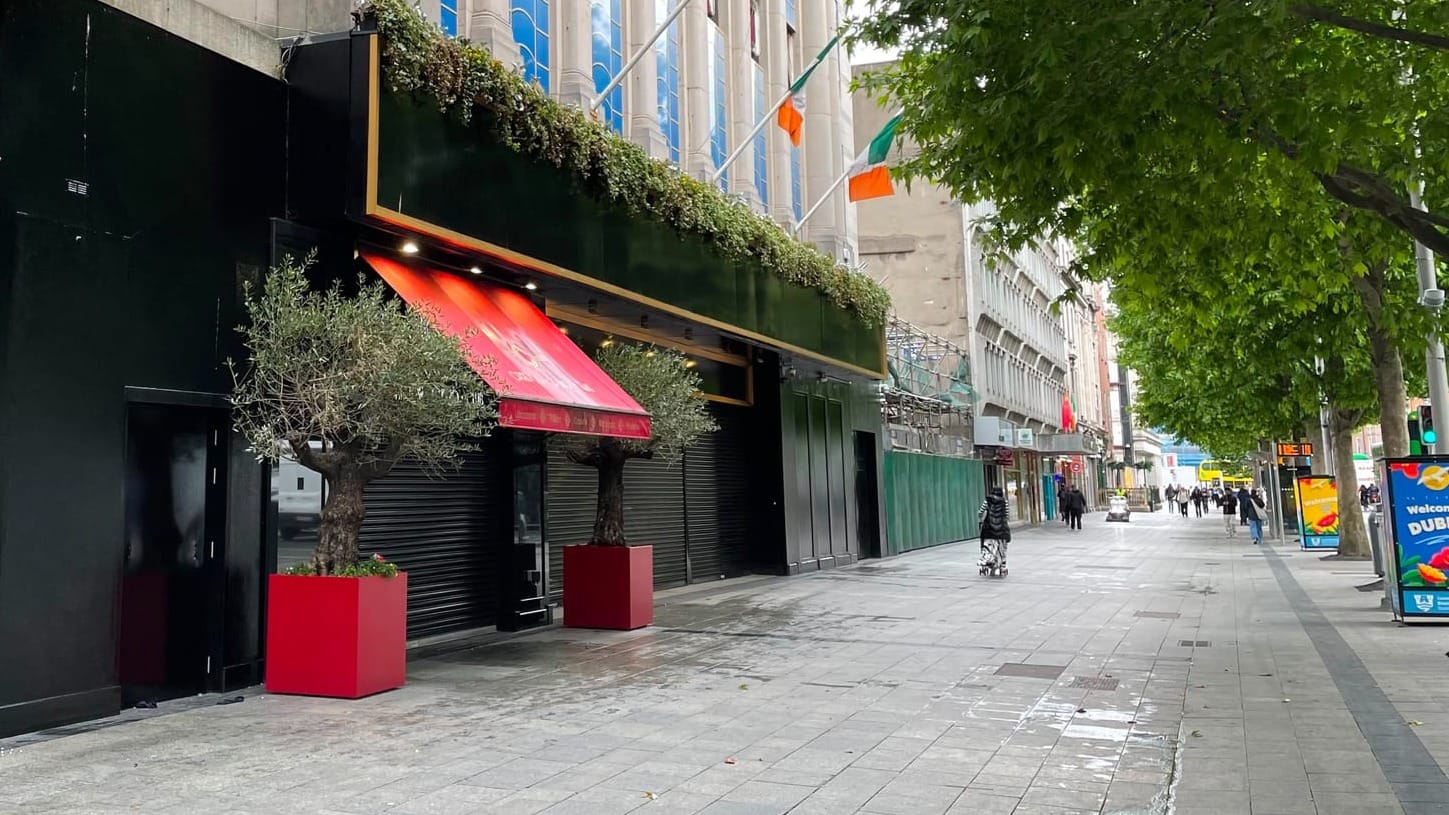
Council planners recently set conditions around signage and lighting for McDonald's, after it sought permission to revamp its building at 62 O’Connell Street.
The council’s conservation section had vetoed a new “M” logo lit up from the inside, asking instead for a softer lighting.
The restaurant decided not to make any changes to that signage, instead, keeping its existing illuminated M, it has told the council.
If the council brought in a shopfront improvement scheme for O’Connell Street, assuming that it works like the current one for the south-west inner city, would mean businesses that want to upgrade their shopfront could get a grant for half the cost of the work, up to €3,000.
For years, Klaus Unger, a retired architect, called for the national government to appoint a champion to regenerate the street.
On the ground, not much has changed since, Unger said.
“I still feel the state should take a strong role in the care and guardianship of the main street of the capital,” he said, by phone on Wednesday.
He says he hopes that senior civil servant Robert Watt – the recently appointed head of the project management unit for the city centre – helps to push the rejuvenation of O’Connell Street.
The decline of heritage streets is an issue seen elsewhere – with responses to draw inspiration from, too.
Between 2020 and 2024, Historic England – a public heritage organisation – spent £103 million, to restore hundreds of shopfronts and historic buildings across 67 high streets, according to its own evaluation report of the project.
In Harlesden in London, the heritage group had success, its report says, in making the high street more attractive, without changing the nature of the businesses.
Unger says that, often in other European capitals, where major thoroughfares are successful, they are places where people really want to live.
O’Connell Street used to be full of homes. “It's essential we turn it back into a living street,” he says.
The regeneration of O’Connell Street is one of the ambitions in the Dublin City Taskforce report.
“Empty and neglected buildings, traffic congestion and a lack of significant investment have led to a dysfunctional and unappealing street,” says the report.
Other suggested changes in the report include allowing fast-track planning for mixed-use developments including homes. The state should buy vacant buildings to bring them back into use as homes too, it says.
The taskforce report envisages Dublin City Council rejuvenating the street, through street upgrades, pedestrianisation and laneway development and creating a cultural hub.
The council’s roadmap for the regeneration of the city centre, published in February, also promises to “develop and roll out a Special Outdoor Dining Scheme to facilitate high quality day/evening uses on O’Connell Street”.

Although, even though the OPW lists these rents as payable, some of the named beneficiaries say they haven't been getting them.

They're set to back the creation of a special purpose vehicle he's been picked to head, which is meant to play a major role in regenerating the city centre – but how major is in dispute.

Social tenants who live in the private Liberties complex Grand Canal Harbour say they're not allowed to use many of the common facilities there.

Gone is the hardman shtick, the macho bravado once associated with hip hop, rapper and producer Michael Ward, who goes by Mickzart. “We’re after something true.”