

Tusla inspectors found problems with the use of physical restraint in seven children’s homes
In two cases, inspectors found that staff were using restraint to try to manage children’s behaviour, and one of those children was restrained 78 times.
Changes to funding under the tenant-in-situ scheme mean the council can no longer recoup costs of any immediate refurbishment of the properties.

Social Democrats Councillor Mary Callaghan raised the case of a single mother with four children, who is facing homelessness, at December’s monthly council meeting of Dublin City Council.
The landlord has said they need to sell the home in Finglas and so issued the family with a notice to leave.
The council looked at buying it under the anti-homelessness tenant-in-situ scheme, turning it into a social home, and keeping them in it as tenants.
But the family recently learnt that was not to be, says Callaghan. “They’ve been told that they can not avail of tenant-in-situ because the property needs maintenance.”
Callaghan contrasted that with another case she dealt with two years back. It also involved a single-parent family, she said.
Then, the council bought the home even though it didn’t plan to refurbish it straight away, she says. “They were told that the maintenance would be done in a few years’ time.”
“Families and children are being made homeless coming up to Christmas and it’s just not good enough,” said Callaghan.
Ruth Dowling, a senior executive officer, at the meeting, pointed to changed rules from the Department of Housing to explain the different response.
The department won’t reimburse councils anymore for money spent on refurbishing homes bought under tenant-in-situ, Dowling said. “We are aware of the difficulties that this is causing.”
A spokesperson for Dublin City Council said that it had a limited budget itself to fund the maintenance on homes acquired under the tenant-in-situ scheme.
But it is engaging with the department, they said. “to see if other sources of funding could be secured to carry out these works”.
A spokesperson for the Department of Housing didn’t respond to queries, including whether it intended to change its policy around funding refurbishments, and how the interests of children are taken into account under the current policy.
The government’s new housing plan, issued in November, says that it will make children’s needs a top priority when tackling homelessness.
In March 2025, the Minister for Housing, Fianna Fáil TD James Browne’s department put out a circular with new rules for councils buying second-hand homes.
Councils can’t recoup costs from the department to refurbish homes that it buys under tenant-in-situ anymore, it says.
Under some other acquisition streams they can, such as if they buy homes to help people exit homeless services. But not for tenant-in-situ, a scheme to prevent people entering homelessness.
After all, the circular says, landlords of such properties would have been receiving the Housing Assistance Payment (HAP), the subsidy to support low-income renters.
As such, they are legally required to keep the homes up to code, it says.
In April, Browne repeated that reasoning in the Dáil. “Such properties are the beneficiaries of significant exchequer-funded rent supports every week,” he said.
They are legally required to meet minimum standards and councils inspect them to make sure that they do, said Browne. “Therefore, immediate essential repairs should not be required.”
Refurbishment works needed in the short-to-medium term should be done as part of the council’s planned maintenance programme for its social housing, he said.
Since September, Dublin City Council has turned down 21 homes because of the condition of properties and the projected refurbishment costs, said a council spokesperson last week.
The council does inspect properties supported by HAP and work with landlords to bring homes in line, said the spokesperson.
But sometimes when it issues notices to improve standards, a landlord opts to sell and issues tenants with notice to quit, said the spokesperson.
Callaghan, the Social Democrats councillor, says that it would be great if every HAP property was kept to the highest standard. “But the reality is that doesn’t happen all the time. And it’s certainly not the tenants fault.”
“Things are messy and it shouldn’t be the family who is put in a position to become homeless at Christmas time,” she says.
Government policy around acquisitions was to avoid “undue impact on the private housing market, including avoiding competition in second hand acquisitions with first-time buyers or with other private individuals”, said a background note at the top of the circular.
The Department of Housing hasn’t responded to a query asking what its rationale is for prioritising first-time buyers over those on the lowest incomes already living in a home.
At the time of the circular, Dublin City Council had paused buying second-hand homes as it had exhausted its budget for this from the department.
In September, after the department announced top-up funding, the council reopened the scheme – but in a more-limited version than in the past.
 Laoise Neylon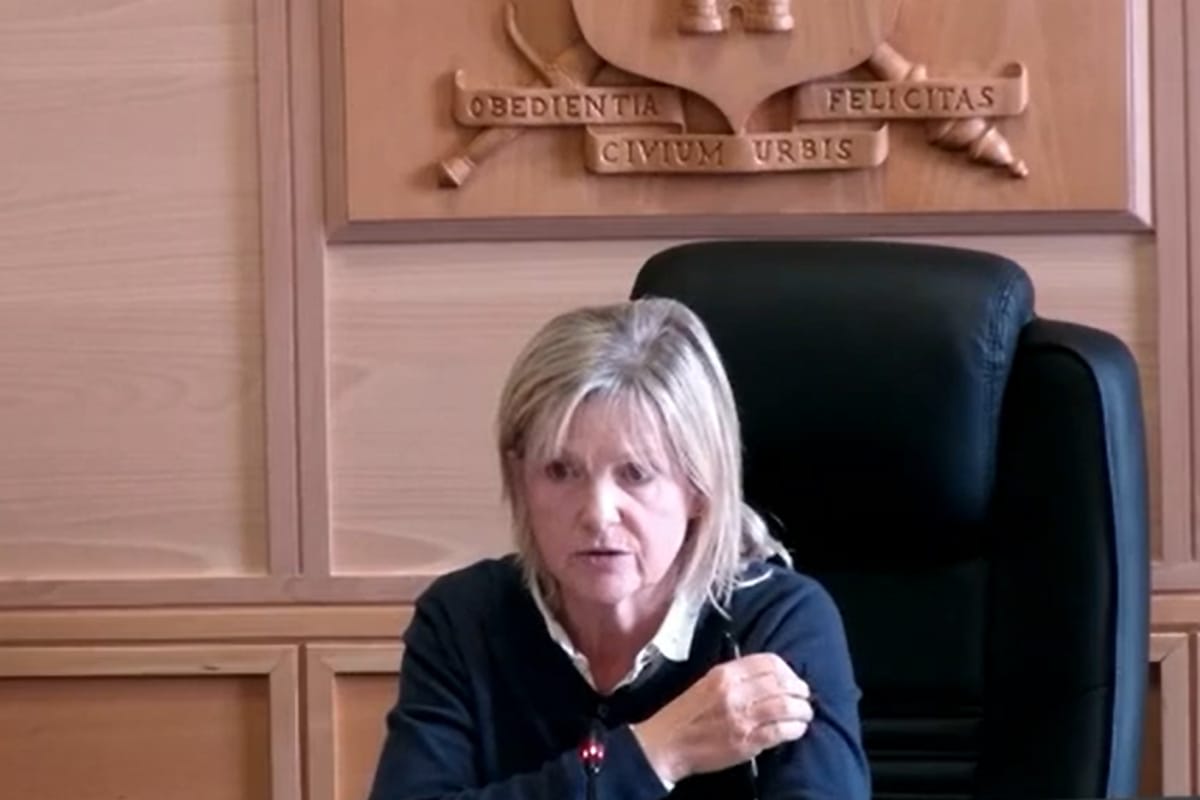
At the monthly council meeting on 1 December, Sinn Féin Councillor Anthony Connaghan also raised the case of the family in Finglas, facing homelessness, and the cost that the council bears when families move into homeless accommodation.
It costs up to €180,000 a year for the Dublin Region Homeless Executive (DRHE) to rent emergency accommodation for a family needing a four-bedroom space, show figures provided to Sinn Féin’s housing spokesperson Eoin Ó Broin.
Most families stay for two years in emergency accommodation. In which case, it would cost up to €360,000 to put up a large family, before they managed to exit homelessness.
Department figures show how much it okayed in past years for councils to pay to buy homes under the tenant-in-situ scheme, and to do them up.
Dublin City Council figures relate to 12 properties for which it had, as of July this year, submitted claims to recoup costs while they were still eligible.
It spent an average of €323,758 on those properties before refurbishment, those figures show.
It also spent an average of €35,200 on each property to bring it up to code – with those costs ranging from €6,600 to €59,500.
“It makes no sense,” says Callaghan, of the restriction on funding maintenance. Not financially, not socially.
Tenants she worked with in past years had been delighted when their homes were bought under tenant-in-situ, even if the council told them maintenance would take a while, she said.
The alternative is for their lives to be upended. Their kids would be in school in the area, their family and support networks would be around, she says.
Callaghan says that the changes to tenant-in-situ are hitting her constituency of Ballymun and Finglas hard in particular.
The area has seen fewer new social homes than others, she says. “There isn’t likely to be much on the horizon for the next few years.”
The housing list isn’t moving much at all, says Callaghan.
Five-hundred applications come in when the council lists a single two-bedroom home on choice-based lettings, she says. “The need is so great.”
Data from the DRHE shows that as of June 2025, 58 percent of the 2,320 families in emergency accommodation were headed by lone parents.

Changes to make it possible were to be included in a new law, when first announced. But they were dropped.

Why it has retreated from a deal to lease the homes is a point of dispute.

Investors work on modelling, says Joseph Kilroy. “Its not necessarily in their shareholders' interests to be driving down the cost of rent.”

“There is just so much confusion,” says Sarah Lawless, who has been on the housing list for 20 years. “The whole system doesn’t make sense.”