

Tusla inspectors found problems with the use of physical restraint in seven children’s homes
In two cases, inspectors found that staff were using restraint to try to manage children’s behaviour, and one of those children was restrained 78 times.
Councillors added a focus on social inclusion to the work of its housing committee in September 2024. But it hasn't really featured yet.

Dublin city councillors are still working out exactly how to magnify supports for “social inclusion” in the city through its policy committees.
Councillors added a focus on social inclusion to the work of its housing committee in September 2024.
The move was promoted, partly, by the long shadow of the riot that burned through the city centre in November 2023.
But while social inclusion now features in the name of the committee, it hasn’t really featured on agendas in the 18 months since it was added – outside of debates about housing.
The first time it did explicitly appear was towards the end of last year, when councillors and committee members began the process of deciding what that strand of work should look like – which is still being thrashed out.
At a meeting of the Housing and Social Inclusion Strategic Policy Committee last November, Mick Mulhern had put forward suggestions for how to emphasise social inclusion as part of its work.
Areas such as senior citizens’ housing, social supports for council tenants, and reducing the impacts of homelessness appeared on the list.
But most councillors and committee members said they wanted a much broader approach.
As somebody involved in countering far-right influence in communities, they should look at ways to support local groups doing that work, and also to challenge misinformation around housing, said Sinn Féin Councillor Daithí Doolan.
People Before Profit Councillor Hazel de Nortuin said she was “thinking of those in our society that we have left behind. That don’t feel like they’re included within the social structures that we have.”
 Lois Kapila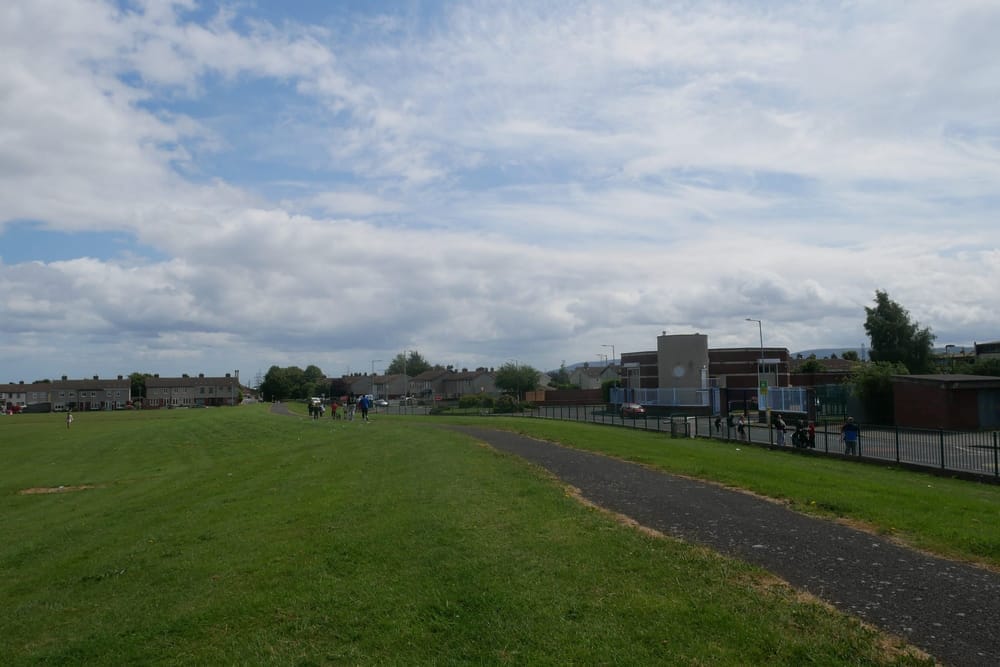
She pointed also to the research that had been funded by the council showing levels of domestic violence in Ballyfermot, resulting in the report “Unveiling the Shadows”.
Oisín O’Reilly, who sits on the committee via the Public Participation Network (PPN), said he had serious concerns about the narrow framing put forward.
“It has taken a full year for this committee to consider social inclusion during its remit and that delay sits very uncomfortably against the backdrop of society and climate that we’re currently living in,” said O’Reilly, who is also CEO of Outhouse LGBT+ Community Resource Centre.
Social inclusion should include equality, community safety, participation, access to services, the experiences of migrants, LGBTQ+ communities, those with disabilities, lone parents, survivors of domestic violence and much more, said O’Reilly.
“We need a very broad approach here,” he said.
Earlier this week, Deirdre Heney, the Fianna Fail councillor and chair of the Housing and Social Inclusion Strategic Policy Committee, said that the new plan is to move social inclusion to a different committee.
It fits better within the Community, Gaeilge, Sport, Arts and Culture Strategic Policy Committee, she said.
Because the council’s social inclusion unit works under the remit of the community department, which reports to that committee, she said.
“We’re just trying to figure out a process of how to do that,” she said.
Labour Party Councillor Darragh Moriarty – who chairs the Community, Gaeilge, Sport, Arts and Culture Strategic Policy Committee – said the current bureaucratic wrangling is really down to councillors.
Council CEO Richard Shakespeare had said that he was reorganising council departments, and that community and housing would no longer sit together.
Which meant that the committees wouldn’t line up with council structures, he said. “That was flagged with us in advance but we ploughed ahead regardless.”
In any case, his committee has its work programme sketched out up to 2029. This year, it includes, among other actions, an age-friendly strategy, and an autism-friendly strategic plan, as well as a diversity, equality, and inclusion in the arts policy.
It also includes reviewing outcomes from the Lord Mayor’s Taskforce on Integration and looking at how to respond to those.
That could change though, said Moriarty. “It’s not all set.”
 Shamim Malekmian
O’Reilly said that getting “social inclusion” headlining as part of a committee’s work was a big achievement.
They’ve all learnt from the experiences so far, and are having conversations about how to propel it all forward, he said.
One of the challenges that he is conscious of is resource allocation, he says.
There is a new national programme on racism, and an LGBT strategy – but problems with implementation because the money isn’t there to back them up, he says.
That’s one of the challenges of taking national strategies down to the local level, he said. Officials and councillors end up with unfunded mandates. “That’s a recurrent problem.”

In two cases, inspectors found that staff were using restraint to try to manage children’s behaviour, and one of those children was restrained 78 times.

Changes to make it possible were to be included in a new law, when first announced. But they were dropped.

About €7 million went into a pot for projects for the surrounding area, when the Oscar Traynor Woods deal was struck.

Why it has retreated from a deal to lease the homes is a point of dispute.