

Darndale Park needs a new committee focused solely on its renewal, area councillors have said
There's drug dealing, loose horses, poor fencing, and many other problems, they said, and the council has to take the lead in arresting the park's decline.
The turnover and track-record requirements are steep, says one councillor.

After years of work fixing up Dublin's Victorian Fruit and Veg Market, in the north inner-city, the council is now seeking a company to operate it.
The main hall of what's to be known as the Dublin City Market is huge: some 6,000 square metres.
The council's plan for it suggests there'll be room for over 100 market stalls in there. Plus a seating and eating area, a stand-alone cafe, an events space, and a food-education/demonstration area.
And in a call for tenders it published Monday, Dublin City Council has laid out criteria for anyone who wants to throw their hat in the ring for the big contract to operate this old/new market.
For example, candidates have to "refer to instances" in the last five years that demonstrate "that they have successfully managed and/or operated markets of a comparable nature, scale and complexity". And their turnover should have exceeded €4.8 million a year for two of the previous three years, too, the tender documents say.
These requirements, while intended to ensure whoever wins the tender has the capacity to fit-out and operate such a large market, have left some concerned that only a big multinational company will be able to win the contract.
"We had assurance that the ethos of the market should be about supporting local businesses in the city at every level from stall holder to operator," says Green Party Councillor Janet Horner. "So I am worried that the current tender is not reflective of that commitment."
Look at Cork's English Market, Horner says.
Aramark operated it for a decade, from 2012 to 2022 – before Irish real-estate firm Lisney took over the contract – and during Aramark's tenure it was "such a pity to have such a valuable cultural venue for the city operated by a morally dubious multinational instead of in a manner where wealth is kept within the city and local community", she said.
Indeed, having the American company that provided food to US prisons, and in Irish direct-provision centres, run the English Market was controversial.
"We are just initiating a body of work on Community Wealth Building with Bohs [Bohemian FC] at the moment and I had hoped that the Fruit and Veg market could be a flagship project for that approach," Horner said. "If a multinational is appointed we lose that opportunity."
 Lois Kapila
So, are the requirements for candidates in Dublin City Council's tender for operating the Fruit and Veg Market's new incarnation going to limit potential operators to bigger international companies, like Aramark?
"This is an open and competitive procurement process, and we very much welcome interest from qualified Irish operators, businesses and investors," a council spokesperson said by email on Tuesday in response to that query.
"The objective is to secure the best operator with the experience, vision and capability to deliver a successful, sustainable market for Dublin," he said.
Dublin City Council emptied out the Victorian-era Fruit and Veg Market by 2020, and last year councillors agreed to borrow €30 million to fix it up. Works are underway.
Back when the market closed, some councillors argued that the council itself should operate the market, rather than contracting out that job.
But this week the council put out a call for tenders looking for someone to design, fit-out, and operate what'll be known as Dublin City Market.
The council also has a plan to fix up the streets in the area around the market. And re-opening the market "will act as a catalyst for regeneration and bring vitality and vibrancy to neighbourhoods around the market area", the tender documents say.
 Laoise Neylon

"The ambition is to be Dublin’s home for the best of Irish and international food and drink connecting customers with the passionate producers, farmers, and provenance stories behind every product," they say. "The market will embrace elements of sustainability, education, community, and culture in its ethos."
The market will "celebrate specialist and traditional production methods like organic; regenerative; pesticide free; free range; high welfare; sustainable production methods; artisan small batch; etc.", the documents say.
"A thriving commercial community of food producers across all categories (including home producers and start-up businesses) will deliver a world class service through passionate engagement with consumers," they say.
The planning permission for the market designates 50 percent of the market hall as retail market space. The operator should propose what to do with the other 50 percent.
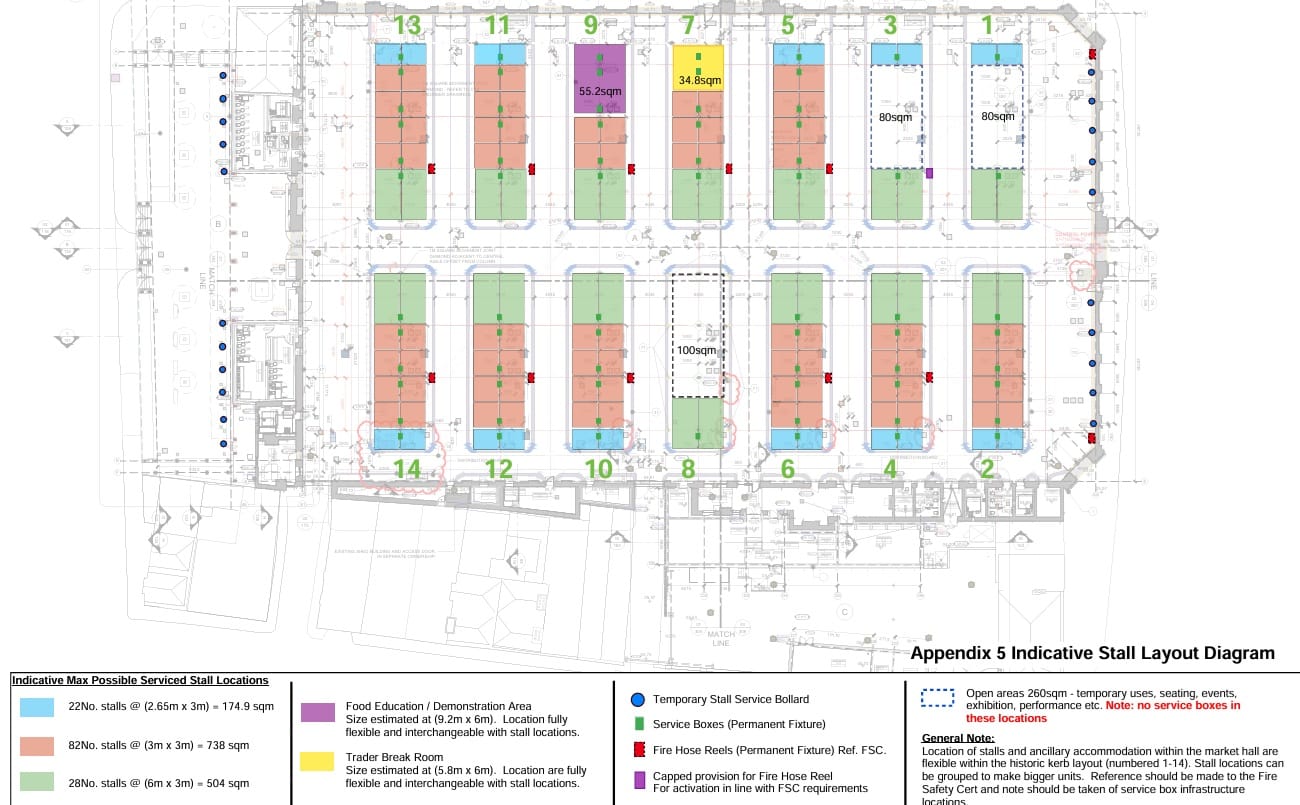
The market should be open seven days a week, 10am to 10pm. There should be "food for now", "food for later", and fresh produce on offer in the market. As well as events, cookery demonstrations, and food-education.
Whoever gets the contract will be responsible for "Developing and operating a commercially sustainable model, capable of funding the day-to-day operation of the market and contributing an agreed income to Dublin City Council in respect of its capital investment".
Basically, it looks like customers would shop at the stalls, stallholders would pay to be in the market, and that money would pay for the operator to run the market hall day-to-day, and pay something to the council for the privilege.
"A financially sustainable operating model is essential to maintaining quality, supporting traders, reinvesting in the building and ensuring the Dublin City Market remains relevant and vibrant over time," the tender documents say.
On Tuesday, the council spokesperson said by email, that "We expect strong interest from both Irish and international market operators and look forward to seeing innovative proposals throughout the process."