

Tusla inspectors found problems with the use of physical restraint in seven children’s homes
In two cases, inspectors found that staff were using restraint to try to manage children’s behaviour, and one of those children was restrained 78 times.
The remaining residents in Cromcastle Court have been living under the shadow of regeneration for years.

“It is a milestone to get to this point in time,” said independent Councillor John Lyons, at a meeting on Monday of councillors for the North Central Area.
On the agenda was an update on long-touted plans to regenerate the old social flats at Cromcastle Court in Coolock.
The remaining residents in Cromcastle Court have been living under the shadow of regeneration for years, with the flats gradually emptying out as the council stopped allocating homes to tenants.
At the meeting, Mary McQuillan, a senior executive architect at the council, and her colleague Julie Mason said the proposals – which went out for public consultation late last year – are to go before councillors for final approval at their February monthly meeting.
That’s the last step in what’s known as the Part 8 planning process, whereby the council applies for planning permission for its own projects.
The plan, McQuillan said, is for 118 social homes at Cromcastle Court.
On the opposite side of Kilmore Road, the Old Coal Yard site should see 34 new homes for older people.
The scheme is one of several projects to regenerate old social flat complexes that Dublin City Council is gradually progressing across the city, from Dorset Street to Basin Street, Glovers Court to Croke Villas.
McQuillan said that once the full cohort of councillors have approved the Cromcastle Court scheme at a monthly meeting, the council would move to appoint a demolition contractor and get them started on site.
The council would tender for the main construction contract later this year, she said. They hope to appoint the main contractor in the first half of 2027, with the new homes delivered by the end of 2029, she said.
That was looking far ahead, though.
At Monday’s meeting councillors said they were relieved to see the project on the cusp of starting – but still raised niggles with parking, the accessibility of homes, and getting ahead of possible misinformation.
At the meeting, McQuillan said that the homes at Cromcastle Court break down into 56 one-bed apartments, 47 two-bed apartments and 15 three-bed duplexes.
The Old Coal Yard site would see 34 new one-bed older person homes.
All of the apartments are dual aspect - meaning they are to have windows on walls in two directions for better light - and have their own balcony or terrace, said McQuillan.
The plans include communal courtyards, and a new community space in one of the blocks.
Also, said McQuillan, the new development has sustainability built in.
Heating would be air-to-water heat pumps, she said, while solar panels on the roofs would provide renewable energy too.
The plans include natural ways to soak up rainwater, which reduces the need for an attenuation tank and leaves more space for amenities, she said.
“We're using rain gardens, green and blue roofs as part of the sustainable urban drainage solutions and to improve biodiversity,” McQuillan said.
Secure bicycle parking would be provided, she said.
The issue of parking drew chatter at the meeting, when the committee’s chair, Councillor Daryl Barron of Fianna Fáil, threw open the wider discussion.
There are 72 car parking spaces proposed for the site for 118 new homes, said Lyons, at the meeting.
That wasn’t enough, he said
He pointed to challenges with parking in nearby Kilmore West, where the overflow from Beaumont Hospital clogs the surrounding residential roads.
Councillor Jesslyn Henry of the Social Democrats had referenced the problem earlier in the meeting. Locals are talking about taking action themselves, by blocking their roads so that non-residents cannot park there, she said.
It’s a familiar issue across the city.
 Eoin Glackin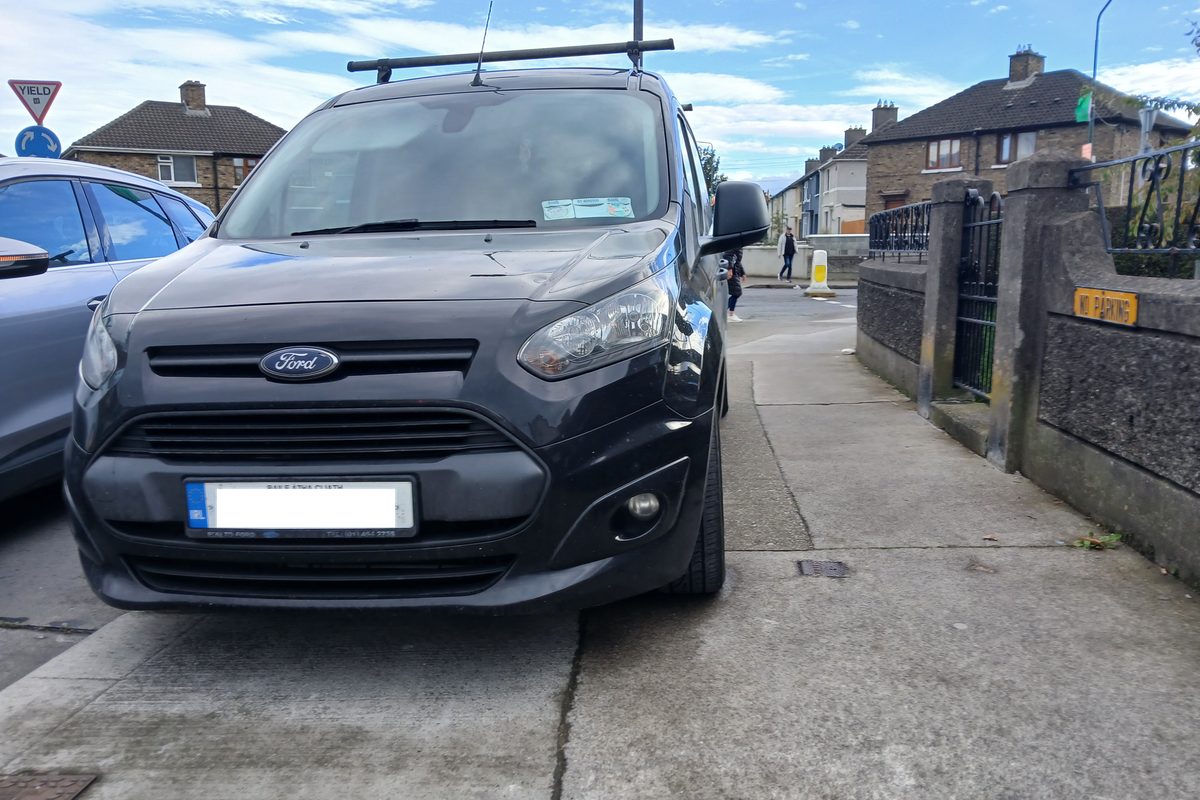
Policies to encourage a long and medium-term shift from private cars to active travel and public transport are absolutely to be supported, Lyons said. “But people live in real time, day by day.”
And, “most people that will move into these homes to get to work, most likely will depend upon their car”, he said.
The council must ensure it doesn’t worsen issues of parking in the area, he said. “I would ask for serious consideration and an increase in the number of car parking spaces available.”
McQuillan said that the parking strategy aims to strike a balance between car parking and delivering a high-quality and safe public realm for residents.
“Increasing the number of car parking spaces would further significantly reduce the amount of useful amenity space available,” she said.
“And would conflict with the wider objectives of the city development plan, including promoting more sustainable travel choices and compact urban growth,” said McQuillan.
Mason said that the council is aware of parking concerns. The redevelopment has two phases, she said, so if trouble arises in phase one, they would endeavour to sort it in phase two.
Green Party Councillor Donna Cooney said she was supportive of ceding parking spaces to allow better green areas.
It’s part of the broader transition away from car dependence, she said. “We’re following our own development plan, in terms of the percentage.”
That’s true, said Councillor Edel Moran of Sinn Féin.
But still, parking shortages can stress communities, she said. “People are coming home and you're stressed, or you’ve nowhere to park your car, it's a lot of hassle. So, to me, it's still just a major thing that needs to be looked into.”
It all shows the need for more integrated transport planning early on, said Councillor Mícheál Mac Donncha of Sinn Féin.
So many sites are due to be developed in the coming years, with more people moving in, he said. “What is the planning by Bus Átha Cliath for that?”
“It always seems to come after the event, years after the event. Whereas that planning should be going on now so that services are enhanced and people are facilitated to leave cars and not have to use cars for transport,” said Mac Donncha.
The National Transport Authority’s BusConnects plan, to rejig the city’s bus network, brought in the N6 orbital route running a wiggly east-westish through the area, and envisions the A and D spines also serving the area, roughly running north-south.
Under the current city development plan, Dublin City Council has a policy that at least 10 percent of its homes in big schemes should be “universal design”.
 Laoise Neylon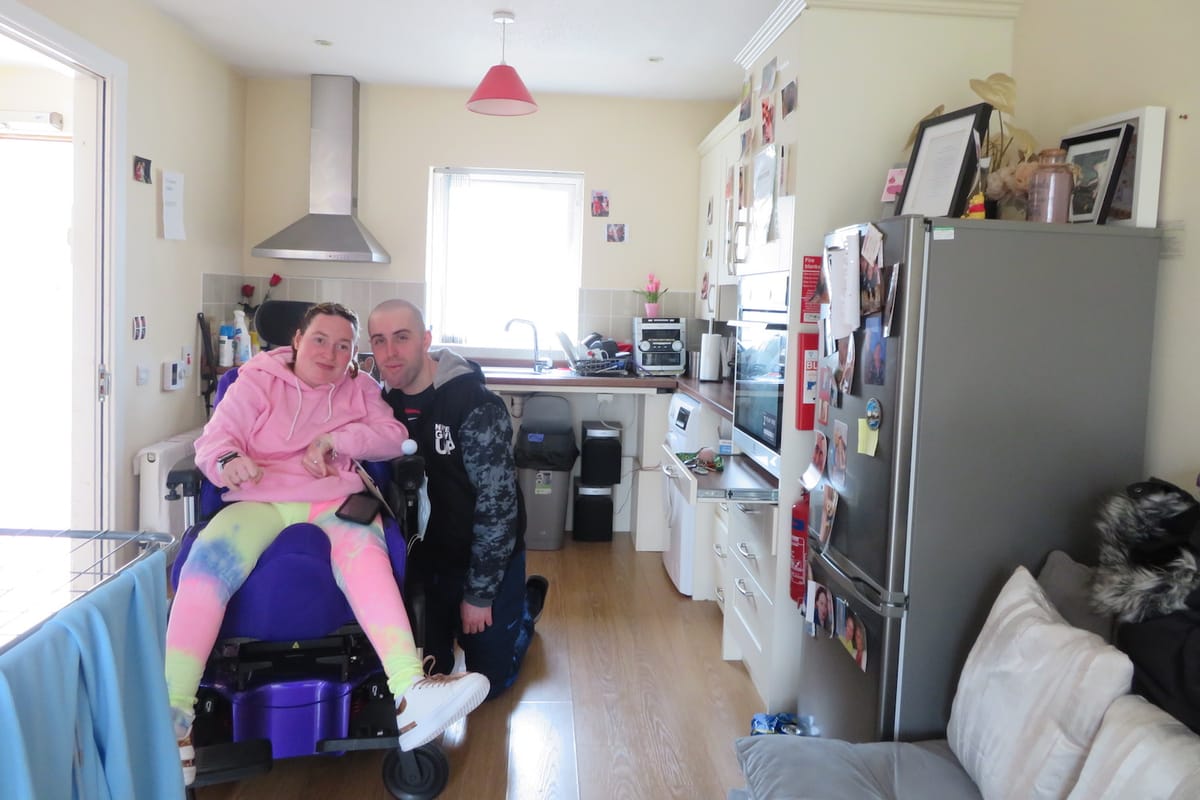
The Cromcastle Court and Old Coal Yard development includes 36 universal design (UD) homes, and two universal design+ (UD+) homes.
Lyons said that should be revisited. Universal design means that the homes are “wheelchair visitable”, said Lyons, while UD+ are “wheelchair liveable”.
It’s an important distinction, said Lyons.
More UD+ units should be included to “future proof” the development, he said.
McQuillan, the architect, said that UD means the units are bigger and can accommodate people with disabilities.
While UD+ units are suitable for wheelchair users and are more bespoke with extra features, she said.
They’re complying with the development plan, she said.
And, more generally, half of the homes exceed the minimum standards and that means that they are at least 10 per cent bigger than the minimum standards, she said.
So, she said, those would be similar to the universal-designed homes.
A pattern of misinformation has emerged in the North Central Area and elsewhere in recent times, says Mac Donncha.
“Those far-right elements who have caused havoc in lots of our communities are again spreading fear and falsehood wherever there's any new housing development,” he said.
There are claims that the new homes are mostly going to people who have immigrated to Ireland, he said. “All this kind of nonsense rubbish. We’ve seen it disproved in many cases that have been raised.”
Mac Donncha said he wants the committee and council to “set down a marker” that they fully support public housing, which there is still not enough of, he says.
The council needs to keep the pressure on central government to provide more of it, he said.
“That's where we stand. And we have no time for, as I said, the falsehoods and fear mongering that comes up from time to time,” the Sinn Fein councillor said.
The council will put branded hoarding around the site that will have information about the project, which should help, said Mason. As well as information available on the council website about what’s happening on site, she said.
Moran, the Sinn Féin councillor, like her North Central Area colleagues, said that the new update and plan is so welcome – but if only it was coming quicker.
“I do feel sorry for the people who are left in the blocks,” she said, referring to the residents still living in the old apartments.
Any way to bring the end-date forward by 12 or 24 months? asked Declan Flanagan, the Fine Gael councillor.
A nearby project, being carried out with the Land Development Agency, had moved really quickly, he said, so he would like to see similar. “In the interest of the people in the surrounding areas who need housing now.”
He referenced the An tSrúill development planned on Cromcastle Road, where the council and the LDA are building 146 homes.
The council is working to get on site as quickly as possible, said McQuillan.
The first step is for councillors to approve planning at the full council meeting next month, and then appoint the demolition contractor, she said.
“There is a short period where the demolition contractor needs to mobilise and to get its compliances with planning,” she said.
The timeline from that point is “approximately seven to eight months”, she said.
The council hopes to then tender for the main contract and appoint the contractor as soon as possible, after the enabling works are complete, McQuillan said.
“Hopefully it won't take as long as you think, and we can move on getting people into their new homes,” said Moran.
Funded by the Local Democracy Reporting Scheme.

Changes to make it possible were to be included in a new law, when first announced. But they were dropped.

About €7 million went into a pot for projects for the surrounding area, when the Oscar Traynor Woods deal was struck.

Why it has retreated from a deal to lease the homes is a point of dispute.

Investors work on modelling, says Joseph Kilroy. “Its not necessarily in their shareholders' interests to be driving down the cost of rent.”