

What to do with the horses of Darndale?
Grazing in public parks means other uses are being pushed out, and adding momentum to calls for an equine centre and stable club to properly support horse culture in the area.
Richmond Road Studios recently bid farewell to the Phibsborough Shopping Centre with a last exhibition, as they head to a new home.

The fourth floor of Phibsborough Shopping Centre was stuffed with people in business suits on Thursday evening. Not the ideal attire.
It was 7pm and the temperature outside was yet to dip below 26 degrees Celsius. But the suggested dress code for the occasion was “office core”.
The event, "Long Day At The Office", was the farewell exhibition thrown by Richmond Road Studios. It was a send-off as they move out of their studio space in the brutalist tower overlooking Dalymount Park.
The artists had moved in after they were evicted from premises on Richmond Road in April 2022.
But, on 22 June this year, Dublin City Council granted developer Stormborn Capital Acquisition Three Limited permission to redevelop the centre. The tower, plans show, is set to become a nine-storey, 150-bedroom hotel.
In the main space, 11 sweaty performers – studio members and associates – performed a hypnotising dance, that of the mundane routine of office workers as they commute, hammer away on keyboards and slowly descend into a euphoric madness.
Music was thrashed out by the experimental electronic collective Acid Granny.
Telephones dangled from the ceiling, and attendees chuckled in the corner of the spacious room next to the front entrance, clutching onto the coldest drinks they could find at the reception.
Meanwhile, in a room to the back, was a second exhibition. This one, by the artist Lana Zubović, who wandered through the repurposed office space with an A4 print-out of a red tie fixed to her t-shirt collar.
Titled The House of Complex: The Necromancer, Zubović’s exhibition didn’t stick to the theme of “office core”.
In the middle of the room was a black castle made of dyed beeswax and wood. Its turrets were made from candles, not yet lit.
Hanging from the ceiling were five rectangular-ish wooden panels attached to each other with bookbinder rings, like pages from a sketchbook.
Covered in beeswax, each one was decorated with detailed illustrations. Letters in silver ink, bicycle wheels, a naked figure whose body resembled a circuit diagram.
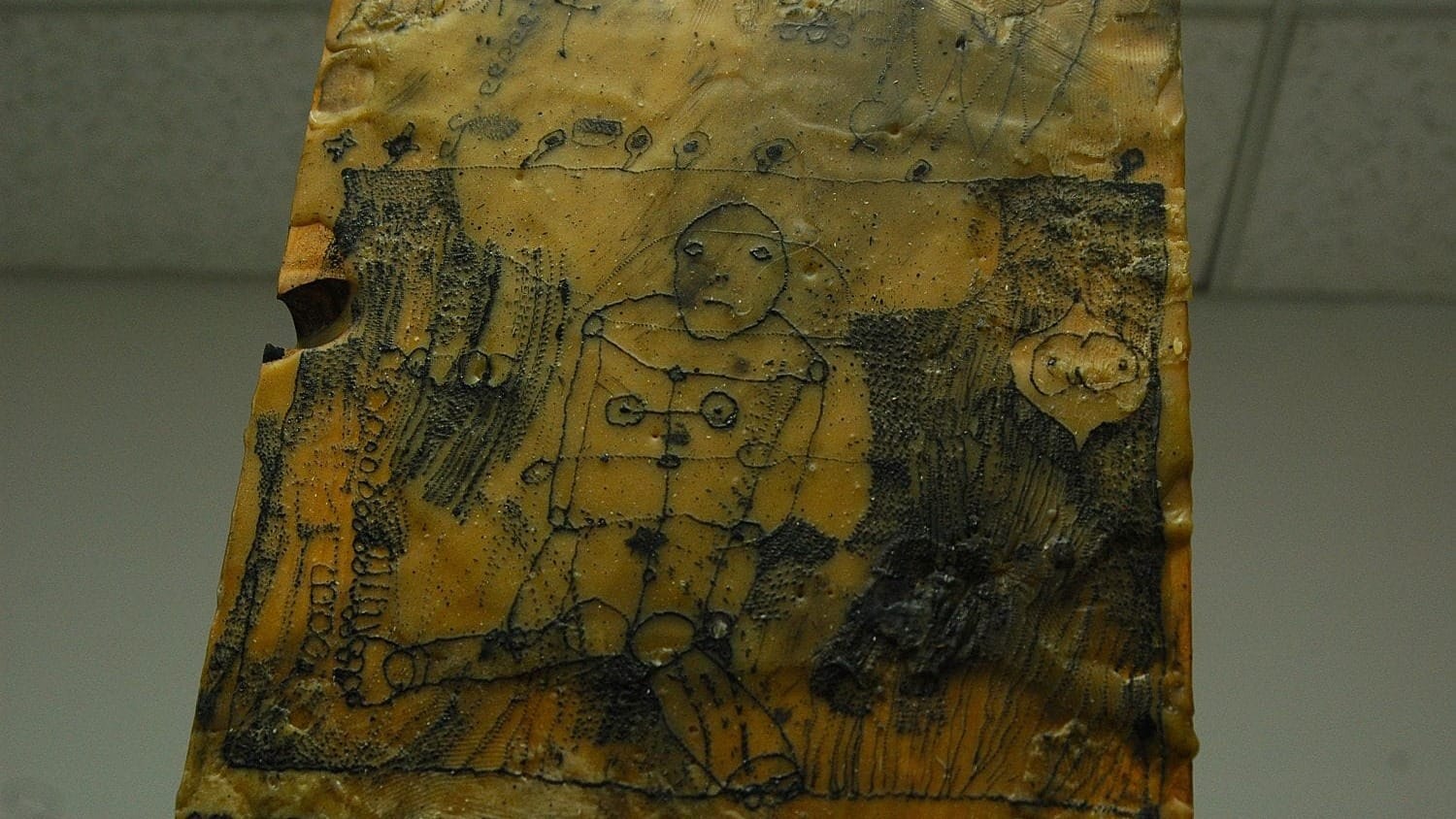
“She used tattoo ink,” said one visitor, to a friend, as they inspected the panels. They noticed that the panel nearest to the ground had tufts of real blonde human hair sticking out of the wax at its bottom.
That idea came from a time not too long ago when Zubović became obsessed with collecting hair, she said the following Saturday afternoon. "It was bought on Etsy, and it actually matches my hair colour. That was good. I didn't aim for that."
The show, she said as she sat in a swivelling office chair, was exploring memories from her childhood home in Zagreb in Croatia. The sense of shelter that her bedroom provided, she said.
“I’m just kinda thinking about my own growing up in that house, and talking about this kinda castle in the house,” she said.
The heatwave hung around still on Saturday as Zubović was once again up in the tower. The air was heavier now, though. A few light showers fell.
Zubović was back to give a talk about The House of Complex with the artist and fellow Richmond Road member Aoife Ward.
After this last event, the group would be moving to their new premises in Glasnevin Industrial Estate, Ward said.
The talk was attended by a couple of other studio members. One brought along a big fluffy white hound who slumbered in a corner, behind the elaborate Acid Granny rig of synthesizers, guitar pedals, television screens and cables fixed to an old shopping trolley, wheelchair and Zimmer frame.
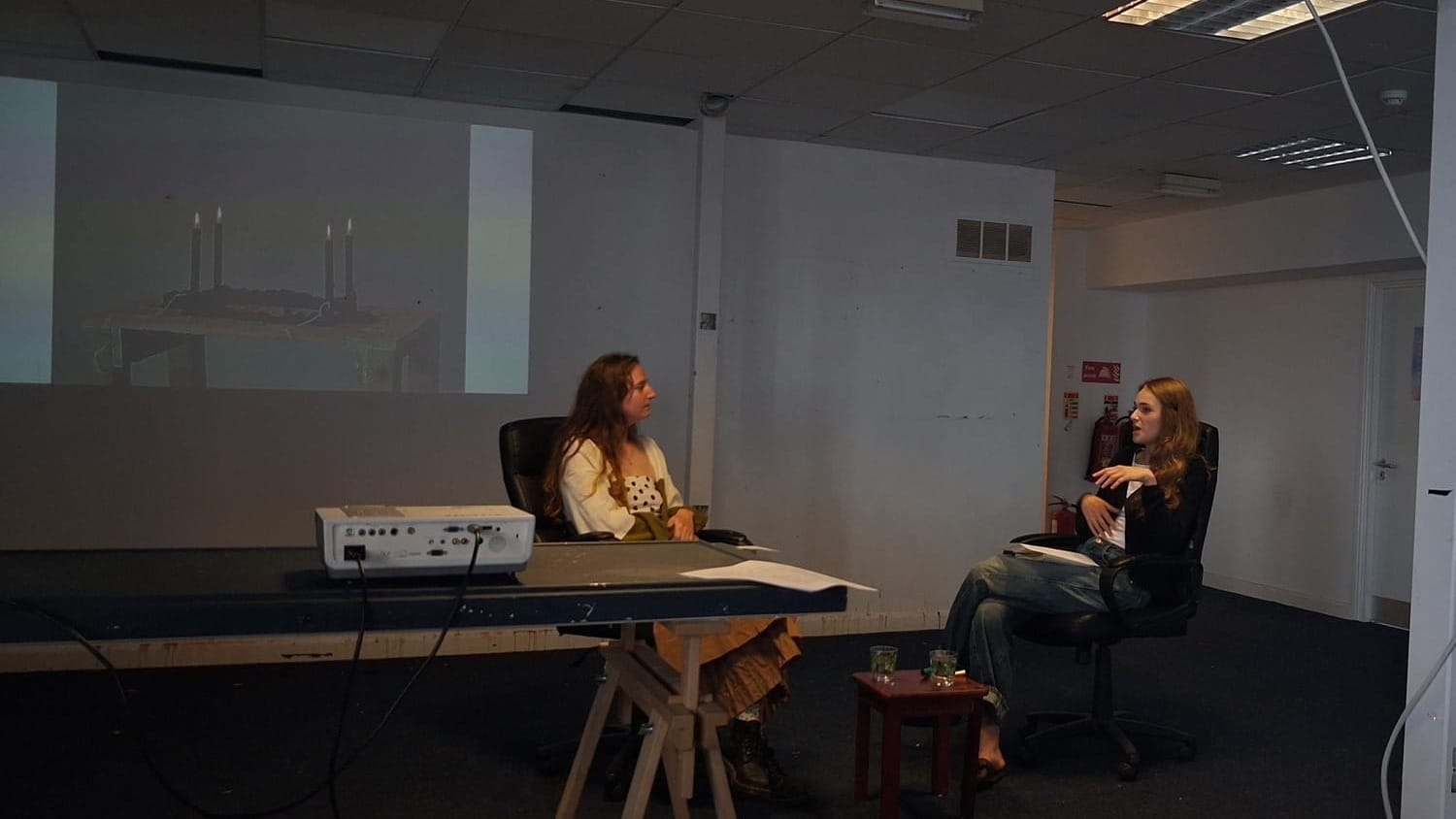
Zubović had embraced setting up site-specific installations for the show, she said. “I could try things I wasn’t able to do, like the candle that’s burning. I don’t know what gallery would allow that.”
Ward said that it was probably good that others hadn't known she was going to light a candle in that small room. “Look, it’s an experimental place where we’re able to do these things.”
The House of Complex was a continuation of Zubović’s 2025 graduate show, The Necromancer, in which, a pamphlet for the Richmond Road show says, she takes on the role of a person who can communicate with the dead to summon “seemingly dead” and buried memories.
A lot of the work comes from the subconscious, Zubović said. “I have this kind of intuitive approach. It’s like so randomised. Something pops into your head.”
The panels that hang from the ceiling were meant to be individual pieces, she said. “But they didn’t make any sense until I connected them like an artist’s book.”
After a half an hour of talking, Zubović led the attendants into the space itself. She approached the black beeswax castle and lit the 11 candles, big and small, that she had moulded into the model's towers and walls.
The burning wicks crackled loudly beneath the room's fire alarm.
She had started to work with beeswax in school as a teenager, she said. "I always like to pick very natural materials."
The castle is what ties the show together, she said, standing over the beeswax structure. It was now illuminated by the warm glowing flames, and the stark white fluorescent lights.
When Zubović started to conceive of the show in January, she was writing about her memories of her family home in Zagreb. “It almost became like a diary or memoir, and I didn’t know what to do with it.”
Some people use an imagined castle or “memory palace” as a way to organise their thoughts, she said. “Like you store memories in every room. It’s a fictional thing that exists in your head for memory.”
Castles too were a feature of many childhood tales, like Alice’s Adventures in Wonderland, something the show alludes to, she said.
Inside what appeared to be a former double door that was blocked off with large wooden panels, Zubović created an almost-life sized cardboard cut-out homage to the Lewis Carroll children’s novel.
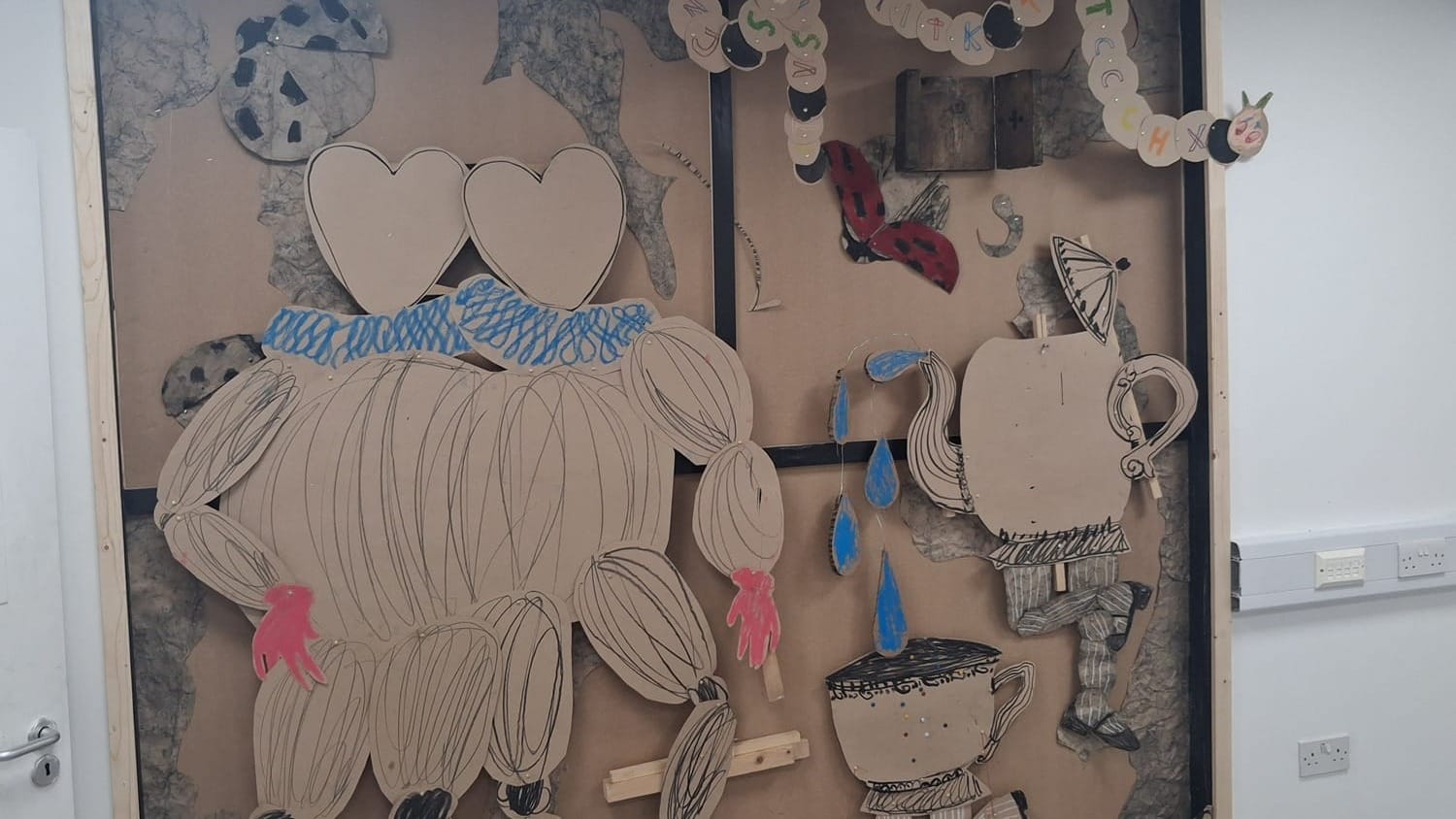
There were two figures with blue ruffled collars and hearts for heads. Next to them was a teapot with legs that was filling a similarly anthropomorphised cup. “There is something very perverse and deviant about things like the tea party,” she says.
In the background, ladybirds both red and black, and grey flew about, and fixed to the door, in a knot, she had created a caterpillar whose body was covered in blue, brown, green and orange letters.
The Very Hungry Caterpillar, itself a story about eating to excess and retreating into a cocoon for weeks, was another tale she wanted to reference, she said after returning to the main office.
“It was this child’s story,” she said, sitting in one of the old office chairs, while the sound of police sirens noisily travelled up from somewhere down below. “But it’s so weird, and I like playing with these things."

The musician says her new album, Draw the Outline, brought her “great solace and peace in writing it. I hope it can do the same for whoever needs it.”

Ross McClean’s new documentary is playing on Saturday as part of the Irish Film Institute’s Documentary Festival 2026.

She didn’t expect to become "Facebook famous" at 61. “It's gas. I don’t like front-of-house,” she says, “keep the head down.”

But viewers seeking a beat-by-beat summation of jazz musician Bill Evans’ career will be disappointed by Grant Gee’s film, which is not meant to be a biopic.