"There is just a ridiculous overconcentration of short-term accommodation," in the Blackpitts and Newmarket Square area, says Sinn Féin Councillor Ciaran Ó Meachair.
Revolt continues in Dublin 7 over proposed shift from bags to bins
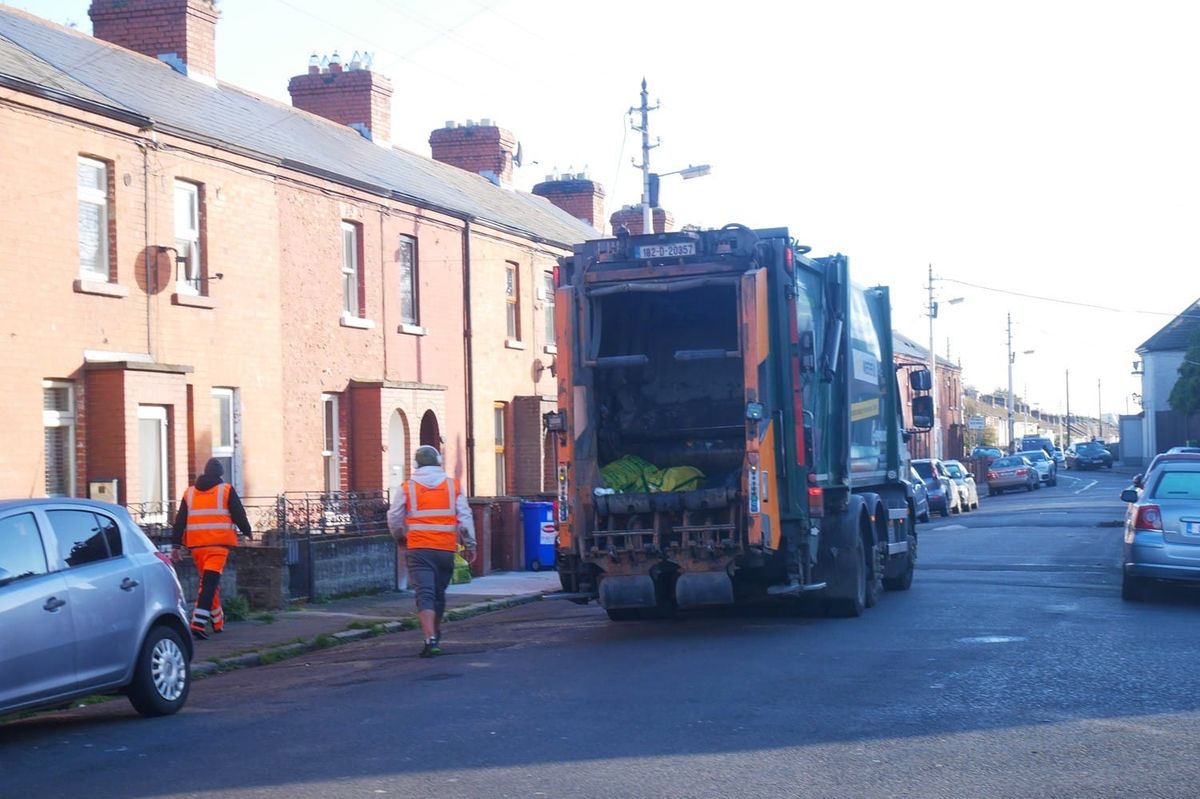
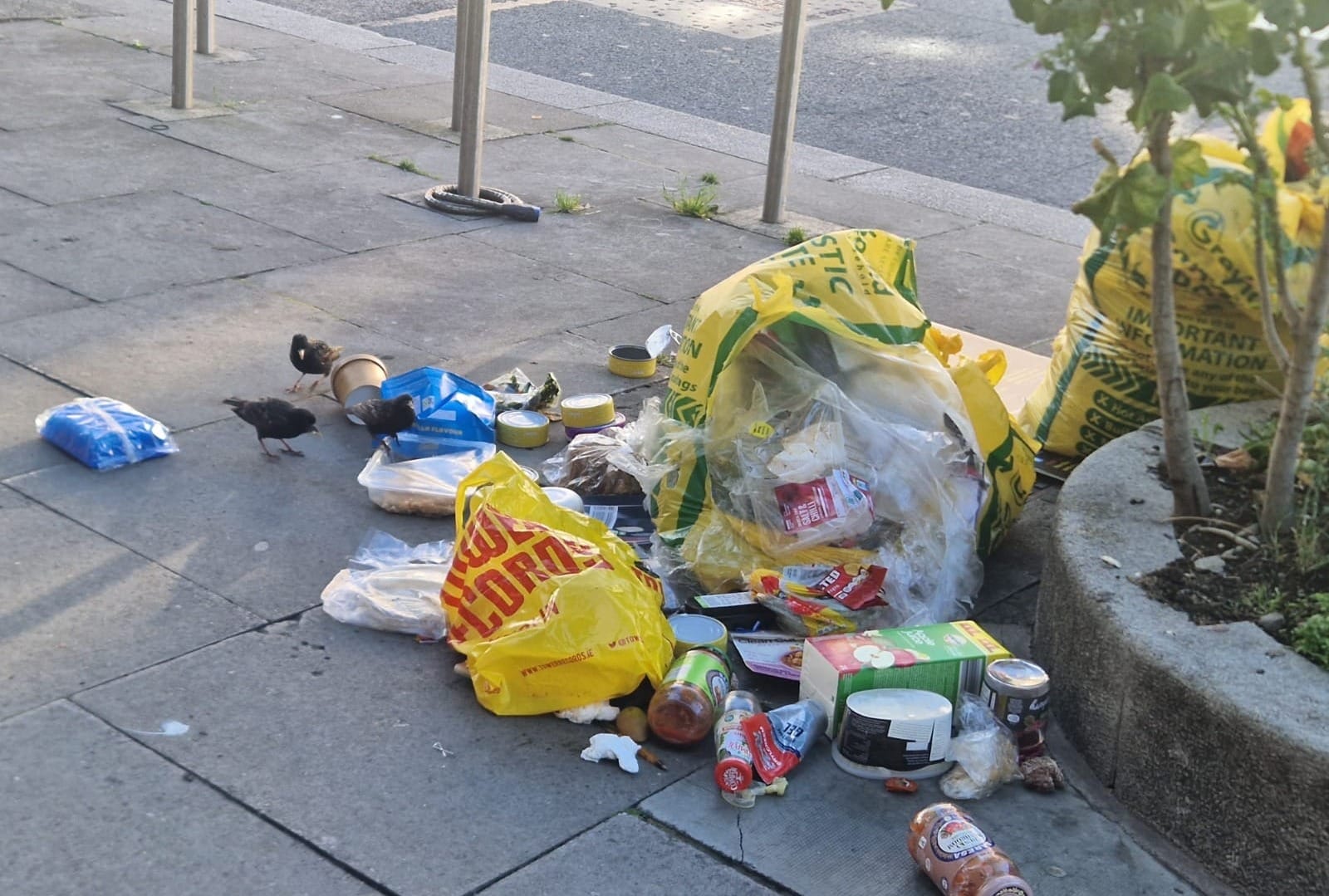
The change is part of the council's efforts to stop foraging foxes and hungry gulls from from tearing open bags left out for collection, scattering rubbish.
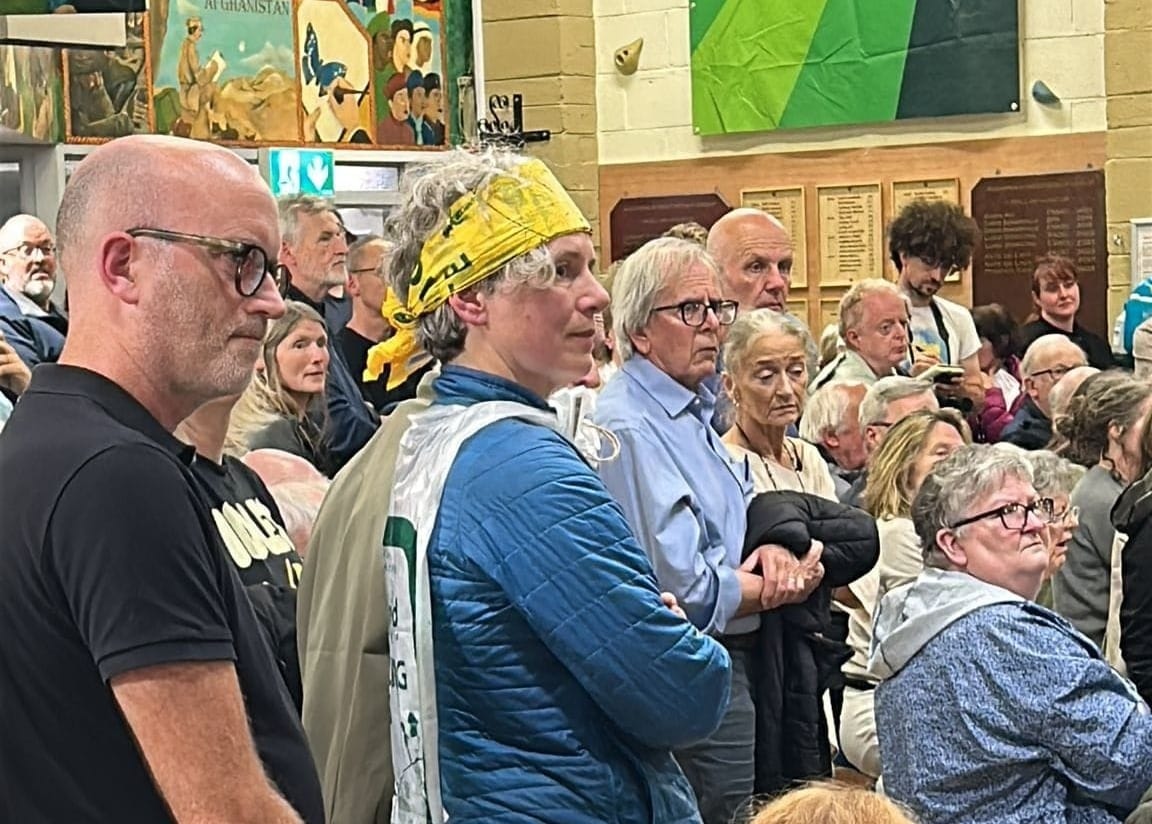
The Aughrim Street Scout Group hall was jammed with Stoneybatter locals on Monday evening.
More than 300 people crammed into the centre’s gymnasium. Some stood inside an open fire exit. Many more leaned against the walls inside a corridor that led out to the front entrance.
They were to talk about Dublin City Council's proposed changes for how they'd put their rubbish out on bin day.
Labour Party TD Marie Sherlock, who was hosting the meeting, addressed the room.
Poor consultation and communication by the council were to blame for the situation, Sherlock said, stood below a climbing wall and next to a Labour banner.
“The reality is that we have a dysfunctional bin collections, waste management here in Dublin,” she said.
The crowd applauded. A curly-haired retriever barked and its owner tried to calm it, saying, “Shush, it’s nothing to do with me.”
The hall was warm. The air was heavy. The atmosphere was tense. A woman entered the room wearing a white recycling bin bag as a cape and a yellow compost bag as a headband.
Photo by Brian Rogers.
Sherlock had called the meeting after bin company Greyhound informed locals in late April that they would need to switch from plastic waste bags to bins by 6 July.
“That is when people became aware of the changes," Sherlock said. "There had been no official correspondence from Dublin City Council to residents.”
This change had been a long time coming. About two and a half years ago, council officials said they were reviewing which streets in the inner-city still used bags – and which could be switched to bins.
At meetings since, councillors pushed for progress, to prevent waste from being strewn about city centre streets by foraging foxes and hungry gulls. And the council has been rolling out the switch in phases, across the inner-city.
Now, it has reached phase three, which covers Stoneybatter, Smithfield and Grangegorman. And, that kicked off the current backlash.
Many houses in the area are small and don’t have the space for a wheelie bin, said Ashley Palermo, who lives in the area, at the meeting.
“People only have a small space in the back garden if they have one,” Palermo said. In many cases, there is little space in front of houses around here too, she said. “And people don’t want to have the bins in front of the house. It’s an eyesore.”
Residents also say the switch will cost them more money, because bin plans are pricier than buying bin bags at the local shop as needed.
Rather than a blanket switch, there need to be alternative options available, Sherlock said after the meeting.
"Some people inside here may want to continue with the bags," she said. "But there mightn't be a one-size-fits-all for every street. There may be different solutions for different streets. A bit like the parking."
Finding a response
For now, the deadline for the changeover has been delayed.
The day after the meeting, Barry Woods, Dublin City Council’s head of Waste Management Services told the Central Area Committee that the phasing out of bins will now happen on 4 August.
But council will not be robustly enforcing the bin mandate in this area until 4 September, he said.
“So that’s giving people nearly three months between now and the start of September before we enforce the change in the bye-law,” he said.
Managing waste from bin bags left on kerbsides has been a big challenge in the city, said a 12 June report from Woods to Central Area Committee councillors.
Bags are torn open by birds, vermin and, more recently, people digging through for containers eligible under the Deposit Return Scheme, he wrote. “This results in littering, contamination of waste streams and unhygienic conditions on public streets.”
Photo by Shamim Malekmian.
But the decision to roll out wheelie bins or waste receptacles, “and no other option” was being decided without consulting with the Dublin 7 community, Sherlock told the public meeting on Monday night.
Cost was a big issue, she said. “We know that people will end up paying a lot more under the new proposals. For some people, it could double in a year.”
A pack of three yellow Greyhound bin bags from a shop in Dublin might cost about €14, and a pack of six white ones about €12.
A bin plan from Greyhound, including black, brown and green bins, might cost €23.50 to €31.50 a month, depending on how much you put in the black bin.
So a household would have to put out a yellow bag and a white bag each week, for the cost to be comparable to a bin plan.
The existing system of putting out a bag incentivises people to reduce waste, Sherlock said. With the new system, "those incentives go out the door”, she said.
Not only that, but the community is facing the prospect of wheelie bins being kept out on their streets as locals might not have yards to store them in, she said. “I don’t think any of us want to see our streets lined with bins that stay there Monday to Friday, Monday to Sunday, seven days a week, week in, week out.”
Sherlock’s public meeting on Monday night lasted more than an hour.
Towards the end, she said she would be writing to the council’s head of waste. “But I think as well, we need to start perhaps organising a demonstration outside Dublin City Council offices.”
As the microphone was passed around, a handful of attendees suggested going a few steps further. One proposed not paying the forthcoming fees. Another said they should bring their bin bags to City Hall.
Sherlock said she couldn’t condone those responses, emphasising instead the need for a demonstration to “support” local councillors in their effort to resolve the problem.
Palermo, the local resident,after the meeting, said it wasn’t great that the council didn’t consult with the community. “Everyone cares, everyone loves this area.”
The current system of plastic bags works, she said. “Everyone can lift them. It’s lightweight.”
Lugging wheelie bins in and out of small houses was, on the other hand, a “biohazard” in some cases, she said. “And if you’re gonna have three bins, how many times can you boil your kettle to clean your bins every week?”
The scoutmaster then loudly clanged a bell, and the packed room quickly emptied out.
Improving communications
At the Central Area Committee meeting on Tuesday morning, each of the local councillors expressed their dissatisfaction with the council’s failure to adequately consult locals.
The lack of consultation has damaged this transition, not only in Dublin 7, but also in other areas where the council needs to remove bin bags from the streets, said Green Party Councillor Feljin Jose. “We’ve ended up with a situation where we’ve jeopardised this through the really poor communication.”
Woods’ written report said the council recognised these concerns, and had carried out a leaflet drop on 6 June, outlining the proposed changes.
But, it also recommended that the council improve its communication campaign ahead of the delayed implementation of the switch on 4 August.
Woods’ report also noted that waste collectors told the council that they will offer a “pay per lift” option for reusable bins.
That would be an option for households which produce less waste, said Green Party Councillor Janet Horner, speaking by phone on Tuesday evening.
"They're only paying every time it's collected, as opposed to paying a standard monthly charge, which doesn't do anything to incentivise people to reduce their waste," she said.
According to Woods' report, unspecified waste collectors have advised the council that they will be offering a pay-per-lift option, which costs €39.99 in the first year, alongside lift fees of €5.50 for residual, €4 for organic and €4.50 for dry mixed recyclable waste.
Jose, the Green Party councillor, said at Tuesday's area committee meeting that Greyhound is the only company offering a pay-per-lift service, right now.
But the service fee rises to €100 per year after the initial payment of €39.99, Jose said. “That’s a significant difference.”
That service fee is outside the council’s scope, Woods said at the meeting. “We will take it to the waste collectors and I’ll come back to you on that.”
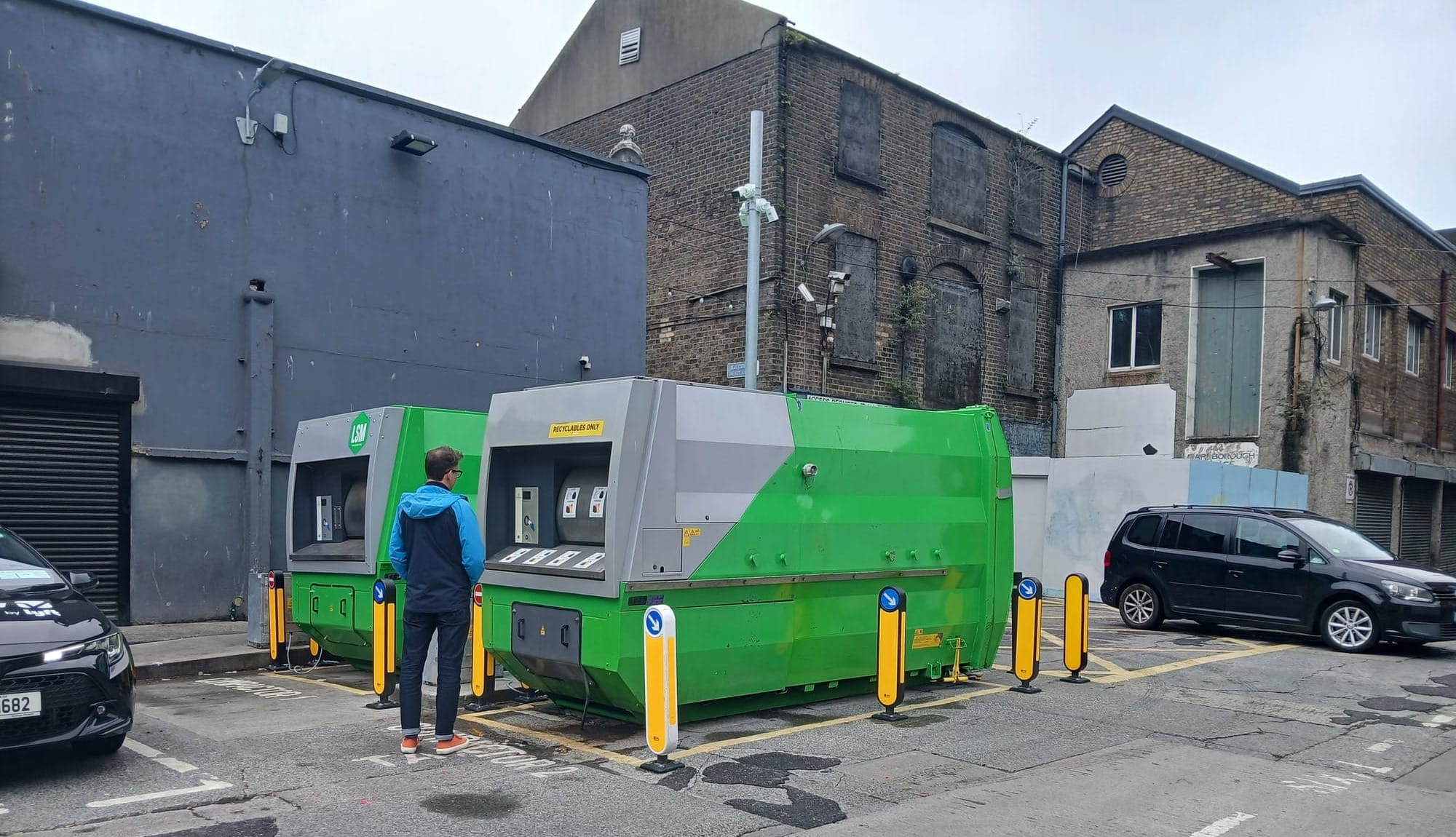
To help the transition from bags to bins, the council will also be considering the installation of a residual waste compactor on a temporary basis at the Grangegorman Bring Centre, Woods’ report says.
That way, instead of leaving them on the street, people could carry their bags over there, and throw them in the compactor.
Waste compactors on Marlborough Place. Photo by Sam Tranum.
They are looking at that, he said at the meeting. “It’s just there’s an issue with space there at the moment.”
They may have to take out a garden waste compactor to replace a residual waste compactor, he said. “If we had to do it, it’s a matter of a couple of hours to switch compactors in and out.”