A false alarm from the Barclay Crop Protection plant near Mulhuddart in July confused some locals, who didn't know what it was, what it meant, or how to get more information.
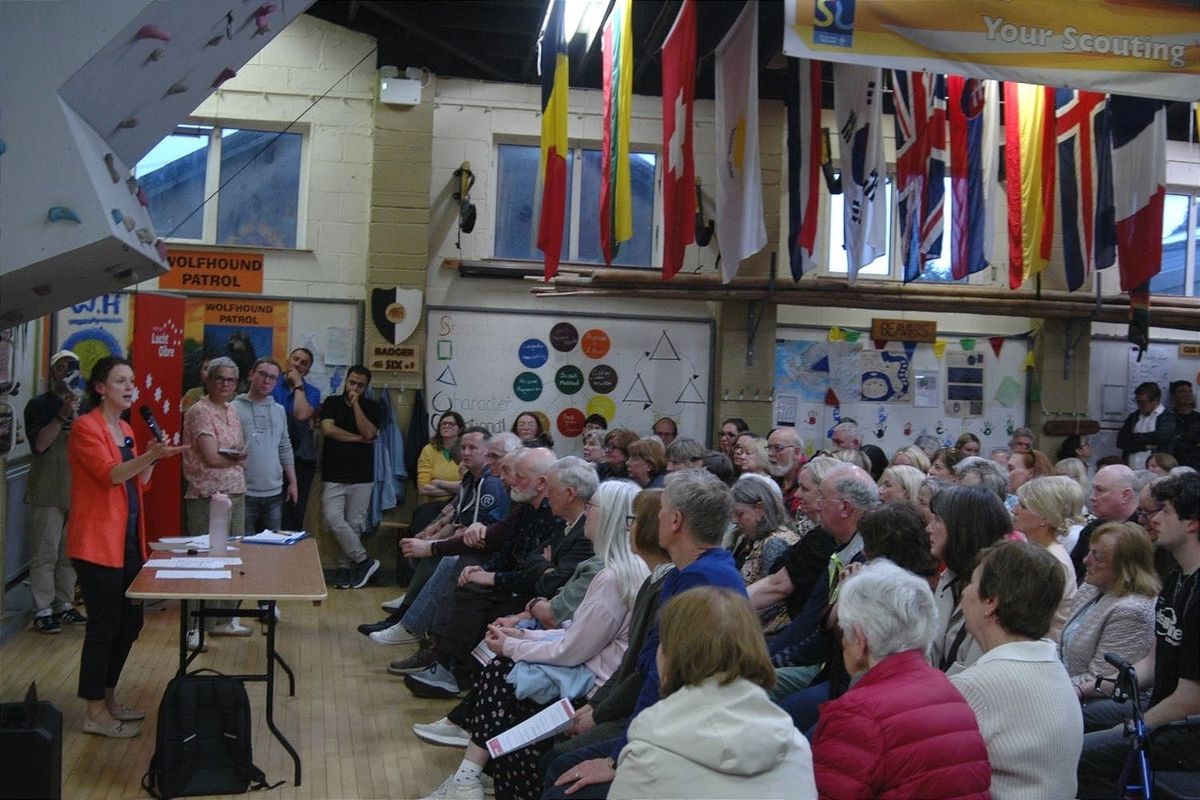
People on low incomes, with unstable housing, are bound to be most affected by more stringent policies for citizenship, says Lucky Khambule of the Movement of Asylum Seekers Ireland (MASI).
On the contrary, apartments have limited parking to nudge people away from cars – and the council should hold the line on that, and introduce other nudges too, some transport committee members suggested.
The council plans to crack down on people who leave their bins on footpaths all the time
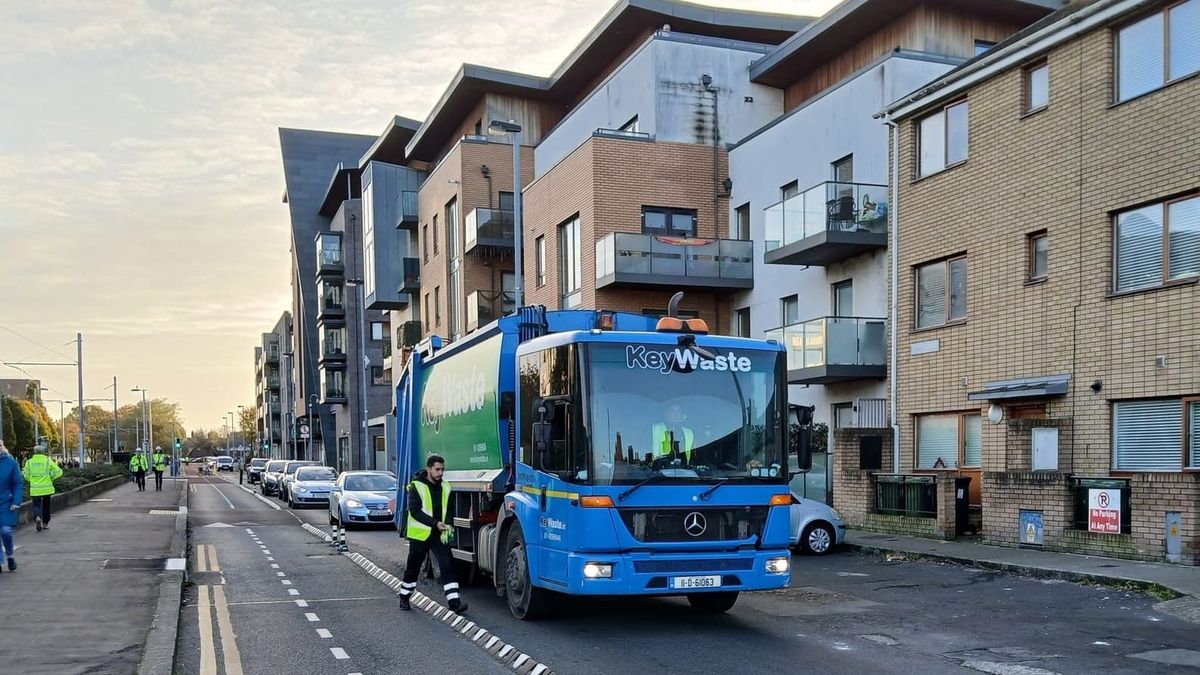
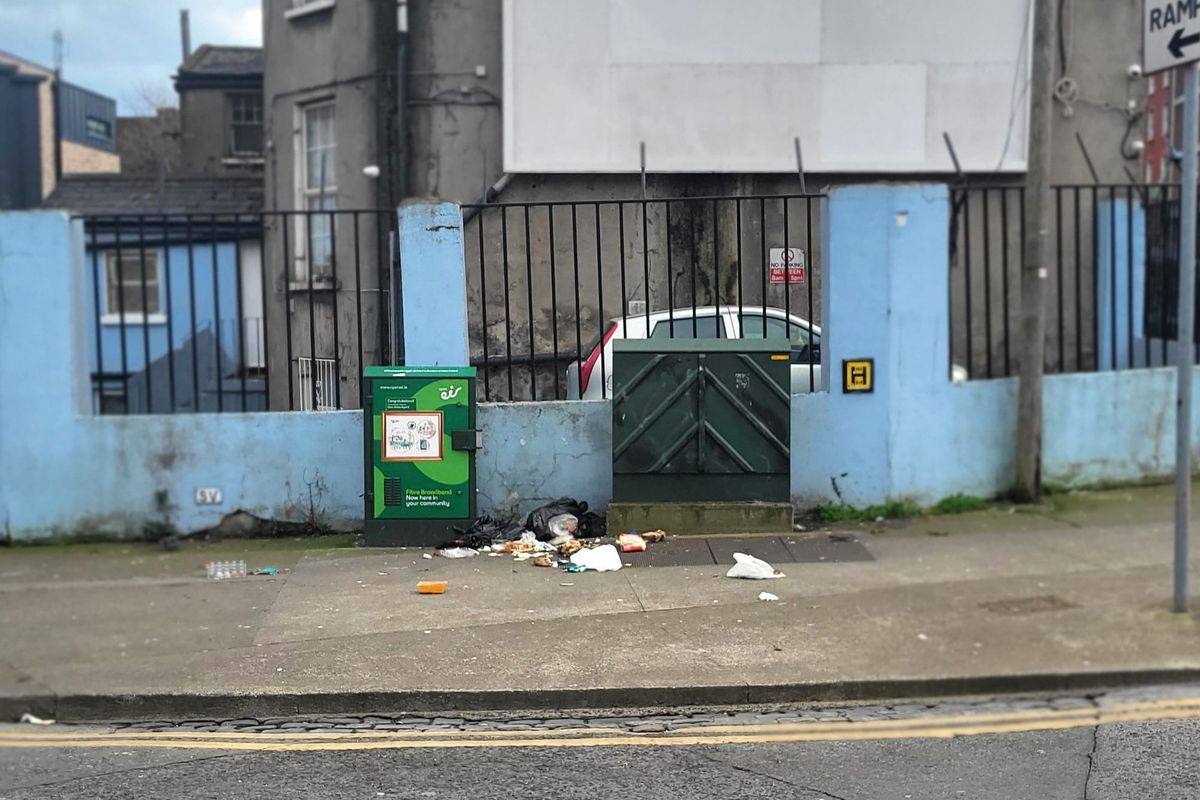
As the council bans putting out rubbish in bags in more and more bits of the city – part of its drive to clean up streets – some residents say they don't have room in their homes for wheelie bins.
Dublin City Council plans to tighten its waste by-laws to make sure households and businesses don't leave their wheelie bins out on footpaths day and night because they don't want to use up space inside, a council official said on Wednesday.
To date, the council has been reasonably tolerant, said Derek Kelly, an executive manager, to councillors on the Climate Action and Urban Resilience Strategic Policy Committee on 29 July.
But as the council bans putting out rubbish in bags in more and more bits of the city – part of its drive to clean up streets – it intends to clamp down on people who respond by switching to bins but leaving them out all the time, Kelly said.
"We will be fining them," said Kelly. "We haven't to date because people have been trying to do the right thing. But the by-laws are clear: you are not allowed to store your wheelie bins on the public footpath."
As part of its changes, the council is to start to revise its waste by-laws this year, he said. "They need upgrading because there's people finding loopholes."
At the moment, some people leave bins out all the time, based on a seven-day waste collection agreement with their waste collector, he said. "And that's all because they don't want to store the waste inside, or in their yards."
At the meeting, Green Party Councillor Claire Byrne had raised concerns about how the bag ban may lead to more clutter, and so blockages on footpaths for pedestrians and those with disabilities.
She foresaw more people in smaller homes just leaving bins out all the time, she said. "People will and they already do."
One solution would be to have big, shared bins or compactors that people could walk over to and throw their rubbish into. Then they wouldn't have to store it at home in bags, or bins.
Byrne said she was frustrated that such big, shared compactors have recently been introduced in areas of the city centre, but not elsewhere, in residential neighbourhoods that could benefit.
Installing shared compactors elsewhere just isn't possible right now, said Kelly. That's because of how the waste collection system is currently set up, he said.
Shared compactors were possible in the city centre because there are fewer waste companies collecting there, so they could strike a commercially workable agreement. "In the city centre, we were dealing primarily with two operators," he said.
But in areas with more operators, putting in shared rubbish infrastructure like this is a real challenge, he said.
"The world we're living in is that the market is a side by side, open market. I can't change that, that's not within my gift," said Kelly.
If the Department of Climate, Energy and the Environment changes the waste management system after the review that it is currently doing, then new options would open up for the council, he said.
But the current changes the council is bringing in are the best option right and it needs to do this to deliver a cleaner city, he said.
His teams can't keep responding non-stop to ripped bags and rubbish strewn all over the street, he said. "We can't do the day job because we're responding to domestic waste being ripped open."
Byrne said she was frustrated that shared compactors were off the table. "I find it really upsetting that it's a commercial decision, dictated by the private operators."
At the meeting, Kelly ran through progress on the many changes that the council has been making to waste management and street cleaning in the city.
It has more staff, better sweepers and street washers, and is upgrading its IT systems so the council can better check work that is done, he said.
Preparing the reverse-register pilot – identifying which households don't have waste contracts, and targeting them for checks – is also moving ahead, he said.
There have been GDPR challenges but now, software is being developed to enable secure transfer of the data from waste-collection companies to the council, he said.
Also, though, the council intends to keep extending the removal of the derogation allowing waste to be presented in plastic bags on kerbside for collection, he said, with Dublin 7 still next in line in "phase three".
"We hope to move as agreed, in October 2026," he said. The plan to force a switch from bags to bins has not been received well by some Dublin 7 residents.
The bin-bag derogation has already been removed in two parts of the city.
At the end of last year, in "phase one", the council removed the derogation for 90 streets in the south-inner city. In May, with "phase two" it removed it for 110 streets in the north-inner city.
At the meeting this week, Kelly said the switch away from bin bags has made a major difference to cleanliness in the city centre. Crews no longer have to do so much tidy-up from bags ripped open and rubbish spread around.
They're lifting 20 tonnes less of rubbish a month in the "phase one" area, because of the bin-bag ban, he said. They're only a couple of months into phase two, but expect the same there, he said.
For all?
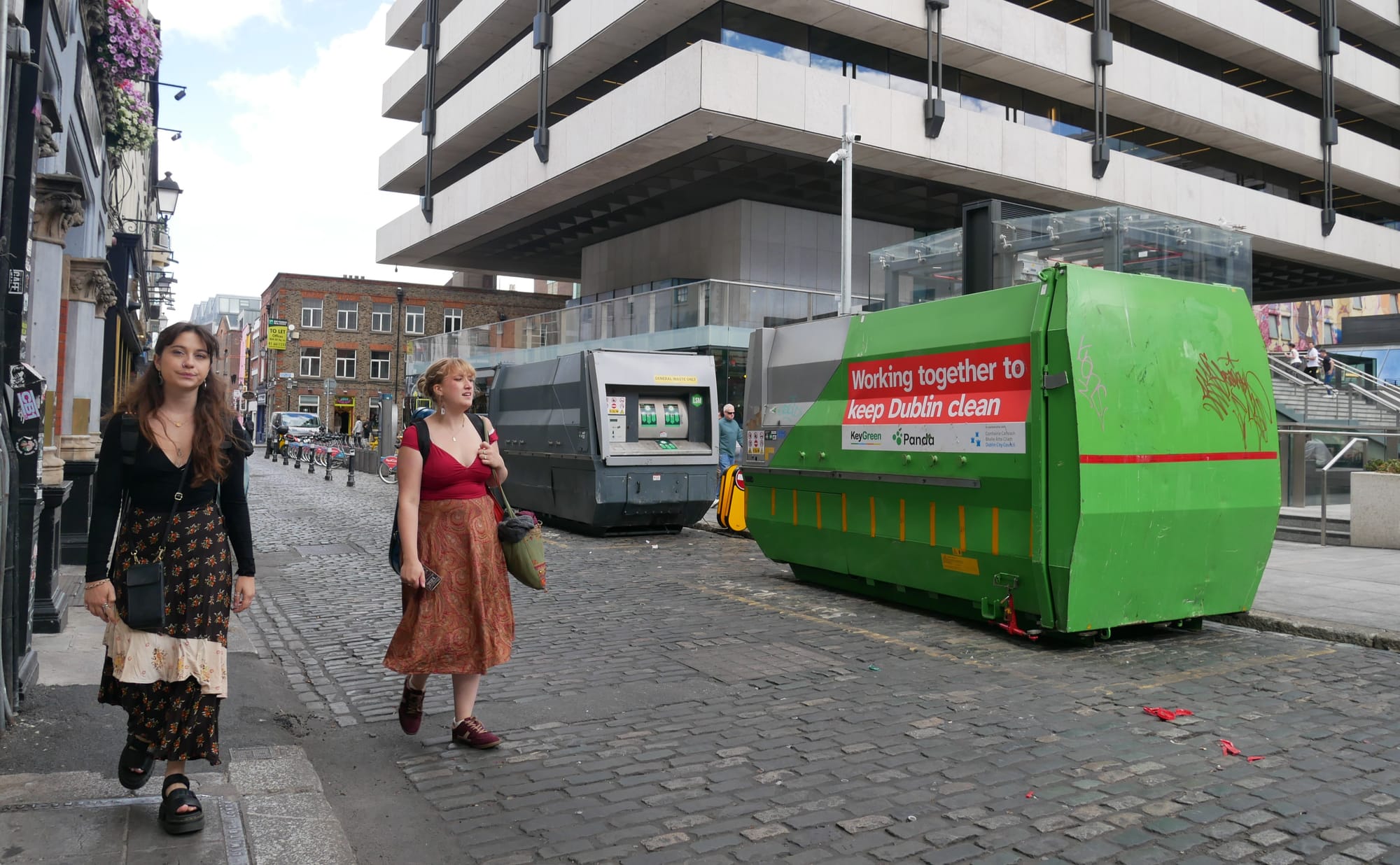
In both "phase one" and "phase two", the council had negotiated with bin companies to put in place a few big waste compactors, for those who said they didn't have space for bins inside the homes.
This way, they could lug their bags to the waste compactors and post them in.
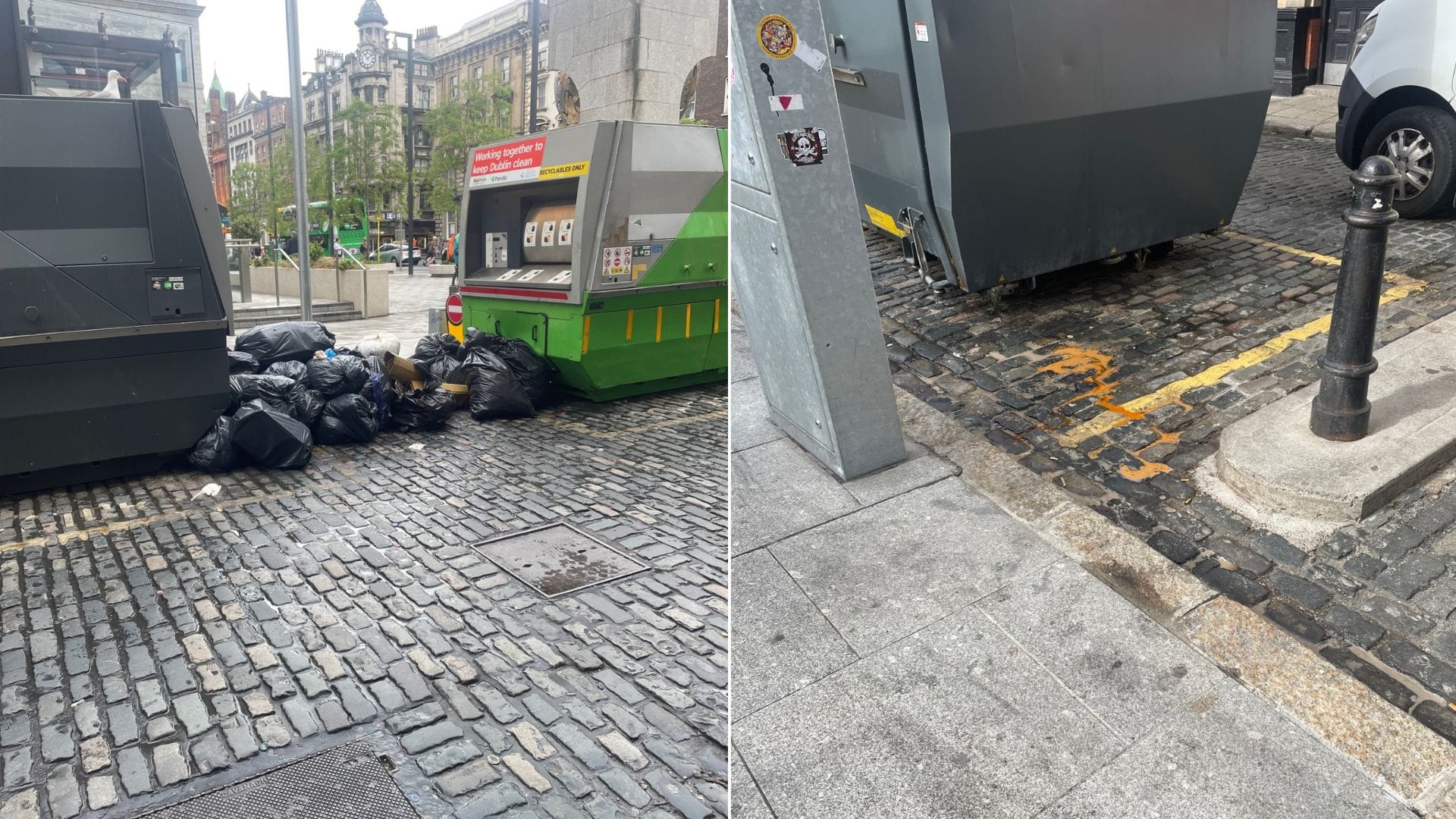
Compactors in Temple Bar. Photo by Lois Kapila.
At the meeting, Byrne, the Green Party councillor, said she was still concerned about the impact of getting rid of the derogation in more places, especially in neighbourhoods with small homes and small apartments, without the option of compactors.
"I understand all the reasons why we need to get rid of bin bags," she said.
But street clutter is a major issue and there's the risk that people leaving wheelie bins out all the time will add to that, she said.
"Why are we going back to that? And why can't we have shared bins?" she said.
Kelly said the council can't force commercial operators to sign up to offer shared bins. In areas with loads of operators, the idea runs aground on questions around how to split revenue share, how billing works, how you give people access, he said.
But the council has tried to negotiate solutions with waste companies, he said. "They're creating bespoke pricing models, pay per lift, annual costs."
A big change is companies now offering smaller caddies – small stackable rubbish bins – of 45 litres, he said, which are easier for people to store.
Households with a small amount of waste should go for that, he said. And, "if you have a huge amount of waste that you're producing, look at how you can reduce the waste that you're producing yourself, you know."
Meanwhile, if a household is putting out three or four big black sacks a week, they're already storing them somewhere, and why not use a wheelie bin? he said. "I'd always ask that question: what are you doing with it at the moment?"
Whether big waste compactors, as they currently operate, would be welcomed in more residential areas is also unclear.
On Fownes Street Upper, among the busy shops of Temple Bar, Alan Cooke isn't convinced that the shared waste compactors just down the way are the solution to dirty streets.
Yes, bin bags ripped by gulls were a problem, said Cooke, who runs John J Cooke & Co. Ltd, the silver jewellry and trophy shop. "I do agree, but this is not the answer."
Bags piling up when the compactors were broken, and leaking. Images courtesy of Alan Cooke.
Look at the footpaths, said Cooke, walking towards the compactors and pointing to black streaks across the pavement and shards of rubbish in the gutters. Those are from people dragging their bins to the compactors, he said.
The stink is bad too, he said. Liquids and sludge can drip from the compactors, said Cooke. The machines break down sometimes, and bags pile up next to them, he said.
"Seagulls are just camping out on the roofs, waiting for the compactors to break down," he said, pointing up a few storeys.
Meanwhile, so many waste vehicles drop by the compactors to leave waste from businesses that there can be queues, said Cooke. "The compactor isn't doing what it said," he said.
He has been writing to the council since before the compactors were put in with these concerns, most recently in the middle of this month, to Dublin's Lord Mayor, Fianna Fáil's Daryl Barron.
In May, Kelly had written to Cooke, acknowledging his concerns about the pilot. "While challenges can arise in the early stages of implementation, we are actively monitoring performance and will make adjustments where necessary," he said.
At Wednesday's council meeting, Byrne, the Green Party councillor, had talked too about the possibilities of putting waste compactors underground, in residential areas.
There's a lot of infrastructure, pipes and wires, underground, said Kelly, while above ground it could prove hard to find a household that wants a waste compactor outside.
But again, he said, the biggest barrier to shared compactors in other parts of the city, is the number of private operators and the system.
People on low incomes, with unstable housing, are bound to be most affected by more stringent policies for citizenship, says Lucky Khambule of the Movement of Asylum Seekers Ireland (MASI).
"As you can imagine, you've got 20 parking spaces, and we come along and say we're going to take out two of them or something like that to give spaces for people on bikes, it doesn't go down particularly well."
Louth County Council passed a motion calling for other local authorities – including Dublin City Council – to join it in pressuring the government to change national planning regulations.