

Tusla inspectors found problems with the use of physical restraint in seven children’s homes
In two cases, inspectors found that staff were using restraint to try to manage children’s behaviour, and one of those children was restrained 78 times.
Scandals in some charities have also harmed the reputation of the sector as a whole, which is unfair, people working for other nonprofits say.

Last summer, the political leaders of the European Parliament voted to embed a “scrutiny working group” in the EU Commission’s budgetary control committee to audit funding for non-governmental organisations (NGOs).
The European People’s Party (EPP), which Fine Gael is a member of, floated the idea.
The European Conservatives and Reformists supported it. That group includes Law and Justice, the party of Poland’s Trump-endorsed president Karol Nawrocki, the Giorgia Meloni-led Brothers of Italy, and others.
The Patriots for Europe were also supporters. That group includes Marine Le Pen’s National Rally, and Victor Orbán’s Fidesz, among other parties.
In the wake of this decision, Oliver Röpke, of the Austrian Trade Union Federation, who was then president of the European Economic and Social Committee, published a statement, sounding frustrated.
“This decision comes despite repeated confirmation from both the European Commission and the European Court of Auditors that EU funding to NGOs is transparent, lawful, and aligned with EU policy objectives,” it said.
The immediate trigger for the establishment of the working group was apparently a story in a German newspaper about the commission’s funding for environmental NGOs, according to EuroNews.
But it’s part of a larger trend of attacks on “NGOs”, often from the right, in both the United States and Europe, lumping together a vast sweep of organisations of various sizes, structures, and purposes.
In Ireland, parties like Independent Ireland and the Irish Freedom Party have criticised “NGOs” as wasteful. And there’s no shortage of anti-NGO posts on places like X, Facebook and Telegram, castigating their perceived outsized influence on government policy and support for causes or people they don’t like.
“NGOs” in Ireland include everything from charities that build housing, to GAA clubs, to churches, to TidyTowns groups, to migrants-rights advocacy outfits, to the Irish Council of Civil Liberties.
Amid sustained attacks from the right, as well as periodic scandals involving specific organisations – like the Peter McVerry Trust and Inner City Helping Homeless – trust in the charities sector has been diving, according to 2023 and 2025 surveys commissioned by the Charities Regulator.
This decline in trust is having real impacts on this “third sector” of Ireland’s economy, which includes groups that are integral to communities, and provide vital services that the government and private sector do not, say those who research, and work, in the sector.
Tensions over NGO funding have been bubbling up for some time in the EU.
But the events that most directly inspired the assembly of the EU working group to scrutnise NGO funding began with an article in the German newspaper Welt am Sonntag, according to EuroNews.
Welt am Sonntag had accused the Commission of secretly paying non-profits like Friends of the Earth and ClientEarth in 2022 to get them to, among other things, promote its climate policies in Germany.
More specifically, it alleged that the commission had invested €350,000 in ClientEarth to bankroll lawsuits against fossil-fuel power plants and disrupt their businesses.
The Commission denies the allegations. And the head of ClientEarth’s German office told EuroNews that it hadn’t spent any of that grant on “external litigation costs”, but that some of it went towards sustaining its operation in Germany.
This came after a previous stir over the Commission’s funds for NGOs to lobby specific MEPs in favour of its environmental policies.
“In the agreements which were signed, there were clauses which were obliging NGOs – obliging them – to carry out very detailed specific activities targeted at specific MEPs,” said Piotr Serafin, the EU’s Commissioner for Budget, Anti-Fraud and Public Administration in the EU Parliament last January.
“It is not illegal, according also to the assessment of our legal services, but simply it is inappropriate,” said Serafin, a member of Poland’s Civic Platform, which is part of the EPP grouping.
Although, a Politico fact-check disputed this.
The idea of funding NGOs to lobby on policies before the Parliament is to balance “policymaking debates, in which the private sector usually has much more money to spend”, it says.
But ultimately it’s up to NGOs to decide what they want to do with the money, according to Politico. “Nowhere in the 28 contracts granted to NGOs and analyzed by POLITICO does the Commission provide direct instructions to lobby on its behalf,” it says.
“In a nutshell, the controversy was fueled by the suspicion that the Commission only gave money to NGOs who agreed with its agenda. Nothing in the contracts suggests that happened,” it says.
In response to the formation of the new working group to look at NGO funding recently, Civil Society Europe – which coordinates European non-profits – published a report addressing anti-NGO claims of some European lawmakers. It also outlined solutions to improve funding transparency.
On 21 January, anti-NGO lawmakers are set to probe funding for immigrant rights non-profits “in an exchange with the European Commission”, said an email from the Platform for International Cooperation on Undocumented Migrants (PICUM) last week.
In Ireland, it’s not totally clear which organisations can or should be included under the umbrella term “NGO”.
There’s no specific legal structure with that name. That means an outfit can’t show up at the Companies Registration Office and start an “NGO”.
And not every organisation that might be considered an NGO would qualify as a charity.
So “NGO” can morph into a catch-all pejorative term for sweeping attacks on groups a critic does not like or agree with, and any group they don’t object to can fall outside the definition of NGO, even if they are.
A 2015 paper by a researcher at the University of Waikato in New Zealand explored difficulties around pinning down what NGOs actually are.
It set out to define it, concluding that they are structured, accountable, non-commercial, separate from the government “voluntary organisations involved in helping individuals and communities to achieve their social, economic and cultural goals”.
Outsourcing essential services to third parties is nothing new in Ireland, with lots of non-profits taking over from the Catholic Church as its importance in society has shrunk in recent decades, those who’ve worked in the sector say.
But that’s why lots of them “still have a connection to religious bodies”, says Liam Herrick, chief commissioner at the Irish Human Rights and Equality Commission (IHREC).
Better, more thoughtful government policies could ease the demand for their existence, say researchers and sector workers.
But many are here to offer what the government “is either unwilling or unable” to do, says Ronan Kennedy, senior policy officer at the Irish Council for Civil Liberties (ICCL).
Those pushing anti-NGO discourse often cite figures like 34,000 NGOs in Ireland and billions in funding to suggest there are way too many of them and they waste public money, says Kennedy of the ICCL.
When he was trying to figure out where those figures came from, Kennedy says, he landed on a 2021 report from a now-closed non-profit called Benefacts, which focused on analysing the non-profit sector.
And so its report uses the term “non-profits” and offers its own tally of their number. It doesn’t give a list of places it’d counted but says it had included primary and secondary schools, sports organisations and so on.
“About 10,225 non-profits are incorporated as companies,” it says.
Kennedy, of the ICCL, says the range of organisations that could be called NGOs is vast.
“People could be members of NGOs and not even realise, you know, technically things like GAA clubs, community organisations, Tidy Towns, they are all NGOs,” he said.
There’s a lack of education around that, Kennedy says. And “we don’t communicate that particularly well”.
Herrick, the IHREC commissioner, says that Ireland’s social model is rooted in delivering “a large proportion of essential public services” through the “community and voluntary sector”.
Take homelessness aid services, Herrick says.
“The vast majority of homeless services in the state are provided by private organisations, largely those have a religious affiliation of some type, and they would be categorised as NGOs,” he said.
In an ideal world, the government offers that kind of support itself, says Shane Murphy, a postdoctoral researcher at DCU’s Institute of Future Media, Democracy and Society.
“And you know it would be properly funded,” he said.
A May 2023 survey commissioned by the Charities Regulator found that people’s perception of how much they interact with charities in their lives lags behind reality.
Almost half of the 2,000 people surveyed had said they hadn’t interacted with a charity in the year prior to being asked.
“However, 88% have potentially engaged with a charity in the past year by taking part in activities such as visiting a heritage building (34%) or museum (32%) as well as more obvious charity shop purchases (54%) or attendance at religious services (47%),” it says.
Not all non-profits have registered with the regulator as charities. But lots of those organisations can be counted as NGOs.
At the moment, nearly 11,500 organisations are registered charities, according to the Charities Regulator’s 2025 report.
It says the sector as a whole is worth €32 billion, but “the majority of charities (43%)
(excluding schools) report annual income of less than €100,000, and 70% have few or no employees”.
Herrick says that complaints about NGOs often boil down to opposition to the existence of support services for causes someone dislikes on ideological grounds. The discourse is borrowed and carried forth from other countries, he said.
A post on X by Eoin Lenihan, a conservative Irish writer and an anti-immigrant immigrant commentator in Germany, shows an AI-generated response to a query asking for “top 20 NGOs funded by the Irish state”.
The AI-generated docket features among others, Christian Aid Ireland, the missionary-support group Misean Cara, the housing advice charity Threshold, as well as places that offer support to women, refugees, Travellers, queer people, and a free legal advice centre for low-income families.
“The majority should be defunded for supporting activities and ideologies that are harmful to the country, the economy and to the general public,” says a response from “Long John Silver”.
“For sure. Don't incredible damage to the social fabric of the nation. That's what radical left groups do,” Lenihan replies.
Teresa Buczkowska, CEO of the Immigrant Council of Ireland, says non-profits like the one she leads exist to help marginalised people navigate laws drafted without their struggles in mind.
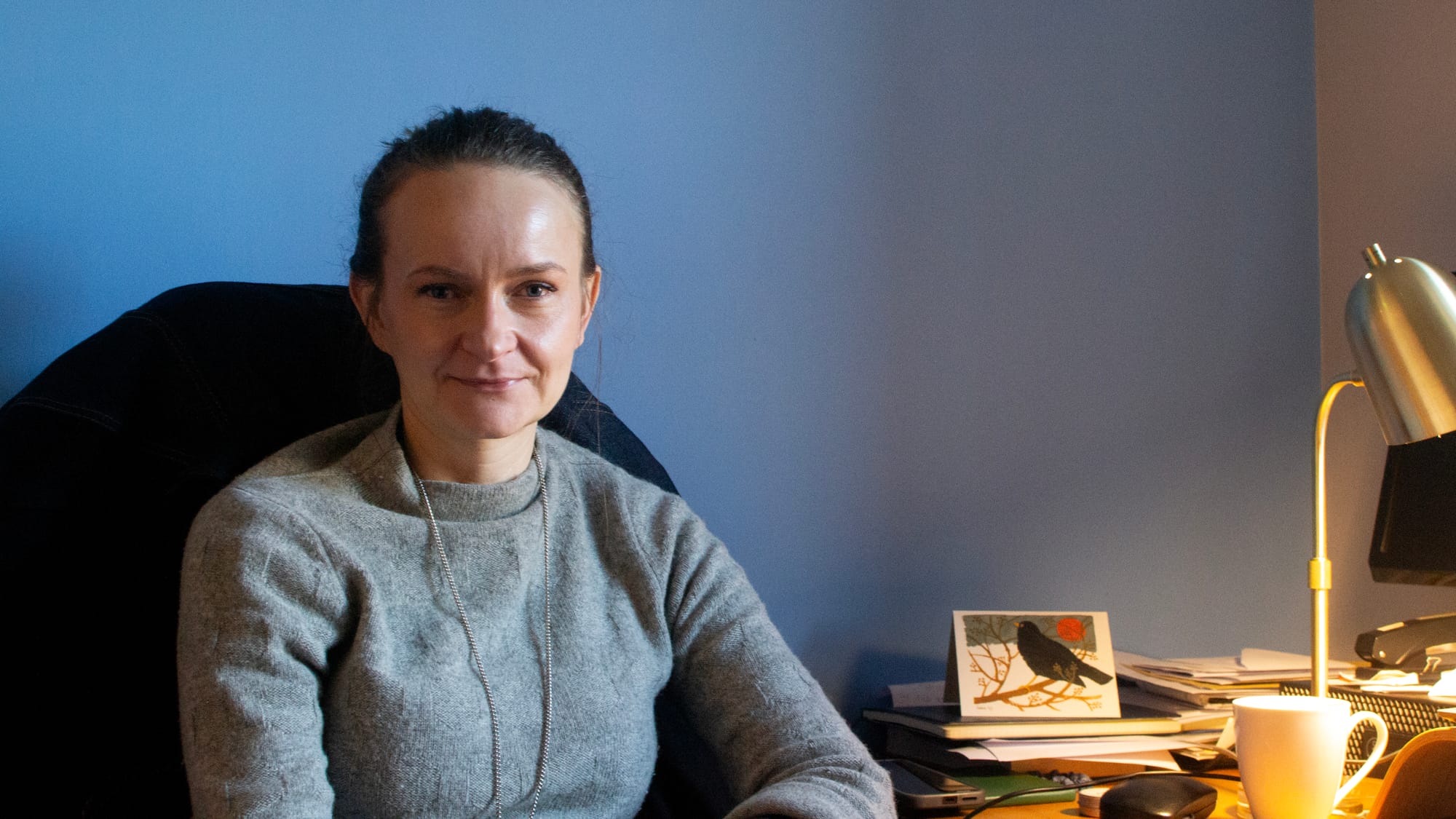
And because of that, “there are always barriers in accessing some rights”, she said, sitting at her dimly lit office on a recent morning.
For example, the Immigrant Council supports immigrants outside of the asylum system, she says. The government doesn’t offer any kind of legal aid to people on different kinds of non-asylum immigration stamps.
So, people who can’t afford to hire private lawyers cast around for free or affordable legal advice for all kinds of immigration troubles. Still, says Buczkowska, so many questions go unanswered.
“We are only able to meet five percent of the demand,” she said.
They have two workers fielding questions for a few hours, four days a week, she said. The rest of the time they’re working on those cases, Buczkowska says.
There are always people who’re going to be left behind, she said.
Those with refugee status have struggled to get timely advice on how to navigate the housing market and bureaucracy of accessing rental subsidies as there aren’t enough charity case workers to support everyone.
“At the moment I have exceeded my caseload unfortunately,” says an email dated 19 January by a case worker at the homeless charity DePaul to a man with refugee status who needs to move out of his asylum shelter.
“As soon as I’m able to add more people on my caseload, I will contact you. In the meantime, you could access the services of Citizens Information on O’Connell Street,” it says.
A 2025 study by researchers at University College Dublin (UCD) explored challenges faced by organisations trying to support kids growing up in asylum shelters, and found they still can’t reach every kid who needs help.
“These organisations deliver essential services to children in Direct Provision, yet they are continually prevented from expanding their reach due to a lack of resources and funding,” says its findings.
Herrick says many anti-NGO voices overestimate the extent of community and voluntary sector’s lobbying power and ability to shift state policies on consequential matters.
The number of NGOs focused solely on advocacy work – as opposed to providing services – is tiny, he said.
“Because there isn’t a high level of independent funding for advocacy in Ireland, and so very often groups that are funded by the state to deliver essential services are not in a position to engage in advocacy,” said Herrick by phone, recently.
Kennedy says at ICCL – a non-profit which isn’t reliant on state support – they’d actually looked into whether dependence on government funding causes NGO workers to tone down activism.
And they found that the majority of non-profit workers they talked to strongly agreed that the “government would prefer it if we engaged in no advocacy and only in service delivery”.
“Funding is used bluntly as a lever to silence dissent,” it says.
It quotes one worker as saying, “We have been in the room when a senior civil servant said it was not our role to criticise government policy”.
Some of that manifested itself when some NGOs quickly endorsed the government’s position in the 2024 Family and Care Referendum, says Kennedy.
Two-thirds of voters rejected the changes to the Constitution proposed in the family referendum, and three-quarters rejected the care amendment.
That unleashed more anti-NGO discourse, says Kennedy.
“There was a sense that all these NGOs that campaigned for a yes vote are completely detached from, you know, what’s going on the ground,” he said.
Meanwhile, others heap criticism on NGOs for not being outspoken enough.
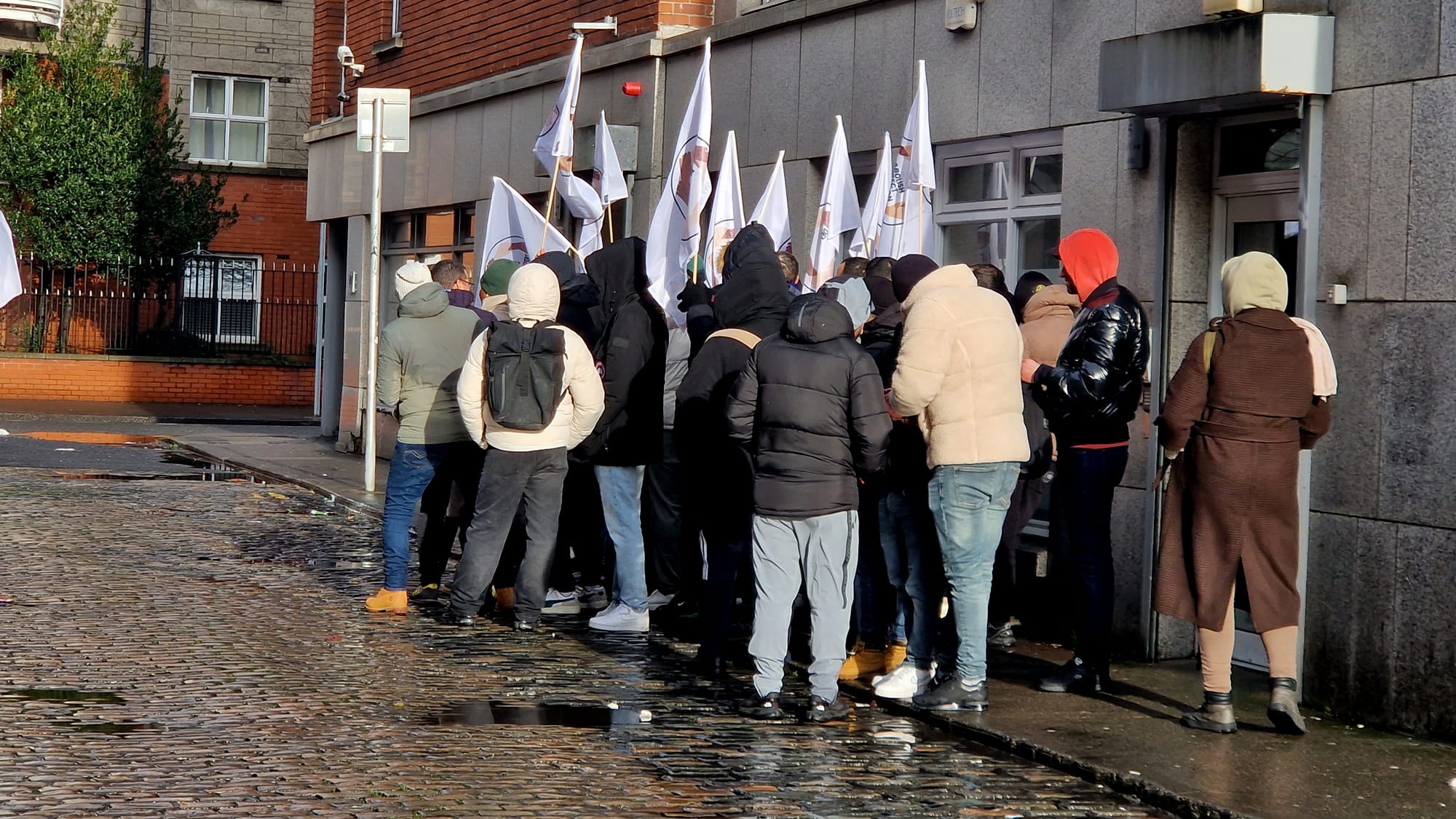
On Tuesday, a knot of people representing an asylum-seekers’ group huddled outside the Immigrant Council offices in Smithfield in protest.
Last week, they’d turned up at the nearby IHREC offices, where Herrick went outside to hear them out.
“They indicated that they were protesting because we hadn’t done enough to support their aims and objectives,” said Herrick.
He said he supports their right to protest and had arranged to meet them again.
The 2023 and 2025 surveys commissioned by the Charities Regulator found that trust in the sector has been falling.
“Lack of transparency regarding how funding is used, perceptions of high salaries of executive staff and negative media coverage are the main drivers of this decline,” the report on the 2023 survey said.
“Public dialogue about serious issues in some charities is seen as the main reason behind the decrease,” the report on the 2025 survey said.
There has been documented evidence of NGO malpractice.
A lack of transparency around finances, conflict of interest issues and failure in governance at the Peter McVerry Trust was a recent one.
Murphy, of DCU, says when he spoke to civil society workers for his research, “everyone could agree that this is a terrible thing that happened and this is definitely mismanagement”.
People felt it unfairly impacted the entire sector's reputation, when it only involved one organisation, he said.
Sometimes non-profits don’t have the capacity and fall behind on filing paperwork and the like, says Kennedy of ICCL.
He points to how the Transgender Equality Network Ireland (TENI) was attacked by conservative groups for not filing financial paperwork properly.
“I’m not saying it’s good practice,” says Kennedy. “But it’s very common in organisations that just have very limited capacity.”
Murphy of DCU also says that because some NGOs are small, they can struggle to navigate bureaucracy and compliance.
Buczkowska of the Immigrant Council says corruption or poor management happens in almost every sector, and there’s always room to improve oversight.
“Look at any other sector, even government sector, how much abuse of funding is there?” she said.
But people shouldn’t write off an entire line of work over the misdoings of a few, she said.
Some people post images of senior workers at non-profits alongside their salaries online as ragebait.
Yes, very senior roles can be well-funded, but senior roles are hard to come by, says Kennedy, who’s worked in the sector for the better part of the last two decades.
“The idea that we’re all just living these luxurious lifestyles or rolling in money is just ridiculous,” he says.
In reality, most people working in the sector are scrambling to keep the wheels in motion, doing stuff not in their job descriptions, says Kennedy.
Could hiring more people from working-class backgrounds help boost trust in the sector?
Kennedy says it’s not like it’s not happening. He doesn’t come from an affluent background, he said. And he’s survived this scene for so many years.
But it’s true that people from lower-income backgrounds are more likely to drop off because the positions are precarious and they don’t have other sources of income to fall back on, he said.
Murphy, the DCU researcher, says the most worrying aspect of the broad-brush anti-NGO campaigns online is their impact on the quality of services on the ground. A surge in anti-immigrant discourse makes it worse.
In the course of his research, he’s heard of contentious staff interactions and of volunteers who are not keen to help certain groups because they read online “that maybe they aren’t deserving”.
Buczkowska of the Immigrant Council says even her own brother in Poland harbours anti-NGO views now. And they end up debating, she says.
“I’m working on a safety plan for the organisation, which we never had to do before,” said Buczkowska.

In two cases, inspectors found that staff were using restraint to try to manage children’s behaviour, and one of those children was restrained 78 times.

Changes to make it possible were to be included in a new law, when first announced. But they were dropped.

About €7 million went into a pot for projects for the surrounding area, when the Oscar Traynor Woods deal was struck.

Dublin city councillors added a focus on social inclusion to the work of their housing committee in September 2024. But it hasn't really featured yet.