

Maybe people shouldn't be able to collect social welfare at GPO, Arnotts lobbies
The company behind the Henry Street department store raised the idea with the man in charge of the regeneration of the city centre, returns show.
Some of the other residents in the complex just off Hill Street – and a neighbouring one – complain about the noise of the playing children.

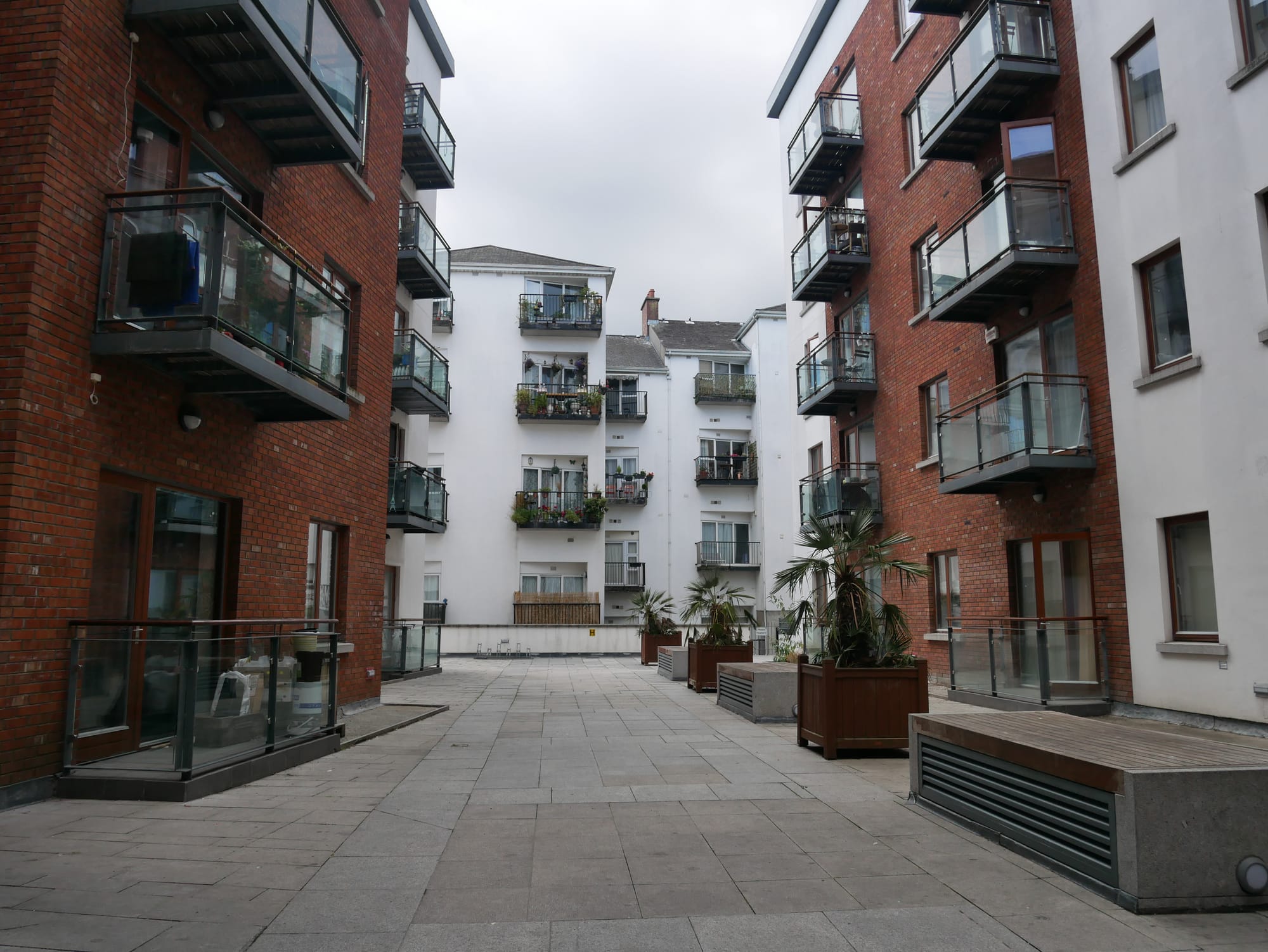
The shared plaza sits like a canyon between the mid-rise apartment blocks just off Hill Street, not far from Mountjoy Square in Dublin 1.
It's paved, and a strip of wide benches and palms in planters runs through it. On Friday, late in the afternoon, it was empty.
For kids who live in The Courtyard apartment blocks either side of the plaza, hers among them, it's a space to enjoy, says Claudia Ichim. "The kids play here, inside our courtyard."
The play is innocent, she says – the oldest kid is around nine years old. And, they're not out there all the time.
"Kids are here when it's good weather, you know. Not every single day, and usually only in the afternoon," says Ichim.
Still though, some of the other residents in The Courtyard complex – and in the neighbouring apartments of Belvedere Court, which sits over a low boundary wall to the north – complain about that, and the noise.
Fraught confrontations on the plaza have ramped up in recent times, says Ichim – and she is unhappy with how the board of The Courtyard's owners' management company (OMC) has dealt with it.
And a sign appeared earlier this summer listing new, stricter rules for the shared space, which apartment owners as a group hadn't been consulted on, she says.
Those are being amended now, she says. But for her, it's all an extreme response to kids playing, she says.
After all, the council's development plan underlines the importance of families living in the city, and children being allowed to play here too – even as most homes being built these days are apartments.
The Courtyard was built 20 years ago, said a response from board members at George's Court Management Company, which is the OMC for The Courtyard, sent via their managing agents.
"In that time, there have been changes in the age profile and the diversity of the population of the local area," the email said. "Our community has always been very welcoming to all, and we certainly value the variety of cultural influences & the positive impact."
They have a four-step process to resolution – moving from informal conversations, to formal reviews of house rules – which has worked well over the years, they said.
"Residents raised concerns about the risk of certain activities potentially causing damage to property, &/or elevating the risk of injury. There were also concerns expressed about noise disturbance in the complex," they said.
Aoife Kelly-Desmond, the chief executive officer at Community Law and Mediation, says this sounds like the kind of situation that would really benefit from community mediation.
Mediation has to be voluntary, rather than forced, Kelly-Desmond said.
But it's basically people coming together, agreeing to sit down with an impartial professional person who can facilitate a conversation around the different views, she says. "Hopefully in a way that allows people to listen to each other and hear each other and move forward."
Belvedere Court Management CLG, the OMC for neighbouring Belvedere Court, hasn't responded to queries sent on Wednesday about the tensions and response, sent via their managing agents.
Tensions between residents over the use of the courtyard have been building for about two years, said Ichim, last Friday. "It's only got, over time, worse and worse," she says.
First off, residents in the nearby flats at Belvedere Court complained about the noise, she said, with one resident regularly shouting at the kids. "Using bad language."
Later, some residents in the complex where they live too objected to kids playing in the shared space, she said.
The parents tried to get the kids to play a bit quieter, she said, and the kids did begin to hush each other a bit because they were scared. They take them to nearby playgrounds when they can, she says, but they need it as a place to play.
The tensions continued to escalate, she says, with confrontations in the courtyard.
 Claudia Dalby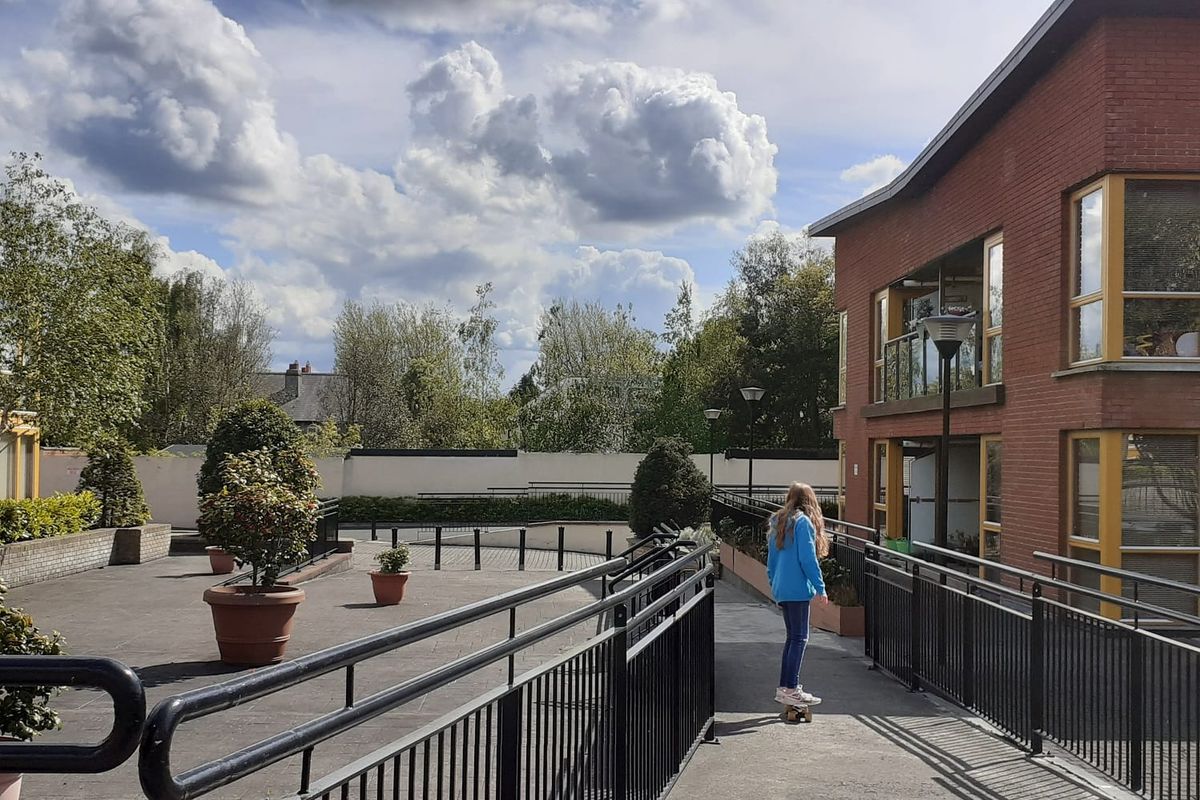
A resident in the neighbouring block installed a mosquito alarm – a device which emits a high-frequency and discomforting sound that can only be heard by young people – on a balcony, she said. That was later taken down.
She isn't sure if her kid heard it or how much, as he is five, she says. He gets headaches but she doesn't know if those were prompted by that, or just normal, she says – and she couldn't hear it if it went back up. "We can't really tell, you know."
Another resident put up a sign in the window, saying it was a nightmare to live where they did. Ichim emailed into the company that manages that block and it was removed, she said.
Over the summer, a sign went up on one wall in the courtyard. "No ball games", it says, "no loud noise", and "no wheeled play", "for the comfort, safety and quiet enjoyment of all residents". Young kids must be supervised too, it says.
The sign and rules had been issued on behalf of the owners' management company, George's Court Management Company, it says.
An email to a resident in August from Apleona Ireland, the managing agent, said George's Court Management Company had had complaints from residents about children playing, using balls, bicycles and scooters, and the noise and disturbance from that.
They had also had legal correspondence from Belvedere Court, about children using the shared space.
On Thursday around midday, none of the residents who opened their doors at Belvedere Court wanted to talk on the record about tension arounds kids playing.
The sign was an effort to provide clear guidance on the shared use of the courtyard, but kids could still use the communal areas, the email from Apleona said.
But were those new house rules?
Section 23 of the Multi-Unit Development Act lays out the process that OMCs must follow, before they change house rules.
New rules have to be considered and approved at a meeting of the homeowners, it says. Property owners must have at least 21 days' notice of any such meeting, and a copy of any draft rules.
Another email in August from Apleona said it was happy to clarify the management company's – George's Court Management Company's – position on that.
The sign wasn't a new house rule, but a "temporary management measure", it said. The management company and board would follow the process, if they planned to bring in or amend house rules, they said.
Dublin City Council's current city development plan talks about the importance of supporting family living in the city.
It talks about supporting "play friendly communities" – that provide time and space and permission for "everyday street play", opportunities and experiences and play in urban public space.
And, it mentions its play strategy, which advocates for children and young people to enjoy and fully exercise their right to play.
Ichim says she wasn't sure where to go with her concerns that her kids' right to play wasn't being met.
The board of the OMC, the George's Court Management Company, did set up a meeting this past Tuesday, for residents to meet and talk about solutions. It wasn't a formal meeting, under Section 23.
They reached an agreement at that meeting, said Ichim.
"Children can continue to play in the courtyard, but only soft balls will be allowed, while wheeled toys/play equipment will also be allowed. They also agreed to remove the sign that had been put up," she said, the day after.
By email, the board members at George's Court Management Company said that: "The primary objective of all is to ensure “safe play” and a safe environment for all."
But Ichim still feels frustrated about how it was all handled, and how they were treated by the board, she said, and has unanswered questions.
How many complaints had they actually had? How could the rules on the sign not be considered new house rules? How old does a child have to be before they can sit out unsupervised?
They talk about safety, she said, but Airbnbs with turnover of visitors operate unbothered in the complex.
Kelly-Desmond, the chief executive officer at Community Law and Mediation, says neighbourhood relationships are very intimate and if there are conflicts, community mediation can really have a positive impact to de-escalate situations.
Community Law and Mediation offers a free service for this, she said. But overall, community mediation is under-resourced, as a thing.
 Eoin Glackin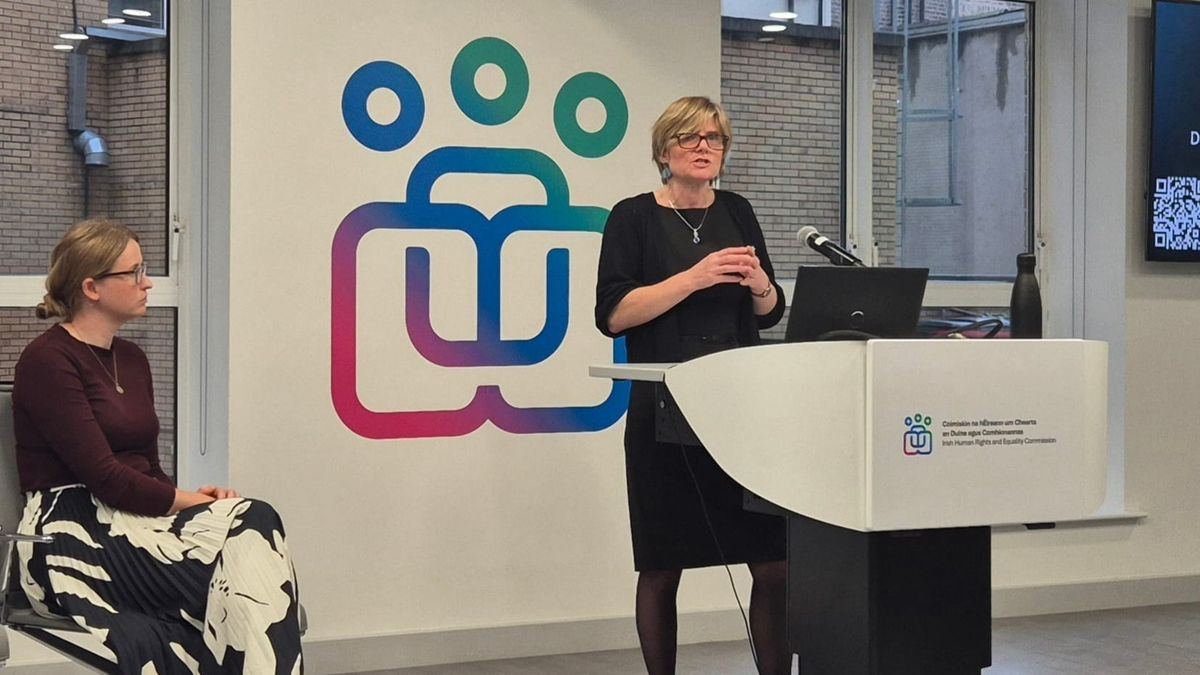
Mediation is often associated with couples separating or commercial disputes, she said. But there is a gradual growing awareness of its relevance for community disputes too, she said.
"We see a huge value on it in Ireland," said Kelly-Desmond.
It's valuable to those individuals stuck in escalating disputes, and it's a valuable way to avoid conflicts reaching the courts, she said.
There's a lot of work going on behind the scenes, ahead of the formal set-up of the government's Mediation Council of Ireland, she said. "The next phase will be for the council to be established. It is moving."
[UPDATE: This article was updated on 28 August at 10.35am to include responses from the George's Court Management Company, sent this morning.]

The company behind the Henry Street department store raised the idea with the man in charge of the regeneration of the city centre, returns show.

It's been in place on buses in Waterford since July, and is due to be rolled out now nationwide – including on Go Ahead's Naas-based Dublin commuter services this past weekend.

"His inability to work will have a direct impact on the provision of the medical services and our ability to maintain adequate staffing and patient care,” reads a letter from the Rotunda to the Department of Justice.

"Please note, I am only looking for the restitution of €2.75 – the fare cost."