

“It’s giving colonialism”: Ireland still owes rent to dukes and earls
Although, even though the OPW lists these rents as payable, some of the named beneficiaries say they haven't been getting them.
Now councillors are considering a plan for the council to pay another €859,000 to break the leases on them, pay for “dilapidations”, and walk away.

Dublin City Council has been paying about €285,000 a year for three empty warehouse units, plus parking, in a north Dublin business park, councillors heard on Monday.
The council’s housing department was using them as depots – a paint depot, a steel depot, and a fleece depot – council senior valuer Helen Geoghegan told them.
But “all these depots have all relocated so these buildings are lying there empty”, Geoghegan said, at a meeting of the council’s North Central Area Committee.
So Geoghegan asked the councillors to approve a plan for the council to pay €859,000 to break the leases on these left-behind spaces at the North Ring Business Park, pay for damages and deterioration (“dilapidations”), and walk away.
“These are massive amounts of money,” said independent Councillor Kevin Breen, after hearing about that plan at the meeting.
“We’ve so little,” said Green Party Councillor Donna Cooney. “We just heard about how little we have for the resurfacing of roads, and how stretched we are for any money.”
Indeed, a previous item on the same meeting’s agenda was the area office’s programme for resurfacing roads and fixing footpaths in its part of the city.
One by one, councillors made their pitches to council managers for works they thought were really important across the north-east part of the city.
“Do we have any further budget? The answer is no,” executive engineer Ronan Connolly said. “Particularly in the current climate with the prices.
In the end, councillors declined to pass the report on surrendering the leases onwards to the next monthly meeting of the full 63-member council – yet.
“I want a standalone meeting,” said the committee chair, Fianna Fáíl Councillor Daryl Barron, to dig further into the issue.
Cooney, the Green Party councillor, also questioned whether there is a bigger issue with the council paying for spaces it’s not using – pointing to a similar situation at the closed Coolock Swimming pool.
“We can’t be making these mistakes and entering into long-term leases where this, you know – and then having to fork out money for nothing,” she said. “We just don’t have it, to be wasting.”
One of the projects of the previous chief executive of Dublin City Council, Owen Keegan, was to consolidate lots of little council depots all over the city into two big new ones.
Back in 2018, the council had 33 of these smaller depots, which 1,400 council workers used as bases to run the city – whether overseeing road maintenance, waste management, public lighting, or other services that keep Dublin ticking.
Keegan’s plan was to merge most of these down to two “super depots”: one near Ikea on the north side, and another on Marrowbone Lane in the Liberties on the south side.
This would provide staff with more modern facilities, create efficiencies, eliminate duplications, allow the council to sell off sites to raise funds, and free up land to build housing on, he said at the time.
Under Keegan, the council built the northside super depot, formally the North City Operations Depot (NCOD). It cost more than €74 million, and opened in June 2023.

The three housing maintenance depots – for paint, steel and fleece – relocated about 2km west to the NCOD, leaving those spaces at the North Ring Business Park.
Keegan retired in September 2023, and Richard Shakespeare, his deputy, took over as the new chief executive of the city council.
The council has not built the South City Operations Depot on Marrowbone Lane.
A version of it is still in the works, but community campaigners and councillors pushed for the council to build a sports pitch on the site first – a project it appears to be moving forward on.
Meanwhile, Shakespeare has started his own major council infrastructure project, this year spending €104 million to buy the Camden Yard site on Kevin Street as part of a plan to build a new headquarters for the council there.
The council is still working on a plan for what might become of its current headquarters on Wood Quay, once it transfers its staff to the planned new offices.
It’s not clear how long the spaces at the North Ring Business Park have lain vacant after their staff and functions were transferred to the new super depot.
A June 2023 council statement about the opening of the NCOD said it brought together “operations from” departments including housing maintenance.
But the council has not yet responded to queries sent Monday asking when exactly these particular housing maintenance depots made the move, and how much rent it has paid on the North Ring Business Park units since they left.
“The three units were no longer required from the housing department we were asked to assign them, they did not want us to get any other department to use them,” Geoghegan said at the committee meeting on Monday.
But the council couldn’t get anyone to take over the leases, she said. “We’ve been paying rent with no one in these units for some time I believe,” she said.
So the next option was to surrender the leases, and that – according to the council’s lease, came with penalties of about €385,000, she said.
Then there’s the question of the “dilapidations”, the cost of repairing damage or deterioration of the spaces over the 20 years or so the housing department had them.
The landlord, M7 Real Estate, wanted about €622,000 for that, but on behalf of the council property firm CBRE negotiated that down to about €475,000, Geoghegan said.
So, to walk away, the council will need to pay the break fees, as well as the dilapidations, a total of about €859,000.
Is that really the best option? councillors at the meeting asked.
One way or another the council is going to have to pay for the wear and tear on the units, the dilapidations, Geoghegan said.
If it doesn’t pay the break fee and leave, it’s also going to have to pay the rent for the remaining three and a half years on the lease, she said.
“Which means that we were going to have to pay, in rent, close to €1 million, and then the dilapidations on top of this,” she said.
If the council wants to avoid that, it has to pay the €385,000 in break fees, she said.
How did the council get itself in this situation? independent Councillor John Lyons asked.
Why wasn’t the move to the NCOD handled in a way that didn’t leave these units sitting empty with the council still paying for them? he asked.
“I just would have thought that would have been factored in as part of the transition and consolidation,” he said.
Geoghegan, from the City Valuer’s Office, directed these kinds of questions to a different council department.
“With regards to how they were managed, they are all questions for the housing department, I can’t really help you there,” she said.
What if there’s a third option, other than breaking the leases or continuing to pay but leaving the spaces empty, suggested Cooney, the Green Party councillor.
“Has it been put before the arts and culture as a possible use? Has it been looked at for sports?” she asked. “Are there other things we could do with it rather than paying out a lease and getting nothing in return for it?”
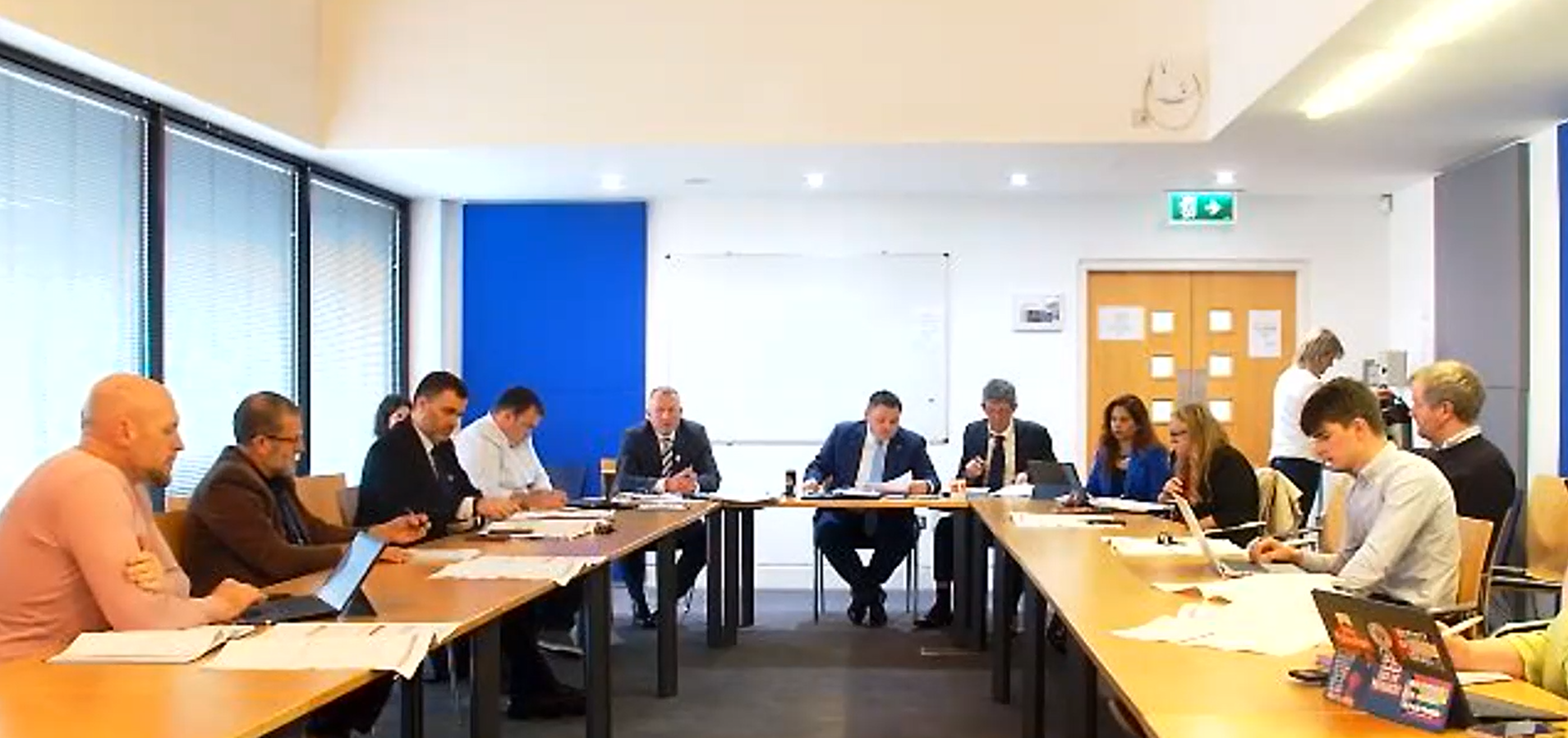
Cooney also questioned whether there is a bigger issue with the council paying for properties it’s no longer using.
“What are the learnings?” she asked. “Because it seems to be the same with the swimming pool in the Northside [Shopping Centre] that we’re left with a lease that we still can’t get out of.”
When the roof of the Coolock Swimming Pool, atop the shopping centre, was badly damaged in December 2024 by Storm Darragh, the council was forced to close it down.
Barron, the Fianna Fáil councillor, said in March that the council remained locked into a lease with the landlords there.
And, in fact, the council put out a tender, in January with an estimated value of €130,000, to fix the roof – even though it appears it will never reopen the pool.
How much longer does the council’s lease on the space run? And how much is it paying for the un-used space in the meantime?
“The amount of rent paid by Dublin City Council is €88,000 per annum,” a council spokesperson said. “No further comments will be made on Coolock Pool.”
The council has not yet responded to a query sent Monday asking whether it has a list of properties it is paying to lease, but is not using.

Although, even though the OPW lists these rents as payable, some of the named beneficiaries say they haven't been getting them.

They're set to back the creation of a special purpose vehicle he's been picked to head, which is meant to play a major role in regenerating the city centre – but how major is in dispute.

Social tenants who live in the private Liberties complex Grand Canal Harbour say they're not allowed to use many of the common facilities there.

Gone is the hardman shtick, the macho bravado once associated with hip hop, rapper and producer Michael Ward, who goes by Mickzart. “We’re after something true.”